

Why Overloading Detergent Damages Clothes and Fabrics
Detergent overloading is defined as adding more soap than a wash cycle can fully rinse away, and it is the leading cause of premature fabric wear in home laundry. The excess soap leaves a sticky film on fibers that traps body oils, bacteria, and grime, making clothes smell worse and wear out faster. Most people assume more detergent means cleaner results. The opposite is true. Understanding why overloading detergent damages clothes is the first step toward fixing the most common laundry frustrations you face every wash day.
Why overloading detergent damages clothes at the fiber level
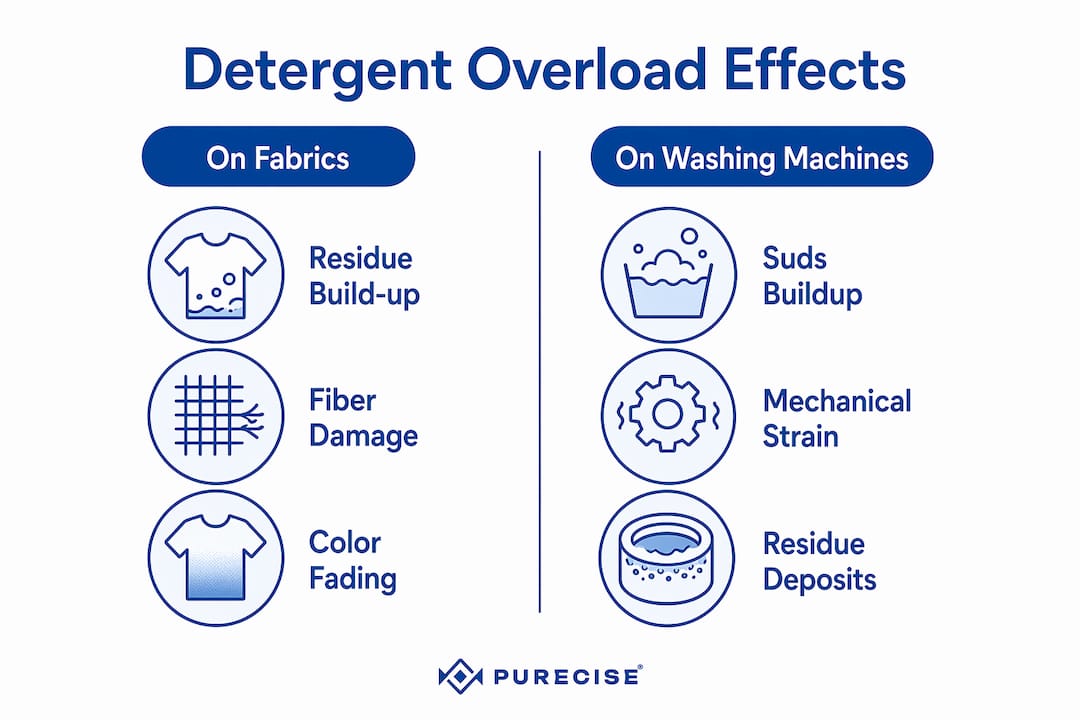
Detergent residue acts as a dirt magnet on fabric fibers. When soap does not fully rinse out, it leaves an invisible coating that binds oils and bacteria to the cloth surface. That coating causes musty odors and makes garments re-soil faster after every wash.
The problem gets worse with hard water. Hard water combined with excess detergent deposits 0.5–2 grams of abrasive mineral and soap residue per kilogram of laundry. That abrasive layer grinds against fibers with every movement, causing structural decay over time.
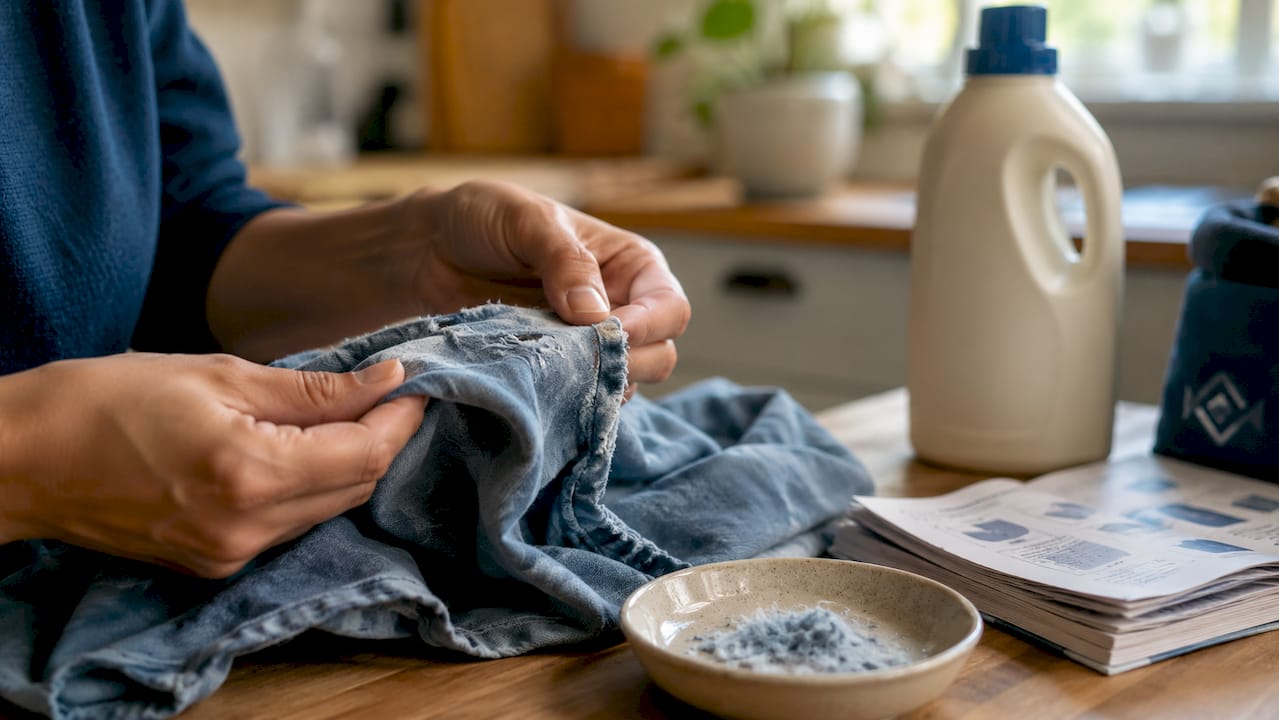
Color loss follows the same pattern. Washing above 40°C combined with excess detergent accelerates dye loss and weakens fiber strength. This means your dark shirts fade and your cotton tees thin out far sooner than they should.
Different fabrics respond differently to residue buildup. Synthetic fibers like polyester trap residue in their tight weave, making them stiff and prone to pilling. Natural fibers like cotton and linen absorb the soap film deeply, which breaks down the cellulose structure over repeated washes. Wool and silk are the most vulnerable. Even a single overdosed wash can cause shrinkage or surface damage in delicate knits.
| Fabric type | Effect of detergent overload |
|---|---|
| Cotton and linen | Residue breaks down cellulose, causing stiffness and thinning |
| Polyester and synthetics | Trapped residue causes pilling and locks in odors |
| Wool and silk | Surface damage, shrinkage, and fiber distortion |
| Dark-dyed fabrics | Accelerated dye loss and fading from residue and heat |
Pro Tip: Run a second rinse cycle on dark or delicate items if you suspect residue buildup. The extra rinse costs almost nothing and removes the soap film before it can set into the fibers.
What causes people to overdose detergent?
The “cap trap” is the most common cause of chronic detergent overdosing. Detergent caps hold up to 10 times the amount actually needed for a standard load. The fill lines inside the cap are small and easy to miss, so most people pour to the brim without thinking twice.
The “suds myth” compounds the problem. Many people believe that more foam equals better cleaning. Excess suds actually reduce mechanical washing action by cushioning clothes against the drum and preventing proper agitation. Less friction means less cleaning, not more.
Modern detergents and high-efficiency washers have changed the math entirely. Two tablespoons of detergent are usually sufficient for a standard HE load. Most people pour three to four times that amount because the packaging implies otherwise.
Here is what drives overdosing in everyday laundry:
- Misleading cap design. Fill lines sit near the bottom of the cap, but most people fill to the top.
- The suds myth. Foam feels like proof of cleaning power, but it signals excess soap.
- Load size guessing. People double the detergent for larger loads, when a modest increase is all that is needed.
- Concentrated formula confusion. Concentrated detergents require far less volume, but the packaging rarely makes this obvious.
- Habit and routine. Most people pour the same amount they always have, regardless of load size or soil level.
“Modern laundry detergents are formulated for minimal doses. More detergent does not mean cleaner clothes. It often means damaged fabric and a machine that needs more maintenance.” — laundry care experts
How does excess detergent affect your washing machine?
Excess detergent does not just harm clothes. It puts real stress on your washing machine. Excessive suds strain pumps and motors by forcing them to work harder to drain foam-filled water. Over time, this shortens the machine’s lifespan and leads to costly repairs.
Residue builds up inside the drum, door seals, and detergent drawer. That buildup creates a warm, damp environment where mold and bacteria thrive. The result is a machine that smells bad and transfers that smell to every load you wash.
“Scrud” is the technical name for the waxy brown residue that forms when detergent and fabric softener mix inside the drum. Scrud causes odor and staining on clothes and is extremely difficult to remove once it sets. Most people blame their clothes or their water quality, when the real cause is soap overuse.
The signs that your machine is suffering from detergent overload include:
- A persistent musty smell inside the drum, even after cleaning
- White or gray streaks on dark clothes after washing
- Clothes that feel stiff or tacky when dry
- Visible residue around the door seal or detergent drawer
- Longer rinse cycles triggered by the machine detecting excess suds
Pro Tip: Run an empty hot wash cycle with two cups of white vinegar once a month. This dissolves soap scrud, kills mold, and resets your machine without any chemical cleaners.
How to prevent detergent overloading and protect your clothes
The single most effective fix is measuring detergent accurately every time. Follow the manufacturer’s dosing guidelines printed on the packaging, not the fill line on the cap. For most standard loads in an HE washer, two tablespoons is the correct amount. Start there and adjust only for heavily soiled loads.
- Measure with a dedicated tool. Use a measuring spoon or a marked cup instead of the detergent cap. This one change eliminates the cap trap entirely.
- Wash in cooler water. Keeping wash temperatures at or below 40°C protects dye and fiber integrity. Hot water speeds up both residue bonding and color loss.
- Use less detergent for lightly soiled loads. A half dose works for everyday wear. Save the full dose for gym clothes, work uniforms, or heavily stained items.
- Skip the fabric softener if clothes feel stiff. Stiffness after washing is a sign of residue, not a lack of softener. Adding softener masks residue but speeds wear by layering more chemicals onto already-coated fibers.
- Clean your machine monthly. A vinegar rinse or a manufacturer-approved machine cleaner removes scrud and prevents mold from building up in seals and hoses.
- Choose pre-dosed formats. Pre-measured laundry products, such as detergent sheets, remove the guesswork entirely. Each sheet delivers the exact amount needed, with no cap, no measuring, and no overdosing.
Using less detergent produces better results. Less soap means better rinsing, softer clothes, and longer fabric life. That is not a counterintuitive trick. It is how modern detergent chemistry is designed to work.
Pro Tip: If your clothes come out of the wash smelling stale, run them through a second rinse with no detergent at all. That single extra rinse often removes the residue causing the odor, and your clothes will smell fresher than they did with more soap.
Key Takeaways
Detergent overloading damages clothes by leaving residue that weakens fibers, fades colors, traps odors, and stresses your washing machine, and the fix is simply using less soap with every load.
| Point | Details |
|---|---|
| Residue is the root cause | Excess detergent leaves a film that traps oils, bacteria, and grime in fabric fibers. |
| Hard water multiplies damage | Mineral deposits combined with soap residue deposit abrasive particles that break down fibers over time. |
| The cap trap drives overdosing | Detergent caps hold up to 10 times the needed amount, making accurate measuring critical. |
| Less detergent cleans better | Modern formulas work best at low doses; excess soap reduces washing action and causes stiffness. |
| Pre-dosed formats prevent overuse | Products like Purecise detergent sheets deliver exact amounts, removing the risk of overdosing entirely. |
What I have learned from watching people ruin their laundry
The most common mistake I see is not carelessness. It is misplaced confidence. People pour a full cap of detergent because it feels like the right amount. The cap is designed to hold more than you need, and that design works against you every single time.
The second mistake is doubling up. Larger load? Double the detergent. Stinky gym clothes? Double the detergent. That instinct is understandable, but it is wrong. A modest increase in dose handles a larger load. Doubling it just means twice the residue and twice the damage.
What I have found actually works is trusting the formula. Modern detergents are concentrated and engineered to clean at low doses. The chemistry does the work. Your job is to get out of the way and let it. When you use less soap, clothes come out softer, colors stay brighter, and the machine stays cleaner with almost no extra effort.
The shift to a minimalist laundry routine feels strange at first because we are conditioned to believe more product equals better results. In laundry, that belief costs you money, shortens the life of your clothes, and creates problems you then spend more money trying to fix. Less is genuinely more here, and the chemical residues left by overdosing are a real and underappreciated source of fabric damage.
— Purecise
Purecise laundry sheets: the fix for detergent overuse
Every problem covered in this article, from residue buildup to fiber damage to machine scrud, traces back to one root cause: using more detergent than the wash cycle can handle. Purecise Toss & Go laundry detergent sheets solve that problem at the source.
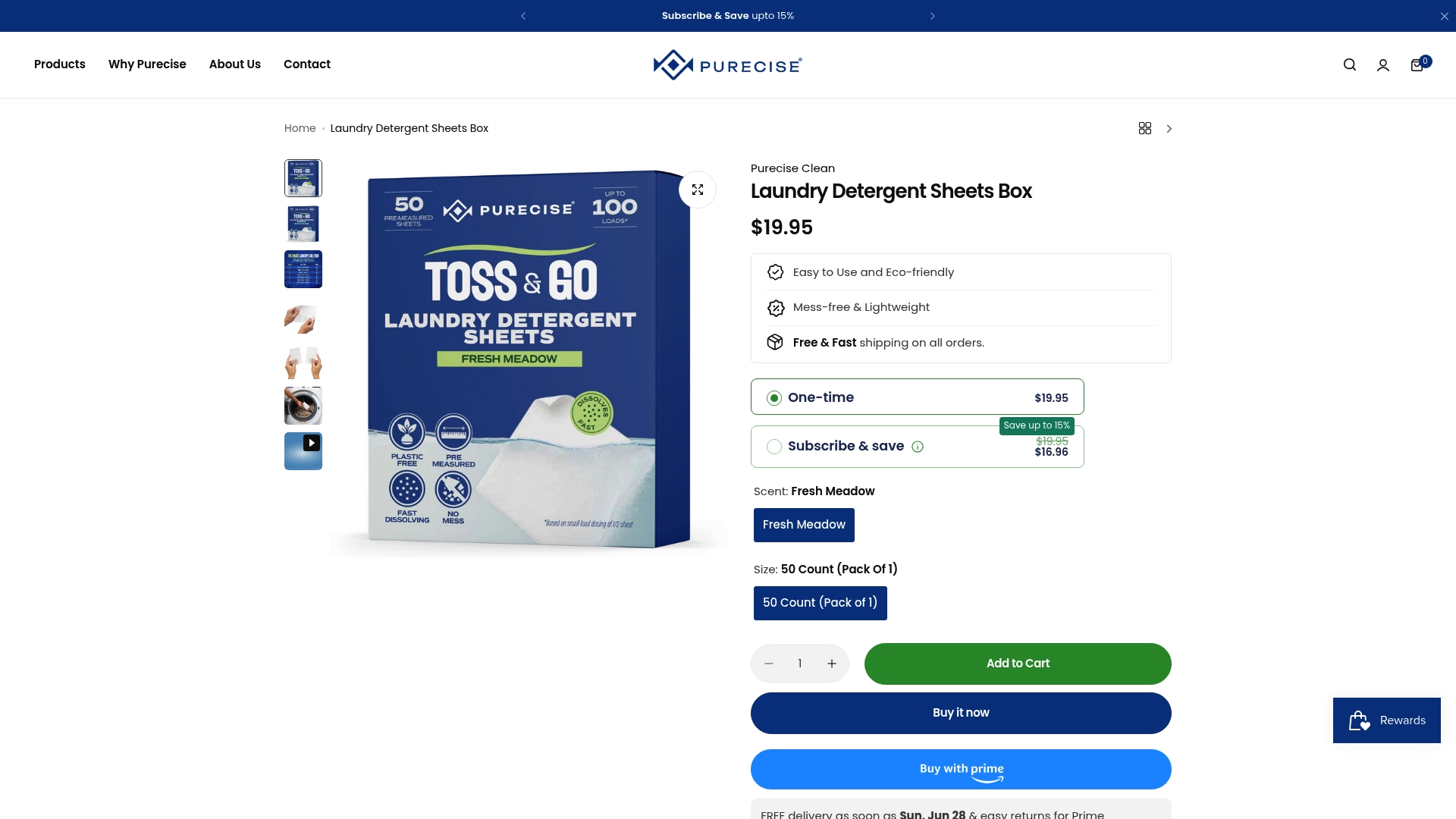
Each Purecise sheet is pre-dosed to deliver exactly the right amount of detergent for a full load. There is no cap to misread, no liquid to spill, and no guesswork. The hypoallergenic formula dissolves completely in any water temperature, leaves zero residue on fabrics, and is free from harsh chemicals that accelerate wear. A full month’s supply fits in your pocket, cuts plastic waste, and protects your clothes wash after wash. Purecise backs every order with a 100% money-back guarantee.
FAQ
Why does too much detergent make clothes smell worse?
Excess detergent leaves a residue film on fabric that traps body oils and bacteria. That trapped organic matter is the source of the musty odor, not the clothes themselves.
How much detergent should I actually use?
Two tablespoons is the correct amount for a standard load in a high-efficiency washer. Always follow the manufacturer’s dosing guidelines rather than the fill line on the detergent cap.
Can detergent overuse cause skin irritation?
Yes. Detergent residue left in fabric is a common cause of skin irritation, especially for people with sensitive skin or eczema. Reducing your dose and adding an extra rinse cycle resolves most cases.
Does more detergent remove stains better?
No. More detergent does not improve stain removal and often makes it worse by leaving a soapy film over the stain. Pre-treating the stain directly with a small amount of detergent before washing is more effective.
Is detergent overuse bad for the environment?
Excess detergent pollutes waterways and wastes money on soap that never cleans anything. Accurate dosing reduces both your environmental footprint and your monthly laundry costs.
Recommended
How to Wash Clothes Without a Laundromat Traveling
How to Switch to Zero Waste Laundry in 2026
Related Posts

Remove Lipstick Stains: The First 15 Minutes, Plus Detergent Sheets

How Often to Wash Towels: Bath Weekly, Hand Towels Every Few Days

Detergent Allergy Rash: Test a Low Residue Wash Without Fragrance

Save Clothes From Mud Stains in 1–2 Hours With Premeasured Sheets

Fabric First Sweat Stain Fixes: Measured DIY Recipes and Sheets

Whiten White Clothes, No Chlorine: 4–8 Hour Soak, Premeasured Sheets

Remove Blood Stains from Clothes: Cold Water, Enzyme Soak, No Dryer


