

Detergent Format for Communal Laundry: 2026 Guide
Detergent format is the primary factor shaping cleaning performance, convenience, and ecological footprint in communal laundry environments. The term “detergent format” refers to the physical form a detergent takes: liquid, powder, pods, or sheets. Each format behaves differently depending on water temperature, machine type, and load size. In shared laundry rooms, where dozens of people use the same machines with different habits and fabrics, the role of detergent format in communal laundry goes far beyond personal preference. Purecise Toss & Go detergent sheets and Tide evo tiles represent newer formats entering this space, but understanding all four formats is the foundation for making the right call.
How does detergent format affect performance in communal laundry machines?
The format you choose directly controls how well detergent dissolves, how much residue it leaves, and how consistently it cleans across different cycles.
Liquid detergent dissolves rapidly at low temperatures, typically 30–40°C, making it the safest choice for dark fabrics and cold cycles. That rapid dissolution means fewer marks on dark clothing and less residue on machine drums after a short cycle. The tradeoff is that liquid is easy to overdose. In communal settings where each person pours their own amount, excess detergent builds up inside machines, causing malfunctions and unpleasant odors over time.
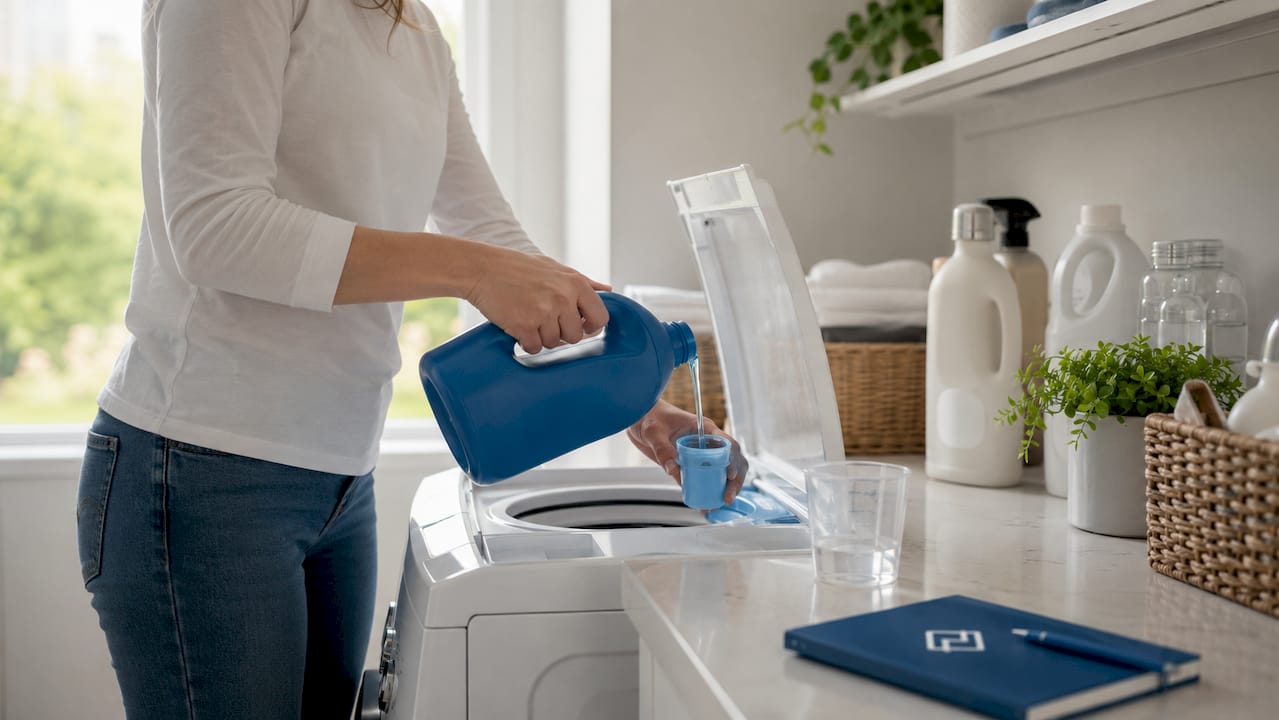
Powder detergent excels at 60°C cycles and is the go-to format for whites and heavy stain removal. Powder contains oxygen-based bleaching agents that activate in hot water. The problem appears in cold or short cycles: undissolved powder leaves chalky residue on dark fabrics and inside machine dispensers. Communal laundry rooms that run mixed-temperature loads all day face this residue risk constantly.
Pods offer a fixed pre-measured dose, which removes the guesswork. The limitation is that fixed dosing cannot adjust for a half-full drum or an oversized comforter. You pay for a full dose whether you need it or not, and per-load costs run higher than powder or liquid.
Detergent sheets dissolve fully across a wide temperature range with minimal packaging and zero mess. They work in both cold and warm cycles, leave no residue, and store in a fraction of the space that a liquid jug or powder box requires. For communal laundry users with limited shelf or locker space, that compactness is a genuine advantage.
| Format | Best temperature | Best for | Residue risk | Storage space |
|---|---|---|---|---|
| Liquid | 30–40°C | Dark fabrics, cold cycles | Medium (overdosing) | High (bulky bottles) |
| Powder | 60°C | Whites, heavy stains | High (cold cycles) | Medium (boxes) |
| Pods | Any | General loads | Low | Low |
| Sheets | Any | All fabrics, eco users | Very low | Very low |
Pro Tip: If your communal laundry room runs mostly cold cycles, avoid powder as your default. Undissolved granules coat machine drums and clog dispensers faster than any other format.
Cost efficiency and environmental impact of detergent formats in shared facilities
The cheapest format per unit is not always the cheapest format per wash. That distinction matters in communal laundry, where overuse is the norm.
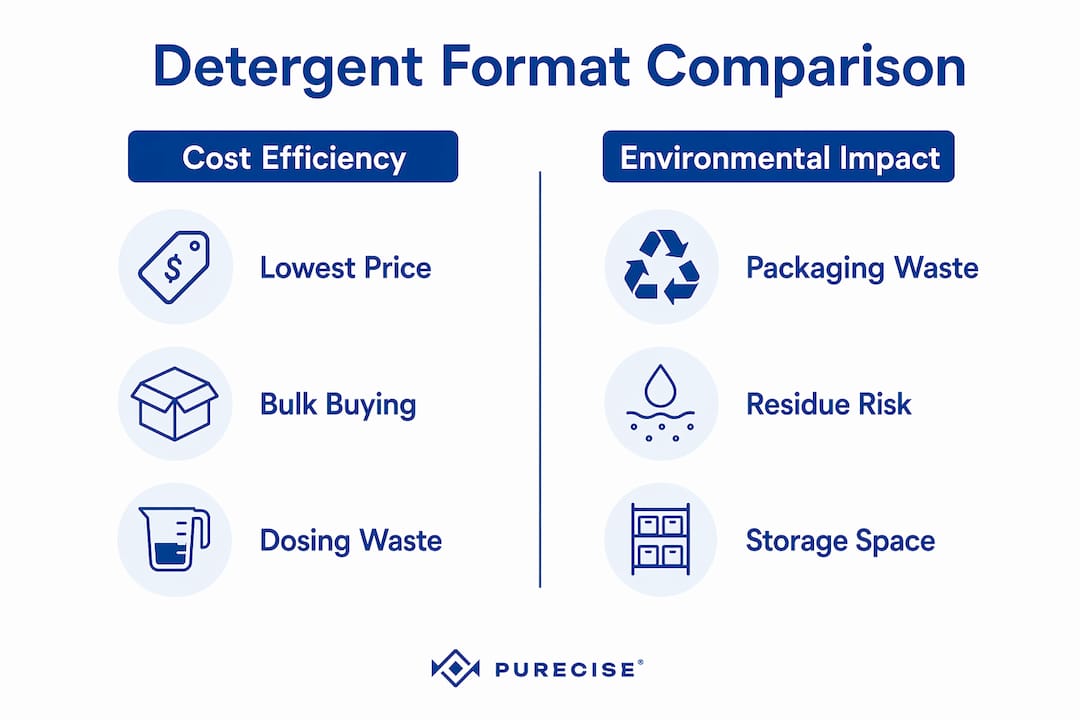
Powder detergent carries the lowest sticker price per wash. It is cost-effective for property managers buying in bulk and for residents who measure carefully. The catch is that liquid detergent allows adjustable dosing, meaning a careful user can stretch a bottle further than the label suggests. Perceived cost and actual cost per wash diverge depending on user behavior.
Liquid detergent’s biggest cost problem in communal settings is overdosing. When users guess at the fill line, they consistently pour too much. Overdosing causes machine buildup on drums and dispensers, leading to repair calls and shortened machine life. That maintenance cost falls on property managers, not individual users.
Pre-measured formats like pods and sheets prevent overdosing, reducing residue buildup and extending machine lifespan. The upfront cost per load is higher, but the reduction in maintenance and waste offsets that gap over time.
On the environmental side, the differences are significant:
- Powder: Cardboard packaging is recyclable, but plastic scoops and liners add waste. Heavy boxes increase shipping emissions.
- Liquid: Plastic jugs are the largest source of single-use plastic in laundry care. Most are not recycled at scale.
- Pods: Plastic tubs and individual film wrappers create disposal issues. Some pod films do not fully break down in cold water.
- Sheets: Minimal packaging and zero plastic bottles make sheets the lowest-waste format. A month’s supply fits in an envelope-sized packet.
| Format | Avg. cost per load | Packaging waste | Storage space needed |
|---|---|---|---|
| Powder | Lowest | Medium (cardboard) | Medium |
| Liquid | Low to medium | High (plastic jugs) | High |
| Pods | Higher | Medium (plastic tubs) | Low |
| Sheets | Higher | Very low (paper/cardboard) | Very low |
Pro Tip: If your building has a shared laundry room with limited cabinet space, sheets cut storage needs to almost nothing. A 30-load pack fits in a jacket pocket.
Practical considerations: convenience, safety, and space in shared laundry rooms
Convenience is not a luxury in communal laundry. It is a factor that directly affects whether people use the right amount of detergent and keep shared spaces clean.
Pods and sheets minimize mess and spills in high-traffic shared laundry rooms. When a liquid jug tips over on a shared shelf, it creates a sticky mess that discourages other users and can damage surfaces. Pods and sheets eliminate that risk entirely. They also reduce detergent theft, since a single sheet or pod is less tempting to pocket than an open bottle.
Liquid and powder require precise measuring to avoid waste and residue. Most communal users do not measure precisely. Without a marked measuring cup or a dispensing system, liquid users routinely pour double the recommended amount. Powder users face the same problem, with the added risk of leaving granules in the dispenser drawer.
Safety is a real concern with pods in buildings where children are present. Pod packaging resembles candy to young children, and accidental ingestion is a documented hazard. Buildings with family residents should factor this into format decisions.
Detergent sheets address the storage constraints of communal laundry rooms directly. A full month’s supply of sheets takes up less space than a single liquid bottle. Residents can keep their supply in a small bag or locker without taking up shared shelf space.
Best practices for communal laundry detergent use:
- Store detergent in a sealed, labeled container to prevent moisture damage and confusion.
- Never leave open liquid bottles on shared surfaces where spills can occur.
- Match your format to the cycle temperature your machine defaults to.
- Use pre-measured formats if your building has children or high user turnover.
- Check machine dispenser drawers monthly for residue buildup, regardless of format.
How do water hardness and machine type influence the best format?
The water supply and machine model in your building are fixed variables. Your detergent format choice needs to work around them, not against them.
Water hardness reduces surfactant function. Hard water minerals bind to detergent molecules before they can lift stains from fabric. Powder detergents typically contain builders, compounds that neutralize hard water minerals and restore surfactant effectiveness. In buildings with hard water, powder often outperforms liquid on stain removal and fabric softness.
High-efficiency (HE) communal machines are designed for low-suds detergents. Standard liquid detergents produce too many suds in HE drums, which triggers error codes and incomplete rinse cycles. Pods and sheets are generally low-suds by formulation, making them safer choices for HE equipment. Always check whether your building’s machines carry an HE label before choosing a format.
Smart washing systems benefit from unit-dose formats because consistent dosing prevents the sensor errors that variable liquid amounts can trigger. When a machine expects a specific conductivity level from dissolved detergent and gets twice the amount, it can misread the cycle and extend rinse time unnecessarily.
Aligning your format with the machine manufacturer’s recommendations is the single most direct way to protect shared equipment. Most communal machine manufacturers publish detergent guidelines in the machine room or on the unit itself.
Pro Tip: Check your building’s water hardness with an inexpensive test strip. If your water tests hard, switch to powder or a sheet formula with added builders. Your fabrics will come out softer and your machine will thank you.
Key Takeaways
Detergent format is the most controllable variable in communal laundry, and matching format to facility conditions prevents waste, machine damage, and poor cleaning results.
| Point | Details |
|---|---|
| Format drives performance | Liquid suits cold cycles; powder suits hot cycles; sheets and pods work across temperatures. |
| Overdosing costs money | Liquid and powder in communal settings lead to machine buildup that shortens equipment life. |
| Sheets minimize storage and waste | A month’s supply of detergent sheets fits in a pocket, cutting plastic waste and shelf space. |
| Water hardness changes the equation | Hard water favors powder with builders; HE machines favor low-suds pods or sheets. |
| Pre-measured formats reduce mess | Pods and sheets eliminate spills and reduce detergent theft in high-traffic shared spaces. |
What I’ve learned from watching communal laundry go wrong
The most common mistake I see in communal laundry rooms is treating detergent format as an afterthought. People grab whatever is on sale, pour it in, and wonder why their clothes smell stale or why the machine keeps flashing an error code.
The format matters more than the brand. A well-chosen sheet or pod in the right machine will outperform a premium liquid used in the wrong quantity every single time. Communal laundry is a shared system, and every user’s detergent choice affects the machines and the people who come after them.
The shift toward detergent sheets is the most practical development I’ve seen for shared laundry environments. No measuring, no spills, no bulky packaging left on shared shelves. Residents who switch to sheets consistently report cleaner machines and less friction with neighbors over mess. The ingredient transparency of sheet-format products also matters in buildings with sensitive-skin residents, since sheets tend to use shorter, cleaner ingredient lists than traditional liquids.
My honest advice: stop optimizing for price per unit and start optimizing for outcome per wash. In a communal setting, the cheapest format per bottle is rarely the cheapest format per clean load when you factor in machine maintenance, rewashing, and shared-space cleanup.
— Purecise
Purecise detergent sheets for communal laundry users
Purecise Toss & Go laundry detergent sheets are built for exactly the conditions communal laundry users face: limited storage, shared machines, and the need for consistent results without measuring.
Each Purecise sheet is pre-dosed, dissolves completely in any wash temperature, and leaves zero residue on fabrics or machine drums. The plant-based, plastic-free formula is hypoallergenic, making it safe for buildings with families and sensitive-skin residents. A full month’s supply fits in an envelope-sized packet, which means no more bulky bottles competing for shelf space in the laundry room. Purecise backs every order with a 100% money-back guarantee. Try Purecise detergent sheets and see the difference a well-matched format makes in your next communal wash.
FAQ
What is the best detergent format for communal laundry?
Detergent sheets and pods are the best formats for communal laundry because they offer pre-measured doses, produce no mess, and work across water temperatures and machine types.
Why does powder detergent leave residue in communal machines?
Powder detergent requires hot water to dissolve fully. When communal machines run cold or short cycles, undissolved granules coat dispenser drawers and drum surfaces.
Are detergent sheets effective in high-efficiency (HE) machines?
Yes. Detergent sheets are low-suds by design, making them compatible with HE communal machines that require low-foam formulas to avoid rinse errors.
How does water hardness affect detergent choice in shared laundry facilities?
Hard water minerals reduce detergent effectiveness by binding to surfactants. Powder detergents with builders counteract this, while liquid detergents may underperform in hard water without added softeners.
Do detergent pods pose safety risks in communal laundry rooms?
Pods carry an ingestion risk for young children due to their candy-like appearance. Buildings with family residents should store pods in locked or high cabinets, or switch to sheet formats that present no ingestion hazard.
Recommended
Why Liquid Detergent Spills in Laundry Bags: Real Fixes
What Is Pre-Dosed Laundry Detergent? A Family Guide
Related Posts

Remove Makeup Stains on the Go With a 10–15 Minute Pretreat

Remove Lipstick Stains: The First 15 Minutes, Plus Detergent Sheets

How Often to Wash Towels: Bath Weekly, Hand Towels Every Few Days

Detergent Allergy Rash: Test a Low Residue Wash Without Fragrance

Save Clothes From Mud Stains in 1–2 Hours With Premeasured Sheets

Fabric First Sweat Stain Fixes: Measured DIY Recipes and Sheets

Whiten White Clothes, No Chlorine: 4–8 Hour Soak, Premeasured Sheets


