

How to Reduce Plastic Waste Doing Laundry
Reducing plastic waste doing laundry is one of the most direct ways a household can cut its plastic footprint. The laundry room generates two distinct plastic problems: packaging waste from detergent bottles and microplastic fiber pollution from synthetic clothing. Up to 900 million plastic detergent jugs are discarded in the U.S. every year, with 90% ending in landfills. A single wash cycle with synthetic fabrics can release 700,000 microplastic fibers into wastewater. Both problems are solvable with the right product choices, machine settings, and habits.
How to eliminate single-use plastic from your laundry detergent
Plastic detergent jugs are the most visible source of plastic waste in the laundry room. Most families go through several per month, and the recycling rate for these containers sits at roughly 10%. That means the vast majority of those jugs travel directly to a landfill, where they persist for centuries.
Comparing detergent formats by plastic impact
Not all detergent formats carry the same environmental cost. Here is how the four main options compare:
| Detergent format | Packaging | Hidden plastic concern |
|---|---|---|
| Liquid in plastic jug | Single-use plastic | High. Jug rarely recycled. |
| Laundry pods | Plastic film wrapper | High. PVA film survives wastewater treatment 75% of the time. |
| Powder in cardboard | Recyclable cardboard | Low. Most plastic-conscious format when PVA-free. |
| Detergent sheets | Paper or cardboard envelope | Lowest. No plastic packaging at all. |
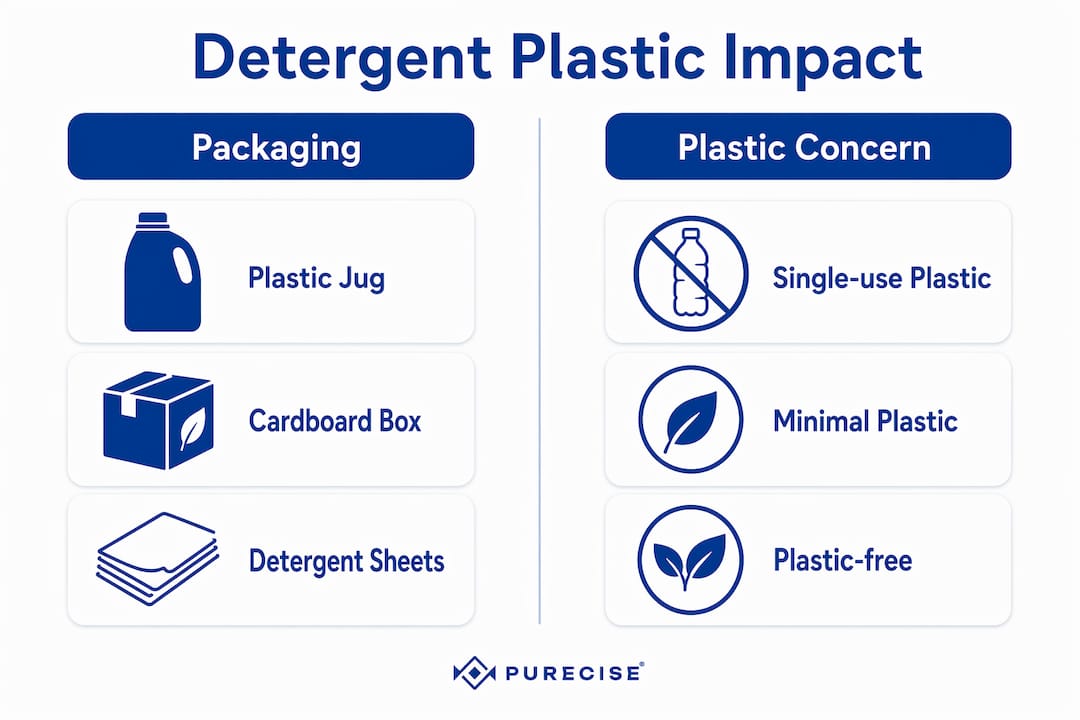
Pods deserve special attention because their marketing often positions them as convenient and modern. The PVA film that holds each pod together is labeled water-soluble, but research shows 75% of it survives municipal wastewater treatment. That makes pods a hidden source of microplastic pollution, not a solution to it.
Powder detergent in recyclable cardboard is the most plastic-conscious traditional option. It contains fewer synthetic additives and avoids plastic packaging entirely. Detergent sheets go one step further by combining zero plastic packaging with a pre-measured dose format. You can read more about how these packaging alternatives compare in terms of materials and environmental impact.
Pro Tip: When switching from liquid detergent, start with powder in a cardboard box before committing to sheets. The transition is easier, and you will immediately stop adding plastic jugs to your recycling bin or landfill.
How do you reduce microplastic fiber pollution from washing?
Every wash cycle with synthetic fabrics, including polyester, nylon, and acrylic, releases microplastic fibers into wastewater. Most wastewater treatment plants cannot capture them all, so they reach rivers, lakes, and oceans. The good news is that washing technique has a measurable effect on how many fibers shed.
Here are the most effective changes to make, ranked by impact:
- Wash in cold water. Cold water reduces fiber shedding by about 30% compared to hot water. Hot water weakens fiber bonds and accelerates breakdown.
- Use a front-loading machine. Front-loaders shed about 35% fewer fibers than top-loaders because they tumble clothes gently rather than agitating them with a central spindle.
- Fill the drum completely. A full drum means clothes move as a single mass rather than individual items bouncing against each other. Filling the drum fully significantly lowers friction and fiber loss.
- Choose a shorter, gentle cycle. Longer cycles with high agitation increase mechanical stress on fibers. A quick wash on a delicate setting does the job for lightly worn clothes.
- Set a medium spin speed. High spin speeds increase mechanical stress on synthetic fibers and accelerate microplastic release. Medium speed removes enough water without damaging fibers.
- Air dry instead of tumble drying. Dryers are a secondary source of microplastics released into indoor air. Air drying synthetic garments preserves fiber integrity and eliminates that source entirely.
Pro Tip: If you use powder detergent, dissolve it in a cup of water before adding it to the drum. Undissolved powder grains act like sandpaper against synthetic fibers, increasing shedding with every wash.
Combined, these washing changes can reduce fiber output by over 90% compared to a hot, high-agitation cycle with a half-empty top-loader. That is not a marginal improvement. It is a near-complete fix using settings already available on most machines.
What tools capture microplastics during the wash cycle?
Changing your wash settings reduces fiber shedding, but some fibers will always escape. Capture tools intercept those fibers before they reach the drain. Two main options exist: external drain filters and specialized wash bags.
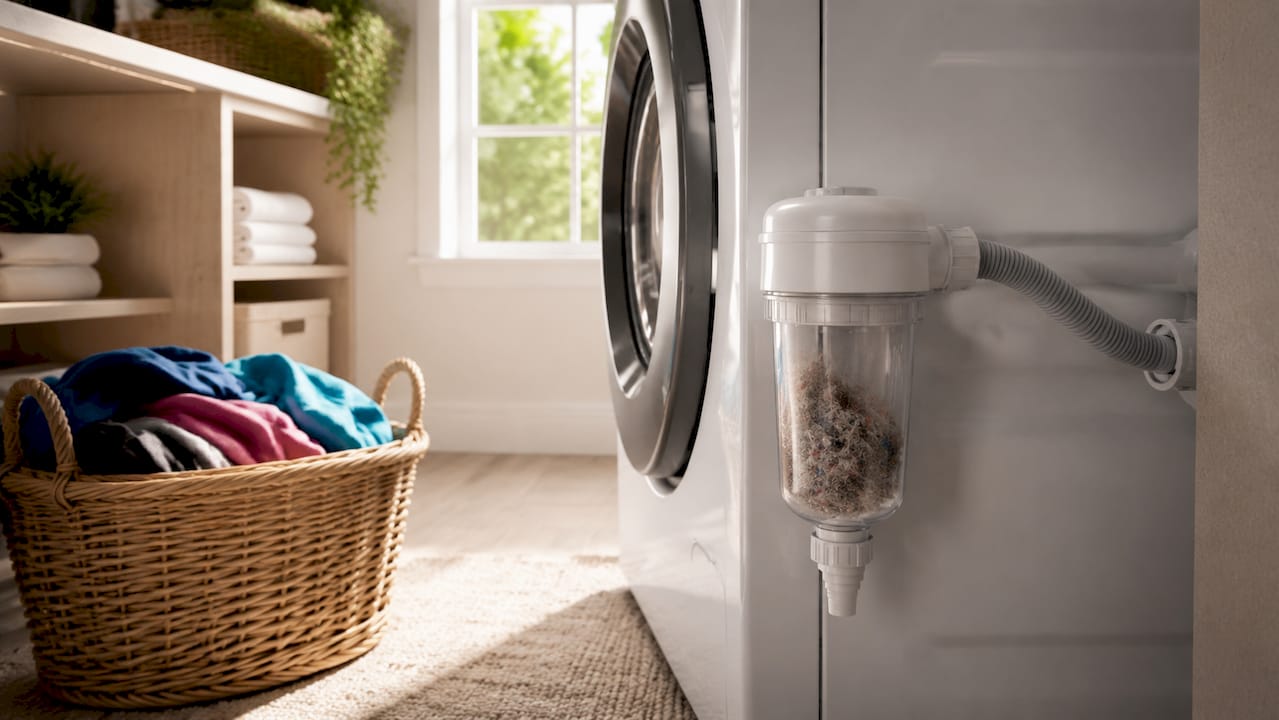
External drain filters
External filters mount directly onto the washing machine’s drain hose. They capture 70–90% of microfibers regardless of load size or fabric type. This makes them the most consistent and reliable option for households that wash synthetic fabrics regularly. Installation takes about 30 minutes and requires no plumbing expertise.
Wash bags
Specialized wash bags, such as the Guppyfriend bag, work by containing garments during the wash. They capture approximately 54% of released fibers when used correctly. That capture rate is meaningful, but it depends entirely on the user placing synthetic items inside the bag before every wash. Some microfiber capture bags also reduce mechanical stress on fabrics during the cycle, which lowers shedding beyond what the bag alone captures.
The practical comparison:
- External filters capture more fibers, work passively, and require no behavior change per wash.
- Wash bags cost less upfront but require consistent use and capture fewer fibers overall.
The best approach combines both. Use a wash bag for your most fiber-heavy synthetic loads and install an external filter as a permanent backstop.
Pro Tip: Empty captured fibers from your filter or bag into the trash, not the sink. Rinsing them down the drain defeats the entire purpose.
Choosing fabrics and routines that cut plastic waste at the source
The most effective way to reduce microplastic pollution from laundry is to generate less of it in the first place. Buying fewer synthetic garments is the single most powerful upstream strategy. Natural fibers like cotton, wool, linen, and hemp do not shed plastic microfibers at all.
Practical steps for a lower-plastic laundry routine:
- Wash less often. Spot cleaning and airing garments between wears reduces wash frequency without compromising hygiene. Most clothes worn for a few hours do not need a full machine wash.
- Skip the fabric softener. Conventional softeners leave a waxy residue on fibers that builds up over time and harms fabric integrity. White vinegar in the rinse cycle softens clothes naturally, neutralizes odors, and comes in glass bottles rather than plastic ones.
- Prioritize natural fibers when buying new. A wardrobe built around cotton, wool, and linen generates zero microplastic fiber pollution in the wash. Each synthetic item you replace with a natural alternative permanently removes a source of plastic pollution from your laundry routine.
- Adopt laundry minimalism. Washing only what genuinely needs washing, combining small loads into full ones, and extending the life of garments through proper care all reduce plastic fiber release over time. The laundry minimalism approach also cuts water and energy use alongside plastic waste.
The shift in mindset here matters. Sustainable laundry is not just about which products you buy. It is about how often you wash, what you wash, and how long your clothes last.
Key Takeaways
Switching to plastic-free detergent formats and adjusting wash settings together deliver the largest reduction in laundry-related plastic waste for most households.
| Point | Details |
|---|---|
| Detergent packaging is the first fix | Replace plastic jugs with powder in cardboard or detergent sheets to eliminate packaging waste immediately. |
| Pods are not plastic-free | PVA film in pods survives wastewater treatment 75% of the time, adding hidden microplastic pollution. |
| Cold water and full drums cut fiber shedding | Washing in cold water and filling the drum reduces microplastic fiber release by measurable amounts. |
| External filters outperform wash bags | Drain-mounted filters capture 70–90% of fibers passively, versus 54% for wash bags used correctly. |
| Source reduction is the strongest strategy | Buying fewer synthetic garments and washing less often prevents plastic fiber pollution before it starts. |
What I’ve learned from making laundry genuinely plastic-free
The hardest part of reducing plastic waste in the laundry room is not finding alternatives. The alternatives exist and most of them work well. The hard part is unlearning the assumption that convenience and sustainability are opposites.
Liquid detergent in a plastic jug became the default because it is easy to grab off a shelf. Pods became popular because measuring felt like a chore. Neither format was designed with plastic waste in mind. They were designed for shelf appeal and repeat purchase. Once you see that, switching feels less like sacrifice and more like a correction.
The change that surprised me most was how little difference I noticed after switching to detergent sheets. The clothes came out clean. The stains came out. The process took the same amount of time. What changed was the absence of a plastic jug in the recycling bin every few weeks. That absence adds up fast.
The microplastic fiber issue is trickier because it requires thinking about clothing purchases, not just laundry products. Buying a polyester fleece means committing to hundreds of thousands of fiber releases per wash for the life of that garment. That is a long-term plastic decision disguised as a clothing decision. Choosing wool or cotton instead is not a laundry tip. It is a purchasing decision with laundry consequences.
Start with one change. Swap the detergent jug. Then adjust your wash temperature. Then look at your wardrobe. Each step compounds.
— Purecise
Purecise detergent sheets: plastic-free laundry made simple
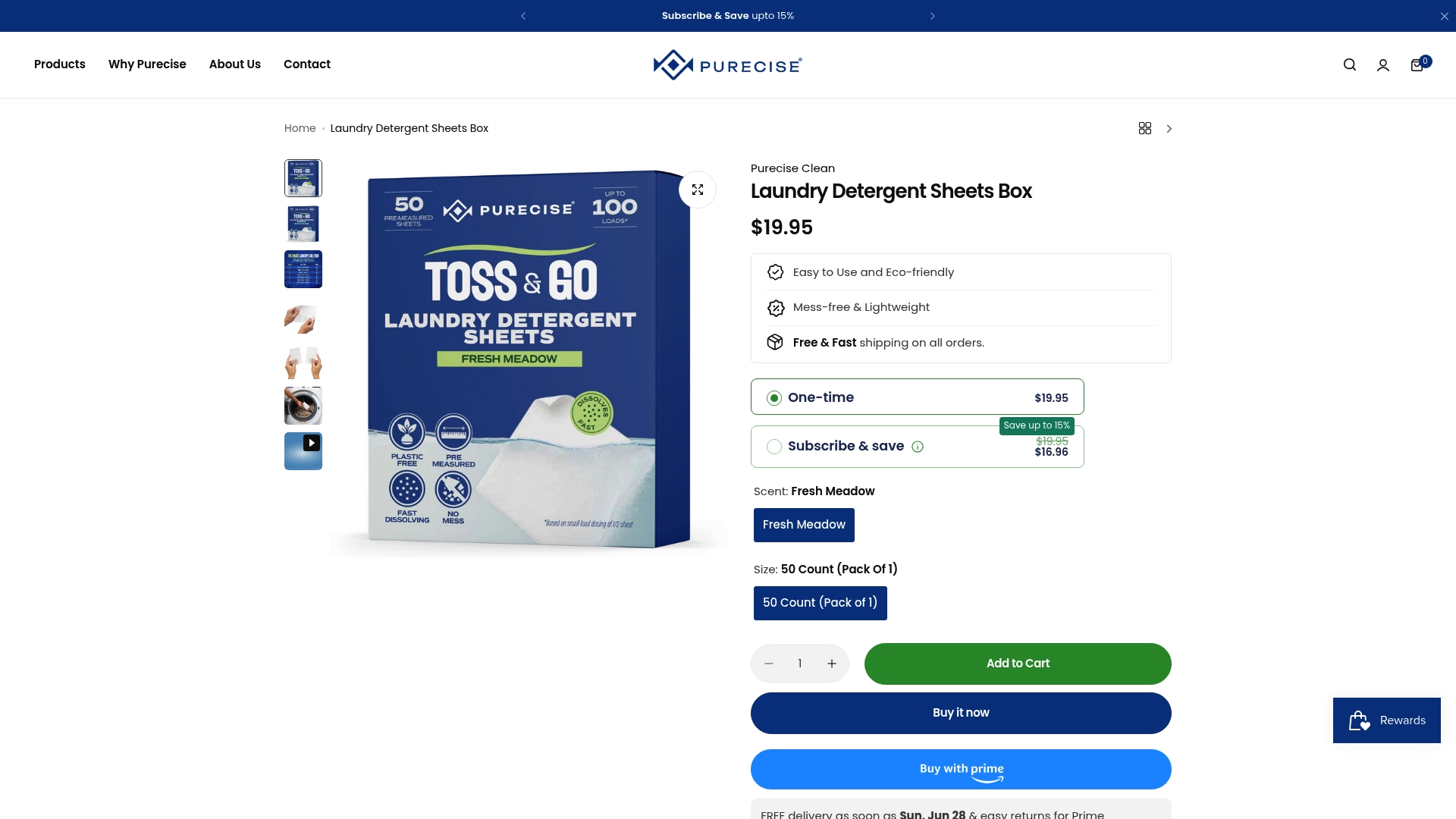
Purecise Toss & Go laundry detergent sheets remove plastic packaging from your laundry routine entirely. Each sheet is pre-dosed, dissolves completely in any wash temperature, and comes in a recyclable paper envelope with no plastic in sight. The formula is plant-based, free from harsh chemicals, and hypoallergenic, making it safe for families with sensitive skin. A full month’s supply fits in your pocket, which means no more bulky jugs under the sink. Purecise backs every order with a 100% money-back guarantee. You can pick up detergent sheets in envelopes or grab a bulk box for ongoing savings.
FAQ
How many plastic detergent bottles are thrown away each year?
The U.S. discards up to 900 million plastic detergent jugs annually, with roughly 90% going to landfills rather than recycling facilities.
Are laundry pods actually eco-friendly?
No. The PVA film in pods is labeled water-soluble, but 75% of it survives wastewater treatment and contributes to microplastic pollution in waterways.
What is the most effective way to reduce microplastic fiber shedding?
Washing in cold water, using a front-loading machine, and filling the drum completely together reduce fiber shedding significantly. Combined washing changes can cut fiber output by over 90%.
Do microfiber wash bags actually work?
Wash bags like the Guppyfriend capture approximately 54% of released fibers when used correctly. External drain filters are more consistent, capturing 70–90% of fibers regardless of load size.
What natural fabric softener can replace plastic-packaged softeners?
White vinegar added to the rinse cycle softens clothes naturally, neutralizes odors, and avoids the plastic packaging and synthetic residue that conventional fabric softeners leave behind.
Recommended
Benefits of Laundry Detergent Sheets for Eco Shoppers
Benefits of Plant-Based Laundry Cleaners for Families
Related Posts

Remove Lipstick Stains: The First 15 Minutes, Plus Detergent Sheets

How Often to Wash Towels: Bath Weekly, Hand Towels Every Few Days

Detergent Allergy Rash: Test a Low Residue Wash Without Fragrance

Save Clothes From Mud Stains in 1–2 Hours With Premeasured Sheets

Fabric First Sweat Stain Fixes: Measured DIY Recipes and Sheets

Whiten White Clothes, No Chlorine: 4–8 Hour Soak, Premeasured Sheets

Remove Blood Stains from Clothes: Cold Water, Enzyme Soak, No Dryer


