

Why Laundry Detergent Child Poisoning Happens: A Parent's Guide
Laundry detergent poisoning in children happens because pods pack a highly concentrated, water-soluble liquid into a thin film that dissolves almost instantly when a child mouths or bites it, releasing a toxic dose before you can react. If your child has been exposed right now, call Poison Help at 1-800-222-1222 immediately. Call 911 if your child is having trouble breathing, is unresponsive, or is having seizures.
If your child was exposed, do this first:
- Call Poison Help: 1-800-222-1222 (available 24/7, free, confidential)
- Eye exposure: Flush with clean water for at least 15 minutes
- Skin exposure: Remove contaminated clothing and rinse the skin thoroughly with water
- Do NOT induce vomiting — it can cause additional chemical injury to the throat and airway
- Do NOT give milk, water, or any “neutralizing” agent unless Poison Help instructs you to
- Call 911 if breathing is labored, the child is drowsy or unresponsive, or vomiting is uncontrollable
America’s Poison Centers reported 1,423 exposures to liquid laundry detergent packets among children five and younger in just January and February 2024 alone. The sections below explain the mechanisms, symptoms, first-aid steps, and prevention strategies in detail.
Table of Contents
- What makes laundry pods so much more dangerous than regular detergent?
- How exposure causes harm: ingestion, aspiration, and eye contact
- What symptoms look like — and when they get serious
- Exactly what to do after exposure: first aid and when to go to the ER
- Practical prevention steps parents can take at home
- How common are these poisonings, and what has changed?
- What clinicians and poison specialists say about the evidence
- Key Takeaways
- A note from Purecise on why this matters to us
- Purecise detergent sheets: a safer format for families with young children
- Authoritative references and where to learn more
What makes laundry pods so much more dangerous than regular detergent?
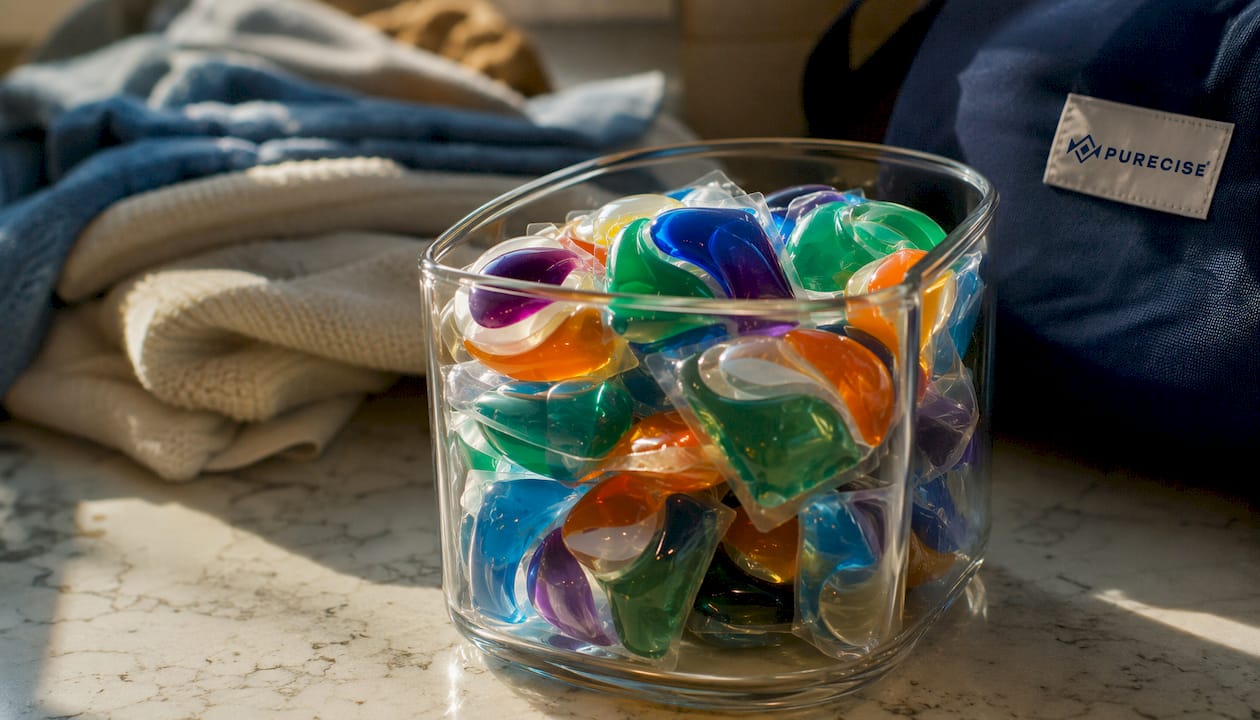
A laundry detergent pod, also called a single-load packet or capsule, is a pre-measured dose of concentrated liquid detergent sealed inside a water-soluble polyvinyl alcohol (PVA) film. That film is the core of the problem. It dissolves on contact with moisture, including saliva, which means a toddler who puts a pod in their mouth gets the full liquid payload within seconds.
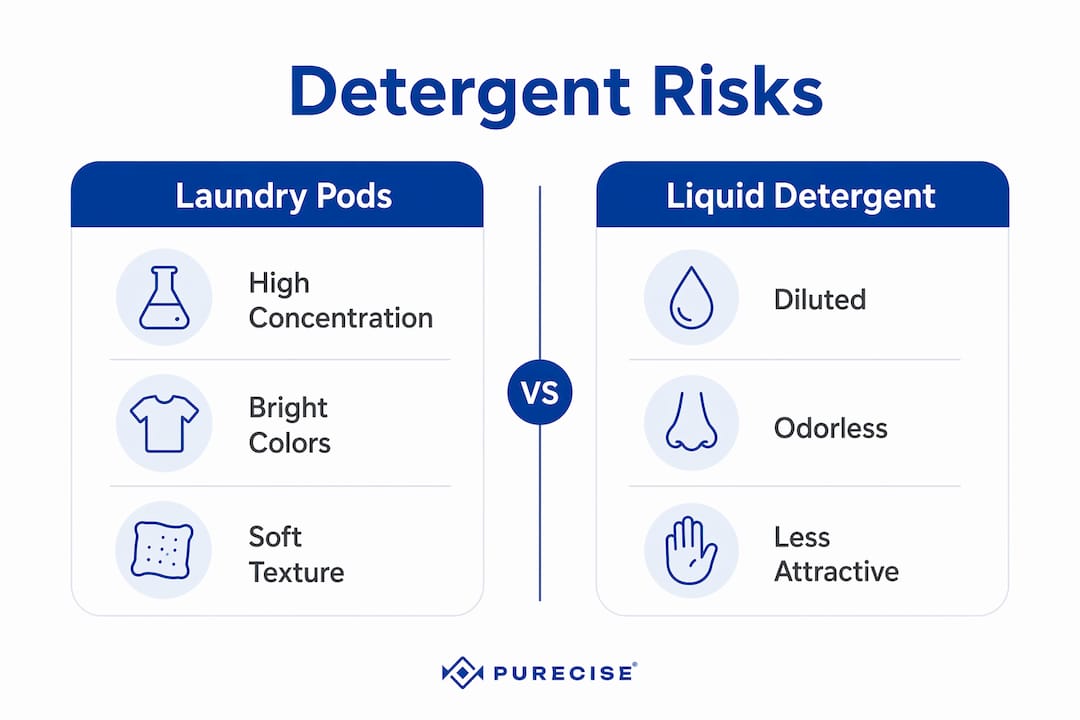
Traditional liquid detergent is diluted and requires a child to drink a significant quantity to cause serious harm. Pods are a different category entirely. Even a small amount of the concentrated liquid can cause serious breathing problems, stomach injury, eye damage, coma, or death. The concentration difference is not marginal — it is the reason pediatric toxicologists treat pod exposures as a distinct, higher-severity event.
The visual design compounds the risk. Pods are brightly colored, soft, squishy, and roughly the size of a piece of candy. To a toddler, they look and feel like something meant to be played with or eaten. That combination of attractive appearance and instant-release chemistry is what drives the injury pattern.
| Feature | Laundry Pods | Liquid Detergent (Bottle) | Detergent Sheets |
|---|---|---|---|
| Concentration | Very high | Moderate | Low to moderate |
| Burst/release risk | High (film dissolves instantly) | Low (requires pouring) | None |
| Attractiveness to children | High (colorful, squishy) | Low | Low |
| Packaging hazard | Child-resistant cap, but film is fragile | Child-resistant cap | Flat box, no liquid |
| Accidental dose | Full load in one bite | Partial, gradual | Pre-dosed, no liquid |
How exposure causes harm: ingestion, aspiration, and eye contact
The injury from a pod exposure is not simply “swallowing soap.” There are four distinct routes, each with its own mechanism.
Ingestion and gastrointestinal injury: When the concentrated surfactants and alkaline compounds hit the mouth, throat, and esophagus, they cause direct caustic chemical injury to the mucosal lining. This can produce burns, swelling, and in severe cases, esophageal perforation. Clinical literature documents severe outcomes including airway compromise and esophageal perforation in pediatric cases after concentrated capsule exposure.
Aspiration and lung injury: Vomiting after ingestion is common, and if the child inhales any of the concentrated liquid, it can cause chemical pneumonitis, a form of lung inflammation that compromises breathing rapidly. This is why inducing vomiting is dangerous: it creates a second opportunity for aspiration.
Ocular injury: The alkalinity and high surfactant concentration in pods can cause conjunctivitis, corneal abrasions, and keratitis on eye contact. Peer-reviewed data show that ocular exposure causes conjunctivitis in a significant proportion of affected children, with keratitis also reported. Delayed irrigation is associated with worse outcomes.
Dermal exposure: Skin contact typically causes irritation, rash, or chemical burns, particularly in infants with thinner, more permeable skin. Alkaline substances in detergents activate protease enzymes that break down skin proteins.
Children are uniquely vulnerable beyond just their small size. Faster metabolic rates and smaller physiologic reserve mean a child’s body processes and reacts to toxic chemicals more rapidly than an adult’s, which is why respiratory and central nervous system effects can appear within minutes.
Pro Tip: Handling pods with damp hands can weaken the film and leave residue on surfaces a child later touches or mouths. Always handle pods with dry hands and wash immediately after.
What symptoms look like — and when they get serious
Symptoms after pod exposure can appear within minutes and progress quickly. Knowing what to watch for helps you decide whether to call Poison Help or go straight to the emergency room.
Early symptoms (within minutes):
- Drooling or foaming at the mouth
- Coughing, gagging, or choking
- Vomiting (often profuse)
- Eye redness, tearing, or pain after ocular contact
- Skin redness or rash at the contact site
Later or severe signs (minutes to hours):
- Difficulty breathing or rapid, labored breathing
- Drowsiness or unusual sleepiness
- Altered consciousness or unresponsiveness
- Persistent or uncontrollable vomiting
- Wheezing or stridor (a high-pitched breathing sound)
Red-flag signs that require calling 911 immediately: respiratory distress or gasping, loss of consciousness, seizures, inability to swallow or handle secretions, or any sign of rapid deterioration after initial exposure. These indicate potential airway compromise or systemic toxicity and cannot wait for a Poison Help callback.
A CDC case report from 2012 described a 20-month-old who appeared well immediately after ingesting pod contents, then developed profuse vomiting, respiratory distress, unresponsiveness, and seizure-like activity within 10 minutes. He required intubation and was found to have a lung infiltrate on chest X-ray. That rapid progression from “seems fine” to intubation in under 10 minutes is the pattern that makes pod exposures so dangerous.
Symptom differences by route matter too. Eye exposures tend to cause localized pain and redness without systemic effects unless the child also ingested. Ingestion and aspiration carry the highest risk of systemic and respiratory complications. Skin-only contact usually causes local irritation without the severe systemic picture.
Exactly what to do after exposure: first aid and when to go to the ER
Speed matters. Here is the sequence to follow:
- Stay calm and assess the situation. Note what product was involved, how much, and the route of exposure (mouth, eyes, skin).
- Call Poison Help at 1-800-222-1222. Do this even if symptoms seem mild. Specialists are available 24/7 and will guide you in real time. Mild initial symptoms do not rule out serious progression.
- Eye exposure: Begin flushing immediately with clean, lukewarm water. Flush for at least 15 minutes continuously, then seek medical evaluation. Do not rub the eyes.
- Skin exposure: Remove any contaminated clothing and rinse the affected area with water for several minutes.
- Do NOT induce vomiting. The concentrated alkaline liquid will cause additional caustic injury on the way back up.
- Do NOT give anything by mouth (milk, water, antacids) unless Poison Help specifically instructs you to.
- Go to the ER immediately if the child shows any breathing difficulty, persistent vomiting, drowsiness, unresponsiveness, or eye burns.
Go to the emergency room without delay if you see:
- Any breathing difficulty, wheezing, or stridor
- Uncontrollable vomiting
- Drowsiness, limpness, or unresponsiveness
- Seizures
- Significant eye pain or visible eye injury
In the emergency department, clinicians will assess and stabilize the airway first. Oxygen and ventilation support may be needed. For significant ingestions, endoscopy can evaluate esophageal injury. Activated charcoal is not used for alkaline detergent ingestion. Depending on severity, treatment may include IV steroids, antibiotics, intubation, or nasogastric feeding. Most children who receive prompt care recover fully.
Pro Tip: Save 1-800-222-1222 in your phone right now, before you need it. Also save it on a visible note near your laundry area and at any home your child visits regularly.
Practical prevention steps parents can take at home
The single most reliable prevention strategy is consistent, locked storage, because safety features on packaging reduce risk but do not eliminate it. Child-resistant caps slow a determined toddler; they do not stop one.
Daily storage rules:
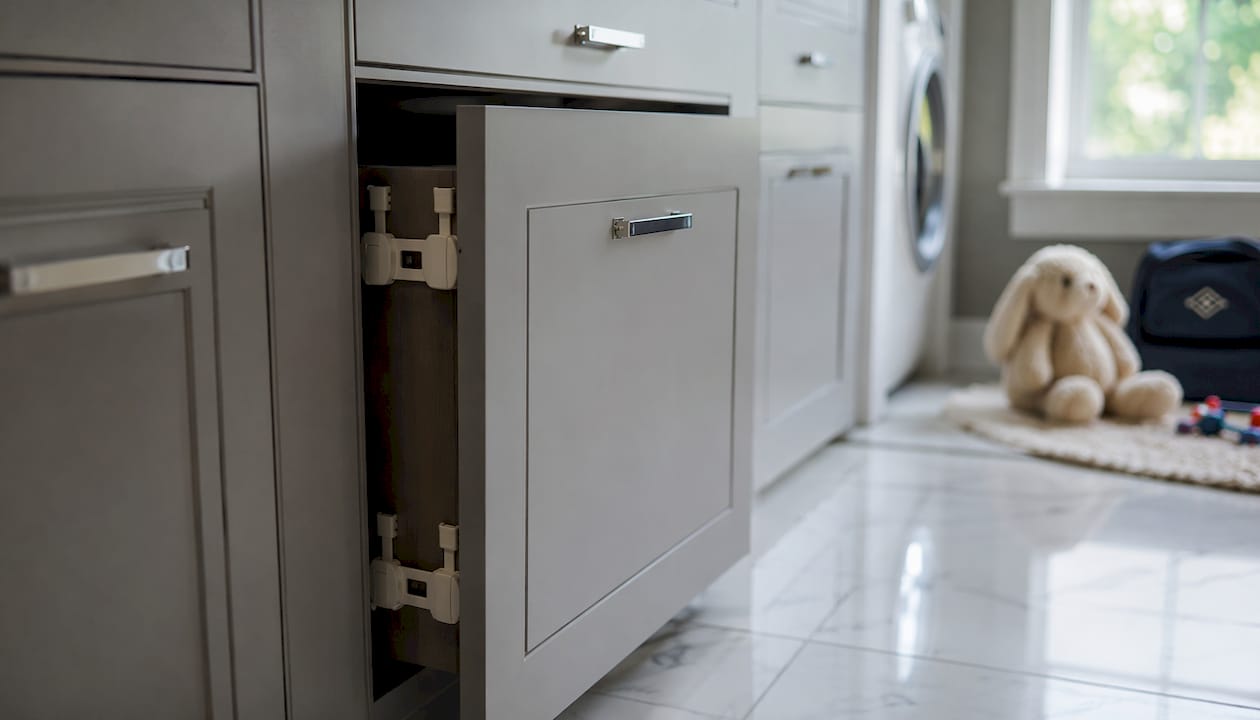
- Store pods in their original child-resistant container, sealed, in a locked cabinet at adult height
- Never leave pods on top of the washer or dryer, even briefly during an active load
- Never place pods in laundry baskets, on counters, or anywhere a child can reach in seconds
- Never transfer detergent into food or drink containers
- Childproof your cabinet doors with locks rated for toddlers, not just latches that older children can figure out
During laundry day:
- Take out only the pod you need immediately before loading the machine
- Return the container to its locked location before starting the wash cycle
- Never set a pod down and walk away, even for a moment
When visiting other homes or traveling:
- Most unintentional poisonings happen at home, but exposures spike when routines change, such as during holidays or visits to grandparents who may store pods differently. Ask ahead and check storage at any home your child visits.
- Bring your own safer detergent format when traveling so you are not dependent on whatever the host has available.
Consider switching product formats. Detergent sheets eliminate the water-soluble film and concentrated liquid payload entirely, removing the specific burst-and-release exposure route that makes pods so hazardous. Pre-dosed powder in sealed containers is another lower-risk option. When evaluating alternatives, look for hypoallergenic formulas, no harsh chemical solvents, and packaging that does not resemble food. Our clean laundry ingredient checklist walks through exactly which ingredients to avoid.
How common are these poisonings, and what has changed?
Laundry pods have appeared in the top 10 products involved in unintentional pediatric poisoning ED visits every year since 2013, according to CPSC data. Laundry packets continue to be a common cause of emergency department visits for children under five.
America’s Poison Centers recorded 1,423 exposures to liquid laundry detergent packets in children five and younger in just the first two months of 2024. That figure covers a single two-month window, which puts the annual scale in perspective.
The industry has responded. Since 2015, manufacturers have introduced child-resistant packaging, delayed-dissolving films, and bittering agents designed to make pods taste unpleasant. Those measures have helped, but they have not solved the problem. Pediatricians emphasize that the primary danger, the combination of high concentration and rapid dissolution, remains unchanged. A pod that a child bites through before the bittering agent registers still delivers a full toxic dose.
The American Academy of Pediatrics (AAP), the CPSC, and poison control centers continue to recommend that parents treat pods as a high-risk product requiring locked storage, regardless of child-resistant packaging claims.
What clinicians and poison specialists say about the evidence
The medical consensus on pod exposures is clear and consistent across sources. Here is what the evidence shows:
- Pod-exposed children were significantly more likely to experience vomiting, drowsiness, and coughing or choking compared with children exposed to non-pod laundry detergents, per CDC data from the initial surveillance period.
- 76% of children with laundry detergent capsule ingestion were symptomatic, compared with only 27% of children who ingested other laundry detergents, in a cross-sectional study of 578 children.
- Clinicians note that younger children’s faster metabolic rates and smaller physiologic reserve make them uniquely vulnerable to rapid-onset respiratory and central nervous system effects.
- The AAP and poison control specialists recommend calling Poison Help for any exposure, even when the child appears well initially, because symptom progression can be rapid and unpredictable.
- Early eye irrigation is specifically emphasized: delayed flushing is associated with worse outcomes including corneal burns.
- Activated charcoal is not appropriate for alkaline detergent ingestion and should not be given at home.
- Reviewing toxic chemicals in conventional detergents can help parents understand which specific compounds drive the injury pattern.
Evidence gaps remain. The exact biochemical mechanism behind the most severe pod injuries, including why some children develop rapid airway compromise while others have milder courses, is still not fully understood. Ongoing research and improved voluntary safety standards continue to evolve, but locked storage remains the most reliable control available to parents today.
Key Takeaways
Laundry detergent pod poisoning in children is a medical emergency driven by concentrated chemistry, instant-release packaging, and toddler curiosity — and locked storage plus Poison Help at 1-800-222-1222 are your two most important tools.
| Point | Details |
|---|---|
| Call Poison Help first | Dial 1-800-222-1222 for any exposure, even if symptoms seem mild at first. |
| Never induce vomiting | Concentrated alkaline detergent causes additional caustic injury on the way back up. |
| Flush eyes for 15 minutes | Immediate, prolonged irrigation reduces the risk of corneal burns and keratitis. |
| Lock pods away, always | Store in original child-resistant containers in a locked cabinet at adult height, never on the washer. |
| Purecise sheets remove the risk | Pre-dosed detergent sheets have no water-soluble film or liquid payload, eliminating the pod burst-and-release hazard. |
A note from Purecise on why this matters to us
As a brand built around safer, simpler laundry for families, we think about this issue a lot. The fear a parent feels when they find a chewed-open pod is real, and the medical outcomes described in this article are not rare edge cases. They happen in ordinary homes, during ordinary laundry days, in the seconds it takes to move a basket from one room to another.
We developed our detergent sheets specifically for families who want effective cleaning without the risks that come with liquid pods. There is no water-soluble film, no concentrated liquid payload, and no burst risk. A sheet left within a child’s reach is not a medical emergency. That is not a marketing claim; it is a straightforward difference in product design. We also recognize that switching formats is one layer of prevention, not a substitute for locked storage and knowing your Poison Help number. Both matter.
If you want to read more about what goes into safer laundry products, our plant-based laundry cleaners guide covers the family-safety angle in detail.
Purecise detergent sheets: a safer format for families with young children
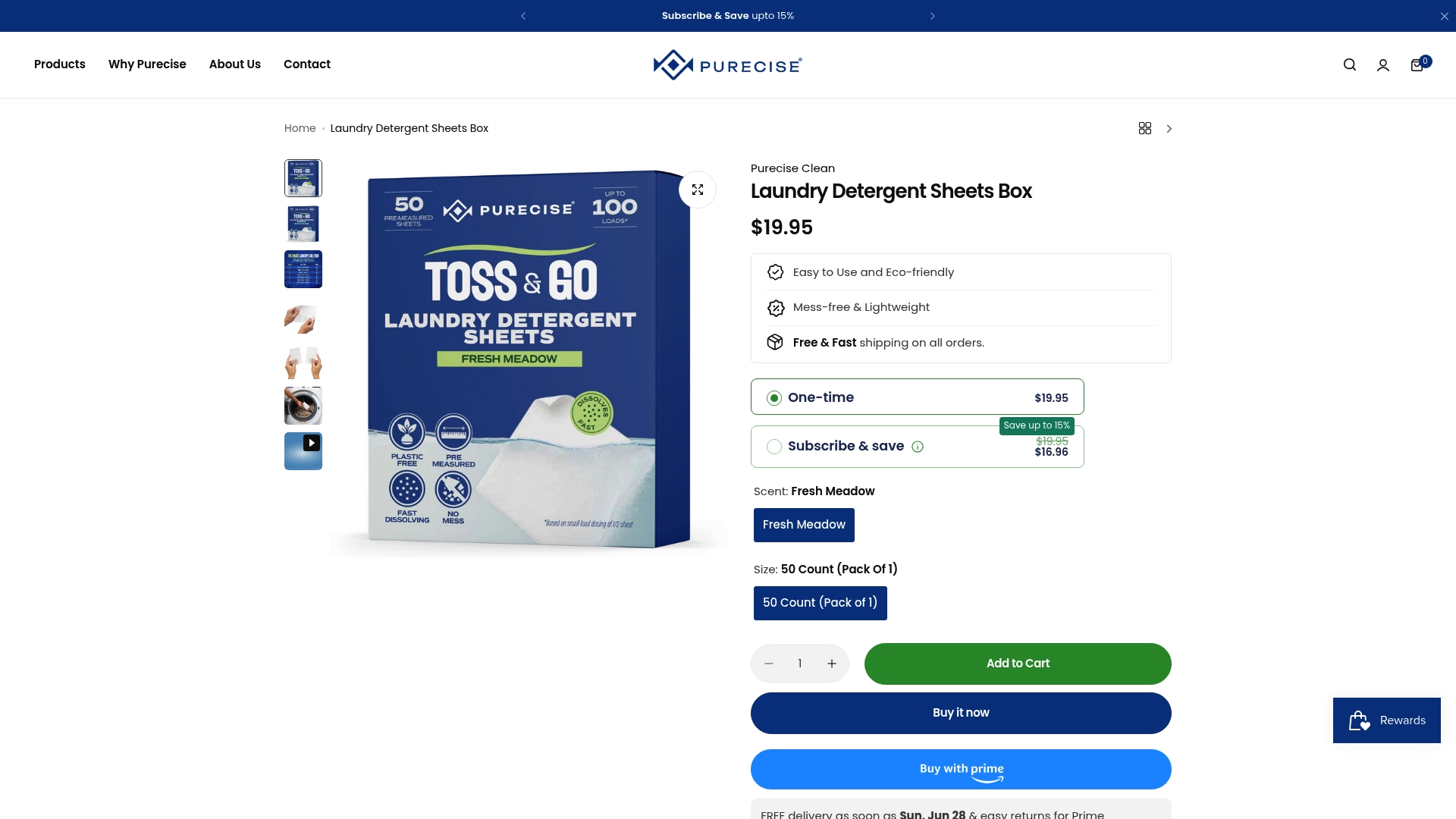
If the pod risk described in this article has you rethinking your laundry routine, Purecise Toss & Go detergent sheets offer a practical, evidence-aligned alternative. Unlike pods, sheets contain no water-soluble film and no concentrated liquid payload, which means the specific burst-and-release mechanism that drives pediatric poisoning simply does not exist.
Here is what makes the format different for families:
- No liquid, no burst risk. Each sheet is pre-dosed and dry, so there is nothing to leak, dissolve in a child’s mouth, or release a concentrated dose on contact.
- Hypoallergenic and plant-based. Free from harsh solvents and unnecessary chemicals, suitable for sensitive skin and children.
- Compact, recyclable packaging. A full month’s supply fits in a flat box, easy to store high and out of reach without a dedicated locked cabinet.
- Dissolves completely in any machine type and temperature, hot or cold.
You can explore the detergent sheets envelopes for travel-friendly packs, or pick up the detergent sheets box for your regular home supply. Purecise backs every order with a 100% money-back guarantee.
Disclosure: This article is published by Purecise. Product recommendations reflect the brand’s own offering.
Authoritative references and where to learn more
The claims in this article are grounded in the following primary and peer-reviewed sources:
- America’s Poison Centers / CAES Field Report — Laundry Room Safety: Practical storage guidance and 2024 exposure statistics for parents; useful for prevention and epidemiology.
- HealthyChildren.org — Laundry Room and Detergent Safety: AAP-backed guidance on pod hazards, first aid, and safer alternatives; the primary clinical reference for parents.
- HealthyChildren.org — Poison Prevention: Broader AAP guidance on storage, routine changes, and visiting-home safety.
- CDC MMWR — Health Hazards Associated with Laundry Detergent Pods (2012): The foundational surveillance report establishing that pod exposures cause more severe outcomes than non-pod detergent exposures; includes case reports and symptom data.
- PMC — Laundry Detergent Capsules and Pediatric Poisoning: Peer-reviewed clinical review covering ingestion, ocular, and dermal mechanisms, symptom rates, and treatment approaches.
- CPSC — Pediatric Poisoning Fatalities and Injuries Report: Official federal data on ED visits for laundry packet poisoning in children under five, with year-by-year trends since 2012.
- Stanford Medicine Children’s Health — Poisoning in Children: Clinical explanation of why children are more physiologically vulnerable to toxic exposures than adults.
- Poison Control — Liquid Laundry Detergent: Poison.org guidance comparing pod and non-pod liquid detergent risks; useful for first-aid decision-making.
Emergency contacts:
- Poison Help: 1-800-222-1222 (24/7, free, confidential)
- Emergency services: 911 for breathing difficulty, unresponsiveness, or seizures
This article provides general safety information for educational purposes and is not a substitute for professional medical advice. For any exposure, contact Poison Help or your child’s healthcare provider to confirm the appropriate response for your specific situation.
Recommended
Why Pre-Portioned Detergent Works for Deployment Bags
Lightweight Detergent Alternatives for Carry-On Travel
Related Posts

140°F Heat or 3% Peroxide: Sanitize Laundry Without Bleach

For Homeowners: Wash Pillows at Home Without Overdosing Detergent

Store Detergent Sheets Right for Travel, Small Spaces, and Eco Shoppers

Stop Detergent Residue on Clothes: Cut Dosing 25–50% or Use Premeasured Sheets

5–15 Minute Fix for Baby Poop on Clothes With Enzymes and Purecise

Travel Friendly Way to Remove Deodorant Stains Using Detergent Sheets

Cut Detergent 50–75%: Portable Washer Detergent for Travel & RVs


