

Cut Detergent 50–75%: Portable Washer Detergent for Travel & RVs
Use an HE or low-suds concentrated detergent, or a pre-dosed detergent sheet, and cut your usual dose substantially compared to what a full-size washer label recommends. Portable washers use far less water, so anything formulated for a standard machine will oversuds fast. Add it while the drum fills, never onto dry clothes, and skip single-use pods entirely.
TL;DR:
- Using a low-suds, concentrated detergent sheet is ideal, as it prevents overflow in small water volume portable washers and simplifies dosing.
- Most manufacturers recommend reducing the usual detergent amount by 50 to 75 percent, especially for small loads and hard water conditions.
- Detergent pods are not suitable because their concentrated dose often causes excess suds, residue, and drain issues in portable machines.
- Cold-water formulas are beneficial for portability and energy savings, with a focus on hypoallergenic options for sensitive skin.
- Overdosing and neglecting maintenance are the leading causes of wear and malfunction, which can be mitigated by using designated measuring tools and regular cleaning.
Table of Contents
- What Detergent Should You Use in a Portable Washer?
- How Much Detergent Should You Actually Use?
- Do Laundry Pods Work in Portable Washers?
- Choosing Detergent for Travel and RV Life
- How Purecise Sheets Solve the Portable Washer Problem
- The Mistakes That Wear Out a Portable Washer Fastest
- Get Pre-Dosed Sheets Built for Small-Load Washing
- Sources
- FAQ
What Detergent Should You Use in a Portable Washer?
The right detergent for a portable washer comes down to one thing: suds control. These machines run on a fraction of the water a standard washer uses, so any detergent that foams heavily will overflow the drum, leave residue on fabric, or trip an error sensor mid-cycle. That’s why HE detergents generate fewer suds and suit machines that use less water, making them the safer default over standard formulas built for large-capacity machines.
Liquid, powder, pods, and sheets each behave differently once they hit that small volume of water.
- Liquid HE detergent dissolves fastest and gives you the most control over dose size, which matters when you’re working with a cap that holds far more than you’ll ever use in one load.
- Powder detergent can leave undissolved granules behind, especially in cold water or short cycles, and those granules show up as white streaks on dark fabric.
- Detergent pods pack a full-size dose into one sealed unit with no way to split it, which is precisely the wrong shape for a machine that needs a quarter of that amount.
- Detergent sheets arrive pre-dosed at a scale built for small loads, so there’s no measuring cup, no guessing, and no risk of dumping in triple what the machine needs.
Fabric type matters as much as format. Baby clothes, delicates, and anything worn against sensitive skin do better with a fragrance-free or hypoallergenic formula, since portable washers rinse less aggressively than full-size drums and any leftover fragrance additive or dye tends to linger in the fabric. If you or your kids deal with eczema or contact irritation, a plant-based, dye-free option is worth the switch regardless of which machine you own.
Concentrated cold-water formulas deserve a mention here too, since a lot of portable washer use happens where hot water isn’t available. A detergent built to activate in cold water saves you a step and protects fabric that would otherwise shrink or fade under repeated warm washes.
How Much Detergent Should You Actually Use?
Manufacturer guidance is consistent on this point: reduce your normal dose substantially. Haier’s support documentation recommends cutting the standard detergent amount by roughly 75% for portable washers, and other appliance makers publish similar ranges, generally landing somewhere between a 50% and 75% reduction depending on load size and water hardness.
In practice, that means:
- Check your machine’s stated capacity. Most portable and folding units hold between 8 and 16 liters, far below a standard washer’s 15 to 20 gallon fill.
- Start small. For liquid HE detergent, that’s often just one to two teaspoons, not the tablespoon-plus a bottle cap suggests for full loads.
- For sheets, use a fraction of one sheet for very small loads (a few items, socks, underwear) and a full sheet for a standard portable load of 4 to 6 pounds of clothing. If you’re unsure how many sheets a given load actually needs, this detergent sheet dosing guide breaks it down by load size.
- Load the machine first, then close the drain valve.
- Start the fill cycle, and add the detergent (or drop in the sheet) while water is actively running into the drum. Dissolving detergent into filling water prevents concentrated streaks or spotting that happen when detergent touches dry fabric directly.
- Let the cycle run, then check the rinse water before draining. Cloudy or bubbly rinse water means you used too much.
Heavy soils and grease stains need pre-treatment before the load starts, since portable washers don’t agitate long or hard enough to lift set-in stains on their own. A small amount of stain remover worked into the fabric for a few minutes beats adding extra detergent, which only raises your suds risk without improving the clean.
If you do oversuds a load, don’t panic and don’t add more water hoping to dilute it. Drain the machine completely, refill with clean water, and run one additional rinse cycle with no detergent at all. Repeat once more if suds are still visible.
Pro Tip: Keep a small dosing cup dedicated to your portable washer and mark a line at your reduced-dose amount with a permanent marker. Eyeballing “a little less than usual” is how most oversudsing problems start.
Do Laundry Pods Work in Portable Washers?
Pods generally do not work well in portable washers, and this is the single most common mistake first-time owners make. Single-use detergent packages are typically not recommended for portable washers because they’re built for the water-to-load ratio of full-size machines, which means the concentrated dose inside one pod is often two to four times what your portable machine’s water volume can actually rinse clean.
Here’s what tends to go wrong when a pod goes into a small-drum machine:
- Excess suds that overflow the drum or trigger an automatic stop.
- Residue left on fabric because the rinse cycle can’t fully flush out that much concentrated soap.
- Drain clogging as thick suds slow down the pump, especially on machines with narrow drain hoses.
- Sensor errors on machines with load-sensing or suds-detection features, which read heavy foam as an overload condition.
- Fabric spotting if the pod’s outer film contacts dry clothing before it fully dissolves, since the concentrated liquid inside burns through fast.
If a pod is genuinely all you have on hand, cut it open and dissolve a small fraction, maybe a quarter of the contents, into a cup of water first, then add that diluted mixture during the fill. It’s a workaround, not a recommendation, and it still risks leaving film residue that a properly dosed liquid or sheet wouldn’t. Run a second rinse cycle afterward as a safety step. A far more reliable fix is simply switching to a format built for small-volume washing in the first place.
Choosing Detergent for Travel and RV Life
Packing for a trip changes the math. Weight and space matter as much as wash performance, so compact, pre-dosed sheets remove the need to pack a bottle, a measuring cup, and a backup bottle for the return trip. That single swap frees up real space in a bag that’s already carrying too much.
A few things to plan around before you hit the road:
- Water hardness varies by region, and hard water reduces how well any detergent lathers and rinses. If you’re camping somewhere with notoriously hard water, bump your dose up slightly from the baseline reduced amount, rather than assuming one dose fits every stop.
- Rinse cycles on the road are often shorter or run with less water pressure than at home, so lower-suds formulas matter even more when you’re hooked up to a campsite spigot instead of full residential plumbing.
- Pack a small bar of handwashing soap and a compact wash bag as backup for days you can’t run the machine at all, whether that’s a dry campsite or a mechanical hiccup. A travel wash bag works well for this exact situation.
- Bring a few spare sheets or a small backup dose separate from your main supply, in case your main stash gets wet or lost.
- Never dump leftover liquid detergent on the ground at a campsite or dump station. Pour it down a designated gray water disposal point, and choose a biodegradable formula so what does end up in the ground breaks down cleanly.
For a full breakdown of what else belongs in a portable laundry kit, this guide to portable apartment laundry supplies covers the gear side beyond detergent alone.
Pro Tip: Store sheets in a small zip-top bag or their original envelope, not loose in a toiletry kit. Humidity on the road can make sheets stick together if they’re left exposed.
How Purecise Sheets Solve the Portable Washer Problem
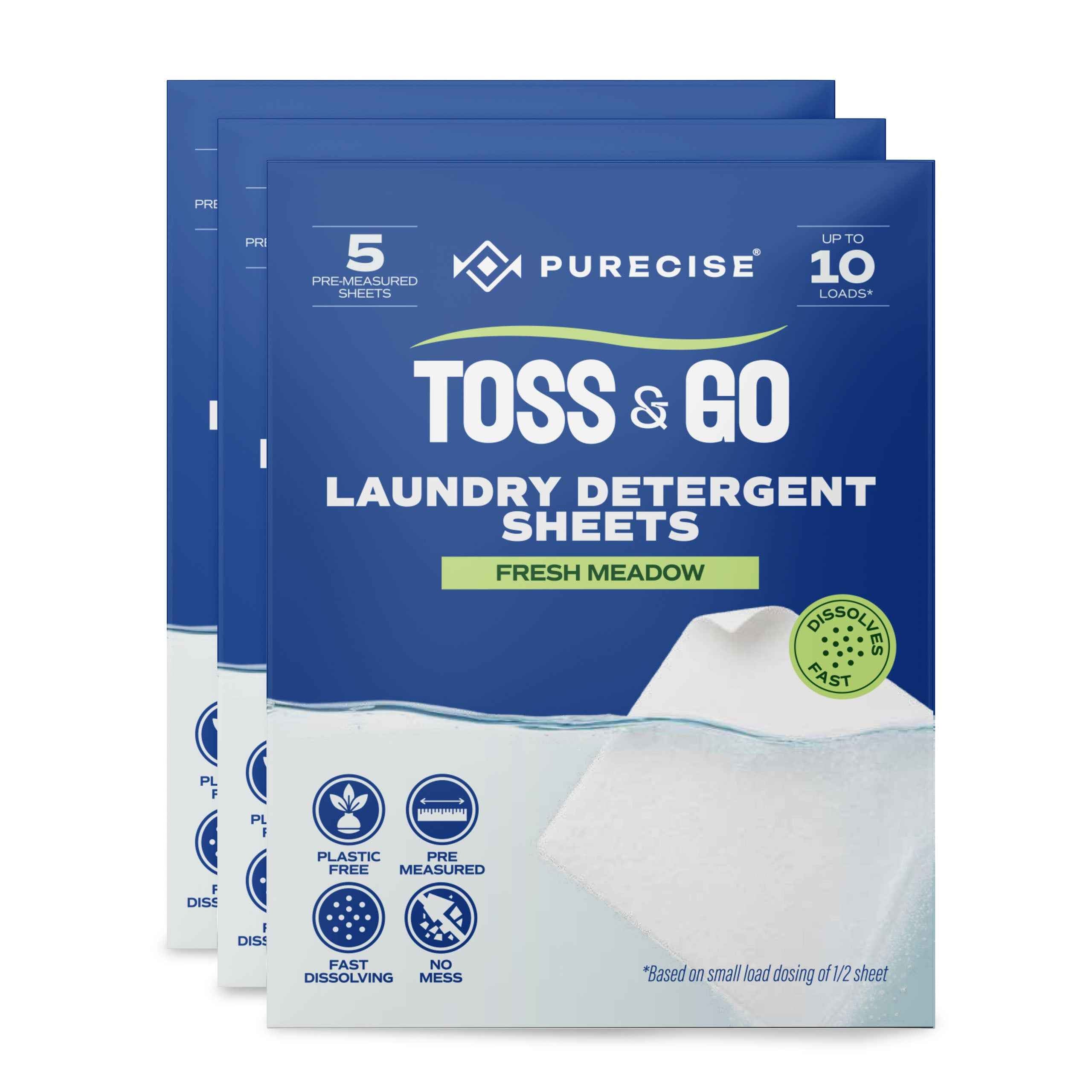
Every rule covered so far points to the same conclusion: portable washers need a pre-measured, low-suds, fast-dissolving detergent, which is exactly what a sheet format is built to deliver. Toss & Go sheets are designed around that constraint rather than around a full-size machine’s water volume.
- Pre-dosed by design, so there’s no dosing cup, no eyeballing a “quarter dose,” and no risk of the oversudsing problems pods cause in small-drum machines.
- Dissolves completely in any wash type, including cold-water cycles common on portable and RV setups where hot water access is limited.
- Hypoallergenic formula free from harsh chemicals, a practical fit for the baby clothes and sensitive-skin loads that often end up in a portable washer at home or on the road.
- Compact storage that fits a full month’s supply in a space smaller than one detergent bottle, which matters directly for anyone packing a van, RV, or a dorm room shelf.
For a typical portable load of 4 to 6 pounds, one sheet is usually enough. Very small loads, a few items of underwear or socks, can often get by with half a sheet torn off and saved for the next wash. Purecise’s approach to eliminating overdosing in small machines applies the same logic shared-laundry-room users rely on, just scaled down further for a portable drum.
The Mistakes That Wear Out a Portable Washer Fastest
Most portable washer problems trace back to the same handful of habits, and none of them are hard to fix once you know what to watch for.
Overdosing is the big one. Adding “a little extra for a really dirty load” is the instinct that causes most suds overflow calls, and it’s almost always unnecessary since a lower dose combined with a slightly longer soak cleans just as well. Dropping undiluted liquid or a whole pod straight onto dry clothes is the second habit worth breaking. It looks harmless, but it’s how spotting and fabric discoloration happen.
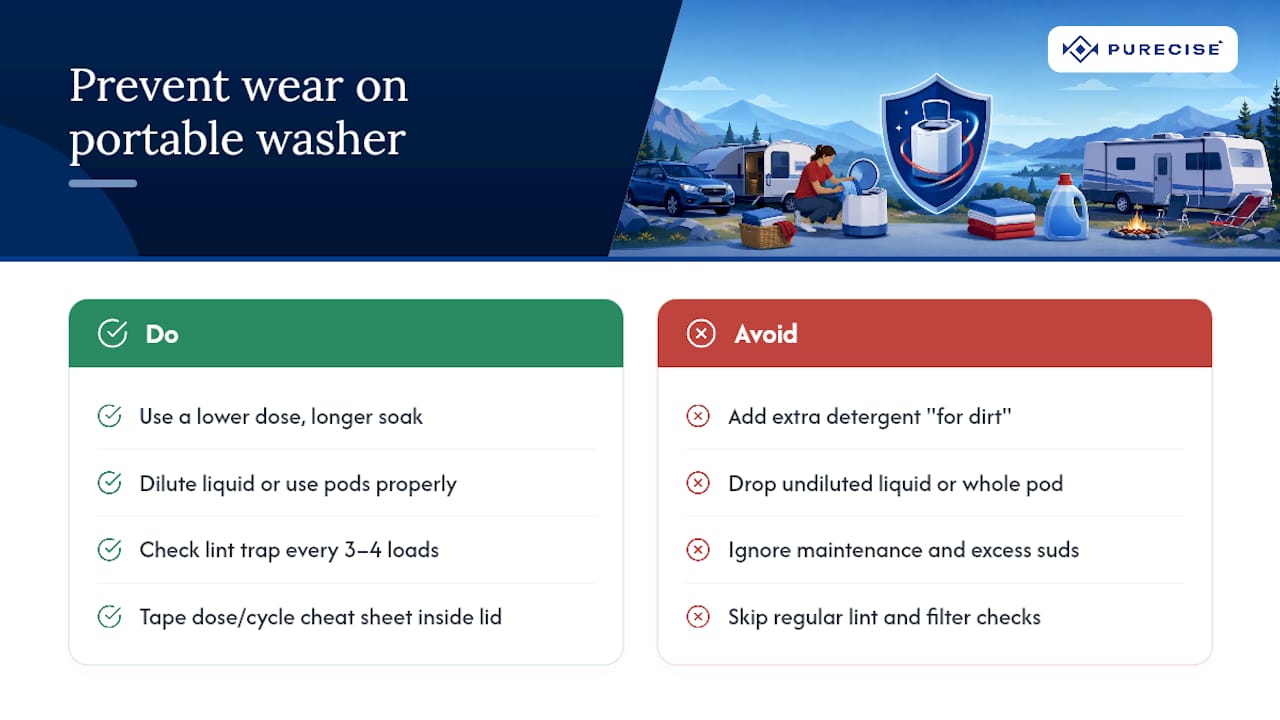
Maintenance gets ignored more than it should. Manufacturer guidance repeatedly flags excess suds and residue as the leading cause of leaks and sensor malfunctions, and a lot of that buildup is preventable with a five-minute lint trap check after every third or fourth load. Small folding machines especially need this, since their drain hoses and filters are narrower than what a full-size washer uses.
The simplest fix of all is a cheat sheet. Write your machine’s exact dose, sheet count, and cycle length on a sticky note and tape it inside the lid. It sounds basic, but it’s the single habit that prevents almost every mistake above.
— Purecise
Get Pre-Dosed Sheets Built for Small-Load Washing
Toss & Go sheets skip the measuring cup entirely, which matters most exactly where dosing mistakes happen: in a portable washer with a fraction of the water a full-size machine uses.
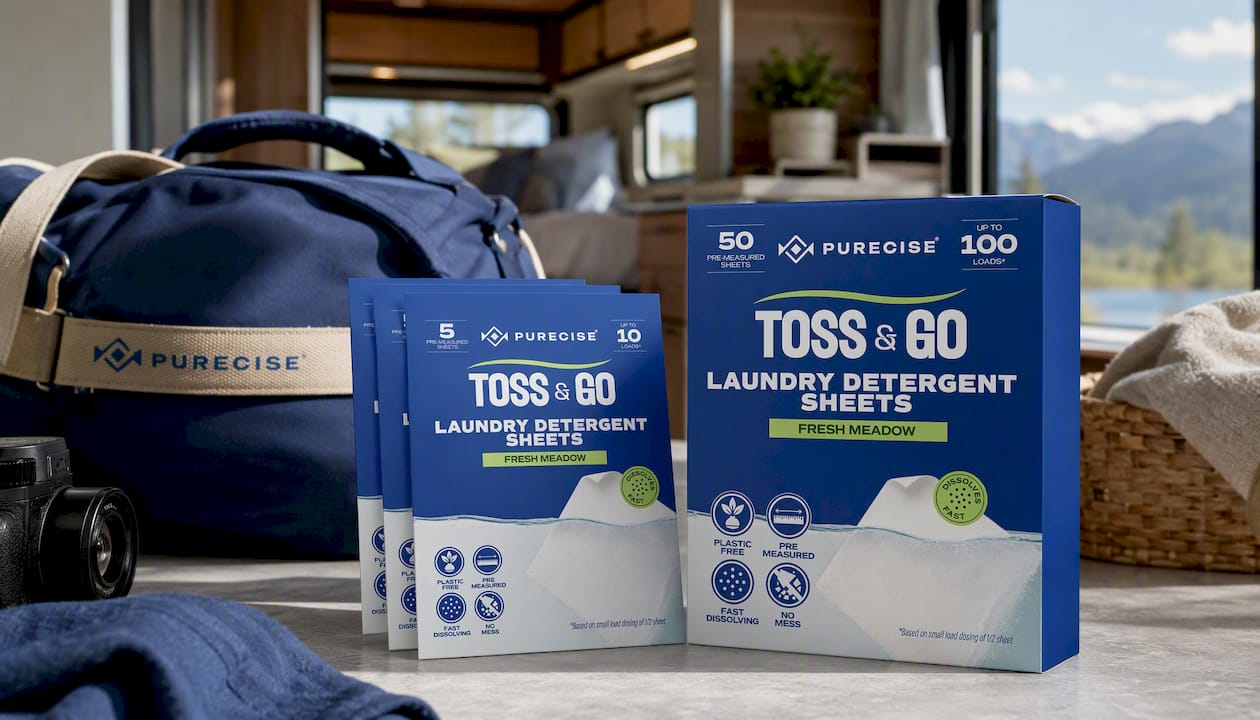
Each sheet dissolves fully in cold or warm water, works across HE and standard cycles, and is formulated without harsh chemicals, so it’s safe for sensitive skin, baby clothes, and everything else that ends up in a small drum. Buy a box of laundry detergent sheets if you do regular loads at home or in an apartment, or grab the travel-ready sheet envelopes if you’re packing for a space where every inch of storage counts. Pick the format that matches your trip length and place your order today.
Sources
A few pages are worth saving if you want to double-check dosing rules for your exact machine model or dig deeper into wash technique.
- Haier - Portable Washer Detergent and Fabric Softener Use
- How to Choose the Right Detergent for Your Portable Washing Machine? - Precision Appliance Leasing
- How to use a portable washing machine — Business Insider
FAQ
Why Do Landlords Not Allow Portable Washers?
Some landlords restrict portable washers over concerns about water damage from improvised drain hookups, noise on shared flooring, or electrical load on older wiring, not because of the detergent used. Check your lease before assuming it’s banned outright, since policies vary widely by building.
Do Laundry Pods Work in Portable Washers?
Not reliably. Pods are built for the water volume of full-size washers, and that concentrated dose is usually too strong for a portable machine’s smaller drum, leading to excess suds, residue, and possible drain clogging.
Can You Just Pour Water Into a Portable Washing Machine?
Most portable washers need to be connected to a water source or filled through a designated inlet rather than having water poured directly into the drum, since pouring water in manually can bypass fill sensors and cause overflow. Check your specific model’s manual for its fill method before running a load.
How Do You Do Laundry When You Live in a Camper?
Use a compact portable washer or a manual wash bag, a low-suds HE detergent or pre-dosed sheet at a reduced dose, and plan around your campsite’s water hookup and gray water disposal rules. Packing pre-dosed sheets instead of liquid bottles saves space and avoids spill risk during transit.
How Much Less Detergent Should I Use in a Portable Washer?
For sheets, use a fraction of one sheet for very small loads and a full sheet for a standard 4 to 6 pound load.
Recommended
Recyclable Detergent Packaging: What MRFs Will Actually Recycle
Travel Friendly Way to Remove Deodorant Stains Using Detergent Sheets
Related Posts

Whiten White Clothes, No Chlorine: 4–8 Hour Soak, Premeasured Sheets

Remove Blood Stains from Clothes: Cold Water, Enzyme Soak, No Dryer

Pet Owners: Remove Hair from 5 Surfaces with a Washer and Dryer Trick

Wash Sheets Weekly, Dry Them Fully, and Stop Dosing Guesswork

6 Quick Steps to Remove Oil Stains at Home Without Ruining Clothes

Save Space: 50 Sheets Cover 50–100 Loads for Airbnb Hosts

Cut Detergent 25–50%: Use Premeasured Sheets for Soft Water


