

Types of Portable Apartment Laundry Supplies: 2026 Guide
Portable apartment laundry supplies are compact, self-contained tools designed to replace or supplement shared laundry facilities for renters with limited space. The main types of portable apartment laundry supplies include fully automatic washers, semi-automatic twin-tub models, manual hand-crank washers, compact dryers, and a range of supporting accessories. Each category fits a different budget, space constraint, and laundry routine. Renters who understand these distinctions make smarter purchases and avoid costly mistakes.
1. What are the main types of portable washing machines for apartments?
Portable washers fall into three categories: fully automatic, semi-automatic twin-tub, and manual hand-crank models. Each type demands a different level of involvement from you and comes with a different price point.
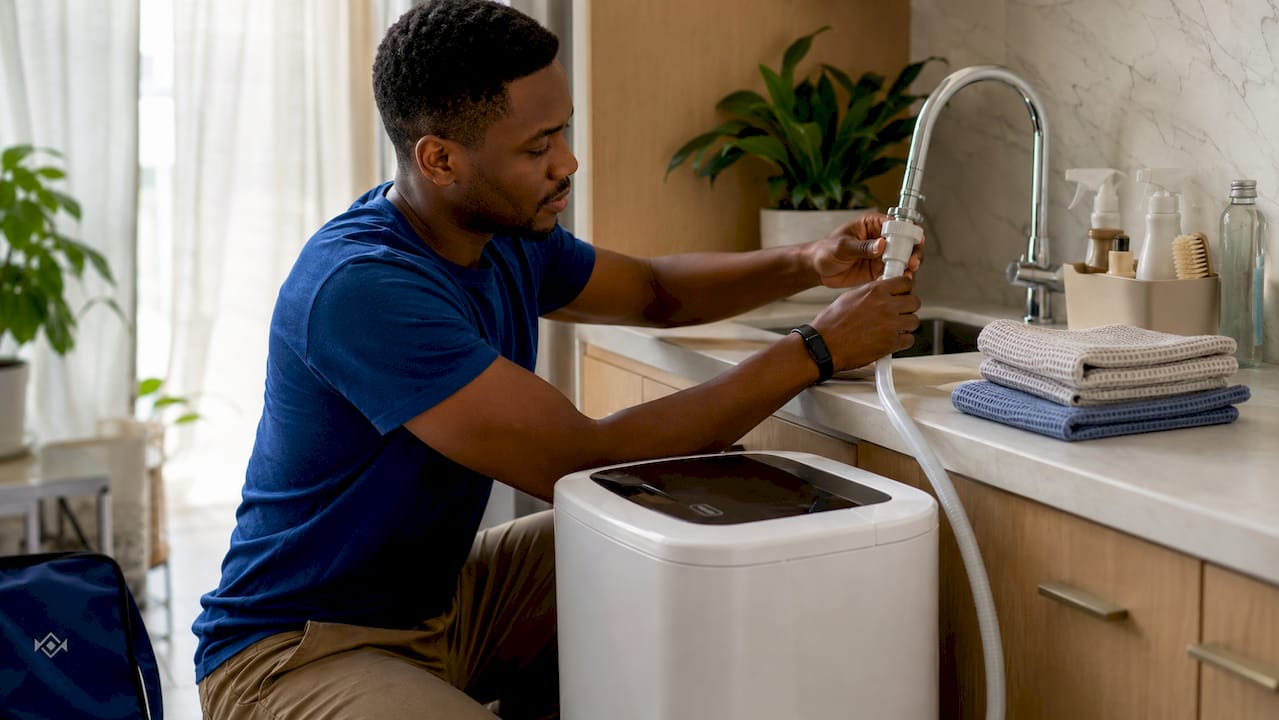
Fully automatic portable washers connect directly to a sink faucet and handle the entire wash and spin cycle without any intervention. You load the clothes, set the cycle, and walk away. These models run on standard 120-volt outlets and range in capacity from 0.6 to 2.8 cubic feet. That smaller capacity means you will run more loads per week than with a full-sized machine, but the convenience is hard to beat.
Semi-automatic twin-tub washers split the process into two separate compartments: one for washing, one for spinning. You manually transfer clothes between the two. This extra step sounds tedious, but twin-tub models cost under $200 and often deliver stronger spin-drying than entry-level fully automatic units. For budget-conscious renters, the trade-off is worth it.
Manual hand-crank washers are the most stripped-down option. They use no electricity and weigh less than 5 pounds, consuming fewer than 3 gallons of water per cycle. They work well for socks, underwear, and baby clothes, but they are not practical for full laundry loads.
Key features by type:
- Fully automatic: Hands-free operation, sink connection required, best for frequent laundry needs
- Semi-automatic twin-tub: Manual transfer step, strong spin performance, best value under $200
- Manual hand-crank: No electricity needed, ultra-lightweight, best for small items or travel
Pro Tip: Measure your sink faucet thread before buying any portable washer. Many units require a specialized aerator adapter, and mismatched threads will stop your setup before it starts.
2. Which portable dryers and drying solutions suit small apartment living?
Compact and ventless dryers are the most practical electrical drying option for apartments. Unlike vented dryers, they do not require an external exhaust duct, which makes installation possible in almost any room. The key sizing rule: choose a dryer with a capacity slightly larger than your washer’s wet load weight. That buffer prevents overloading and speeds up drying time.
Drying solutions for small apartments include:
- Compact ventless dryers: Condenser or heat pump models that recirculate air internally; no duct needed
- Countertop spin dryers: Centrifugal units that remove excess water before air drying, cutting drying time significantly
- Freestanding drying racks: Collapsible frames that fold flat for storage; ideal when floor space is at a premium
- Over-door and wall-mounted racks: Fixed or retractable bars that use vertical space rather than floor area
- Heated drying racks: Low-wattage electric racks that gently dry clothes overnight without taking up much space
The right dryer capacity matches your washer’s load size. Buying a dryer that is too small forces multiple drying cycles and wastes time. Buying one that is too large wastes floor space you do not have.
Drying racks remain the most space-efficient option for renters who wash small loads frequently. A collapsible rack stores behind a door or under a bed when not in use. For renters who wash larger loads, a compact ventless dryer paired with a drying rack covers every situation without requiring a dedicated laundry room.
3. What essential portable laundry accessories optimize apartment laundry setups?
The machine is only part of the setup. The right accessories determine whether your portable laundry system works reliably or causes problems for you and your landlord.
Critical accessories include:
- Faucet adapters: Many portable washers require adapters to connect to standard sink faucets. Specialized aerator adapters typically cost $10–$20 and are rarely included in the box. Buy one before your machine arrives.
- Drain hose kits: Extension hoses direct wastewater into the sink or a floor drain. Check hose length against your sink distance before purchasing.
- Anti-vibration mats: Thick rubber mats placed under the washer absorb operational vibration. Anti-vibration mats can reduce noise by 50–70% depending on floor type. That difference matters in apartments with thin floors and close neighbors.
- Hose clamps and gaskets: Rubber gaskets inside faucet connections degrade over time. Neglecting drain hose and gasket maintenance is the leading cause of leaks and water damage in apartment units.
- Compact detergent formats: Laundry detergent sheets take up almost no storage space and eliminate the risk of liquid spills near electronics. They are pre-dosed, which removes the guesswork from measuring.
Pro Tip: Inspect your faucet connection and drain hose gaskets every 30 days. A $2 replacement gasket prevents the kind of leak that voids your security deposit.
Eco-friendly detergent sheets, like those from Purecise, are particularly well-suited to portable washers. They dissolve completely in any water temperature, leave no residue in small-capacity drums, and store a full month’s supply in a space smaller than a paperback book. For renters who use shared laundry facilities as well as a portable unit at home, sheets eliminate the need to carry a heavy bottle back and forth.
4. How to choose the right portable laundry supplies based on apartment size, usage, and budget
Choosing the right compact laundry equipment starts with three measurements: the machine’s footprint, the doorway width it must pass through, and the distance from the nearest sink. Measuring access points before purchasing is the single most common mistake renters skip. A washer that does not fit through your hallway is a return shipping problem, not a laundry solution.
Next, assess how often you do laundry and how large your typical load is. Renters who wash two to three times per week with moderate loads get the most value from a fully automatic model. Renters who wash once a week on a tight budget will find a semi-automatic twin-tub covers their needs at a lower cost.
Loading discipline also extends machine life. Load only 50–60% of the stated capacity to avoid motor strain and get cleaner results. Capacity ratings on portable washers are often optimistic. Treating them as a ceiling rather than a target protects your investment.
| Feature | Manual hand-crank | Semi-automatic twin-tub | Fully automatic |
|---|---|---|---|
| Price range | Under $50 | Under $200 | $200 and above |
| User effort | High | Moderate | Low |
| Load capacity | Very small | Small to medium | Small to medium |
| Power required | None | Standard outlet | Standard outlet |
| Best for | Travel, tiny loads | Budget renters | Convenience-focused renters |
The table above shows that no single type wins across every category. Your choice depends on which column matters most to you. If budget is the priority, the semi-automatic twin-tub delivers the best performance per dollar. If convenience is the priority, a fully automatic model is worth the higher upfront cost.
Key takeaways
The most effective portable laundry setup for apartment renters combines the right washer type, a matched drying solution, and a short list of well-maintained accessories.
| Point | Details |
|---|---|
| Know your washer types | Fully automatic, semi-automatic, and manual models each suit different budgets and routines. |
| Match dryer to washer capacity | Choose a dryer slightly larger than your washer’s wet load to avoid multiple drying cycles. |
| Buy adapters before setup day | Faucet aerator adapters cost $10–$20 and are rarely included; missing one stops your first wash. |
| Load at 50–60% capacity | Overloading shortens motor life and produces worse cleaning results in portable machines. |
| Maintain hoses and gaskets monthly | Regular checks prevent leaks that cause water damage and security deposit disputes. |
What I have learned from setting up portable laundry in tight spaces
Most renters focus entirely on the washer and ignore everything around it. That is the wrong order of operations. The accessories, the floor surface, the faucet thread, the drain hose length: these details determine whether your setup works on day one or frustrates you for weeks.
The noise issue surprises people most. A portable washer on a bare hardwood floor in a second-story apartment sounds like a small earthquake to the neighbor below. An anti-vibration mat is not optional in that situation. It is the difference between a workable setup and a noise complaint.
The other pitfall I see constantly is overloading. Renters assume the stated capacity is a target. It is not. Treat it as a maximum and stay well below it. Your clothes come out cleaner, your machine lasts longer, and you avoid the mid-cycle imbalance errors that send water onto your floor.
Detergent choice matters more in small machines than most people realize. Liquid detergent can leave residue in compact drums that do not agitate as aggressively as full-sized machines. Pre-dosed detergent sheets dissolve fully regardless of water temperature, which makes them a genuinely better fit for portable washers. Purecise sheets are more efficient than liquid soap and take up almost no storage space, which matters when your laundry area is a corner of your bathroom.
The renters who get the most out of portable laundry setups treat them like any other appliance: they read the manual, check the connections regularly, and do not push the machine past its limits. That mindset turns a portable washer from a frustrating compromise into a genuinely convenient solution.
— Purecise
Purecise laundry detergent sheets: built for portable and compact setups
Portable washers and shared laundry rooms share one problem: space. Bulky detergent bottles take up room you do not have, and liquid spills near electronics are a real risk.
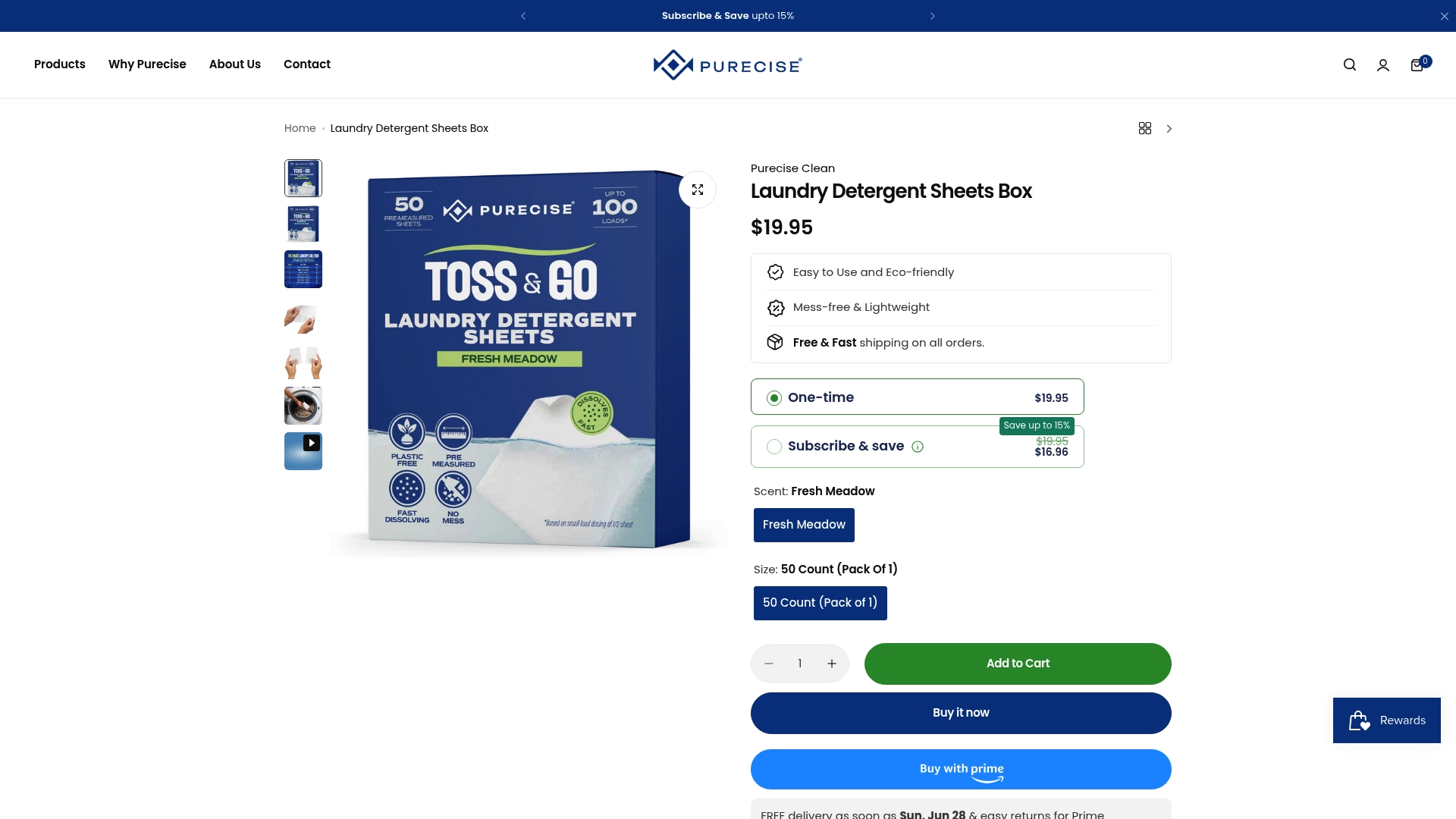
Purecise Toss & Go laundry detergent sheets solve both problems. Each pre-dosed sheet dissolves completely in any water temperature, leaves zero residue in compact drums, and stores a full month’s supply in a space smaller than a wallet. The hypoallergenic, plant-based formula is free from harsh chemicals and safe for sensitive skin. Purecise backs every order with a 100% money-back guarantee. Pick up a detergent sheets box and see why renters with portable washers are switching from liquid for good.
FAQ
What types of portable washing machines work best in apartments?
Fully automatic portable washers offer the most convenience for apartment renters, connecting directly to a sink and running complete cycles without user intervention. Semi-automatic twin-tub models cost under $200 and deliver strong spin-drying performance for budget-focused renters.
Do portable washers need special electrical outlets?
Most portable washers run on standard 120-volt outlets, the same outlets found in any American apartment. No special wiring or dedicated circuit is required for the majority of models.
How do I reduce washer noise in an apartment?
Placing the washer on a thick rubber anti-vibration mat reduces operational noise by 50–70% depending on floor type. This single accessory prevents most noise complaints in multi-unit buildings.
What laundry detergent works best with portable washers?
Pre-dosed detergent sheets work better than liquid in portable washers because they dissolve fully in any water temperature and leave no residue in compact drums. Purecise sheets are designed for small-space laundry and eliminate the storage and spill problems that come with liquid bottles.
How full should I load a portable washing machine?
Load portable washers to only 50–60% of their stated capacity. Overloading strains the motor, reduces cleaning effectiveness, and shortens the machine’s lifespan.
Recommended
Eco-Friendly Laundry Routine Guide for 2026
Top 3 Zerotraceliving.com Laundry Detergent Alternatives 2026
Related Posts

Whiten White Clothes, No Chlorine: 4–8 Hour Soak, Premeasured Sheets

Remove Blood Stains from Clothes: Cold Water, Enzyme Soak, No Dryer

Pet Owners: Remove Hair from 5 Surfaces with a Washer and Dryer Trick

Wash Sheets Weekly, Dry Them Fully, and Stop Dosing Guesswork

6 Quick Steps to Remove Oil Stains at Home Without Ruining Clothes

Save Space: 50 Sheets Cover 50–100 Loads for Airbnb Hosts

Cut Detergent 25–50%: Use Premeasured Sheets for Soft Water


