

Types of Off-Grid Laundry Methods for Sustainable Living
Off-grid laundry is defined as washing clothes without relying on grid electricity or municipal water systems, using manual effort, low-voltage power, or a combination of both. The types of off-grid laundry methods fall into three core categories: manual, low-voltage electrical, and hybrid systems. Each category trades labor, water use, and upfront cost differently. Choosing the right one depends on your household size, physical ability, water supply, and how far off-grid you actually live. This guide breaks down every major method, explains what each demands in practice, and helps you build a laundry routine that fits your lifestyle.
What are the main types of off-grid laundry methods?
Off-grid washing techniques are practical systems that replace the conventional top-loading washer, which draws 27–51 gallons per load and requires a 120V grid connection. Manual methods use zero electricity. Low-voltage electric options run on 12V DC power from solar battery banks. Hybrid systems blend human-powered agitation with battery-assisted spinning. Each method sits at a different point on the labor-versus-convenience spectrum, and none of them requires a utility hookup.
The right starting point is almost always the simplest method you can tolerate. Off-grid laundry works best as a system that scales gradually from basic tools to more complex electric setups, matching your budget and labor tolerance as you grow into the lifestyle.
1. Bucket and plunger washing
The bucket and plunger method is the most accessible entry point into manual laundry methods. You fill one bucket with soapy water, agitate clothes with a toilet-style plunger modified for laundry, then rinse in a second bucket. The bucket setup costs under $50 in basic hardware parts and requires no power source at all.
Water use runs 5–8 gallons per load for a standard 5-pound batch. That is a fraction of what a conventional washer uses. Active washing time is 20–30 minutes, which makes this method physically demanding for large families but perfectly manageable for solo off-grid living or small households.
Pro Tip: Soak clothes for several hours before agitating. Soaking lifts dirt from fibers before you start scrubbing, cutting your active washing time and physical effort significantly.
2. Washboard scrubbing
The washboard is one of the oldest off-grid washing techniques still in practical use. You press and drag fabric across a ridged surface to work out stains and embedded dirt. It excels on heavily soiled work clothes, denim, and thick cotton where a plunger lacks the friction to clean effectively.
Washboards pair well with a two-bucket setup. Use one bucket for scrubbing and one for rinsing. The physical effort is higher than plunger agitation, but the cleaning power on tough stains is noticeably better. A quality washboard costs $15–$40 and lasts for years with minimal maintenance.
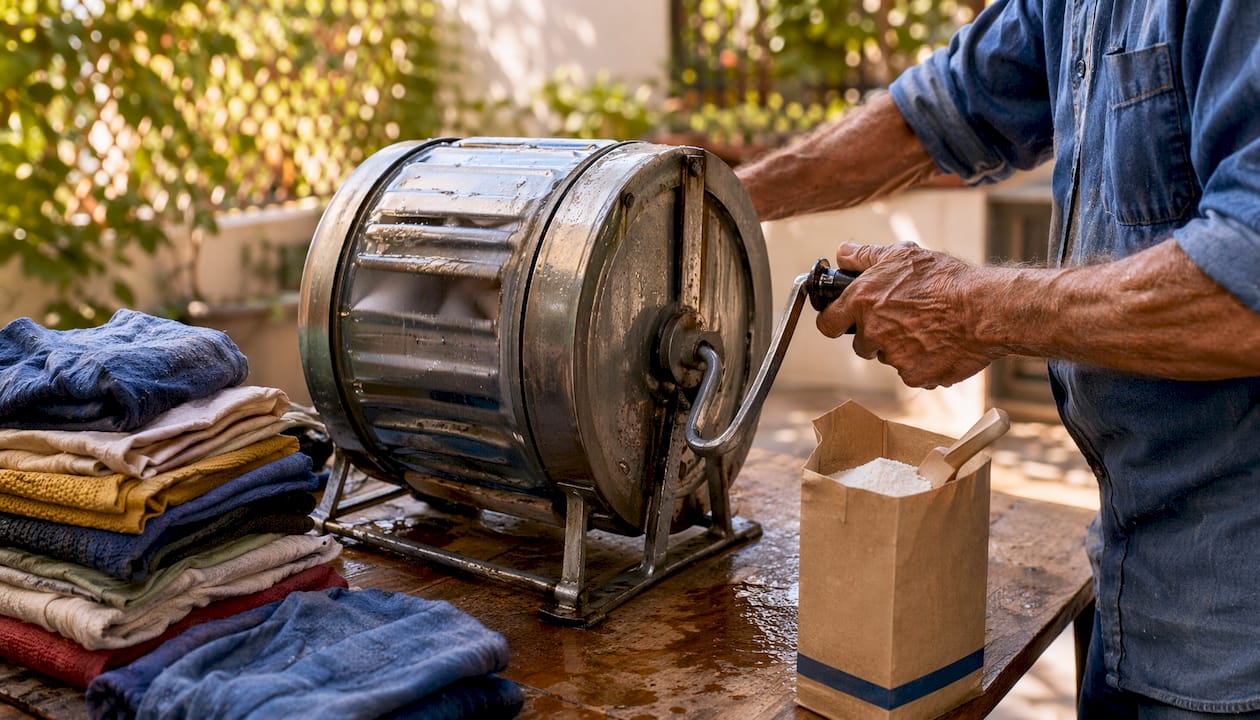
3. Lever-action and hand-crank manual washers
Lever-action washers are a significant upgrade over bucket agitation. These small drum-style units use a hand lever or crank to spin clothes inside a sealed chamber. They clean a 5-pound load in 2–5 minutes using only 5–7 gallons of water. That speed and efficiency make them the preferred manual option for people who do laundry several times a week.
The reduced physical effort compared to plunger washing is the real advantage. You turn a handle rather than repeatedly thrusting a plunger. These units typically cost $50–$150 and fit on a countertop or table, making them practical for small cabins, RVs, and tiny homes.
4. Pedal-powered washers
Pedal washers use foot power to drive a drum agitator, freeing your hands and distributing physical effort across your legs rather than your arms and shoulders. This makes sustained washing sessions far less fatiguing. Some designs resemble a bicycle frame attached to a drum, while others use a simple foot-press mechanism.
Pedal washers handle 5–8 pound loads and use water volumes comparable to hand-crank units. They are particularly well-suited to people with upper-body limitations or anyone who wants to wash larger loads without exhaustion. Expect to pay $100–$300 for a purpose-built unit.
5. Low-voltage 12V DC portable washers
Low-voltage electric washers are designed specifically for RV and off-grid use. They run on 12V DC power, which means they connect directly to a solar battery bank without an inverter. 12V portable washers draw 100–400W and use roughly 0.2–1.0 kWh per load for efficient units. That is a fraction of what a standard 500W+ grid washer consumes.
These machines handle agitation automatically, which eliminates most of the physical labor. You load clothes, add detergent, and let the machine run. The tradeoff is upfront cost, typically $150–$400, plus the need for a properly sized solar battery bank and an MPPT charge controller to manage power delivery efficiently.
- Water use: 5–15 gallons per load depending on model
- Power source: 12V solar battery bank with MPPT controller
- Labor level: Low. Load and unload only
- Best for: Families, frequent laundry needs, or anyone with limited physical capacity
6. Hybrid foot-powered and battery-assisted systems
Hybrid systems combine human-powered agitation with a small electric motor for the spin cycle. A common setup uses a foot-pedal drum for washing and a battery-powered centrifugal spinner for water extraction. This split approach reduces labor compared to pure manual methods and uses far less battery power than a fully electric washer.
The spin cycle is where electric assistance pays off most. Spinning removes far more water than hand-wringing alone, cutting drying time dramatically. Hybrid setups typically cost $200–$500 total and work well in climates where air-drying is slow.
Pro Tip: Run the spin cycle twice on thick fabrics like towels and jeans. A second spin pass removes enough extra water to cut outdoor drying time by an hour or more in humid conditions.
- Water use: 5–10 gallons per load
- Power draw: Low. Only the spin motor uses electricity
- Labor level: Moderate. Agitation is manual, extraction is electric
- Best for: Households that want reduced labor without a full solar power investment
7. Two-bucket wringer systems
The two-bucket wringer system is the most cost-effective laundry option for small off-grid households. Two-bucket setups with a wringer cost under $150 and consume near-zero energy. You wash in one bucket, rinse in the second, and run clothes through a hand-crank or mop-bucket wringer before hanging them to dry.
The wringer is the critical component. A manual crank-wringer or mop-bucket wringer removes up to 90% of water from clothes before they go on the line. That level of water extraction drastically reduces drying time and indoor humidity, which matters most in cold or damp climates.
Best practices to improve your off-grid laundry efficiency
Getting the most from any off-grid washing system comes down to a few consistent habits. These practices apply across all method types and make a measurable difference in both cleaning results and physical effort.
1. Soak before you wash
Soaking clothes for several hours before agitation is the single most effective labor-saving step in manual laundry. Soaking lifts embedded dirt from fibers before you apply any physical effort. A 30-minute soak handles light soil. Heavily soiled work clothes benefit from an overnight soak.
2. Wring thoroughly before drying
Thorough water extraction before hanging clothes cuts drying time significantly. A crank-style wringer outperforms hand-wringing by a wide margin. Efficient wringing removes up to 90% of water, which can eliminate the need for an electric spin dryer entirely.
3. Wash small loads frequently
Washing 2–3 loads of 5 pounds per week prevents bacterial growth and mold in off-grid environments. Letting laundry accumulate creates hygiene problems that are harder to solve than the inconvenience of frequent small washes. Small loads also use less water per item and are easier to manage manually.
4. Use biodegradable detergent
Biodegradable soap allows you to reuse greywater for garden irrigation. Choosing biodegradable soaps turns laundry water into a resource rather than waste. Purecise laundry detergent sheets are pre-dosed, free from harsh chemicals, and dissolve completely in any water temperature, making them a practical fit for off-grid use. Check the clean laundry ingredient checklist to understand which ingredients are safe for greywater systems.
5. Schedule laundry around solar peak hours
If you use any electric component, run it during peak solar generation, typically 10:00 AM to 2:00 PM. This maximizes battery charge and avoids drawing down stored power unnecessarily.
Pro Tip: Hang clothes in direct sunlight whenever possible. UV exposure from sunlight kills bacteria and whitens fabric naturally, reducing the need for bleach or heavy-duty detergents.
Which method fits your lifestyle?
Choosing between off-grid laundry options depends on four factors: household size, physical ability, water availability, and budget.
| Lifestyle | Best method | Why it fits |
|---|---|---|
| Solo or couple, limited budget | Two-bucket wringer system | Low cost, low water use, manageable labor |
| Family of 4+, solar setup | 12V DC portable washer | Handles volume, low labor, runs on solar |
| Limited physical ability | Hybrid pedal and electric spin | Reduces arm strain, electric spin cuts effort |
| Minimal water access | Lever-action hand-crank washer | 5–7 gallons per load, fastest manual clean |
| Cold or humid climate | Any method plus crank wringer | 90% water removal cuts slow drying times |
Solo off-grid residents and couples do well starting with a bucket and plunger or a hand-crank washer. Families with higher laundry volumes benefit from the automation of a 12V washer paired with a solar battery bank. Anyone in a cold or humid climate should prioritize a quality wringer regardless of which washing method they choose. Pilot-test the simplest method first before investing in electric equipment. Most people discover that a hand-crank washer plus a good wringer handles 80% of their laundry needs without any electricity at all.
Key Takeaways
The most effective off-grid laundry system combines the right washing method for your household size with consistent soaking, thorough wringing, and biodegradable detergent to minimize water use, labor, and environmental impact.
| Point | Details |
|---|---|
| Three core method categories | Manual, low-voltage electric, and hybrid systems each trade labor, cost, and energy differently. |
| Water savings are substantial | Off-grid methods use 5–15 gallons per load versus 27–51 gallons for conventional washers. |
| Soaking cuts labor significantly | A multi-hour soak before agitation reduces scrubbing effort and improves cleaning results. |
| Wringing is the efficiency multiplier | A crank wringer removes up to 90% of water, cutting drying time across all method types. |
| Small frequent loads prevent hygiene problems | Washing 2–3 small loads per week stops bacterial growth and mold in off-grid settings. |
What I have learned from off-grid laundry that most guides skip
Most off-grid laundry content focuses on the gear. The harder lesson is the mindset shift. When I started washing clothes manually, I treated it as a chore to minimize. That framing made every session feel like a burden. The shift came when I started treating laundry as a water management practice, not just a cleaning task.
Tracking how many gallons I used per load changed how I approached every wash. I became deliberate about soaking, precise about rinsing, and consistent about wringing. The result was cleaner clothes, less physical effort, and a greywater system that now irrigates part of my garden. The hygiene benefits of properly cleaned clothes in off-grid living go beyond comfort. Clean clothing prevents skin infections and pathogen spread, which matter more when you are far from medical care.
The other thing most guides miss is the value of starting small. A $40 bucket and plunger setup teaches you more about your actual laundry habits than any amount of research. You learn how much water you really need, how often you actually do laundry, and whether you want to invest in a hand-crank washer or a 12V electric unit. That pilot experience saves money and prevents buying equipment that does not fit your real routine.
My honest recommendation: start with a two-bucket wringer system, use a quality biodegradable detergent, and add electric assistance only when you have a clear reason to. Most people need less equipment than they think.
— Purecise
Purecise detergent sheets: built for off-grid laundry
Off-grid laundry works best when your detergent is as practical as your washing method. Purecise Toss & Go laundry detergent sheets are pre-dosed, lightweight, and dissolve completely in cold or warm water, making them compatible with every method covered here, from bucket washing to 12V portable washers.

Each sheet is free from harsh chemicals and safe for greywater irrigation when you use biodegradable-friendly systems. A full month’s supply fits in a small envelope, which means no heavy bottles to haul, no measuring, and no plastic waste. The hypoallergenic formula works for sensitive skin and all fabric types. Purecise backs every order with a 100% money-back guarantee. Pick up the Purecise detergent sheets box and simplify the one supply that every off-grid laundry method depends on.
FAQ
What does off-grid laundry mean?
Off-grid laundry means washing clothes without relying on grid electricity or municipal water. It uses manual effort, low-voltage solar power, or hybrid systems to clean clothes sustainably.
How much water does off-grid laundry use per load?
Manual off-grid methods use 5–8 gallons per load. That compares to 27–51 gallons for a conventional top-loading washer, making off-grid methods up to 90% more water-efficient.
Can you do laundry off-grid without any electricity?
Yes. Bucket and plunger setups, washboards, hand-crank washers, and two-bucket wringer systems all operate with zero electricity and cost under $150 to set up.
How often should you do laundry off-grid?
Washing 2–3 loads of roughly 5 pounds per week prevents bacterial growth and mold. Letting laundry accumulate creates hygiene risks that are harder to manage in off-grid environments.
What detergent works best for off-grid laundry?
Biodegradable detergents that dissolve in cold water and leave no harsh chemical residue work best. Purecise laundry detergent sheets meet all three criteria and are safe for greywater reuse in garden irrigation.
Recommended
- Revolutionizing Laundry for a Sustainable Future – Purecise Clean
- More Efficient Than Typical Laundry Soap & Sustainable – Purecise Clean
- Laundry Minimalism: Simplify Your Routine, Space and Sustainability – Purecise Clean
- How to Wash Clothes Without a Washing Machine (And the One Supply Most – Purecise Clean
Safe Detergent for Eczema-Prone Skin: 2026 Guide
What Is a Travel Laundry Bag System? 2026 Guide
Related Posts

Whiten White Clothes, No Chlorine: 4–8 Hour Soak, Premeasured Sheets

Remove Blood Stains from Clothes: Cold Water, Enzyme Soak, No Dryer

Pet Owners: Remove Hair from 5 Surfaces with a Washer and Dryer Trick

Wash Sheets Weekly, Dry Them Fully, and Stop Dosing Guesswork

6 Quick Steps to Remove Oil Stains at Home Without Ruining Clothes

Save Space: 50 Sheets Cover 50–100 Loads for Airbnb Hosts

Cut Detergent 25–50%: Use Premeasured Sheets for Soft Water


