

Why Minimalists Prefer Laundry Sheets Over Liquid
Laundry sheets are ultra-concentrated, pre-measured detergent alternatives that dissolve completely in the wash, and they are the reason why minimalists prefer laundry sheets over liquid detergents. Also called sheet detergent or strip detergent in the industry, these thin, lightweight squares replace bulky plastic jugs with a format that fits in your pocket. Brands like Purecise have made the format mainstream by combining plant-based formulas with plastic-free packaging. The appeal is not just aesthetic. Sheets address three real problems with liquid detergent: wasted space, plastic waste, and messy measuring.
Why minimalists prefer laundry sheets over liquid detergent
Laundry sheets remove every friction point that makes liquid detergent annoying. No heavy jug to carry, no measuring cap to rinse, no drips down the side of the bottle. The format is pre-measured and mess-free, which means you tear off one sheet, toss it in the drum, and start the machine.
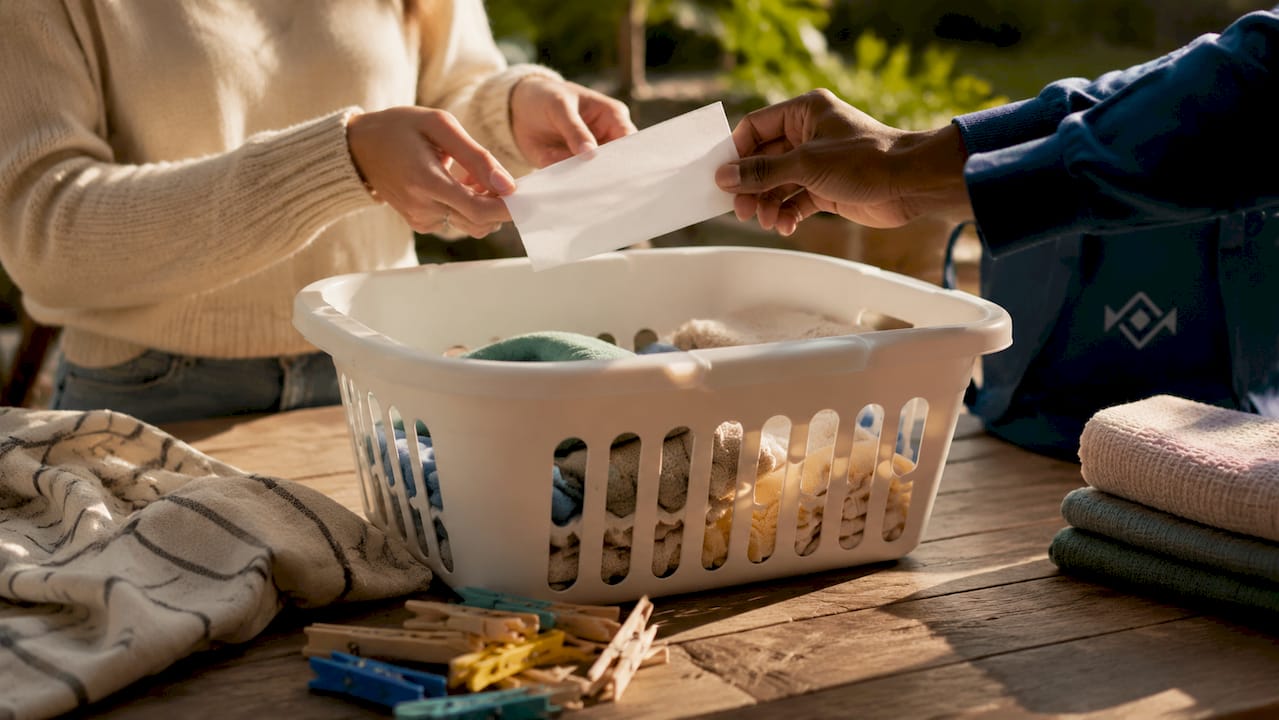
That simplicity matters more than it sounds. 82% of global consumers consider convenience essential or desirable when buying household products. Laundry sheets are a direct answer to that demand, cutting out the steps that make laundry feel like a chore.
The size advantage is equally significant. A box of sheets resembles a paperback book and lasts about three months for an average person. A comparable supply of liquid detergent takes up a full shelf and weighs several pounds. For anyone living in a small apartment, a van, or a shared space, that difference is not trivial.
Here is what sheets eliminate from your laundry routine:
- Measuring cups and dosing caps
- Spills and sticky residue on shelves
- Heavy jugs that are awkward to store and carry
- Overdosing or underdosing errors that affect wash quality
- Bulky packaging that takes up cabinet space
Pro Tip: When traveling, pack three to five sheets in a small envelope instead of a travel-size liquid bottle. They weigh almost nothing and clear airport security without issue.
Pre-measured sheets also prevent the two most common dosing mistakes: using too much detergent, which leaves residue on fabric, and using too little, which means clothes do not get clean. One sheet per standard load removes the guesswork entirely.
Are laundry sheets actually better for the environment?
The environmental case for sheet detergent is strong, but it comes with one important nuance worth knowing.
Traditional liquid detergent is 60–90% water by composition. That means you are paying to ship water in a plastic jug. A package of 50 laundry sheets weighs around 200g, compared to roughly 1.5kg for a liquid detergent with similar load capacity. That is an 86% reduction in shipping weight. Lower weight means fewer carbon emissions per shipment, which adds up across millions of deliveries.
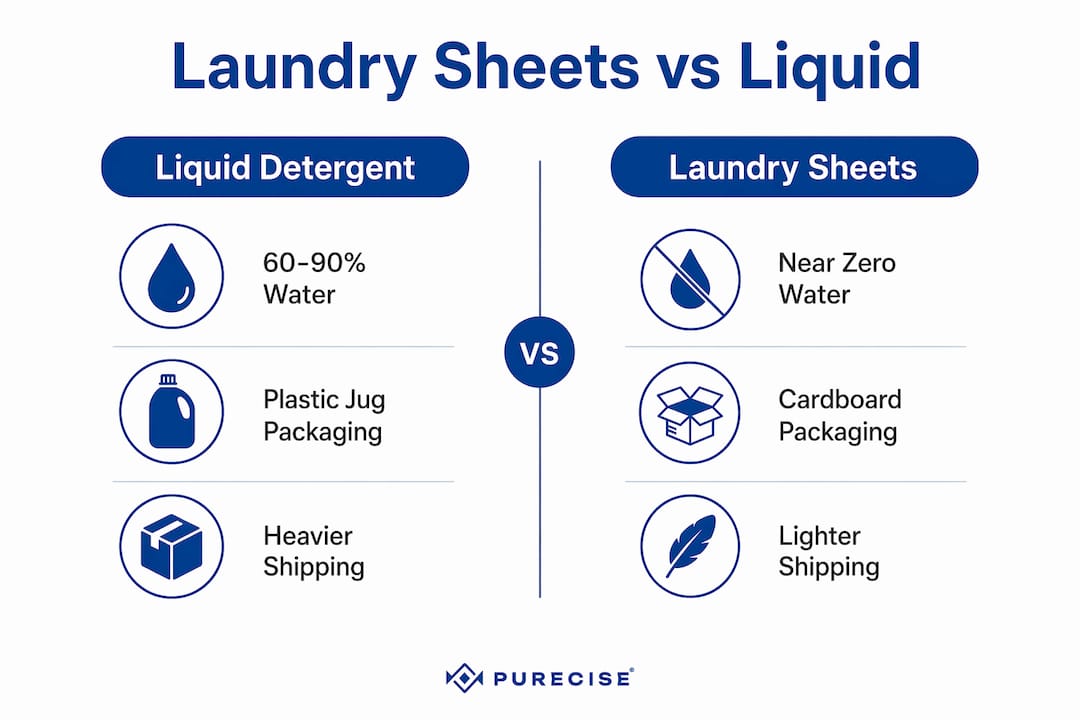
The packaging difference is just as clear. Most sheet detergents use cardboard boxes or paper envelopes. Liquid detergent almost always comes in a plastic jug, and most of those jugs are not recycled. Switching to sheets removes that plastic from your household waste stream entirely.
| Factor | Liquid detergent | Laundry sheets |
|---|---|---|
| Water content | 60–90% | Near zero |
| Packaging material | Plastic jug | Cardboard or paper |
| Shipping weight (50 loads) | ~1.5kg | ~200g |
| Carbon emissions per load | Higher | Significantly lower |
| Plastic waste per year | Multiple jugs | None |
The one nuance: most laundry sheets use a polyvinyl alcohol (PVA) film that dissolves in water but does not fully biodegrade in all wastewater treatment systems. PVA is a synthetic polymer, and its environmental fate depends on the treatment infrastructure in your area. This does not cancel out the plastic reduction benefits, but it is worth knowing when you compare brands.
Pro Tip: Look for brands that disclose their PVA sourcing and biodegradation testing. Transparency on this point is a reliable signal of a brand’s actual commitment to sustainability.
Purecise addresses this directly with plant-based formulas and packaging designed to minimize environmental impact at every stage, from production to disposal. You can read more about their approach on the sustainability and efficiency page.
How do laundry sheets compare to liquid on cleaning performance?
Sheet detergent performs well on everyday laundry. For lightly to moderately soiled clothes, the difference between sheets and liquid is not noticeable in practice. Sheets dissolve fully in any wash cycle, including cold water, and they clean cotton, synthetics, and blends without issue.
The gap shows up with heavy stains. Liquid detergents typically contain enzymes such as proteases, lipases, and amylases. These enzymes break down protein-based stains like blood, grass, and egg, as well as fat-based stains from cooking oil or grease. Most laundry sheets lack these enzymes because enzymes degrade quickly in a dry format. The result is weaker performance on set-in or heavily soiled items.
| Laundry type | Sheets performance | Liquid performance |
|---|---|---|
| Everyday wear, lightly soiled | Excellent | Excellent |
| Moderately soiled cotton | Good | Good to excellent |
| Protein stains (blood, grass) | Limited | Strong (with enzymes) |
| Grease and oil stains | Limited | Strong (with lipases) |
| Cold water wash | Excellent | Good |
| Delicates and synthetics | Excellent | Good to excellent |
Industry experts note that sheets work well for lightly soiled clothes but are generally less effective for heavily soiled items. For most minimalists, this is an acceptable trade-off. The majority of weekly laundry consists of worn-once clothing, not heavily stained workwear. Sheets handle that load without any issue.
For the occasional tough stain, a targeted stain remover applied before washing solves the problem without requiring a full switch back to liquid.
Practical tips for using laundry sheets as a minimalist
Getting the most from sheet detergent takes a small amount of adjustment. These four practices make the transition straightforward.
-
Match sheet quantity to load size. One sheet handles a standard load. Use two sheets for a large or heavily loaded machine. Half a sheet works for a small or delicate load. Most brands, including Purecise, print this guidance on the packaging.
-
Store sheets in a small container. A slim cardboard box or a reusable tin keeps sheets dry and accessible. Place it on a shelf, in a drawer, or inside a cabinet. The footprint is smaller than a single bar of soap.
-
Check the ingredient list before buying. Look for plant-based surfactants, a hypoallergenic formula, and clear disclosure on PVA film. Avoid sheets with synthetic fragrances if you have sensitive skin or allergies. Purecise uses a hypoallergenic formula that is safe for families and people with sensitive skin.
-
Keep one liquid detergent for heavy-duty loads. Sheets cover 90% of typical laundry. For muddy sports gear, heavily stained work clothes, or protein-based stains, a small bottle of enzyme-rich liquid detergent handles what sheets cannot. You do not need to choose one exclusively.
Sheet detergent costs roughly $0.20 to $0.35 per load, which is comparable to most liquid detergents. The cost difference is not the primary reason to switch, but it removes any financial barrier to trying them.
Key takeaways
Laundry sheets are the clearest minimalist laundry solution available because they cut plastic waste, storage space, and dosing errors in one format without raising the cost per load.
| Point | Details |
|---|---|
| Convenience is the core driver | Sheets eliminate measuring, spills, and heavy jugs, addressing the top consumer priority in household products. |
| Environmental gains are real but nuanced | Sheets cut shipping weight by 86% and remove plastic packaging, but PVA film biodegradation varies by wastewater system. |
| Performance suits everyday laundry | Sheets clean lightly to moderately soiled clothes well but lack the enzymes needed for heavy protein or grease stains. |
| Storage advantage is significant | A three-month supply fits in a space smaller than a paperback book, ideal for small homes and travel. |
| Cost is comparable to liquid | At $0.20–$0.35 per load, sheets do not cost more than liquid detergent and often cost the same or less. |
What I have learned from switching to laundry sheets at Purecise
The honest answer is that sheets changed our relationship with laundry more than we expected. The physical reduction in clutter was obvious from day one. What surprised us was how rarely we missed liquid detergent for everyday loads.
The environmental argument convinced us to make the switch. The convenience argument convinced us to stay. Carrying a month’s supply in a jacket pocket while traveling, or fitting a full household supply into a single drawer, is a different experience from managing a shelf of plastic jugs.
The limitation is real. We keep a small bottle of enzyme-based liquid detergent for grass stains, blood, and cooking grease. We use it maybe twice a month. That is a reasonable trade-off for eliminating plastic waste and storage bulk from the other 95% of laundry days.
The PVA question is one we take seriously. Not every brand is transparent about it. We built Purecise’s formula and packaging with that concern in mind, because the goal is actual environmental improvement, not just the appearance of it.
If you do mostly everyday laundry and want a simpler, cleaner routine, sheets are the right call. If you regularly deal with heavily soiled items, keep one liquid detergent on hand and use sheets for everything else.
— Purecise
Purecise Toss & Go sheets: a minimalist laundry solution
Purecise Toss & Go laundry sheets are plant-based, plastic-free, and pre-dosed for one simple reason: laundry should not be complicated.
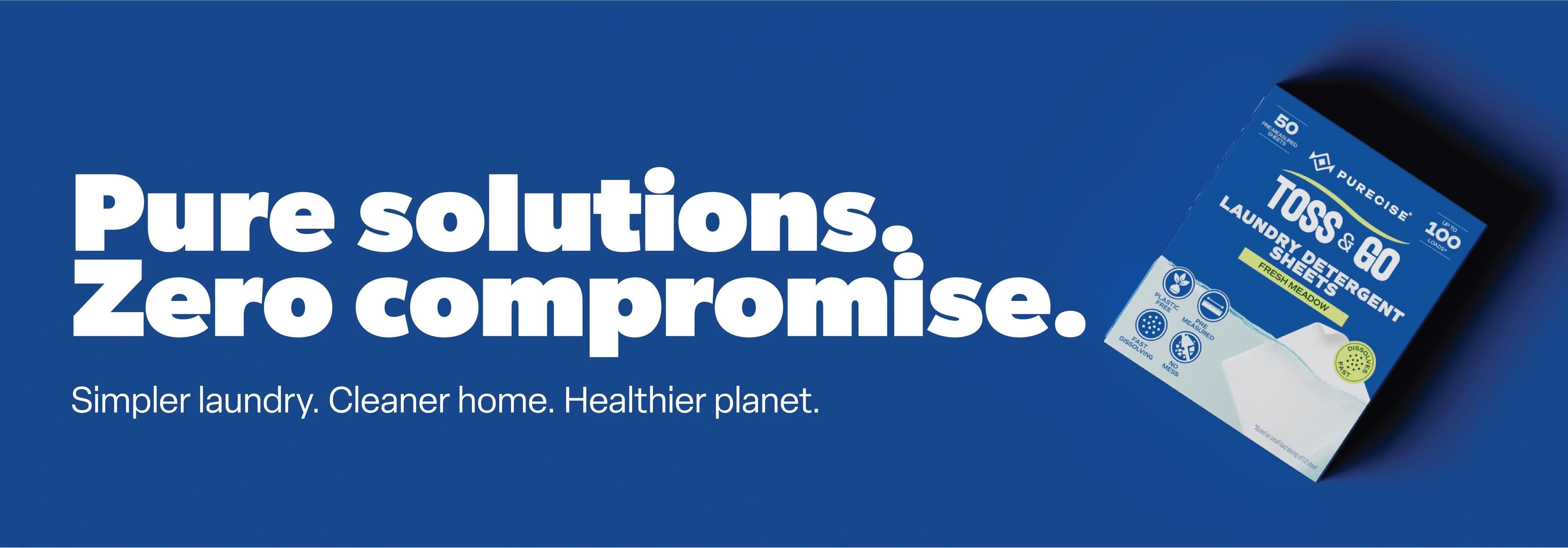
Each sheet dissolves completely in any wash type, hot or cold, and the hypoallergenic formula is safe for sensitive skin and families. A full month’s supply fits in your pocket. No plastic jugs, no measuring caps, no mess. Purecise backs every order with a 100% money-back guarantee, so there is no risk in trying them. Browse the Toss & Go sheet box or pick up the sheet envelopes for a travel-ready option.
FAQ
What are laundry sheets made of?
Laundry sheets are ultra-concentrated detergent compressed into a thin, dissolvable sheet, typically using a polyvinyl alcohol (PVA) film and plant-based surfactants. They dissolve fully during the wash cycle and leave no residue.
Do laundry sheets work in cold water?
Yes. Laundry sheets dissolve completely in cold water, making them compatible with energy-saving cold wash cycles. This is one advantage they hold over some powder detergents, which can clump in cold water.
Are laundry sheets as effective as liquid detergent?
Sheets perform equally well on everyday, lightly soiled laundry. They are less effective on heavy protein or grease stains because most sheet formulas lack the enzymes found in liquid detergents.
Are laundry sheets actually eco-friendly?
Sheets reduce plastic packaging and cut shipping weight by up to 86% compared to liquid detergent. The main caveat is that PVA film may not fully biodegrade in all wastewater treatment systems, so full environmental impact depends on local infrastructure.
How many sheets do I use per load?
One sheet handles a standard load. Use two sheets for a large or heavily loaded machine, and half a sheet for small or delicate loads. Most brands print dosing guidance on the packaging.
Recommended
What Does Fully Dissolving Detergent Mean for Your Laundry
Sustainable Laundry Packaging Alternatives Explained
Related Posts

Remove Lipstick Stains: The First 15 Minutes, Plus Detergent Sheets

How Often to Wash Towels: Bath Weekly, Hand Towels Every Few Days

Detergent Allergy Rash: Test a Low Residue Wash Without Fragrance

Save Clothes From Mud Stains in 1–2 Hours With Premeasured Sheets

Fabric First Sweat Stain Fixes: Measured DIY Recipes and Sheets

Whiten White Clothes, No Chlorine: 4–8 Hour Soak, Premeasured Sheets

Remove Blood Stains from Clothes: Cold Water, Enzyme Soak, No Dryer


