

Why Pre-Portioned Detergent Works for Deployment Bags
Pre-portioned detergent is the most practical laundry choice for deployment bags because it fixes the dose, eliminates leaks, and takes up almost no space. You get consistent cleaning results every time, whether you’re running a load through a shared base washer or scrubbing a shirt in a sink. The American Cleaning Institute and market research from IPRD/Evalueserve both point to the same driver: unit-dose formats are designed to eliminate dosing volatility, which is exactly the problem that bites you hardest when you’re packing light and washing in unfamiliar conditions.
- No measuring, no mess: Each unit delivers the right amount, so you never over-suds a shared machine or under-dose a hand wash.
- TSA-friendly and leak-proof: Solid sheets and pods skip the 100 mL liquid rule entirely and won’t soak your gear if a bottle cracks.
- Less plastic, less weight: A month’s worth of Purecise Toss & Go sheets fits in a pocket, replacing a bulky plastic jug.
Table of Contents
- Why pre-portioned detergent works for deployment bags: dosing consistency
- How compact packaging saves space and weight in your bag
- Do pre-portioned sheets dissolve in cold water and hand washes?
- Are pre-portioned detergents safe for sensitive skin in shared facilities?
- How many pre-portioned units should you pack for a deployment?
- Why solid formats beat liquids for transport and travel
- What’s the environmental case for pre-portioned detergent?
- Common questions about detergent sheets answered
- Purecise Toss & Go sheets: a field-ready option
- Key Takeaways
- The case for pre-portioned detergent is stronger than it looks
- Ready to pack smarter for your next deployment?
- Useful sources
Why pre-portioned detergent works for deployment bags: dosing consistency
Dosing volatility is a real problem in field conditions. Pour too much liquid detergent into a shared washer and you get residue buildup that irritates skin and shortens the machine’s life. Use too little and you’re rewashing the same load. A fixed-dose format removes that variable entirely, which is why unit-dose adoption is framed by industry analysts as a strategy to “design out overconsumption.”
In deployment settings, you’re often washing in conditions you didn’t choose: a communal machine with no instructions, a utility sink with cold tap water, or a portable wash bag in the field. A pre-portioned sheet or pod gives you repeatable results across all three. Laundry capsules reduce dosing errors and improve wash consistency, which matters when you can’t run an extra rinse cycle.
- Consistent dosing prevents detergent residue that can cause skin irritation over repeated wears.
- Fixed amounts reduce water use by eliminating the extra rinse cycles that overdosing requires.
- Pre-measured units make hand-washing in a sink just as reliable as a machine wash.
Pro Tip: Drop the sheet or pod into the drum or basin before adding clothes. Direct contact with water first speeds dissolution, especially in cold-water hand washes.
How compact packaging saves space and weight in your bag
Solid detergent formats cut packing weight dramatically compared to liquid bottles. A 100-sheet pack weighs far less than a comparable liquid bottle, and it takes up a fraction of the space, according to travel detergent comparisons. For a deployment bag where every cubic inch counts, that difference is felt immediately.
Sheets also sidestep the TSA 3-1-1 liquids rule entirely. Carry-on or checked, solid formats have no volume restriction. That matters for air transport to a forward operating location or a rapid-deployment flight where you’re limited to one bag.
- A sleeve of 30 sheets fits flat in a side pocket, leaving room for other gear.
- No risk of a cracked bottle coating your uniforms in detergent.
- Envelope-format packs like Purecise’s travel sheets slide into a document sleeve or cargo pocket.
Space math: If your deployment bag has a 10" × 10" side pocket, a 30-sheet envelope occupies roughly the same footprint as a folded map. A 32 oz liquid bottle does not fit at all.
Do pre-portioned sheets dissolve in cold water and hand washes?
Yes, reliably. Modern sheets use water-soluble PVA film that releases concentrated detergent on contact with water. The film dissolves in the drum or basin, regardless of temperature, as long as there’s adequate agitation. Sheets are temperature-agnostic in a way that many powders and some liquids are not, which makes them reliable for sink washes and HE machines alike.
Hard water slows dissolution slightly, but a quick stir or an extra minute of agitation handles it. The bigger variable is soil level: heavily soiled gear (mud, grease, heavy sweat) may need a pre-treat before the sheet does its job.
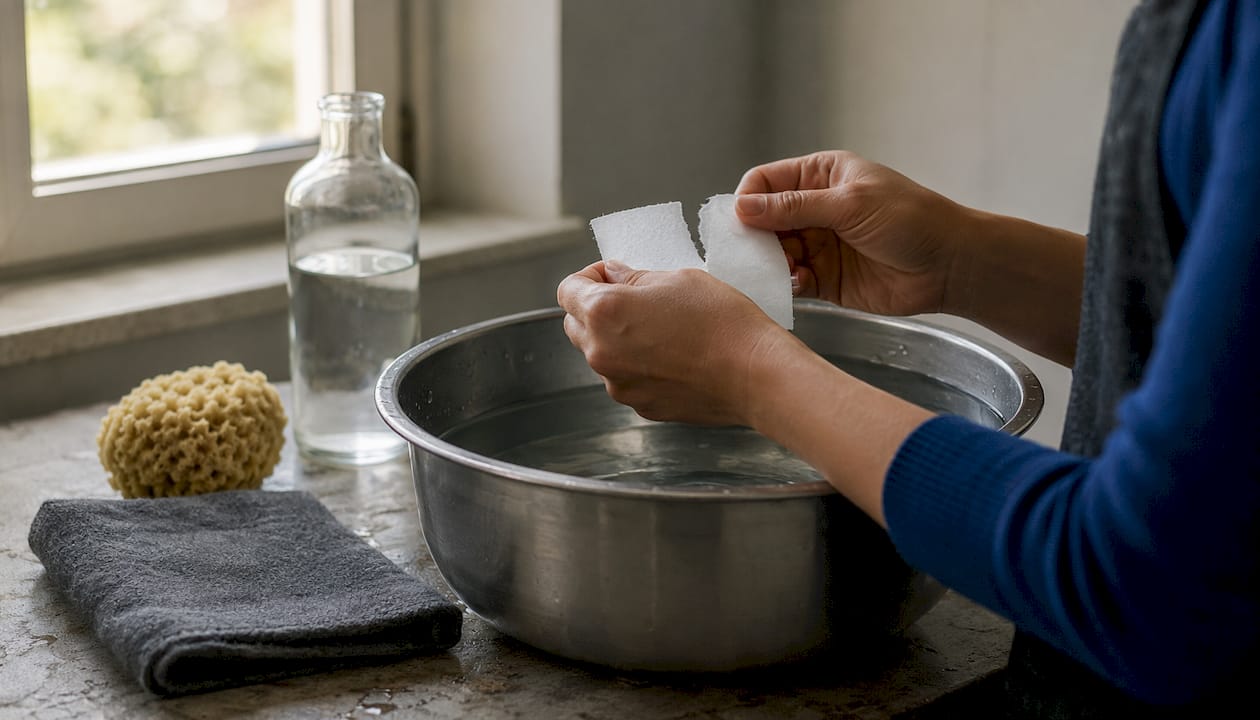
- For hand washes: dissolve the sheet in water first, then add clothes and agitate.
- For machine washes: place the sheet at the back of the drum before loading.
- For heavy soils: apply a small amount of concentrated soap directly to the stain before washing.
- Check packaging for cold-water and dissolution claims before you buy.
Pro Tip: If you’re washing in hard water, tear the sheet in half and dissolve each half separately before combining. It speeds up full dissolution and improves lather distribution.
Are pre-portioned detergents safe for sensitive skin in shared facilities?
Pre-dosed, hypoallergenic formulas reduce two of the most common irritation triggers in communal laundry: residue from overdosing and contact with harsh surfactants. When every person in a shared facility uses the same fixed dose, residue buildup in the machine drops, and the next person’s load comes out cleaner.
Hypoallergenic claims on packaging typically mean the formula omits common allergens like optical brighteners, synthetic fragrances, and certain preservatives. Always check the ingredient list if you have a known sensitivity. Purecise’s formula is designed for sensitive skin and free from harsh chemicals, which makes it a practical choice for shared barracks or family use.
A note on communal machines: Overdosing in a shared washer leaves surfactant residue in the drum that transfers to the next user’s load. A fixed-dose sheet eliminates that variable entirely, protecting everyone who uses the machine after you.
- Fixed doses prevent the accidental double-pour that leaves residue on fabric.
- Fragrance-free and dye-free formulas reduce contact dermatitis risk.
- Check labels for “hypoallergenic” and review the ingredient list for your specific sensitivities.
For more on avoiding overdosing in shared machines, Purecise’s guidance covers the most common mistakes.
How many pre-portioned units should you pack for a deployment?
The formula is straightforward: days ÷ days between washes × loads per wash day = units needed. Add a buffer to account for extra usage or missed wash days.
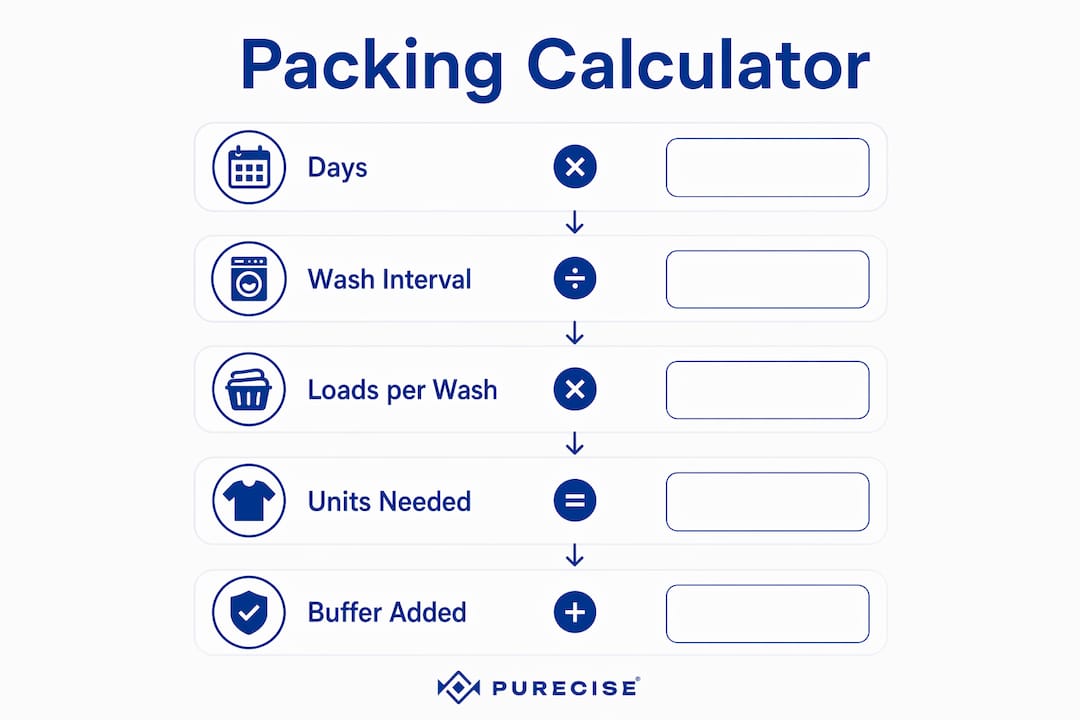
Example 1: 7-day trip, washing every 3 days, one load per session. 7 ÷ 3 = ~2.3 sessions, round up to 3 loads. Add 1 buffer unit. Pack 4 sheets.
Example 2: 30-day deployment, weekly laundry, one load per week. 30 ÷ 7 = ~4.3 sessions, round up to 5 loads. Add 1 buffer. Pack 6 sheets.
- Count your deployment days.
- Estimate how often you’ll wash (realistically, not optimistically).
- Multiply sessions by loads per session.
- Add 15–20% for heavy-soil days or missed wash days.
- If you’re sharing a machine with others, you may do smaller, more frequent loads. Adjust accordingly.
- Heavy physical work means heavier soiling. Budget one extra sheet per week for pre-treating.
- Sheets are light enough that overpacking by a few units costs almost nothing in weight.
Why solid formats beat liquids for transport and travel
Solids avoid the TSA 100 mL rule and remove leak risk entirely. That’s the short answer. The longer one involves what happens to liquid pods under pressure. Pods can rupture when gear shifts, altitude changes, or heavy items compress them in a bag. A ruptured pod turns your deployment bag into a detergent-soaked mess.
Sheets don’t have that problem. They’re flat, dry, and structurally stable under pressure. If you prefer pods, store them in a rigid container with a secure lid. For rough transport, sheets are the safer choice.
Pro Tip: Store sheets in a small zip-lock bag inside a rigid travel case. In humid climates, moisture can cause sheets to stick together. A sealed bag prevents that and keeps them dry through any weather.
- Sheets pass through airport security without declaration or liquid limits.
- No risk of altitude-related pod rupture in cargo holds or mountain environments.
- In hot, humid climates, airtight storage keeps sheets from clumping or partially dissolving.
What’s the environmental case for pre-portioned detergent?
Unit-dose formats reduce lifecycle impact in two concrete ways: they eliminate plastic bottles and they prevent overuse. Concentrated sheets ship at a fraction of the weight of liquid detergent, which cuts transport emissions per load. And because each unit is fixed, you can’t accidentally use three times the recommended amount.
The PVA film used in most sheets and pods dissolves under standard wastewater conditions, releasing the detergent without leaving plastic residue. Outer packaging for sheets is typically cardboard or a minimal paper envelope, both recyclable.
- Look for EPA Safer Choice certification or equivalent third-party verification on the label.
- Cardboard or paper outer packaging is recyclable; check local guidelines.
- Concentrated detergent sheets reduce shipping emissions compared to liquid bottles of equivalent wash count.
- Choosing cold-water-compatible sheets further cuts energy use per load.
Common questions about detergent sheets answered
Do sheets actually clean as well as liquid? Yes, for everyday garments and moderate soiling. For heavy mud or grease, pre-treat the stain first, then wash with the sheet.
Are they more expensive per load? Cost per load varies by brand and pack size. Sheets often cost comparably to mid-range liquids when you account for the fact that liquid users routinely overdose by 20–50%.
What’s the shelf life? Most sheets remain stable for 1–2 years in a cool, dry environment. Heat and humidity accelerate degradation, so sealed storage matters on long deployments.
What if a sheet gets wet before use? It will partially dissolve. If it’s still mostly intact, it can still work in a wash. If it’s dissolved into a sticky mass, it’s unusable. Airtight storage prevents this entirely.
Does cold water really work? Modern sheets are formulated for cold-water performance. The ACI confirms that unit-dose formats are designed for cold washes, which also saves energy.
Purecise Toss & Go sheets: a field-ready option
Purecise Toss & Go sheets check every box for deployment use: pre-measured dose, hypoallergenic formula, complete dissolution in any wash type, and packaging small enough to fit in a cargo pocket. The boxed format holds a month’s supply in a package smaller than a paperback book.
- Pre-dosed: No measuring, no guessing, no residue from overdosing.
- Hypoallergenic: Free from harsh chemicals; suitable for sensitive skin and shared facilities.
- Cold-water soluble: Works in hand washes, HE machines, and everything in between.
- 100% money-back guarantee: Purecise backs the product fully if it doesn’t perform.
- Compact: A full month’s supply stores in a pocket or side pouch of a deployment bag.
Pro Tip: Pack your sheets in a small zip-lock inside the bag’s document pocket. Label it with the number of sheets inside so you can track your supply mid-deployment without counting.
Key Takeaways
Pre-portioned detergent works for deployment bags because it fixes the dose, removes leak risk, and cuts packing weight to almost nothing.
| Point | Details |
|---|---|
| Fixed dosing improves results | Pre-portioned units eliminate overdosing residue and under-dosing failures in shared or field conditions. |
| Solid formats beat liquids for transport | Sheets avoid TSA liquid limits and won’t rupture under pressure or altitude changes the way pods can. |
| Packing math is simple | Divide deployment days by wash frequency, multiply by loads per session, then add a 15–20% buffer. |
| Environmental benefits are real | Concentrated sheets ship lighter, eliminate plastic bottles, and prevent overuse that wastes detergent. |
| Purecise Toss & Go sheets | Pre-dosed, hypoallergenic, cold-water soluble, and backed by a 100% money-back guarantee for deployment use. |
The case for pre-portioned detergent is stronger than it looks
The conventional wisdom treats detergent as a minor packing detail. It isn’t. Overdosing in a shared machine leaves residue that irritates skin over weeks of wear. A cracked liquid bottle ruins gear that took months to break in. And measuring out powder in a dim barracks at 0500 is a small but real friction that adds up.
What pre-portioned formats actually solve is the cognitive load of laundry in constrained conditions. You don’t think about it. You toss a sheet in, wash, and move on. The trade-off is real: for heavily soiled gear, you’ll want a small pre-treat option alongside your sheets. But for the 90% of washes that are everyday garments and moderate soiling, a sheet handles it cleanly and leaves no trace of plastic behind. That combination of reliability and reduced waste is what makes the format worth committing to, not just for deployments, but as a permanent switch.
Ready to pack smarter for your next deployment?
Purecise Toss & Go sheets give you a month’s worth of laundry in a package that fits in your hand. No bottles, no measuring, no leaks. The hypoallergenic formula works in cold water, shared machines, and field hand washes. Every purchase is backed by a 100% money-back guarantee, so there’s no risk in trying them before your next trip out.
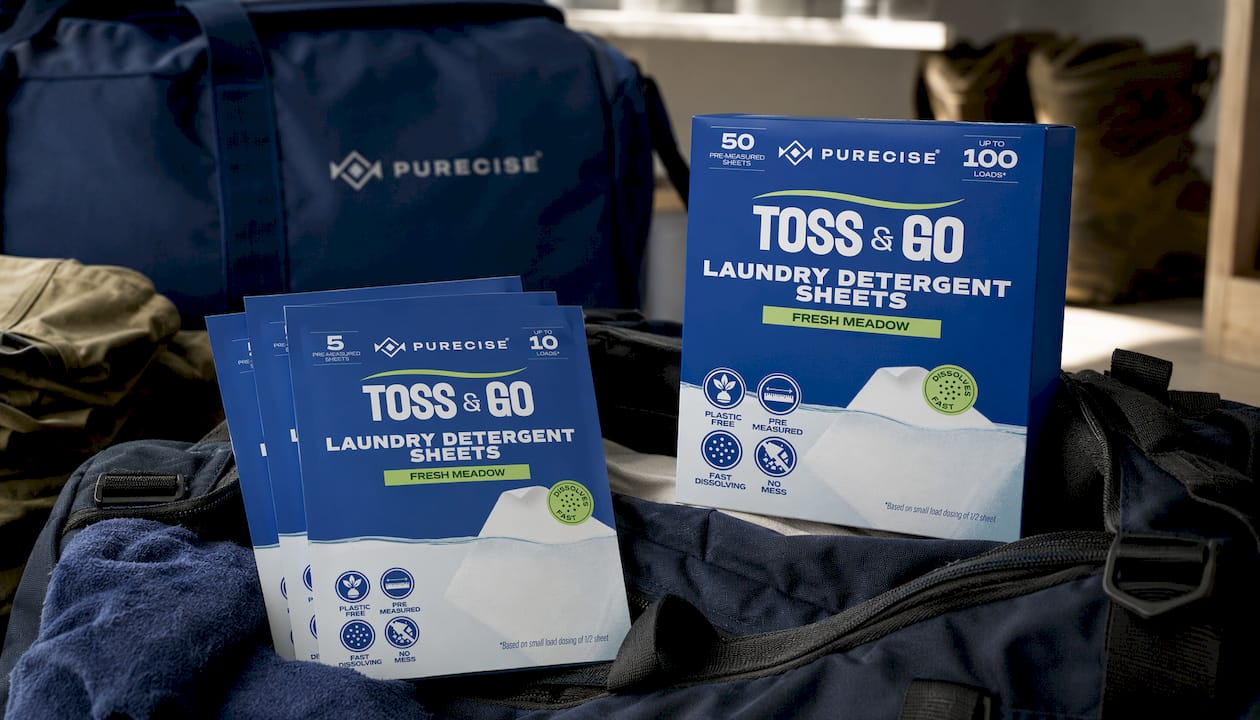
Pick up the detergent sheets box or grab the travel envelope pack if you want a slimmer option for shorter deployments. Both ship ready to toss straight into your bag.
Useful sources
- American Cleaning Institute: Unit Dose Detergents — explains PVA film chemistry, cold-water performance, and dissolution mechanics.
- IPRD/Evalueserve: The business case for designing out overconsumption — market research on unit-dose adoption and dosing volatility reduction.
- DELPACK: Why consumers switch from liquid to capsules — industry analysis on dosing consistency and wash performance.
- DistinctiveTravels: Best travel detergent packs — practical travel comparisons of sheets vs. powder vs. liquid for packing weight and TSA compliance.
- DistinctiveTravels: Sheets vs. liquid packets — cold-water and hand-wash performance comparison.
- Vigour Group: 5 ways to buy travel-size laundry detergent — expert guidance on pod rupture risk and storage for rough transport.
- Purecise: Laundry Detergent Sheets Box — product details, hypoallergenic claims, and money-back guarantee.
- Purecise: Best Travel Laundry Detergent for Carry-On Packing — brand guidance on packing, measuring mistakes, and travel use.
Recommended
Pre-Portioned Detergent Saves Your Trips Downstairs
Why Laundry Detergent Child Poisoning Happens: A Parent's Guide
Related Posts

Remove Berry Stains: Cold Water First, Detergent Sheets on the Go

Remove Makeup Stains on the Go With a 10–15 Minute Pretreat

Remove Lipstick Stains: The First 15 Minutes, Plus Detergent Sheets

How Often to Wash Towels: Bath Weekly, Hand Towels Every Few Days

Detergent Allergy Rash: Test a Low Residue Wash Without Fragrance

Save Clothes From Mud Stains in 1–2 Hours With Premeasured Sheets

Fabric First Sweat Stain Fixes: Measured DIY Recipes and Sheets


