

How Concentrated Detergent Sheets Reduce Emissions
Concentrated detergent sheets are ultra-compact, water-light cleaning products that cut carbon emissions by eliminating the excess water mass and plastic packaging that drive up shipping weight in conventional liquid detergents. Up to 95% of liquid detergent is water, meaning most of what you ship, store, and throw away is not cleaning anything. Detergent sheets strip that weight out entirely. The result is a product format where understanding how concentrated detergent sheets reduce emissions starts with one simple fact: lighter products burn less fuel to move. Purecise builds on this principle with its Toss & Go laundry detergent sheets, pre-dosed and plastic-free, designed to shrink your laundry’s carbon footprint from the moment they leave the warehouse.
How do concentrated detergent sheets reduce transportation emissions?
Transportation is the single largest source of emissions in the lifecycle of most cleaning products. The reason is straightforward: liquid detergents are heavy, and weight drives fuel consumption. Concentrated packaging can reduce shipping weight by 75–95% compared to liquids, which translates to carbon emission reductions of 60–90% on the transport segment alone. That is not a marginal improvement. It is a structural one.
The mechanism works at several levels:
- Water elimination. Sheets contain almost no water. Liquid detergents are mostly water, which adds mass with zero cleaning benefit.
- Reduced fuel per load. A lighter shipment requires less fuel per unit of product delivered. Fewer loads per truck means fewer trips.
- Higher packing density. Flat, thin sheets pack far more tightly than bottles. More loads per pallet means fewer pallets per truck, compounding the fuel savings.
- Smaller box volume. Reduced product size means smaller outer cartons, which further improves how efficiently trucks and containers are loaded.
Real-world emission savings depend on logistics factors like shipping route, consolidation, and pallet utilization. A product shipped domestically in consolidated loads will have a meaningfully lower per-load footprint than one shipped internationally in partial loads. Two products with identical detergent sheets can carry very different carbon footprints depending on how they move through the supply chain. This is why packaging weight alone does not tell the whole story, but it remains the most controllable variable for both brands and consumers.
Pro Tip: When comparing eco-friendly detergent sheets, check where the product ships from. Domestic sourcing and consolidated shipping reduce per-load emissions beyond what the product format alone can achieve.

What impact does packaging have on detergent sheet emissions?
Packaging is the second major lever in the concentrated detergent environmental impact equation. Liquid detergents typically ship in rigid plastic bottles, which add weight, require petroleum to produce, and often end up in landfill. Detergent sheets sidestep most of that.
Most sheet formats use one of two packaging types:
- Recyclable cardboard or paperboard. Lightweight, widely recyclable, and produced from renewable materials. This format adds almost no shipping weight and generates far less waste than a plastic jug.
- Water-soluble PVA film. Used in some sheet and pod formats as an inner wrapper. Detergent-grade PVA dissolves and biodegrades during wastewater treatment and does not persist as microplastic pollution. This distinguishes it from conventional plastic films.
Switching to cardboard and ultra-concentrated formats significantly reduces both plastic waste and shipment carbon footprint. The packaging weight reduction compounds the benefit from the lighter detergent formula itself. A full month’s supply of detergent sheets fits in an envelope-sized box, compared to a bulky plastic jug that takes up shelf space and adds dead weight throughout the supply chain.
A common concern is whether water-soluble film packaging is truly safe for waterways. The American Cleaning Institute confirms that detergent-grade PVA is engineered to dissolve and biodegrade in wastewater treatment systems. The key distinction is formulation: detergent-grade PVA is not the same as conventional plastic film, and the environmental concern applies to the latter, not the former.
Pro Tip: Look for detergent sheets packaged in cardboard or paper rather than plastic pouches. The sustainable packaging choice compounds the emission savings from the concentrated formula itself.
What factors determine whether emission reductions actually happen?
Concentration is a necessary condition for lower emissions. It is not a sufficient one. Correct dosing and full dissolution are what convert a lighter product into actual emission savings. Here is how to make sure the math works in your favor:
- Use the right dose. Detergent sheets are pre-dosed, which removes the guesswork. Use one sheet per standard load. Overdosing creates excess suds that require additional rinse cycles, adding water and energy use that erodes the emission benefit.
- Place the sheet correctly. Drop the sheet directly into the drum before adding clothes. This maximizes contact with water and speeds dissolution.
- Check your water temperature. Most quality sheets dissolve in cold water. If your cycle is very short or the water is extremely cold, partial dissolution can leave residue on fabric. Residue triggers rewashing, which adds energy use and negates the savings.
- Wash full loads. Running half-empty machines wastes water and energy regardless of detergent format. Full loads maximize the emission efficiency of every wash.
- Use cold water where possible. Cold water washing lowers home energy use, amplifying the carbon footprint reduction already achieved through lighter shipping and packaging.
Overdosing concentrated detergent leads to additional rinsing cycles that offset the emission savings from the lighter product. The pre-dosed format of sheets like Purecise’s Toss & Go eliminates this risk by design. You cannot accidentally use too much when the dose is already measured.
Pro Tip: Cold water washing is the single easiest habit change you can make to reduce laundry emissions at home. Pair it with concentrated sheets and you address both the supply chain and the in-home energy footprint simultaneously.
How do detergent sheets compare to other formats in emission impact?
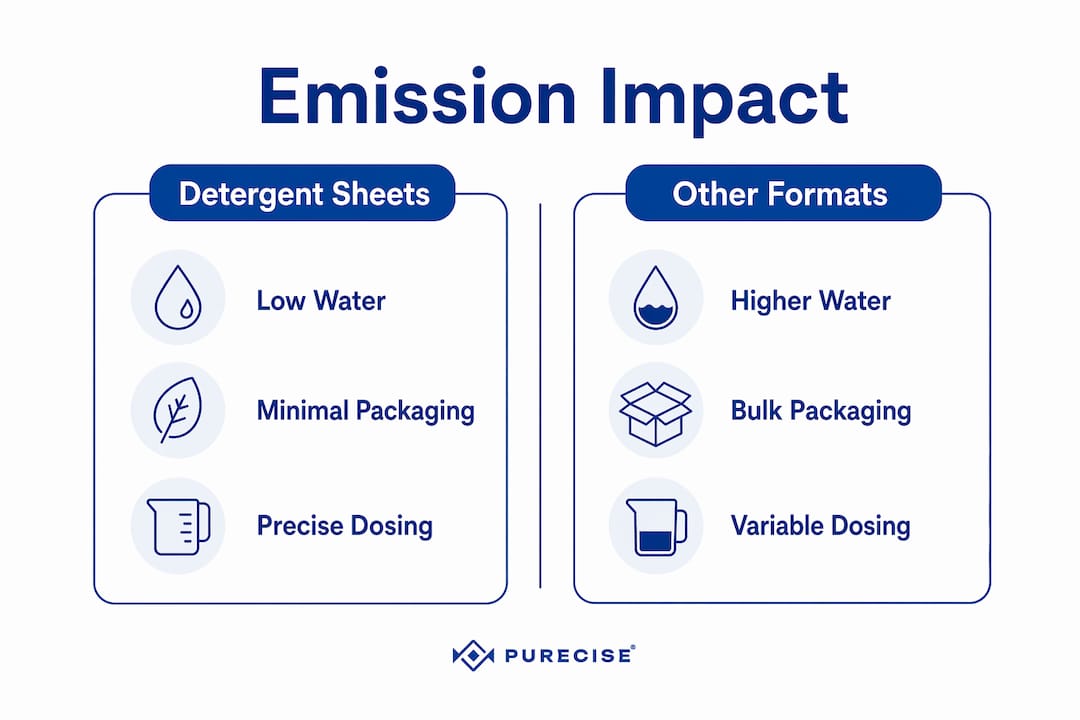
Not all low-water detergent formats are equal. Understanding where sheets sit relative to powders and liquids helps you make a genuinely informed choice.
| Format | Water content | Packaging | Shipping weight | Dosing precision | Cold water performance |
|---|---|---|---|---|---|
| Liquid detergent | Very high (up to 95%) | Rigid plastic bottle | Heavy | Measured by cap, prone to overdose | Good |
| Powder detergent | Low | Cardboard box or plastic bag | Moderate | Measured by scoop, prone to overdose | Variable |
| Concentrated sheets | Near zero | Cardboard or paper envelope | Very light | Pre-dosed, no measuring needed | Good to excellent |
Powder detergents do reduce water content compared to liquids, which gives them a shipping advantage over liquid formats. Their packaging, however, often includes plastic inner liners or bags, and the scoop-based dosing system leads to overdosing in practice. Liquids carry the heaviest water weight and the most plastic packaging, making them the least efficient format for reducing laundry emissions across the supply chain.
Sheets outperform both formats on compactness and dosing convenience. The pre-dosed format removes human error from the equation. The near-zero water content and minimal packaging combine to produce the lowest transport-related carbon footprint of the three formats. The tradeoff is that sheets require full dissolution to perform, which means cycle length and water temperature matter more than they do with liquids.
For eco-conscious consumers, the efficiency and sustainability benefits of concentrated sheets are clearest when you account for the full product lifecycle: manufacturing, packaging, shipping, in-home use, and disposal. Sheets win on every stage except, potentially, very short cold cycles where dissolution needs attention.
Key Takeaways
Concentrated detergent sheets reduce emissions by removing water mass, minimizing packaging, and enabling precise dosing that prevents waste-generating rewash cycles.
| Point | Details |
|---|---|
| Water elimination drives the biggest gain | Up to 95% of liquid detergent is water; sheets remove this mass and cut transport emissions dramatically. |
| Packaging compounds the savings | Cardboard or paper packaging replaces plastic bottles, reducing both waste and shipping weight. |
| Correct dosing is non-negotiable | Overdosing triggers extra rinse cycles that erase the emission benefit of a lighter product. |
| Cold water washing multiplies the impact | Pairing sheets with cold water cycles reduces in-home energy use on top of supply chain savings. |
| Logistics shape the final footprint | Domestic sourcing and consolidated shipping reduce per-load emissions beyond what product format alone achieves. |
Why the supply chain matters as much as the formula
Most conversations about eco-friendly detergent sheets focus on what is in the product. After working closely with sustainable laundry solutions, the more revealing question is how the product moves.
A beautifully concentrated sheet shipped in a half-empty truck from overseas can carry a higher per-load footprint than a powder shipped domestically in a full pallet. Concentration is necessary. It is not the whole answer. The brands that take emissions seriously track logistics as carefully as they track formula.
The other thing worth saying plainly: pre-dosed formats are not just convenient. They are a structural fix for one of the most persistent problems in sustainable cleaning, which is that consumers overdose liquid and powder detergents constantly. Overdosing is not a character flaw. It is a design flaw in products that require you to measure. Sheets remove that variable entirely.
If you are serious about reducing your laundry’s carbon footprint, the format choice matters. So does where you buy from, how full your machine is, and whether you default to cold water. None of these changes are hard. Together, they add up to a meaningfully lower footprint than switching detergent format alone.
— Purecise
Purecise laundry sheets: a cleaner choice for eco-conscious households
Purecise Toss & Go laundry detergent sheets are plant-based, pre-dosed, and packaged without bulky plastic. Each sheet dissolves completely in any wash type, including cold water cycles, and delivers effective cleaning without harsh chemicals.
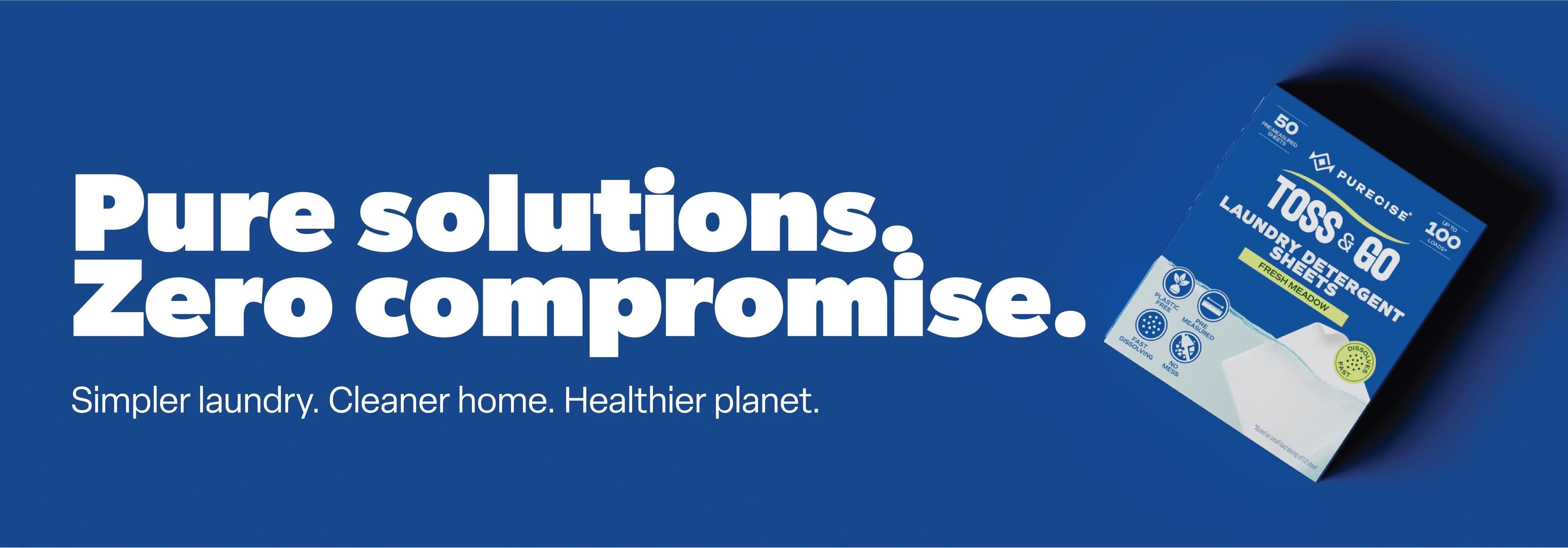
The Purecise detergent sheet envelopes and box format both ship in minimal, lightweight packaging that compounds the emission savings from the concentrated formula. A full month’s supply fits in your pocket. Purecise backs every order with a 100% money-back guarantee, so trying a genuinely lower-footprint laundry routine carries no risk.
FAQ
How do detergent sheets lower carbon emissions?
Detergent sheets remove the water mass that makes liquid detergents heavy to ship. Lighter products require less fuel per load delivered, cutting transport-related carbon emissions by up to 60–90% compared to liquid formats.
Are detergent sheet wrappers safe for the environment?
Detergent-grade PVA film dissolves and biodegrades during wastewater treatment and does not persist as microplastic pollution, according to the American Cleaning Institute. Cardboard outer packaging is recyclable and adds minimal weight.
Does overdosing detergent sheets cancel out the emission savings?
Yes. Overdosing creates excess suds that require extra rinse cycles, adding water and energy use that offsets the lighter product’s emission benefit. Pre-dosed sheets like Purecise eliminate this risk by design.
Do detergent sheets work in cold water?
Most quality concentrated sheets dissolve effectively in cold water. Cold water washing also reduces in-home energy use, which amplifies the carbon footprint reduction already achieved through lighter shipping and packaging.
Are powder detergents as eco-friendly as sheets?
Powder detergents have lower water content than liquids, which helps on shipping weight. Sheets outperform powders on packaging efficiency, dosing precision, and compactness, giving sheets a lower overall transport-related carbon footprint.
Recommended
What Does Free and Clear Detergent Mean for Sensitive Skin?
How to Read Laundry Detergent Ingredient Labels
Related Posts

Remove Lipstick Stains: The First 15 Minutes, Plus Detergent Sheets

How Often to Wash Towels: Bath Weekly, Hand Towels Every Few Days

Detergent Allergy Rash: Test a Low Residue Wash Without Fragrance

Save Clothes From Mud Stains in 1–2 Hours With Premeasured Sheets

Fabric First Sweat Stain Fixes: Measured DIY Recipes and Sheets

Whiten White Clothes, No Chlorine: 4–8 Hour Soak, Premeasured Sheets

Remove Blood Stains from Clothes: Cold Water, Enzyme Soak, No Dryer


