

How to Read Laundry Detergent Ingredient Labels
Laundry detergent ingredient labels are standardized documents that reveal a product’s chemical composition, safety risks, and environmental impact in a single glance. Most people skip straight to the dosing instructions, but the ingredient list and signal words carry the information that actually protects your health. Fragrance alone can legally hide up to 3,000 unlisted chemicals, making it the single biggest hidden allergen on any detergent label. Third-party certifications like EPA Safer Choice and EWG Verified exist precisely because marketing language cannot be trusted on its own. Once you know what to look for, reading a detergent label takes under two minutes.
How to read laundry detergent ingredient labels: what the list structure tells you
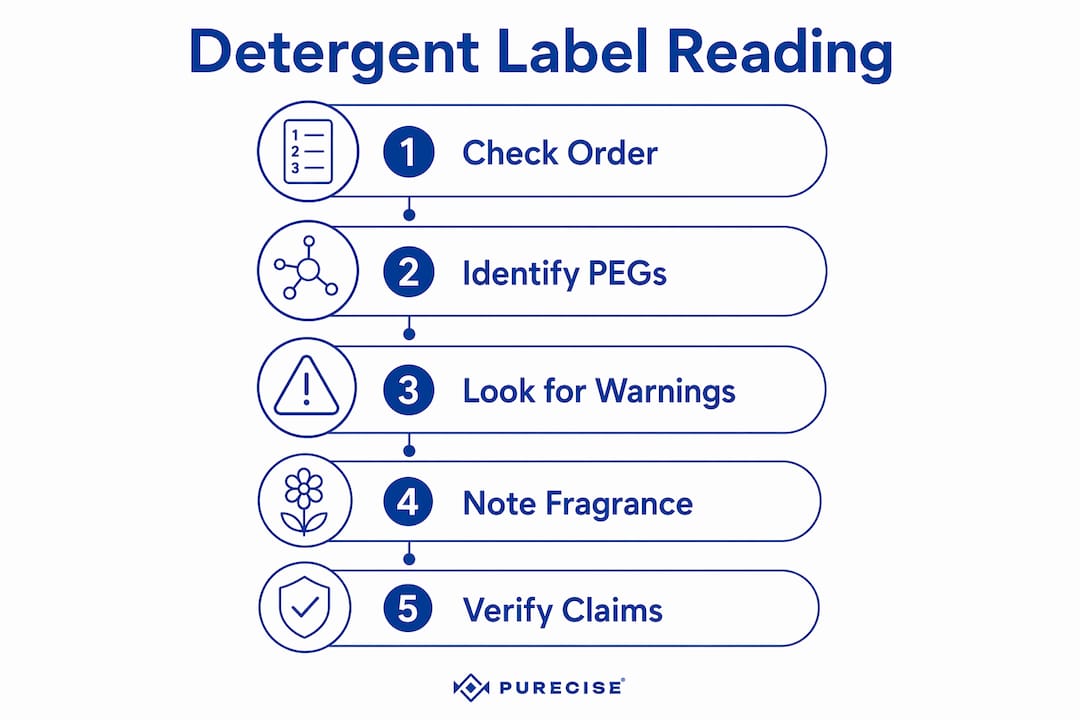
Ingredient lists on cleaning products follow a strict rule: ingredients appear from highest to lowest concentration. The EPA requires this ordering, so whatever appears first makes up the largest share of the formula. Water typically leads the list on liquid detergents, followed by surfactants and then smaller functional additives.
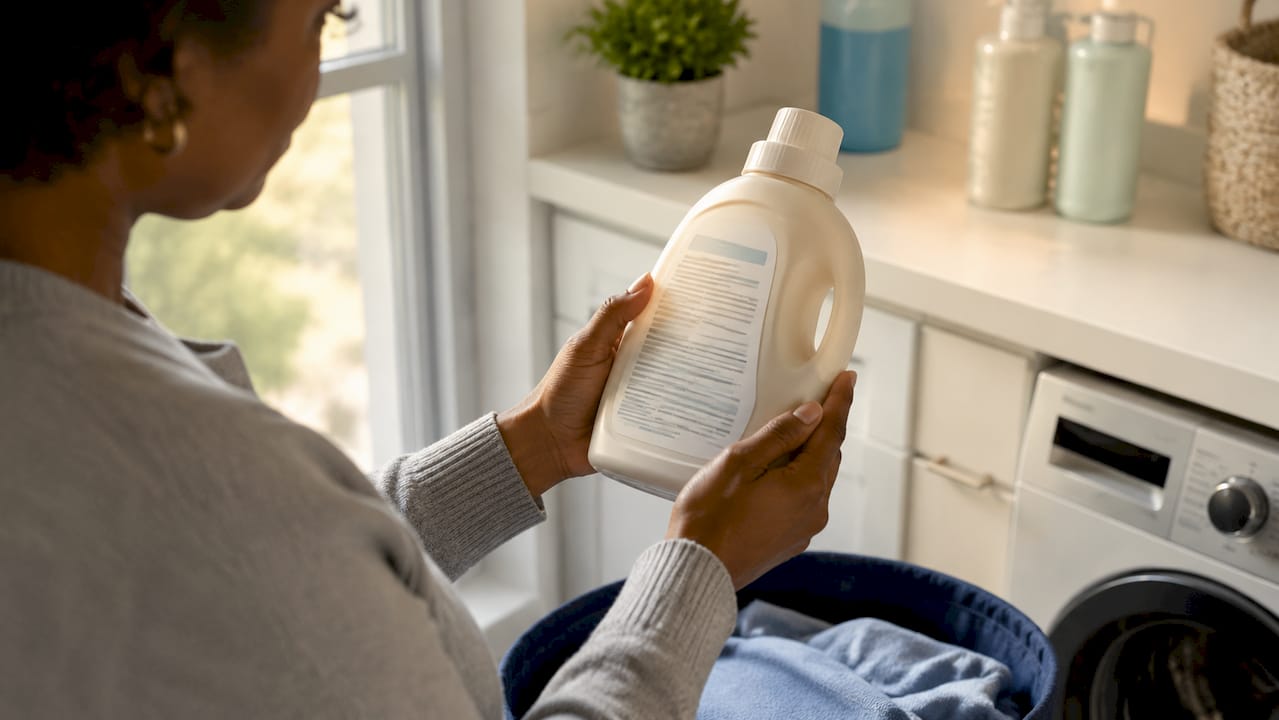
Vague terms like “surfactant blend” hide specific chemical identities and signal low transparency. A brand willing to name each ingredient specifically, such as sodium lauryl sulfate or cocamidopropyl betaine, is giving you verifiable information. A brand that groups chemicals under a category label is asking you to trust them without evidence.
Here are the main ingredient categories you will encounter on a detergent label:
- Surfactants: The cleaning workhorses that lift dirt and grease from fabric. Common examples include sodium laureth sulfate (SLES) and alkyl polyglucosides.
- Enzymes: Proteins like protease, amylase, and lipase that break down specific stain types. Protease targets protein stains like blood; amylase targets starch; lipase targets fats.
- Preservatives: Chemicals like methylisothiazolinone (MIT) that prevent bacterial growth in liquid formulas. MIT is a known skin sensitizer.
- Optical brighteners: Synthetic compounds that absorb UV light and re-emit it as visible blue light, making whites appear whiter. They do not clean. They stay on fabric and can irritate sensitive skin.
- Fragrance: A single word that legally obscures hundreds of chemicals, including phthalates, which are endocrine disruptors.
A short ingredient list, generally under 15 items, tends to reflect a simpler and more intentional formula. Long lists with vague category terms often indicate cost-cutting or chemical complexity that the brand prefers not to detail.
One critical limitation: not every harmful substance appears on the label at all. 1,4-Dioxane is a probable human carcinogen that forms as a byproduct during the ethoxylation process used to make SLES and PEG compounds. Because it is a manufacturing contaminant rather than an intentional ingredient, no label disclosure is required. This means the ingredient list alone cannot tell you everything.
Pro Tip: If you see SLES, sodium laureth sulfate, or any ingredient ending in “-eth” or “PEG,” the product may contain trace 1,4-Dioxane. Look for brands that use third-party testing to verify low or zero levels.
What do hazard signal words on detergent labels mean?
Signal words are not marketing language. Labels use three regulated hazard signal words: “Danger,” “Warning,” and “Caution.” Each communicates a specific toxicity level defined by federal standards, not chosen by the brand.
Here is what each word means in practice:
- Danger indicates a highly toxic product. This level requires maximum caution, especially around children, food preparation surfaces, and pets. Products labeled “Danger” can cause serious harm through skin contact, inhalation, or ingestion.
- Warning indicates moderate toxicity. These products require careful handling but pose lower risk than “Danger” products under normal use conditions.
- Caution indicates low toxicity. This is the most common signal word on household detergents and suggests the product is relatively safe when used as directed.
The directions and safety section of the label does more than tell you how much detergent to use. This section specifies required PPE, dilution ratios, and first-aid protocols for accidental exposure. If a label says to wear gloves during use, that instruction exists because the formula can irritate or damage skin on direct contact.
Reading the first-aid instructions before an accident happens is the practical move. If a child ingests detergent, the label tells you whether to induce vomiting or not, and what to tell poison control. Skipping this section until an emergency creates a dangerous delay.
Pro Tip: Photograph the label’s safety section on your phone before storing the detergent. If an accident happens, you have the first-aid instructions immediately without searching for the bottle.
Are “natural” and “eco-friendly” claims on detergent labels trustworthy?
The short answer is no, not without verification. Terms like “natural,” “plant-based,” and “eco-friendly” carry no consistent legal definition in the United States. Any brand can print them on a label without meeting a specific standard. These marketing claims are largely unregulated, which means they function as advertising rather than safety information.
“Hypoallergenic” is a slightly different case, but still limited. Hypoallergenic claims mean fewer irritants are present, not zero irritants. Individual sensitivity varies widely, so a product that causes no reaction in most people can still trigger a reaction in someone with a specific allergy. The label cannot account for your personal chemistry.
The claims that do carry weight are third-party certifications:
- EPA Safer Choice: Requires every ingredient to meet safety standards for human health and environmental impact. The EPA reviews the full formula, not just the marketing copy.
- EWG Verified: The Environmental Working Group independently assesses ingredients against its database of health and environmental hazard data. Products must meet strict criteria on transparency and safety.
- USDA Certified Biobased: Confirms the percentage of ingredients derived from biological sources, but does not assess toxicity.
“Transparency in naming ingredients builds consumer trust, while vague terms indicate brands ask consumers to trust without evidence.” Brands that list every ingredient by its specific chemical name and carry independent certification are demonstrating accountability. Brands that rely on “natural” and “green” without certification are relying on your willingness to take their word for it.
Cross-check every marketing claim against the actual ingredient list. If a product claims to be “fragrance-free” but lists “parfum” or “fragrance” in the ingredients, the label is contradictory. “Fragrance-free” means no fragrance compounds were added. “Unscented” means the product may contain masking agents that neutralize odor but still introduce chemical exposure.
How to choose a safer detergent using what you read on the label
Applying label knowledge to a purchase decision takes a clear checklist. The goal is to match the product’s actual formula to your household’s specific needs, whether that means avoiding allergens, reducing environmental impact, or both.
Check the full ingredient list before anything else. If “fragrance” appears anywhere and you or a family member has sensitive skin, that product carries real risk. Fragrance sensitivity affects roughly 3.5% of the general population and can trigger contact dermatitis, respiratory irritation, and headaches. Choosing fragrance-free is the single most effective step for sensitive households.
The following comparison shows what to look for versus what to avoid when reading a detergent label:
| Label feature | Safer choice | Red flag |
|---|---|---|
| Ingredient naming | Specific chemical names listed | Vague terms like “surfactant blend” |
| Fragrance | “Fragrance-free” with no fragrance in list | “Fragrance,” “parfum,” or “unscented” |
| Signal word | “Caution” | “Danger” for a standard household product |
| Certifications | EPA Safer Choice or EWG Verified | No third-party certification present |
| Preservatives | None or low-concern options | Methylisothiazolinone (MIT) or formaldehyde-releasing agents |
| Optical brighteners | Absent | Listed as stilbene derivatives or fluorescent whitening agents |
Beyond the comparison, these steps apply every time you evaluate a new product:
- Verify the signal word matches the cleaning task. A heavy-duty industrial cleaner rated “Danger” is not appropriate for everyday home laundry.
- Check for known allergenic ingredients like MIT, benzisothiazolinone, and certain preservatives if you have a history of skin reactions.
- Store the product exactly as the label directs. Temperature, container type, and ventilation requirements are listed for safety reasons, not convenience.
- Prioritize products with short, specific ingredient lists and at least one recognized third-party certification.
The directions section also tells you the correct dose. Using more detergent than recommended does not clean better. It leaves residue on fabric that can irritate skin on the next wear.
Key takeaways
Reading detergent labels with attention to ingredient order, signal words, and certifications is the most reliable way to protect your health and make genuinely sustainable choices.
| Point | Details |
|---|---|
| Ingredient list order matters | Ingredients appear highest to lowest concentration, so position reveals formula priorities. |
| “Fragrance” is a legal loophole | A single word can hide thousands of chemicals; choose fragrance-free for sensitive skin. |
| Signal words are regulated | “Danger,” “Warning,” and “Caution” indicate toxicity levels set by federal standards, not marketing. |
| Marketing claims need verification | “Natural” and “eco-friendly” are unregulated; EPA Safer Choice and EWG Verified are not. |
| Labels have limits | Contaminants like 1,4-Dioxane do not appear on ingredient lists despite being a health concern. |
Why label literacy changed how I think about detergent
Most consumers treat the detergent label as packaging, not information. I used to do the same. The shift happened when I started connecting skin reactions in my household to specific ingredients, not to “sensitive skin” as a vague condition. The culprit was methylisothiazolinone, sitting quietly in the middle of a very long ingredient list on a product marketed as “gentle.”
What struck me most was how much the label structure itself signals brand intent. A company that names every ingredient specifically, carries EPA Safer Choice certification, and uses a “Caution” signal word is making a public commitment. A company that hides behind “fragrance,” “surfactant blend,” and no certification is making a different kind of statement. The label is not just a regulatory document. It reflects how much a brand respects the person buying the product.
The difference between sensitive and regular detergents is not always obvious from the front of the bottle. It lives in the ingredient list. Consumers who learn to read that list stop being passive buyers and start making choices that actually match their needs. That shift in behavior, multiplied across millions of households, creates real market pressure for cleaner formulas. Brands respond to what people buy. Label literacy is not just a personal health tool. It is how consumers shape what gets made.
— Purecise
Purecise laundry sheets: what the label actually says
Purecise built its Toss & Go laundry detergent sheets around the principle that every ingredient should be named, verified, and defensible. The formula is plant-based, fragrance-free, and carries no optical brighteners or formaldehyde-releasing preservatives.
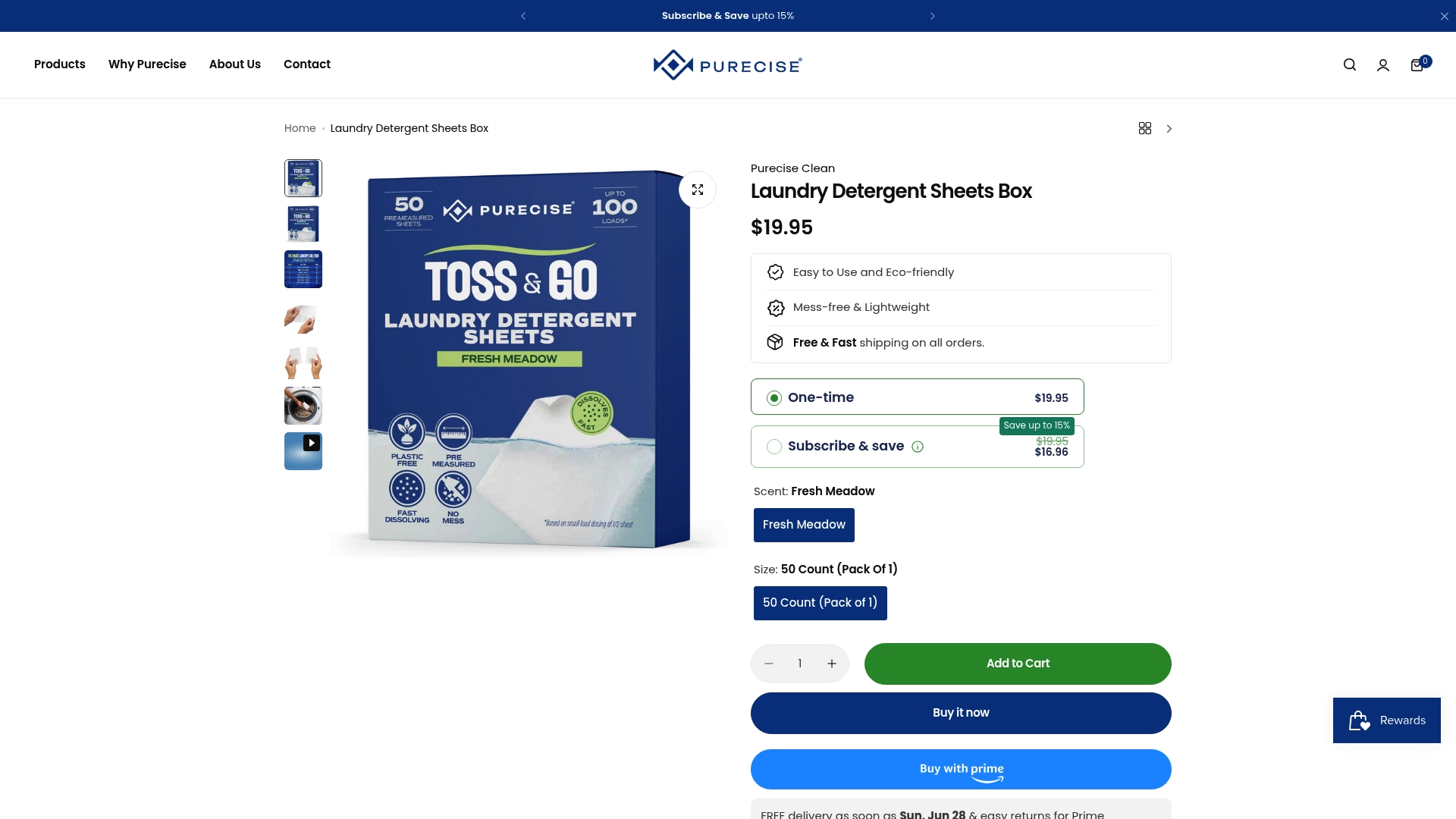
Each sheet is pre-dosed, which eliminates the measuring errors that lead to residue buildup and skin irritation. The formula dissolves completely in any water temperature, leaving no chemical film on fabric. For households managing sensitive skin, the hypoallergenic formula skips the ingredients that most commonly trigger reactions. You can try Purecise detergent sheets in envelopes or pick up a full box of detergent sheets, both backed by a 100% money-back guarantee.
FAQ
What does “fragrance-free” mean on a detergent label?
“Fragrance-free” means no fragrance compounds were added to the formula. It is safer for sensitive skin than “unscented,” which may still contain masking agents that neutralize odor but introduce chemical exposure.
How do I know if a detergent is truly safe for sensitive skin?
Check the ingredient list for fragrance, methylisothiazolinone, optical brighteners, and formaldehyde-releasing preservatives. Look for EPA Safer Choice or EWG Verified certification as independent confirmation of safety.
Why isn’t 1,4-Dioxane listed on detergent labels?
1,4-Dioxane is a manufacturing contaminant, not an intentional ingredient, so no label disclosure is required. It forms during the ethoxylation of SLES and PEG compounds and is a probable human carcinogen.
What is the difference between “Warning” and “Caution” on a label?
“Warning” indicates moderate toxicity and requires careful handling. “Caution” indicates low toxicity and is the most common signal word on standard household detergents used as directed.
Are short ingredient lists actually better?
A list under 15 ingredients generally reflects a simpler, more intentional formula. Very long lists with vague category terms often signal chemical complexity or cost-cutting that the brand prefers not to detail.
Recommended
How Concentrated Detergent Sheets Reduce Emissions
Top 5 Eco-Friendly Laundry Detergent Alternatives 2026
Related Posts

Whiten White Clothes, No Chlorine: 4–8 Hour Soak, Premeasured Sheets

Remove Blood Stains from Clothes: Cold Water, Enzyme Soak, No Dryer

Pet Owners: Remove Hair from 5 Surfaces with a Washer and Dryer Trick

Wash Sheets Weekly, Dry Them Fully, and Stop Dosing Guesswork

6 Quick Steps to Remove Oil Stains at Home Without Ruining Clothes

Save Space: 50 Sheets Cover 50–100 Loads for Airbnb Hosts

Cut Detergent 25–50%: Use Premeasured Sheets for Soft Water


