

Laundry Ingredients to Avoid for Sensitive Skin
Certain laundry ingredients are the direct cause of skin irritation, contact dermatitis, and eczema flare-ups in people with sensitive skin. The clinical term for this reaction is allergic or irritant contact dermatitis, and it affects millions of Americans who never connect their skin symptoms to what is sitting in their laundry room. Ingredients like sodium lauryl sulfate, synthetic fragrances, optical brighteners, and preservatives such as methylisothiazolinone are the most common triggers. Knowing which laundry ingredients to avoid for sensitive skin is the fastest way to stop the cycle of unexplained rashes, itching, and inflammation.
1. What surfactants in laundry detergents should sensitive skin avoid?
Surfactants are the cleaning agents in every detergent. They lift dirt and grease from fabric fibers by breaking surface tension between water and oil. The problem is that the most powerful surfactants do not stop working when the wash cycle ends. They stay in the fabric and keep breaking down the skin’s lipid barrier every time clothing touches your body.
Anionic surfactants are the most irritating class because they persist in fabric fibers and damage barrier proteins in the skin. Sodium lauryl sulfate (SLS) and sodium laureth sulfate (SLES) are the two most common anionic surfactants in mainstream detergents. SLS and SLES are directly linked to skin barrier disruption and chronic inflammation in sensitive individuals.
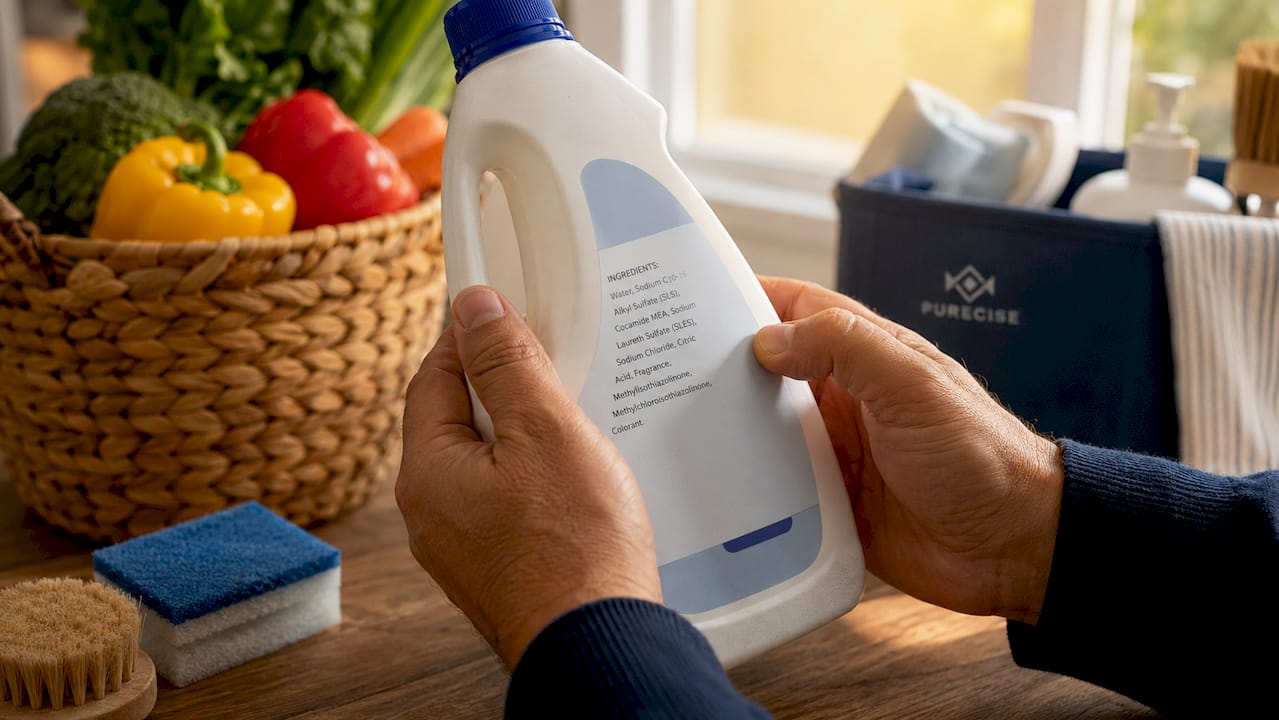
A better approach is to look for detergents built on nonionic or plant-derived surfactants. A balanced surfactant system that blends anionic and nonionic surfactants reduces harshness while maintaining cleaning power. Ingredients like decyl glucoside and coco glucoside are plant-based nonionic surfactants that clean effectively without the same irritation risk.
Watch for these surfactant names on ingredient labels:
- Sodium lauryl sulfate (SLS)
- Sodium laureth sulfate (SLES)
- Ammonium lauryl sulfate (ALS)
- Linear alkylbenzene sulfonate (LAS)
Pro Tip: Flip the bottle and read the ingredient list before buying. If SLS or SLES appears in the first five ingredients, that detergent is formulated for cleaning power, not skin safety.
2. Why fragrances, dyes, and optical brighteners trigger skin reactions
Fragrances, dyes, and optical brighteners serve no cleaning function. They exist to make a product smell pleasant, look appealing, or make whites appear whiter under UV light. For sensitive skin, they are among the most reliable common laundry allergy trigger ingredients on the market.
Fragrances, dyes, parabens, and brighteners in detergents are confirmed irritants that cause allergic reactions and eczema flare-ups. Fragrances are especially tricky because a single “fragrance” listed on a label can contain dozens of individual synthetic chemicals, each with its own irritation potential. Avoiding fragrances, dyes, and optical brighteners is the single most important step in reducing contact dermatitis risk, according to Consumer Reports and dermatologists who specialize in skin science.
Optical brighteners are UV-reactive compounds that coat fabric fibers and fluoresce under light to create the appearance of brightness. They do not rinse out fully, which means they sit against your skin all day. For people with eczema or rosacea, this prolonged contact is enough to trigger a flare.
Look for these terms on labels to identify products that skip these additives:
- “Fragrance-free” (not “unscented,” which may still contain masking agents)
- “Dye-free” or “free of dyes”
- “No optical brighteners” or “no fluorescent whitening agents”
- “Free and clear” formulations
3. How preservatives and enzymes worsen sensitive skin conditions
Preservatives keep liquid detergents shelf-stable by preventing bacterial and mold growth inside the bottle. That function is useful for the manufacturer. For your skin, it is a liability. Methylisothiazolinone (MI) and methylchloroisothiazolinone (MCI) are two preservatives commonly found in liquid detergents that are well-documented skin sensitizers. The European Scientific Committee on Consumer Safety has flagged MI as a contact allergen at concentrations used in rinse-off products.
Enzymes are a separate category of concern. Proteases, amylases, and lipases are added to detergents to break down protein, starch, and fat stains. They are effective cleaners, but enzyme-based detergents can trigger inflammatory responses in acne-prone skin and worsen conditions by supporting bacterial activity on the skin surface.
The cumulative effect matters here. One wash with an enzyme-heavy detergent may not cause a visible reaction. But weeks of repeated exposure to residual proteases and preservatives in your sheets, pillowcases, and clothing creates a slow-building irritation cycle that is hard to trace back to laundry.
Watch for these ingredients if your skin is severely reactive:
- Methylisothiazolinone (MI)
- Methylchloroisothiazolinone (MCI)
- Benzisothiazolinone (BIT)
- Protease, amylase, lipase (enzyme types)
- Glutaraldehyde (biocide preservative)
Pro Tip: Do not mix a detergent containing enzymes with a fabric softener that contains fragrance. The combination doubles your exposure to two separate irritant categories in a single wash cycle.
4. How laundry routine habits reduce irritation from detergent residue
Switching to a gentler detergent is necessary, but it is not sufficient on its own. How you wash matters as much as what you wash with. About 2.5% of laundry detergent residue remains in fabrics even after a standard rinse cycle. That residue sits against your skin for hours every day.
Here are the most effective routine changes for anyone washing clothes for a sensitive skin family:
- Run a double rinse cycle. Most modern washing machines have this setting. It adds one extra rinse pass and significantly reduces the amount of detergent left in the fabric.
- Avoid overfilling the machine. Overcrowded loads do not rinse properly. Clothes need room to move freely through the water.
- Wash bedding at 140°F (60°C) every 2–3 weeks. Hot water at this temperature neutralizes dust mite allergens that compound skin irritation alongside detergent residue.
- Wash new clothes before wearing them. New garments need at least two washes before first wear to remove manufacturing chemicals, finishing agents, and dyes applied during production.
- Replace fabric softeners with white vinegar. Add half a cup of white distilled vinegar to the rinse compartment. It softens fibers naturally without leaving a waxy chemical coating.
- Skip scented dryer sheets entirely. Fabric softeners and scented dryer sheets leave residues that coat fabric fibers, reduce breathability, and increase irritation risk for sensitive skin.
Cumulative exposure to detergent residues, rather than a single acute episode, is what drives most skin sensitivity over time. Fixing your routine addresses the problem at the source.
5. Comparing detergent types for sensitive skin: powders, liquids, and sheets
Not all detergent formats carry the same risk profile for sensitive skin. The format itself affects how much residue stays in fabric and which preservatives the manufacturer needs to add.
| Format | Residue risk | Preservative need | Fragrance risk | Skin-friendliness |
|---|---|---|---|---|
| Liquid | Higher (more rinse needed) | High (prevents microbial growth) | High | Lower |
| Powder | Moderate | Low (dry formula is self-preserving) | Moderate | Moderate |
| Sheets | Low (pre-dosed, dissolves fully) | None required | Low | Highest |
Powder detergents have a natural advantage: they do not need liquid preservatives like MI or MCI to stay shelf-stable. The trade-off is that powders can leave undissolved particles in fabric if the machine water is cold or the load is too large.
Detergent sheets are the newest format and the most favorable for sensitive skin. They are pre-dosed, dissolve completely in any water temperature, and are typically formulated with minimal ingredients. Look for sheets certified by the National Eczema Association or carrying a Sensitive Choice approval, as these marks confirm third-party testing for skin safety.
When testing any new detergent, start with one load of bedding or a single item of clothing. Wait 48–72 hours before washing a full wardrobe. This approach lets you identify a reaction before it affects every piece of fabric you own.
Key takeaways
The most effective way to protect sensitive skin from laundry-related irritation is to eliminate SLS, synthetic fragrances, dyes, optical brighteners, and preservatives like methylisothiazolinone from your detergent, then pair that choice with a double-rinse routine.
| Point | Details |
|---|---|
| Avoid SLS and SLES | These anionic surfactants disrupt the skin barrier and persist in fabric after washing. |
| Skip fragrances and dyes | Fragrance-free and dye-free labels reduce the most common contact dermatitis triggers. |
| Cut preservatives and enzymes | Methylisothiazolinone and proteases cause cumulative irritation in sensitive and acne-prone skin. |
| Fix your rinse routine | A double rinse cycle reduces the 2.5% detergent residue that remains in fabric after a standard wash. |
| Choose the right format | Detergent sheets carry the lowest residue and preservative risk of any detergent format available. |
Purecise’s take on laundry and sensitive skin
After working closely with people who struggle with skin irritation, one pattern stands out: most of them had already tried expensive moisturizers, prescription creams, and elimination diets before anyone thought to ask what detergent they were using. At least 14% of dermatologists do not identify laundry detergent as a primary cause of their patients’ skin irritation. That gap in awareness means a lot of people suffer longer than they should.
The honest truth is that marketing language on detergent bottles is designed to sell, not to protect. Words like “gentle,” “pure,” and “natural” have no regulatory definition in the laundry category. A bottle labeled “natural” can still contain SLS, synthetic fragrance, and optical brighteners. The only reliable approach is reading the full ingredient list and knowing what to look for.
Many people with inflammatory acne see measurable improvement simply by switching to fragrance-free, dye-free, enzyme-free detergents. That result is not a coincidence. It reflects how much time skin spends in contact with fabric treated with chemical residues.
My strongest advice is this: do not expect overnight results. Skin that has been chronically irritated by detergent residue takes two to four weeks to show improvement after you switch products. Patience combined with the right ingredient knowledge is what actually works.
— Purecise
A gentler laundry solution for sensitive skin
If you have worked through this sensitive skin laundry checklist and realized your current detergent contains several of the ingredients listed above, Purecise laundry detergent sheets are worth a serious look.
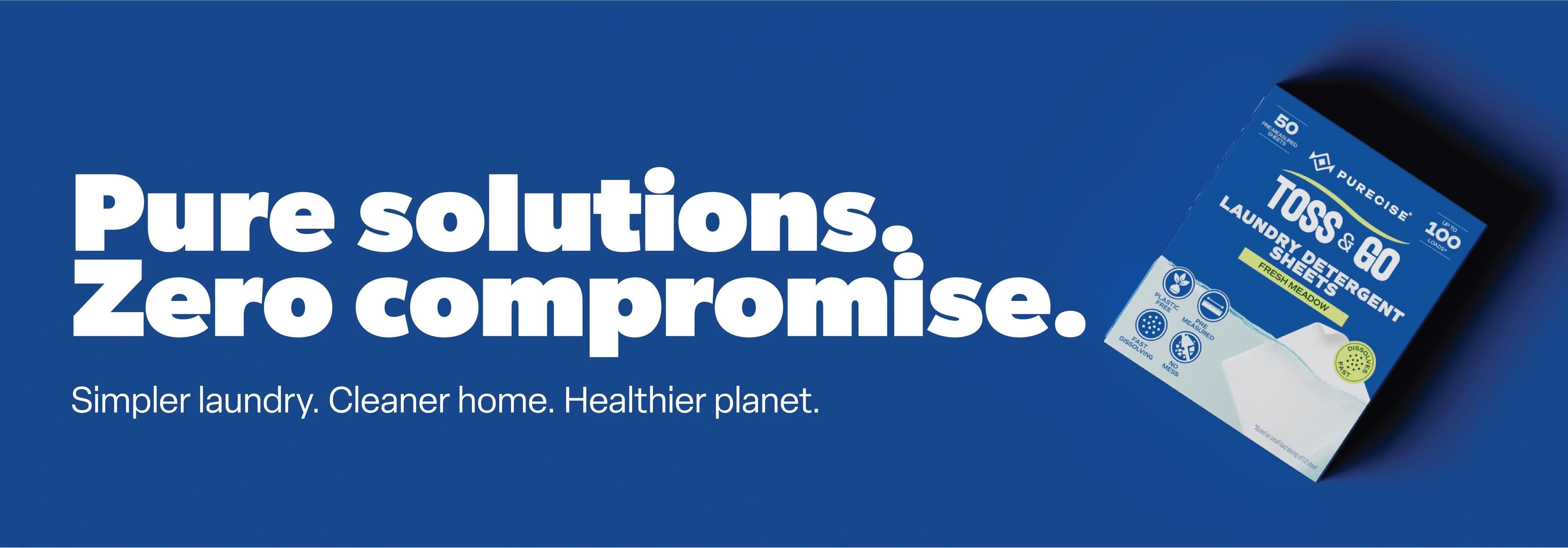
Purecise sheets are formulated without SLS, synthetic fragrances, dyes, optical brighteners, enzymes, or preservatives. The plant-based formula dissolves completely in any water temperature, which means no undissolved residue left in your fabric. Each sheet is pre-dosed, so there is no risk of over-dosing and increasing residue load. The plastic-free packaging removes one more source of chemical exposure from your laundry routine. Purecise backs every purchase with a 100% money-back guarantee, so testing the product carries zero financial risk. For families washing clothes with sensitive skin in mind, that combination of clean ingredients and practical design is hard to beat.
FAQ
What are the worst laundry ingredients for sensitive skin?
Sodium lauryl sulfate (SLS), synthetic fragrances, dyes, optical brighteners, methylisothiazolinone, and protease enzymes are the most common irritants. These ingredients either disrupt the skin barrier directly or cause allergic contact dermatitis through repeated exposure.
Does detergent residue really stay in clothes after washing?
Yes. Approximately 2.5% of detergent residue remains in fabric after a standard rinse cycle. Running a double rinse reduces this significantly and lowers the irritant load against your skin.
Are detergent sheets better than liquid for sensitive skin?
Detergent sheets typically contain fewer ingredients, require no liquid preservatives, and dissolve fully in the wash, leaving less residue than most liquid detergents. They are the lowest-risk format for people with sensitive or eczema-prone skin.
What does “fragrance-free” actually mean on a detergent label?
“Fragrance-free” means no scent compounds were added to the formula. It is more reliable than “unscented,” which can still contain masking agents that neutralize odor but remain chemical irritants on the skin.
How long does it take for skin to improve after switching detergents?
Most people see improvement within two to four weeks of switching to a fragrance-free, dye-free, enzyme-free detergent. Skin that has been chronically exposed to irritants takes time to recover even after the source is removed.
Recommended
Hypoallergenic Laundry Detergent Guide for Sensitive Skin
Toxic Chemicals in Conventional Laundry Detergents
Related Posts

Remove Lipstick Stains: The First 15 Minutes, Plus Detergent Sheets

How Often to Wash Towels: Bath Weekly, Hand Towels Every Few Days

Detergent Allergy Rash: Test a Low Residue Wash Without Fragrance

Save Clothes From Mud Stains in 1–2 Hours With Premeasured Sheets

Fabric First Sweat Stain Fixes: Measured DIY Recipes and Sheets

Whiten White Clothes, No Chlorine: 4–8 Hour Soak, Premeasured Sheets

Remove Blood Stains from Clothes: Cold Water, Enzyme Soak, No Dryer


