

Fabric Care for First-Time Laundry Doers: A Beginner's Guide
Fabric care means cleaning, drying, and storing clothes in ways that match each fabric’s fiber type and finish so garments last longer and don’t get damaged. For your very first load, here’s what to do right now:
- Sort clothes into three piles: whites, lights, and darks.
- Check every care label before loading anything into the machine.
- Choose cold water and a gentle or normal cycle.
- Use one pre-dosed detergent sheet or the recommended amount of liquid detergent — not more.
- Wash bright new items separately the first time to catch any dye bleed.
Pro Tip: Always wash new underwear, baby clothes, and anything that will touch sensitive skin before wearing. Manufacturing residues and loose dyes sit on the surface of new fabric until that first wash.
Table of Contents
- What fabric care actually covers for beginners
- How to sort and prepare clothes before loading the washer
- Detergent: what to use and how much
- Wash settings and water temperature: simple rules of thumb
- Drying and storing: avoid the heat and handling mistakes
- Delicates and tricky fabrics: quick rules for silk, wool, denim, and activewear
- How often should you wash common items?
- Why experts recommend washing new clothes before wearing them
- Your 8-step checklist for your first-ever laundry load
- Key Takeaways
- The case for starting slow and simple
- Fuss-free laundry starts with the right detergent
- Authoritative sources and further reading
What fabric care actually covers for beginners
Fabric care is the full set of decisions you make about how to clean, dry, and store a garment based on what it’s made of. That includes water temperature, agitation level, detergent type, drying method, and how you fold or hang it afterward.
Why does fiber type matter so much? Because wool, silk, cotton, and polyester all behave differently under heat and water. Cotton can handle warm water. Wool shrinks and felts if you wash it hot. Silk loses its sheen if you wring it. Polyester holds odors if you use the wrong detergent. The construction of the fabric — whether it’s knit, woven, or blended — and any special finishes (water resistance, wrinkle resistance) add more variables.
The damage that comes from ignoring this is often permanent. Felting turns a soft wool sweater into a stiff, shrunken shell you can’t wear. Shrinkage can take a shirt from a size medium to a size small in one wash. Color bleed can turn a white T-shirt pink. Pilling from friction makes fabric look worn after just a few washes. None of those outcomes are reversible.
The safest default for any fabric you’re unsure about: go cooler and gentler. You can always rewash a garment if it’s not clean enough. You cannot un-shrink it.
How to sort and prepare clothes before loading the washer
Sorting isn’t just about keeping colors from bleeding. The American Cleaning Institute recommends sorting by both color and fabric care instructions because mixing a heavy denim jacket with a silk blouse in the same cycle damages the lighter item through friction.
Sort into these groups:
- Whites (wash alone or with other whites to keep them bright)
- Lights (pastels, pale grays, light beige)
- Darks (navy, black, deep red, forest green)
- Delicates (lingerie, thin knits, anything with embellishments)
- Heavy items (towels, jeans, sweatshirts — wash separately from delicates)
Before loading, do these prep steps:
- Empty every pocket (tissues in the wash destroy an entire load).
- Close zippers and fasten buttons so metal hardware doesn’t snag other fabrics.
- Turn dark jeans and printed T-shirts inside out to protect color and print.
- Place bras, delicate tops, and anything with thin straps in a mesh laundry bag.
For printed apparel, turning items inside out and using cold water protects the design. If you’re washing custom-printed garments, check out this guide on caring for printed apparel for extra tips on preserving screenprints and heat-transfer designs.
Stain pre-treatment: Treat stains before loading, not after. Blot (don’t rub) the stain with cold water. Apply a small amount of liquid detergent or a stain remover directly to the spot and let it sit for 5–10 minutes. Avoid hot water on stains — heat sets protein-based stains like blood and egg permanently.
Detergent: what to use and how much
The type of detergent matters as much as the amount. Here’s a quick breakdown:
- Regular detergent — works for most cotton and synthetic loads.
- Hypoallergenic detergent — free of dyes and fragrances; best for sensitive skin, babies, and eczema-prone skin. See the Purecise hypoallergenic detergent guide for a deeper look.
Consumer Reports is direct on this: more detergent does not mean cleaner clothes. Excess detergent leaves residue in the fabric, dulls colors over time, and can cause skin irritation. It also reduces cleaning performance because too many suds prevent proper rinsing. Follow the product’s dosing instructions, and for small or lightly soiled loads, use even less. If you want to understand exactly what overloading detergent does to fabric, Purecise covers it in detail.
One note on fabric softener: it’s separate from detergent and optional. Maytag’s guidance points out that softener reduces absorbency in towels and coats the synthetic fibers in activewear, which kills moisture-wicking performance. Skip softener on those items.
Wash settings and water temperature: simple rules of thumb
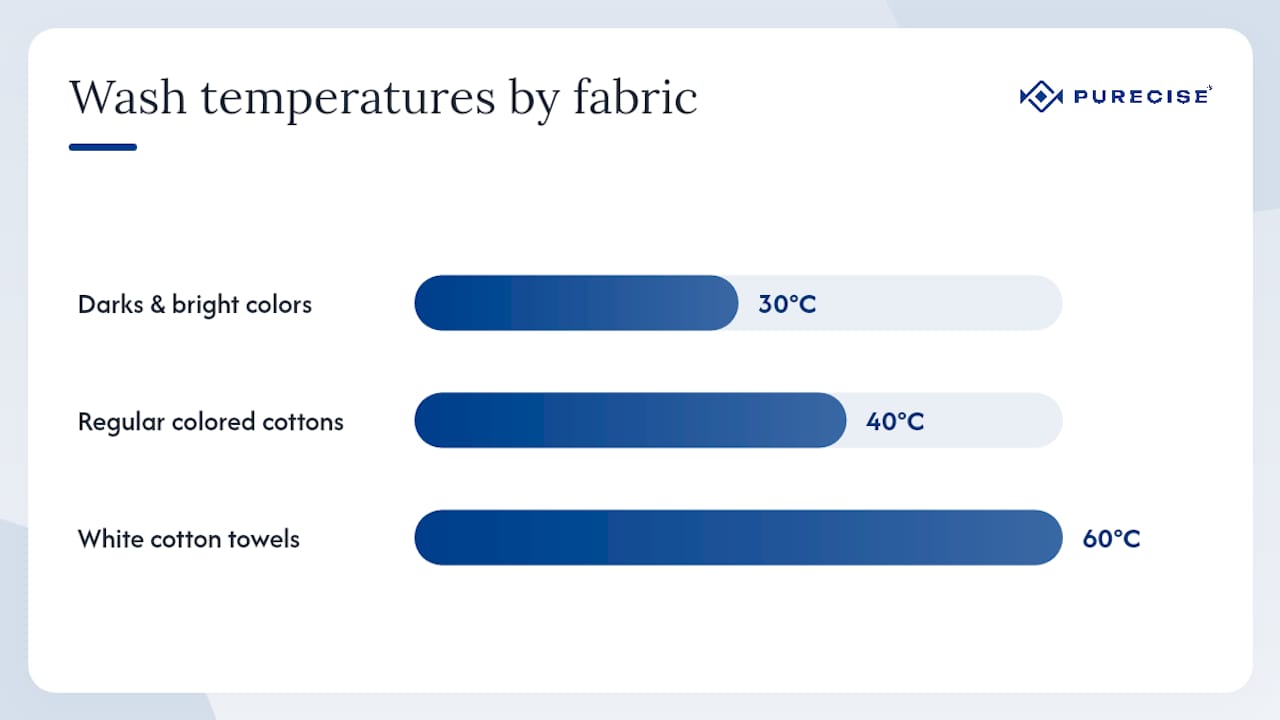
Martha Stewart’s laundry guide and textile experts agree on the same temperature framework. Cold water preserves color and prevents shrinkage. Warm water cleans regular cotton loads well. Hot water is for sanitizing durable whites and heavily soiled linens — not for everyday use.
| Fabric / Load Type | Water Temperature | Cycle |
|---|---|---|
| Darks, bright colors | Cold (30°C) | Normal or gentle |
| Delicates (silk, lace, thin knits) | Cold | Delicate/gentle |
| Regular colored cottons | Warm (40°C) | Normal or permanent press |
| Wrinkle-prone synthetics | Warm | Permanent press |
| White cotton, heavily soiled towels | Hot (60°C) | Normal |
| Wool, cashmere | Cold | Delicate/gentle, low spin |
| Activewear | Cold | Gentle |
Agitation and spin speed matter too. Knits and delicates need low agitation and a slow spin — high spin speed stretches and distorts them. Sturdy items like denim and towels can handle a normal spin.
Drying and storing: avoid the heat and handling mistakes
Tumble drying is the single biggest source of accelerated fabric wear. Heat and mechanical tumbling together break down fibers faster than washing does. If you can air-dry, do it.
Drying rules to follow:
- Air-dry silk, wool, cashmere, and anything labeled “lay flat to dry” on a clean towel or drying rack.
- Tumble dry cotton and synthetics on low heat, not high — high heat shrinks cotton and melts or warps synthetic fibers.
- Remove items from the dryer while they’re still slightly damp. Over-drying causes fiber collapse, static, and unnecessary wear.
- Hang or lay knit sweaters flat to dry — hanging them while wet stretches the shoulders out of shape.
Storage tips:
- Fold heavy knits rather than hanging them; hangers distort the shoulder shape over time.
- Store clean clothes only — oils and food residue attract pests and cause yellowing.
- Use breathable cotton or linen storage bags for seasonal items, not plastic bags, which trap moisture and cause mildew.
- Keep stored clothes away from direct sunlight, which fades color even through a window.
Delicates and tricky fabrics: quick rules for silk, wool, denim, and activewear
Silk
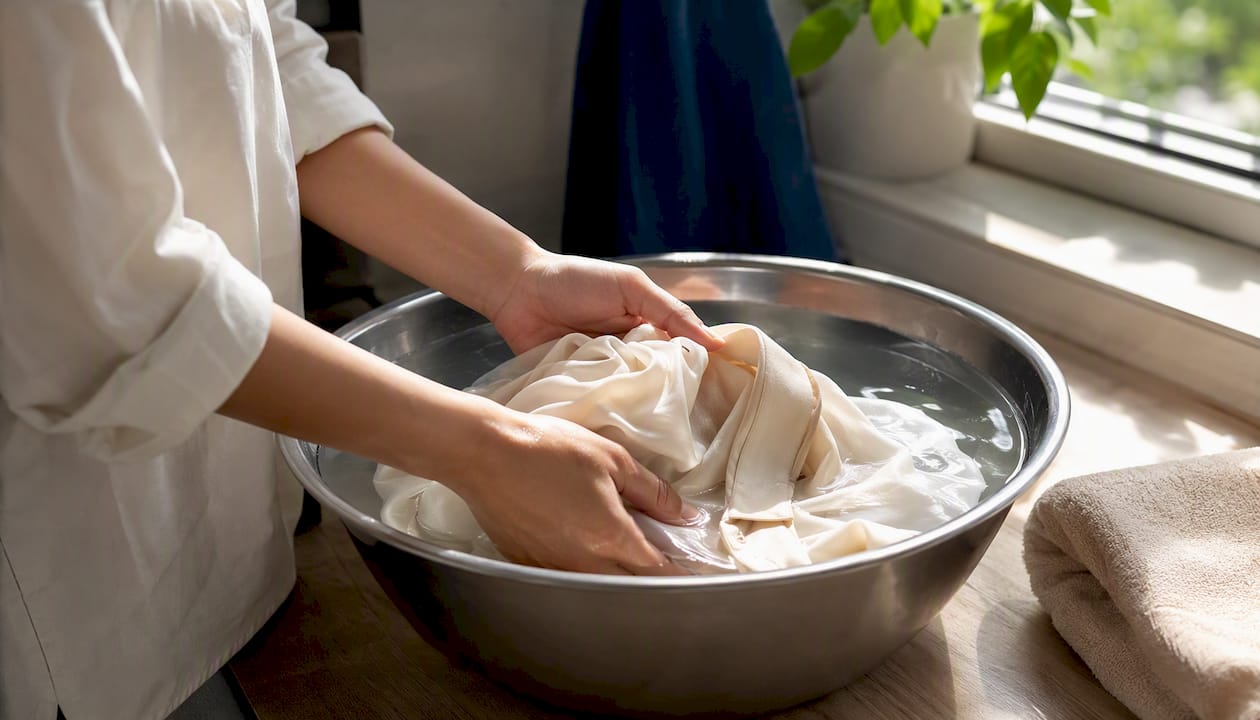
Wash in cold water on the delicate cycle or by hand in a basin. Use a pH-neutral, wool-safe detergent — standard detergents are too harsh. Never wring silk; press it gently between two towels to remove water. Hang or lay flat away from direct sunlight to dry.
Wool and cashmere
Cold water only, wool-safe detergent, minimal agitation. The delicate cycle works if your machine has one; otherwise hand wash. Lay flat on a towel to dry and reshape the garment while it’s still damp. Heat and agitation together cause felting, which is irreversible.
Denim
Wash jeans inside out in cold water to protect the dye and surface finish. Wash infrequently — denim doesn’t need washing after every wear. Avoid high heat in the dryer; air-dry when possible to prevent shrinkage and color loss.
Activewear
Skip the fabric softener entirely. Softener coats synthetic fibers and destroys moisture-wicking performance. Wash inside out in cold water on a gentle cycle with a gentle detergent formulated for synthetics. If you’re unsure which detergent ingredients to avoid for performance fabrics, the Purecise guide on laundry ingredients for sensitive skin is a useful reference.
How often should you wash common items?
Washing garments too often can shorten their life. Washing too rarely lets oils, bacteria, and odors build up. Here’s a practical frequency guide:
| Item | Wash Frequency |
|---|---|
| Underwear and socks | After every wear |
| T-shirts and tank tops | After 1–2 wears |
| Dress shirts and blouses | After 2–3 wears |
| Jeans | After 4–5 wears (or when visibly soiled) |
| Sweaters and sweatshirts | After 3–5 wears |
| Pajamas | After 2–3 wears |
| Towels | After 3–4 uses |
| Bed sheets | Every 1–2 weeks |
These are baselines. Heavy sweating, illness, or visible stains always move an item to the next wash. Washing less when appropriate saves water, energy, and fabric life — a win on every front.
Why experts recommend washing new clothes before wearing them
New clothes aren’t as clean as they look. Consumer Reports explains that manufacturing processes leave excess dyes and finishing chemicals on the fabric surface. These residues can irritate sensitive skin, cause allergic reactions, and bleed onto other items.
Some finishes are designed to stay — water resistance and flame retardancy survive a wash. But the loose, oversaturated surface layer washes away on the first laundering. That’s exactly what you want gone before the fabric touches your skin.
The practical takeaway: wash new items in cold water on a low-agitation cycle, and wash them with like colors the first time in case dye bleeds. This is especially worth doing for children’s clothing, new bedding, and anything labeled with a strong chemical smell.
Your 8-step checklist for your first-ever laundry load
Follow these steps in order and your first load will go smoothly.
- Add detergent. Use one pre-dosed detergent sheet or the recommended amount of liquid detergent. Place it in the drum or dispenser drawer per your machine’s instructions.
If color bleeds: Rewash the affected item separately in cold water immediately. Don’t dry it until the color is gone — heat sets stains permanently. If a stain remains after washing: Re-treat and rewash in cold water. Never put a stained item in the dryer.
Key Takeaways
Proper fabric care comes down to one principle: match your wash settings to the fiber, not the convenience.
| Point | Details |
|---|---|
| Cold water is your safest default | Cold water prevents shrinkage and color bleed for most fabrics, especially darks and delicates. |
| Read the care label first | Follow the most restrictive symbol on the tag — it’s the manufacturer’s minimum safe instruction. |
| Dose detergent correctly | Too much detergent leaves residue, dulls fabric, and irritates skin — use the recommended amount or a pre-dosed sheet. |
| Wash new clothes before wearing | Manufacturing residues and loose dyes stay on new fabric until the first wash; cold water removes them safely. |
| Purecise detergent sheets | Pre-dosed, hypoallergenic, and dissolve in cold water — a simple starting point for any first-time laundry load. |
The case for starting slow and simple
The advice that gets skipped most often in laundry guides is the simplest: start with cold water, a gentle cycle, and a pre-dosed detergent. Not because it’s the only right way, but because it’s the one that prevents the most expensive mistakes.
A shrunken wool sweater or a pink-tinted white shirt can’t be fixed. A load that came out slightly less clean than ideal can be rewashed. That asymmetry is worth taking seriously when you’re doing laundry for the first time. Cold water and gentle settings give you a margin for error that hot water and heavy cycles don’t.
Pre-dosed detergent sheets remove one more variable. There’s no measuring, no accidental overdose, and no residue from using too much. For beginners, that simplicity isn’t a shortcut — it’s just good practice. Once you know your fabrics and your machine, you can adjust. But starting cautious costs nothing and saves a lot.
Fuss-free laundry starts with the right detergent
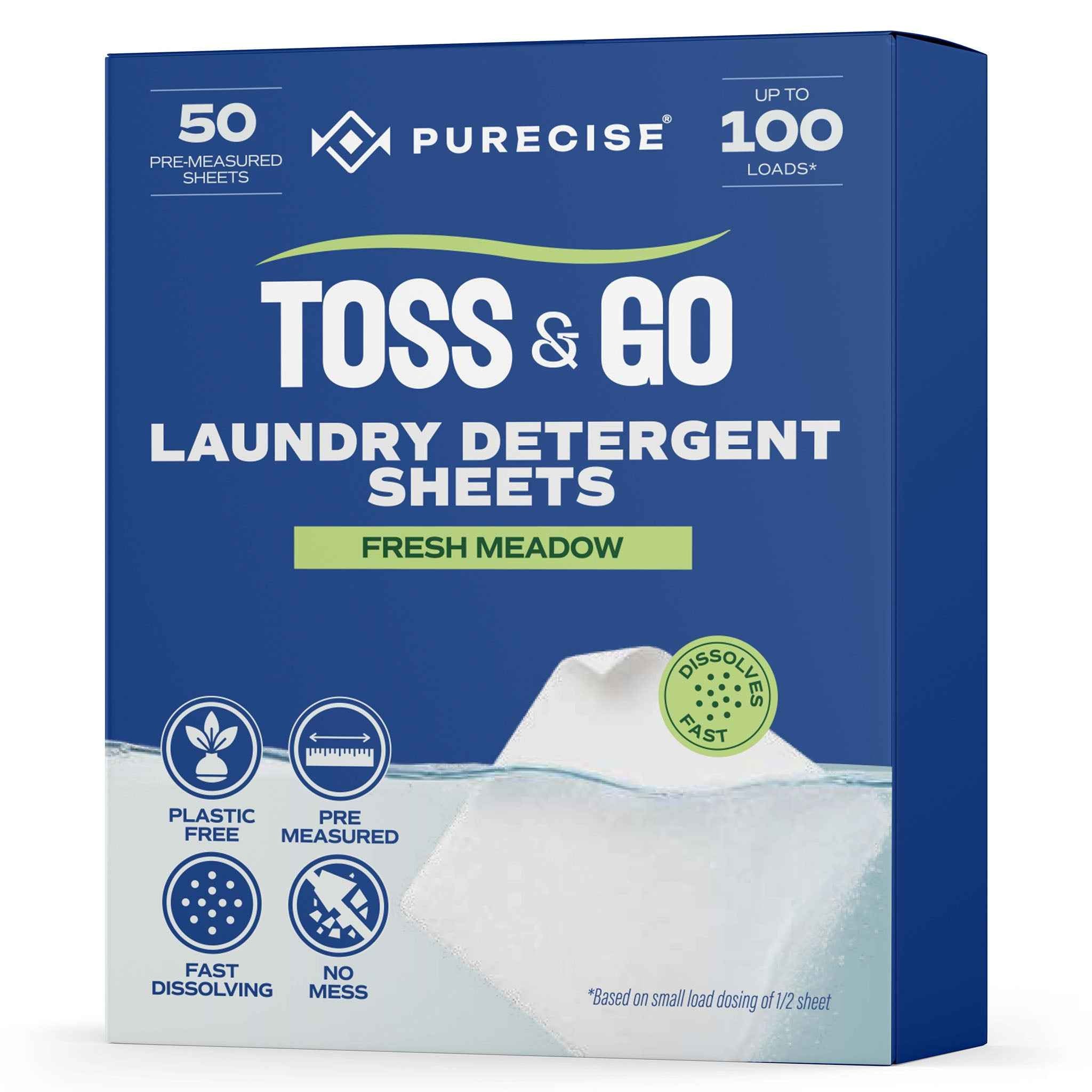
Getting your first load right is easier when you’re not measuring detergent over a full machine. Purecise Toss & Go laundry detergent sheets are pre-dosed, plant-based, and hypoallergenic — one sheet per load, no bottles, no mess.
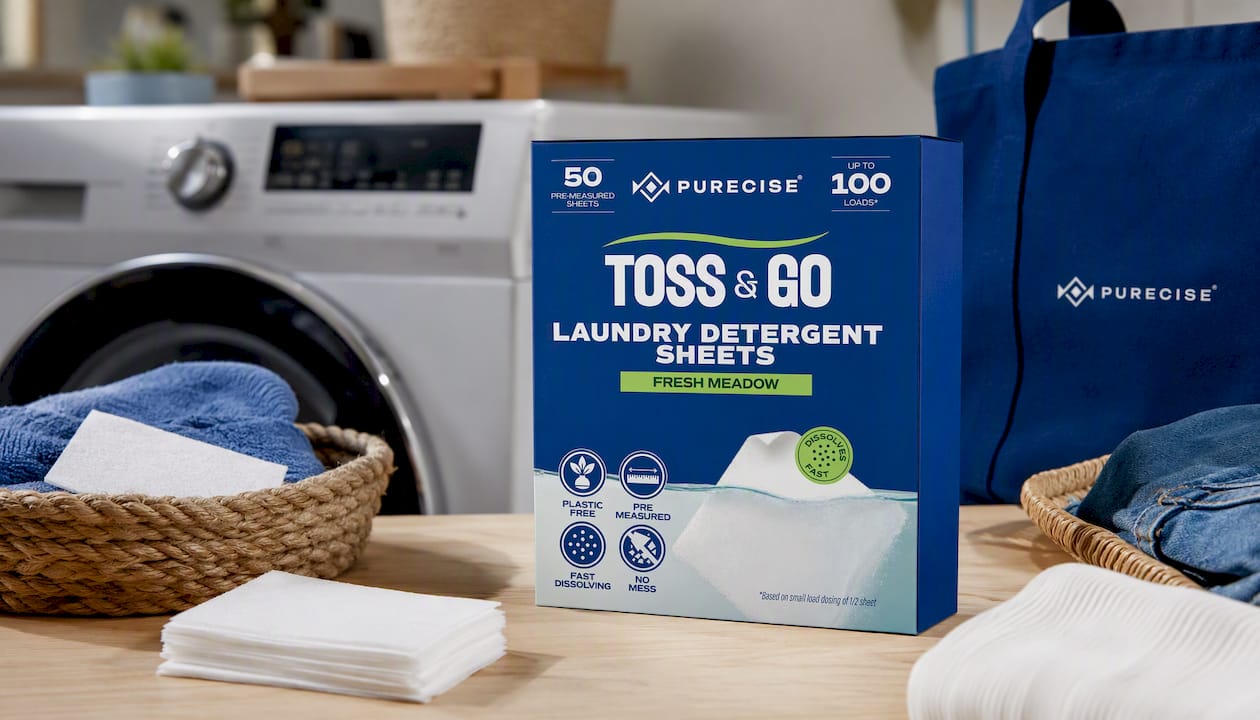
Each sheet dissolves completely in cold water, which makes it a natural fit for the cold-water, gentle-cycle approach this guide recommends. The formula is free from harsh chemicals and safe for sensitive skin, babies, and anyone prone to skin reactions from standard detergents. A full month’s supply fits in a small box you can store in a drawer or toss in a bag.
Why it works for beginners:
- No measuring means no overdosing and no residue buildup.
- Dissolves in cold water, so it works with the safest default wash setting.
- Hypoallergenic formula is gentle on skin and on fabric.
- Recyclable packaging cuts plastic waste compared to traditional liquid jugs.
Purecise backs every box with a 100% money-back guarantee. Test it on a small load first and follow the care labels on your garments — that’s the same advice this guide gives for any new detergent.
Try Purecise detergent sheets and start your first load with one less thing to worry about.
Authoritative sources and further reading
The sources below are worth bookmarking for deeper dives into specific fabrics or more complex care questions.
- Wash new clothes before wearing them for the first time - Consumer Reports
- The Ultimate Fabric Care Guide: How To Wash, Dry, Iron & Store Every Fabric - TextileTuts
- Laundry Basics | The American Cleaning Institute (ACI)
- A rookie’s guide to doing laundry - Consumer Reports
- How to do laundry - Martha Stewart
- Fabric Softener vs. Conditioner vs. Laundry Detergent | Maytag
- Laundry Detergent Sheets Box
Always check the care label on each garment first. For specialty fabrics like vintage textiles, leather-trimmed items, or structured tailoring, consult a professional cleaner rather than guessing.
Recommended
Wash Clothes with Limited Water on Deployment
Greenwashing in Cleaning Products: What to Know
Related Posts

Remove Berry Stains: Cold Water First, Detergent Sheets on the Go

Remove Makeup Stains on the Go With a 10–15 Minute Pretreat

Remove Lipstick Stains: The First 15 Minutes, Plus Detergent Sheets

How Often to Wash Towels: Bath Weekly, Hand Towels Every Few Days

Detergent Allergy Rash: Test a Low Residue Wash Without Fragrance

Save Clothes From Mud Stains in 1–2 Hours With Premeasured Sheets

Fabric First Sweat Stain Fixes: Measured DIY Recipes and Sheets


