

Lightweight Detergent Alternatives for Carry-On Travel
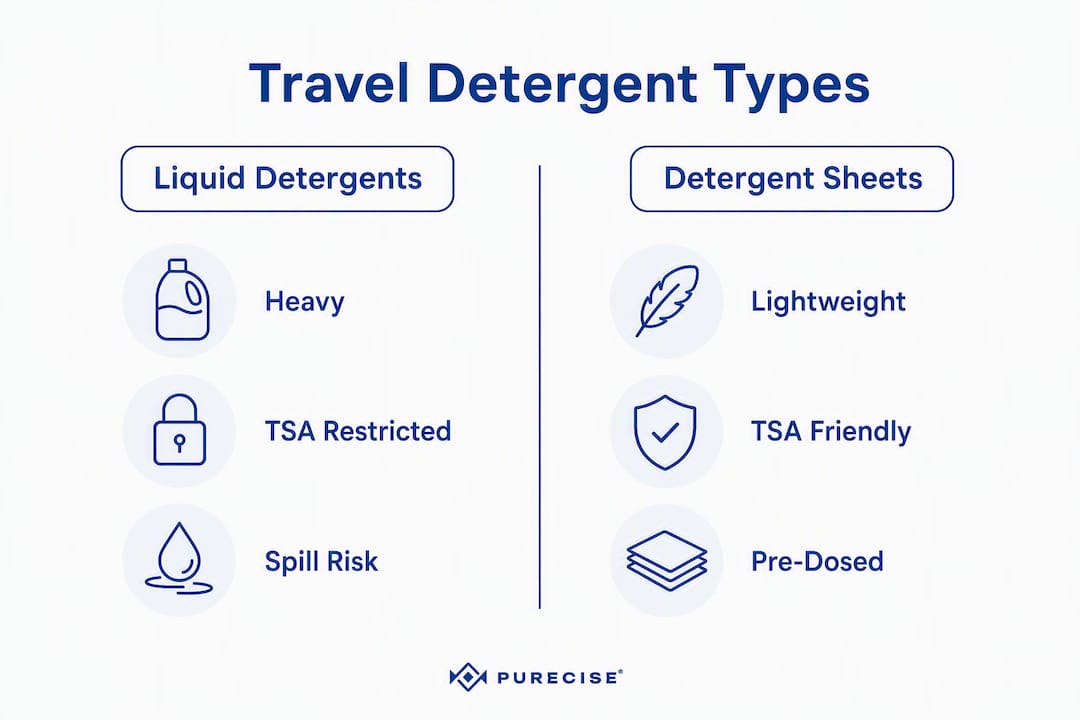
The best lightweight detergent alternatives for carry-on travel are, in order of practicality: detergent sheets, single-use sink packets, solid soap bars, powdered sachets, and DIY substitutes like shampoo or body wash. If you want one answer and nothing else, pack detergent sheets. They weigh almost nothing, skip the TSA liquids line entirely, dissolve in cold or warm water, and work in a hotel sink just as well as a machine.
- Detergent sheets — the top pick for carry-on; pre-dosed, flat, and TSA-safe with no liquid to declare
- Single-use liquid packets — convenient for one-off sink washes, but check the label: some packets are formulated for machines only, not hand-wash
- Solid soap bars — ultra-light, zero leak risk, great for spot-treating stains on the road
- Powdered sachets — effective but may trigger extra TSA screening (more on that below)
- DIY substitutes (shampoo, body wash, baking soda) — fine for emergencies, not ideal for regular washes or delicates
Purecise detergent sheets check every box on the carry-on checklist: pre-dosed, plant-based, hypoallergenic, and packaged plastic-free. A full week’s worth fits in a small envelope that slides into any toiletry bag.
Table of Contents
- Which travel detergent format is right for your trip?
- What can you actually bring through TSA security?
- How to hand-wash clothes in a hotel sink
- How to choose the right formula for your skin and fabrics
- Exact packing tactics to save weight and space
- Why detergent sheets consistently win for carry-on travel
- Mistakes that create laundry problems on the road
- Key Takeaways
- The case for rethinking how you pack laundry supplies
- Purecise detergent sheets: built for carry-on travel
- Useful sources
Which travel detergent format is right for your trip?
Not every format works for every trip. A weekend city break has different demands than a three-week backpacking loop through Southeast Asia. Here’s how the main formats stack up.
| Format | Weight/Space | TSA Carry-On | Cold-Water Dissolve | Leak Risk | Hand-Wash | Machine | Sensitive Skin | Cost Shape |
|---|---|---|---|---|---|---|---|---|
| Detergent sheets | Near-zero | ✅ No liquid | Good (warm = faster) | None | ✅ Yes | ✅ Yes | Options available | Low per wash |
| Solid soap bar | Very light | ✅ Solid | Good | None | ✅ Best | Limited | Varies | Low |
| Single-use liquid packet | Light | ⚠️ Counts as liquid (3-1-1) | Excellent | Low (sealed) | Check label | ✅ Yes | Varies | Moderate |
| Powdered sachet | Light | ⚠️ May be screened | Moderate | None | ✅ Yes | ✅ Yes | Varies | Low |
| DIY (shampoo/body wash) | Zero extra | ✅ (within 3-1-1) | Good | Medium | ✅ Yes | Not recommended | Risky | Free |
When to choose each format:
- Sheets work best when you want one product that handles both sink washes and hotel machines without any measuring or mess. Pre-measured dosing and lower pack weight make them the default recommendation for carry-on travelers.
- Solid bars shine for ultra-light packing and spot-cleaning. They’re the go-to for hikers and minimalists who mostly hand-wash.
- Single-use packets are handy for a planned sink wash on a specific night. Just confirm the packet is rated for hand-wash before you buy.
- Powder sachets are a reasonable backup but expect them to dissolve slowly in cold water and draw extra attention at security.
- DIY substitutes are strictly emergency options. Shampoo can clean a lightly soiled shirt in a pinch, but it’s too harsh for delicates and leaves residue on synthetics.
What can you actually bring through TSA security?
The TSA 3-1-1 rule governs every liquid, aerosol, and gel in your carry-on: containers must be 3.4 oz (100 ml) or smaller, all fitting in one quart-sized clear zip bag, one bag per passenger. Liquid detergent packets count toward that limit. Solid formats — sheets and bars — do not.
Powder is where travelers get tripped up. The TSA may pull powders over 12 oz (350 ml) for additional screening, and even smaller amounts can attract a closer look at busy checkpoints. Powdered detergent sachets are technically allowed, but they add friction to the security process that sheets and bars simply avoid.
Packing rule of thumb: Solid formats (sheets, bars) go anywhere in your carry-on. Liquid packets belong in your quart bag. Powder sachets travel best in checked luggage unless you’re carrying a small quantity in a clearly labeled, sealed bag.
Packing best practices to avoid gate-check problems:
- Keep detergent sheets in their original packaging or a small labeled zip bag inside your toiletry quart bag.
- Never transfer liquid detergent into an unlabeled bottle — TSA officers can’t identify it, and it may be confiscated.
- If you bring powder, use the original sealed sachet and keep it accessible for easy inspection.
- Leak-free formats like sheets and sealed packets are the safest bet for carry-on packing.
Pro Tip: Tuck 5–7 detergent sheets into a small zip bag and drop it inside your toiletry quart bag. They take up almost no space, clear security without a second glance, and you’ll never scramble for laundry supplies at a hotel vending machine.
How to hand-wash clothes in a hotel sink
A sink wash takes about a quarter of an hour and handles most travel laundry needs: underwear, socks, a light shirt, or workout gear. Here’s the method that actually works.
- Sort your items. Wash darks and lights separately if you’re washing more than one or two pieces. Delicates (silk, wool) always get their own wash.
- Plug the sink and fill with lukewarm water. Hot water can shrink fabrics; cold water slows detergent dissolving. Lukewarm is the sweet spot.
- Add your detergent. Drop in one pre-dosed sheet or one packet. For a bar, rub it directly onto the garment. Swirl the water until the detergent dissolves fully.
- Submerge and agitate. Work each garment for a few minutes, squeezing water through the fabric. Focus on collar, underarms, and cuffs.
- Drain and rinse. Drain the soapy water, refill with clean water, and rinse each item until the water runs clear. Two rinse cycles is usually enough.
- Wring gently. Roll the garment in a microfiber towel and press firmly — don’t twist, especially with delicates. This removes far more water than wringing alone.
- Hang to dry overnight. A travel clothesline strung across the bathroom works well. Position items near a vent or open window for faster drying.
- Check before you pack. Synthetics and thin cotton dry fairly quickly, while denim and thick knits require a longer drying time — plan accordingly.
Sink-wash kit to pack:
- Collapsible silicone sink plug (hotel sinks often lack stoppers)
- Travel clothesline with hooks
- One microfiber towel (doubles as a quick-dry bath towel)
- 5–10 pre-dosed detergent sheets or packets rated for hand-wash
How to choose the right formula for your skin and fabrics
Sensitive skin and delicate fabrics need more thought than just grabbing whatever’s at the hotel front desk. Vending-machine detergents are almost always heavily fragranced and formulated for high-volume machines, not a gentle hand-wash of a silk blouse.
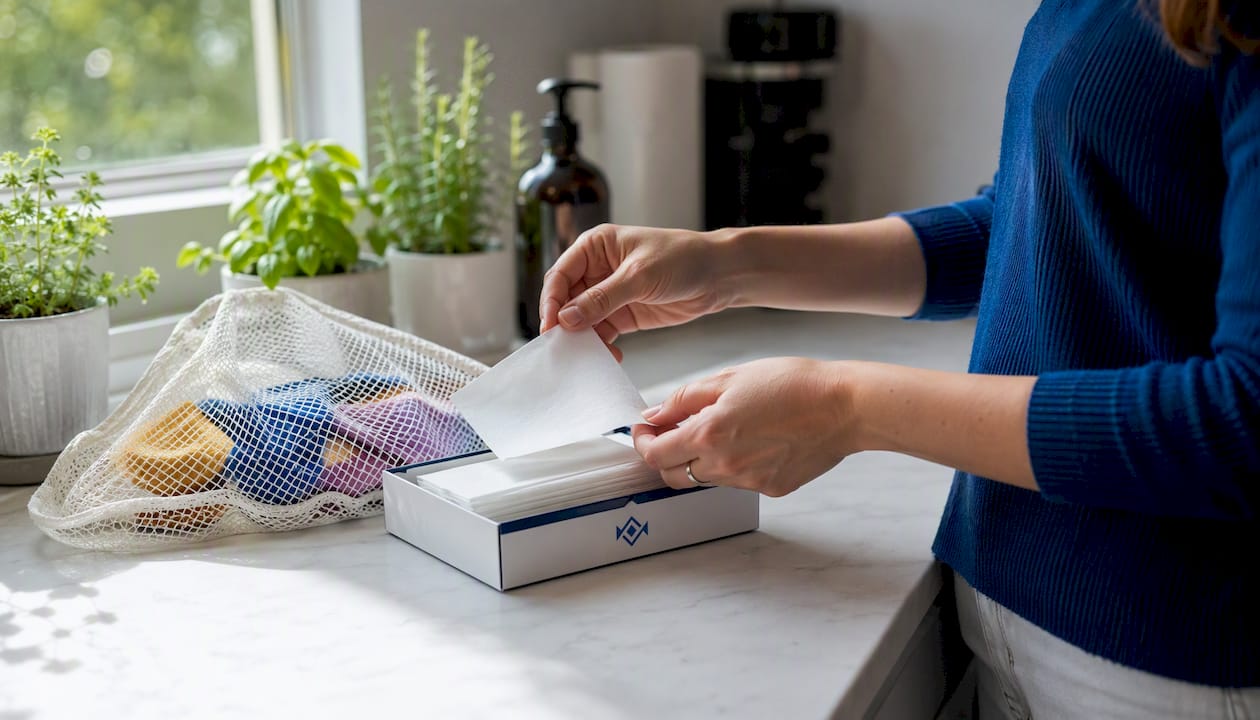
For sensitive skin, plant-based, hypoallergenic sheets are the safest carry-on choice. They skip the synthetic fragrances and harsh surfactants that trigger irritation, and they’re gentle enough for daily use on skin-contact garments like underwear and base layers. Travelers with eczema or contact dermatitis should pay particular attention to fragrance-free formulas — a hypoallergenic detergent guide can help narrow down what to look for.
By fabric type:
- Silk and wool: Hand-wash only, cold water, gentle agitation. Use a mild sheet or bar; never use a standard machine-cycle packet on these.
- Synthetics and quick-dry fabrics: Sheets and mild packets work well. Avoid fabric softeners — they coat synthetic fibers and kill moisture-wicking performance.
- Cotton and linen: Tolerant of most formats. Sheets, bars, and packets all work fine.
- Outdoor and technical gear: Use a fragrance-free, residue-free formula. Softeners and heavy surfactants can degrade DWR (durable water repellent) coatings on rain jackets and hiking pants.
Purecise sheets are plant-based, hypoallergenic, and free from harsh chemicals, making them a practical choice for travelers who pack a mix of delicates, synthetics, and everyday cotton. One sheet format handles the whole bag.
For travelers using shared hotel machines or compact all-in-one units, note that small-capacity cycles in machines like the LG WM3555HWA include cold-wash and delicate settings — sheets perform well in these cycles without overdosing.
Exact packing tactics to save weight and space
How many sheets you need depends on trip length and how often you plan to wash. A reasonable rule: one sheet per wash load, washing every few days for most travelers.
By trip type:
- Weekend trip (2–3 days): 2–3 sheets. Fits in a single small zip bag tucked inside your toiletry kit.
- 5–7 day business trip: 4–6 sheets. Pack in the original envelope or a labeled zip bag. Takes up less space than a credit card stack.
- Multi-week trip (2–4 weeks): 10–20 sheets. Still lighter and smaller than a single travel-size liquid bottle. Consider a travel pack designed for extended trips.
Stowage tips:
- Sheets go inside your toiletry quart bag or a dedicated small zip bag — they don’t need their own space.
- Keep liquid packets in the quart bag, separate from clothes, in case of a seal failure.
- A small mesh laundry bag doubles as a dirty-clothes separator and a sink-wash basin for delicates.
- Never pack loose detergent powder directly in a bag pocket — even a small spill can ruin clothes and create a security headache.
Lightweight laundry kit checklist:
- 10–20 detergent sheets (or equivalent packets)
- Collapsible sink plug
- Compact travel clothesline
- One microfiber towel
- Foldable hanger (for shirts and dresses)
- Small mesh laundry bag
Why detergent sheets consistently win for carry-on travel
The case for sheets comes down to three things: packability, TSA compliance, and versatility. Review roundups consistently flag pre-measured dosing, lower pack weight, and easier disposal as the top reasons travelers choose sheets over other formats. No measuring, no spill risk, no liquid declaration at security.
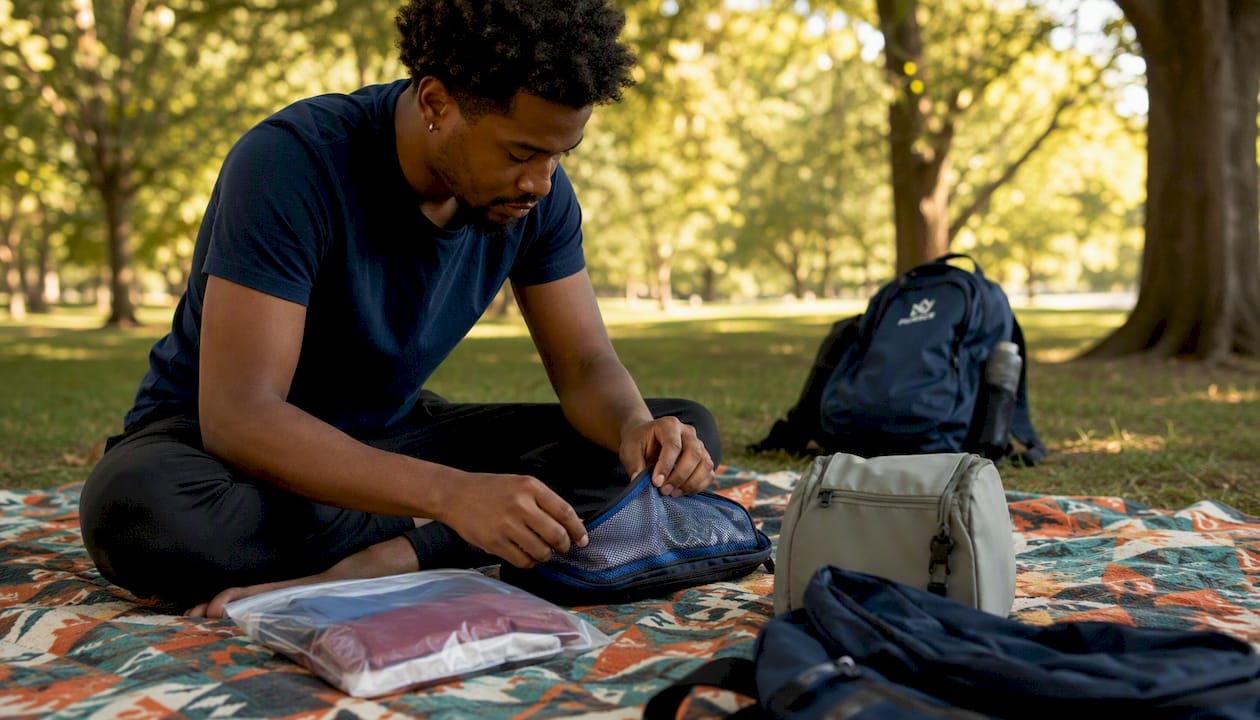
The versatility point matters more than it sounds. Travel experts note that sheets work in both machine-wash and hand-wash environments, unlike some liquid packets that are formulated for machines only. That means one product covers every laundry scenario on a trip, from a hotel sink at midnight to a shared laundry room at a hostel.
Cold-water performance is worth checking before you buy. Most sheets dissolve well in warm water; some formulas are slower in cold. If you typically hand-wash in cold sink water, look for sheets specifically tested for cold-water dissolution.
| Dimension | Sheets | Bars | Liquid Packets | Powder |
|---|---|---|---|---|
| Pack weight | Near-zero | Very light | Light | Light |
| TSA carry-on | No restrictions | No restrictions | Counts as liquid | May be screened |
| Cold-water dissolve | Good–Excellent | Good | Excellent | Moderate |
| Leak/mess risk | None | None | Low | None |
| Hand-wash rated | Yes | Yes | Check label | Yes |
| Hypoallergenic options | Yes | Varies | Varies | Varies |
Purecise sheets dissolve fully in all wash types and temperatures, are pre-dosed for zero measuring, and come in recyclable packaging — covering every dimension in the table above without compromise.
Mistakes that create laundry problems on the road
A few common errors turn a simple sink wash into a bigger problem than the dirty clothes themselves.
Packing loose liquid bottles. Even travel-size bottles leak under cabin pressure. A burst liquid detergent bottle in a carry-on ruins clothes, toiletries, and your mood. Solid or sealed formats eliminate this entirely.
Over-packing powder. Powder over 12 oz may be pulled for extra TSA screening. Even smaller amounts can slow down the security line. Unless you’re checking a bag, powder is rarely worth the friction.
Assuming hotel vending detergents are skin-safe. Vending-machine pods are almost never fragrance-free or hypoallergenic. For anyone with sensitive skin, using an unknown detergent on a trip is a gamble that can mean days of irritation far from home.
Using fabric softener on technical gear. Softeners coat synthetic fibers and degrade performance coatings on outdoor gear. Skip softener entirely when washing sportswear, rain jackets, or moisture-wicking base layers.
Trusting unlabeled DIY mixes on delicates. Baking soda and dish soap are fine for a cotton t-shirt emergency. On silk or wool, they can cause irreversible damage. Stick to a known, gentle formula for anything you care about.
On biodegradability claims: some travel detergents advertise “eco-friendly” or “biodegradable” formulas without third-party verification. The EPA’s guidance on surfactants and septic systems is a useful reference for understanding what biodegradable actually means in practice. Look for plant-based surfactants and packaging that specifies recyclable or compostable materials.
Key Takeaways
Detergent sheets are the single best lightweight, carry-on–friendly laundry solution for travelers: TSA-safe, pre-dosed, and effective in both hotel sinks and machines.
| Point | Details |
|---|---|
| Best carry-on format | Detergent sheets clear TSA with no liquid restrictions and work in sinks and machines. |
| Best emergency option | Shampoo or body wash handles a lightly soiled shirt; avoid on delicates or technical fabrics. |
| TSA packing reminder | Solid sheets and bars have no carry-on restrictions; liquid packets count toward your 3-1-1 quart bag. |
| Sink-wash reminder | Lukewarm water, one pre-dosed sheet, gentle agitation, two rinse cycles, microfiber towel wring. |
| Purecise sheets | Plant-based, hypoallergenic, pre-dosed, and plastic-free — one envelope covers a full week of travel washes. |
The case for rethinking how you pack laundry supplies
Most travelers still toss a small bottle of liquid detergent into their toiletry bag without thinking twice. It’s what they use at home, scaled down. But that habit costs more than it saves: the bottle eats quart-bag space, risks a leak at altitude, and forces a choice between checking a bag or rationing washes.
The shift to sheets isn’t just about convenience. It’s about designing a travel kit that doesn’t create new problems. A pre-dosed sheet has no measuring error, no residue risk from overdosing in a small hotel machine, and no packaging to dispose of responsibly in a foreign city. The format was built for exactly the constraints carry-on travelers face.
What most guides miss is the skin-safety angle. Hotel vending detergents are formulated for volume and shelf life, not for someone with sensitive skin washing a merino wool base layer at 11 PM. Bringing your own known formula is a small decision with a disproportionate payoff, especially on longer trips where skin irritation compounds over days.
The travelers who pack the lightest and wash the most efficiently aren’t the ones who bring the most gear. They’re the ones who chose the right format once and stopped thinking about it.
Purecise detergent sheets: built for carry-on travel
Packing light means every item has to earn its place. Purecise Toss & Go detergent sheets earn theirs on every trip.
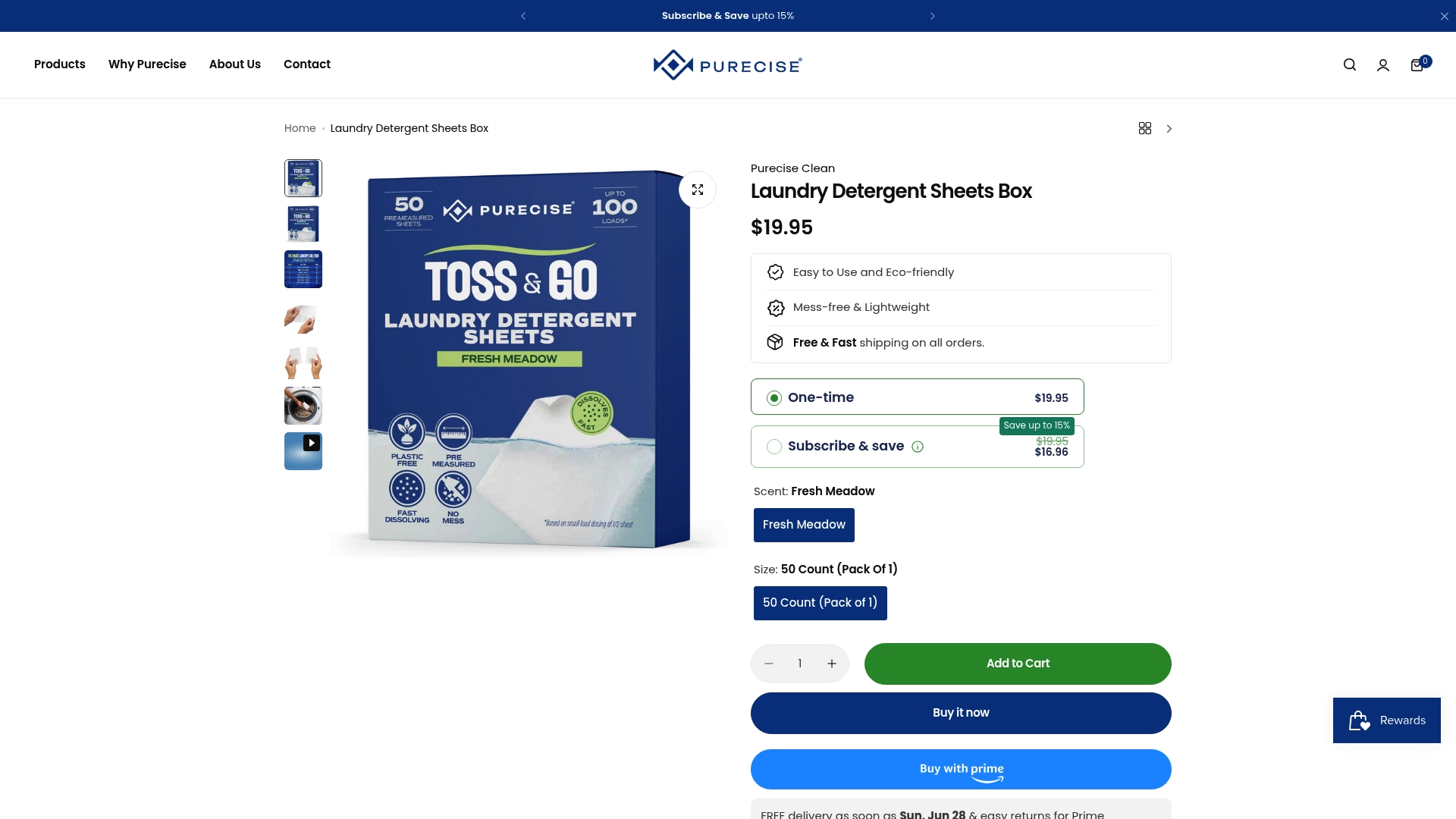
Each sheet is pre-dosed, plant-based, and hypoallergenic — no measuring, no plastic jug, no liquid to declare at security. They dissolve fully in cold or warm water, making them equally effective for a hotel sink wash or a shared laundry machine. The recyclable packaging means you’re not adding plastic waste to every destination you visit.
Why they work for carry-on travel:
- Flat and lightweight — a week’s supply fits in a small envelope
- TSA-safe solid format — no liquid restrictions, no quart-bag space used
- Pre-dosed — one sheet per load, no guessing
- Hypoallergenic and fragrance-free options for sensitive skin
- Dissolves in hand-wash and machine cycles
Pick up a travel envelope pack for your next trip, or grab a full box if you travel regularly and want to keep a supply at home too. Both come with Purecise’s 100% money-back guarantee.
Useful sources
- TSA: What Can I Bring? (Liquids, Aerosols, and Gels Rule) — the primary reference for carry-on restrictions on detergents and powders
- TSA: Liquids, Aerosols, and Gels FAQ — detailed 3-1-1 rule explanation and exceptions
- Travelpro: Doing Laundry While Traveling — practical sink-wash tips and packing guidance from a travel gear brand
- Alpine Dream Clean: Best Travel Laundry Detergent — format comparison and product roundup with hand-wash and machine-wash notes
- Alpine Dream Clean: Best Travel Laundry Detergent Sheets — sheet-specific review covering dissolvability, pack weight, and convenience
- EPA: How to Care for Your Septic System — useful context on surfactant biodegradability claims
- Purecise: Hypoallergenic Laundry Detergent Guide for Sensitive Skin — guidance on fragrance-free and plant-based formulas for sensitive travelers
Recommended
Why Laundry Detergent Child Poisoning Happens: A Parent's Guide
How to Wash Uniforms Without a Washer or Dryer
Related Posts

Remove Makeup Stains on the Go With a 10–15 Minute Pretreat

Remove Lipstick Stains: The First 15 Minutes, Plus Detergent Sheets

How Often to Wash Towels: Bath Weekly, Hand Towels Every Few Days

Detergent Allergy Rash: Test a Low Residue Wash Without Fragrance

Save Clothes From Mud Stains in 1–2 Hours With Premeasured Sheets

Fabric First Sweat Stain Fixes: Measured DIY Recipes and Sheets

Whiten White Clothes, No Chlorine: 4–8 Hour Soak, Premeasured Sheets


