

Pack Light Laundry Essentials for Every Trip
Packing light laundry essentials for travel is the single most effective way to cut bag weight, keep clothes fresh, and reduce your environmental footprint on the road. Travelers who do laundry mid-trip reduce their clothing count by about 30%, shrinking a 35L bag down to 28L on a 7-day trip. That kind of reduction changes everything, from navigating airports to avoiding checked bag fees. The right compact laundry kit, paired with smart fabric choices, means you carry less and stress less from day one.
What are the essential laundry items to pack for light travel?
The core of any compact laundry kit comes down to five items: detergent sheets, a small wash bag, a waterproof dry bag, a portable clothesline, and a universal sink stopper. Each one earns its place by solving a specific problem travelers face on the road.
Detergent sheets outperform liquids for travel in every practical category. They are lighter, spill-proof, pre-dosed, and exempt from TSA liquid limits. Purecise Toss & Go laundry detergent sheets dissolve completely in any water temperature and work in both machine and hand wash settings. A full month’s supply fits in a shirt pocket, which means zero wasted space and zero plastic bottles in your bag.
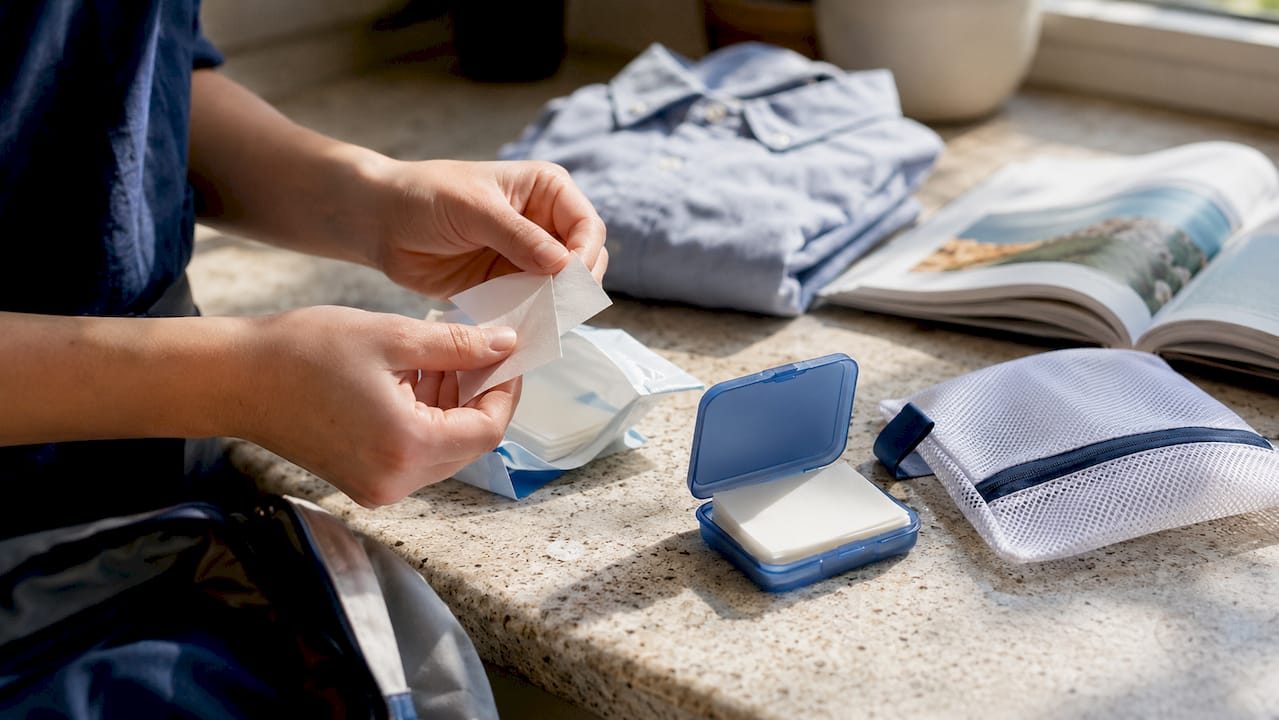
A small waterproof wash bag, weighing under 20 grams, solves one of the most common hotel frustrations: a sink with no plug. Fill it with water and a detergent sheet, add your clothes, seal it, and agitate for a few minutes. The Scrubba wash bag takes this further with an internal washboard texture that mimics machine agitation. For travelers who want a simpler option, any waterproof dry bag with a roll-top seal works well.
A portable clothesline weighing under 50 grams stretches between two anchor points in most hotel rooms. Pair it with a few folding travel hangers, and you can dry clothes in challenging hotel rooms without relying on a towel rack. A universal sink stopper costs almost nothing and takes up no space, but it removes the dependency on whatever drain plug the hotel provides.
Pro Tip: Pack your detergent sheets inside your wash bag so the entire laundry kit stays together and takes up one small corner of your bag.
Here is a quick breakdown of the core kit by category:
| Item | Key benefit | Approximate weight |
|---|---|---|
| Detergent sheets | Spill-proof, TSA-safe, pre-dosed | Under 5g per sheet |
| Wash bag or dry bag | Replaces unreliable sink plugs | Under 20g |
| Portable clothesline | Drying without towel racks | Under 50g |
| Universal sink stopper | Works in any sink worldwide | Under 10g |
| Folding travel hangers | Hang-drying in small spaces | Under 30g total |
The entire kit weighs under 150 grams combined. That is less than a standard paperback book.
How do fabric choices affect laundry frequency and drying time?
Fabric choice is the most underrated variable in any minimalist packing list. The right material means you wash less often, dry faster, and carry fewer items overall.
Merino wool and performance synthetics are the two categories that matter most for travelers. Merino wool offers superior odor resistance, enabling more wears between washes, and it dries in hours rather than overnight. A merino t-shirt can realistically go three to four wears before it needs washing. That single fact lets you pack two shirts instead of five for a week-long trip.
Performance synthetics like polyester and nylon dry even faster than merino, often within two to three hours in a ventilated room. They are also lighter and more durable under heavy travel use. The tradeoff is odor retention: synthetics hold body odor more than merino after multiple wears, so they need washing more frequently.
Cotton is the fabric to avoid. It absorbs water heavily, takes overnight or longer to dry, and offers no odor resistance. One wet cotton shirt in your bag can create a mildew problem within 24 hours.
Here is how the three main fabric types compare for travel:
- Merino wool: Slow to absorb odor, dries in 3–6 hours, ideal for multi-wear use
- Performance synthetics: Fastest drying (2–3 hours), lightweight, but odor-prone after repeated wear
- Cotton: Heaviest, slowest to dry (12+ hours), no odor resistance, not recommended for carry-on travel
Pro Tip: Choose merino wool for base layers and synthetics for outer layers. That combination gives you the best balance of odor control and fast drying.
Fabric care during travel also matters. Turn merino items inside out before washing to protect the outer surface. Avoid wringing any technical fabric. Gentle agitation in a wash bag is enough to clean most travel clothing without damaging the fibers.
How do you wash and dry clothes efficiently while traveling?
The biggest constraint in travel laundry is drying time, not washing time. Planning around climate conditions is the single most important habit you can build. Wash on nights when you have at least two full days in one place. That gives clothes time to dry completely before you pack them.
Follow these steps for a clean, efficient sink wash:
- Check your timeline. Avoid washing within 12 hours of departure in humid climates. Damp clothes packed in a bag develop mildew fast.
- Fill your wash bag or sink. Use cold or lukewarm water. Drop in one Purecise detergent sheet and let it dissolve for 30 seconds.
- Agitate gently. Knead clothes for 2–3 minutes. For a Scrubba bag, roll and press against the washboard texture for the same duration.
- Rinse thoroughly. Drain and refill with clean water twice. Detergent residue left in fabric causes skin irritation and attracts dirt faster.
- Remove excess water with the towel roll method. Lay the washed item flat on a dry towel, roll both together tightly, and press down. Rolling clothes in a dry towel removes 60–70% more moisture than wringing and protects delicate fabrics from damage.
- Hang immediately. Use your portable clothesline or folding hangers. Spread items out so air circulates on all sides.
- Accelerate drying in humid conditions. High humidity increases drying time significantly. Point a fan or hotel hair dryer on a cool setting at your hanging clothes to cut drying time in half.
Scheduling laundry every 4–5 days normalizes it as a travel routine. Professional wash-and-fold services cost $8–$15 per load in most cities and are a solid backup when you are short on time or in a humid destination where sink drying is not practical.
Pro Tip: In humid climates, add 50–100% to your usual drying time estimate. A shirt that dries in three hours in a dry climate can take six or more hours in Southeast Asia or the Caribbean.
What laundry packing mistakes do most travelers make?
Most packing problems come from the same handful of errors. Recognizing them before your next trip saves weight, space, and frustration.
- Overpacking “just in case” items. Reassessing your packing list after each trip is the most reliable way to cut it down. If you did not wear something on your last trip, remove it. Packing for hypothetical scenarios is the primary driver of overpacking.
- Ignoring drying time when planning laundry nights. Travelers who wash clothes the night before a 6:00 AM flight in a humid city arrive at the airport with damp clothes. Always check your itinerary before you wash.
- Bringing bulky liquid detergent. A 100ml bottle of liquid detergent takes up liquid allowance, risks leaking, and adds unnecessary weight. Detergent sheets solve all three problems at once.
- Choosing cotton travel clothing. Cotton is the most common packing mistake for travelers who are new to minimalist packing. Switching one cotton shirt for a merino equivalent cuts drying time from overnight to a few hours.
- Skipping the towel roll step. Travelers who wring clothes instead of rolling them in a towel end up with clothes that take twice as long to dry and fabrics that wear out faster.
- Failing to schedule laundry strategically. Waiting until you have no clean clothes left forces rushed washing with no drying time. Washing every 4–5 days keeps the process manageable and stress-free.
The fix for most of these mistakes is the same: treat laundry as part of your travel planning, not an afterthought. Build it into your itinerary the same way you book accommodation.
Key Takeaways
Packing light laundry essentials for travel requires the right compact tools, fast-drying fabrics, and a consistent washing schedule built into your itinerary.
| Point | Details |
|---|---|
| Detergent sheets over liquids | Sheets are TSA-safe, spill-proof, and pre-dosed, saving space and weight. |
| Fabric choice cuts laundry frequency | Merino wool and synthetics dry in hours and resist odor better than cotton. |
| Towel roll removes more moisture | Rolling clothes in a dry towel removes 60–70% more moisture than wringing. |
| Schedule laundry every 4–5 days | Regular washing prevents buildup and keeps your packing list short. |
| Plan around drying time, not washing time | In humid climates, add 50–100% to drying estimates and use a fan or hair dryer. |
What I have learned from years of packing light on the road
The first time I packed a full laundry kit into a space the size of a sandwich bag, I did not believe it would work. I had always assumed travel laundry meant either overpacking or hunting for a laundromat every few days. Both assumptions were wrong.
The shift that changed everything was switching from cotton to merino wool for base layers and adopting detergent sheets. Those two changes alone cut my packing list by nearly a third. I stopped carrying backup outfits for scenarios that never happened. I started washing every four days as a habit, not a chore.
The towel roll technique felt fussy the first time I tried it. Now I do it automatically. Clothes that used to take all night to dry are ready in three hours. That single habit has saved me from packing damp clothes more times than I can count.
The honest truth about travel laundry habits is that the learning curve is one trip. After that, it becomes faster and easier than any alternative. You stop checking bag weight at the airport. You stop paying for checked luggage. You move through cities with less friction. That is the real payoff of getting your laundry kit right.
— Purecise
Purecise Toss & Go sheets: the lightest laundry upgrade you can make
Travelers who want to cut their laundry kit down to its absolute minimum start with the detergent. Purecise Toss & Go laundry detergent sheets are pre-dosed, dissolve completely in any water temperature, and fit a full month’s supply in a shirt pocket. They are free from harsh chemicals, hypoallergenic, and carry a 100% money-back guarantee.
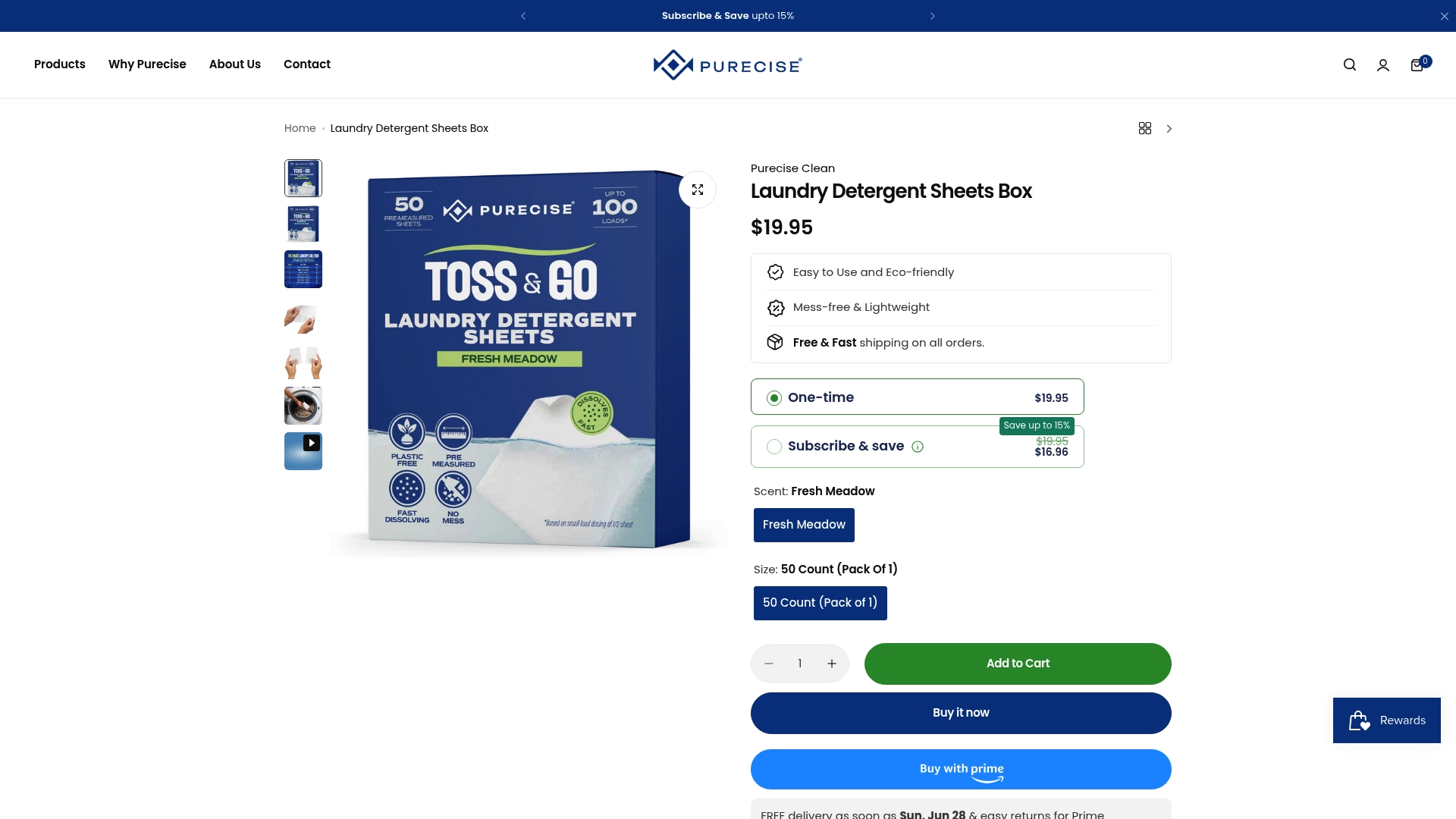
For carry-on travelers, the detergent sheets envelopes format is the most practical option. Grab a few sheets, drop them in your wash bag, and you are set for the entire trip. No measuring, no leaking, no wasted liquid allowance. For travelers who want a full supply at home and on the road, the detergent sheets box covers both. Purecise also backs every purchase with a full money-back guarantee, so there is no risk in trying them on your next trip.
FAQ
What are the best laundry essentials for light travel?
The core kit includes detergent sheets, a small wash bag or dry bag, a portable clothesline, folding travel hangers, and a universal sink stopper. The entire kit weighs under 150 grams.
Why are detergent sheets better than liquid for travel?
Detergent sheets are spill-proof, TSA-compliant, pre-dosed, and lighter than any liquid alternative. They work in both machine and hand wash settings without measuring.
How often should travelers do laundry on a trip?
Washing every 4–5 days normalizes laundry as a travel routine and prevents clothing buildup. That frequency works well for trips of any length when paired with fast-drying fabrics.
What is the fastest way to dry clothes while traveling?
Roll washed clothes tightly in a dry towel to remove 60–70% more moisture than wringing, then hang immediately in a ventilated space. In humid climates, use a fan or hair dryer on a cool setting to cut drying time significantly.
Which fabrics dry fastest for travel laundry?
Performance synthetics like polyester and nylon dry in 2–3 hours. Merino wool dries in 3–6 hours and resists odor better. Both are far faster than cotton, which can take 12 or more hours to dry fully.
Recommended
Top 3 Zerotraceliving.com Laundry Detergent Alternatives 2026
Benefits of Laundry Detergent Sheets for Eco Shoppers
Related Posts

Remove Makeup Stains on the Go With a 10–15 Minute Pretreat

Remove Lipstick Stains: The First 15 Minutes, Plus Detergent Sheets

How Often to Wash Towels: Bath Weekly, Hand Towels Every Few Days

Detergent Allergy Rash: Test a Low Residue Wash Without Fragrance

Save Clothes From Mud Stains in 1–2 Hours With Premeasured Sheets

Fabric First Sweat Stain Fixes: Measured DIY Recipes and Sheets

Whiten White Clothes, No Chlorine: 4–8 Hour Soak, Premeasured Sheets


