

Common Greenwashing Laundry Product Mistakes to Avoid
Most “green” laundry products rely on vague front-panel words, selective disclosures, and misleading imagery rather than verified environmental performance. The most common greenwashing laundry product mistakes shoppers fall for include unqualified terms like “eco-friendly” or “natural,” recycled-cap claims that distract from harmful formulas, “fragrance” labels that hide dozens of synthetic chemicals, and certification logos that no third party ever issued. Three things you can do right now: look for a credible third-party seal (EPA Safer Choice, EWG Verified, or MADE SAFE), scan the full ingredient list using INCI names, and treat any packaging claim that lacks a qualifier like “where facilities exist” as unverified.
- Look for EPA Safer Choice, EWG Verified, or MADE SAFE seals on the label.
- Find the full INCI ingredient list, either on the back panel or the brand’s website.
- Treat unqualified words like “biodegradable,” “recyclable,” or “plant-based” as marketing until a test standard or certifier backs them up.
TL;DR: Flip the bottle over, find the ingredient list, and verify the seal before you buy.
Table of Contents
- What greenwashing actually means for laundry products
- 1. Vague, unqualified words that mean nothing
- 2. Suggestive imagery and color cues
- 3. Selective disclosure: the recycled-cap trick
- 4. Unsupported “biodegradable” claims
- 5. “Fragrance” as a cover term for synthetic chemicals
- 6. “Plant-based” claims that obscure processing and byproducts
- 7. Recyclable packaging claims that don’t hold up locally
- 8. Weak or self-verified certification seals
- How to spot greenwashing on labels and product pages
- Which certifications actually mean something for laundry products
- What brands hide behind “fragrance,” “plant-based,” and “natural”
- Packaging and lifecycle claims: what they mean and what they hide
- What to look for instead, and how Purecise’s sheets address these mistakes
- Your buyer’s checklist before you buy any laundry product
- Key Takeaways
- Why Purecise publishes this guide
- Purecise detergent sheets: a practical alternative to greenwashed products
- Useful sources and verification tools
What greenwashing actually means for laundry products
Greenwashing is the practice of making a product appear more environmentally friendly than it actually is, usually by highlighting a minor eco-improvement while hiding larger impacts. In laundry and cleaning products, that often means a front panel covered in green leaves and words like “gentle on the planet” while the formula contains optical brighteners that persist in waterways or surfactants derived from heavily processed palm oil.
The FTC’s Green Guides flag unqualified terms like “eco-friendly” and “biodegradable” as potentially deceptive without adequate substantiation, but enforcement is complaint-driven rather than pre-market. That gap is exactly why shoppers cannot rely on regulators to catch every misleading claim before it reaches the shelf. Programs like EPA Safer Choice, EWG Verified, and MADE SAFE exist to fill that gap with pre-market ingredient screening.
1. Vague, unqualified words that mean nothing
“Eco-friendly,” “natural,” “green,” and “gentle on the earth” are not regulated terms. Any brand can print them on a bottle without meeting a single environmental standard. The FTC’s Green Guides require environmental claims to be truthful and substantiated, but a word like “natural” carries no legal definition in cleaning products, so it passes without scrutiny.
A detergent can call itself “natural” while containing synthetic preservatives, artificial dyes, and ethoxylated surfactants. When you see these words on a front panel with no certification seal or test standard cited, treat them as decoration.
2. Suggestive imagery and color cues
Green packaging, leaf motifs, earthy textures, and images of forests or clean water are intentionally used to communicate environmental benefit without making a single verifiable claim. Sustainability experts identify this as a non-verbal greenwashing tactic because it triggers the same mental shortcut as a real eco-label, but without any regulated language attached.

A bottle can be bright green with a pine tree on the label and still contain PFAS, optical brighteners, or synthetic fragrance. The visual cue does the persuasion work so the brand never has to make a claim it could be held to.
3. Selective disclosure: the recycled-cap trick
Brands often spotlight one incremental improvement, like a cap made from recycled plastic or a label printed with soy ink, while omitting far larger impacts: the formula’s wastewater effects, the supply-chain emissions from ingredient sourcing, or the fact that the bottle itself is not recyclable in most curbside programs. Researchers warn that highlighting a single positive attribute distracts from the product’s full lifecycle footprint.
This is one of the most effective greenwashing tactics because the claim is technically true. The cap really is made from recycled material. What the front panel does not say is that the improvement is cosmetic relative to the product’s actual environmental load.
4. Unsupported “biodegradable” claims
“Biodegradable” is only meaningful when a test standard is named. The OECD 301B and 301F tests measure ready biodegradability, requiring at least 60% degradation within 28 days under controlled aerobic conditions. An unqualified “biodegradable” claim on a laundry label tells you nothing about the timeframe, the conditions, or whether the test was ever run.
Some ingredients biodegrade in a treatment plant but not in a river. Others degrade in 180 days, not 28. Without the test standard cited, the claim is a marketing word.
Pro Tip: When a product page says “biodegradable,” search for the OECD test number (301B, 301F, or 302B for inherent biodegradability). If the brand cannot name one, the claim is unsubstantiated.
5. “Fragrance” as a cover term for synthetic chemicals
The word “fragrance” or “parfum” on an ingredient list is a legal loophole that can mask dozens of synthetic chemicals and irritants, even in products marketed as “natural” or “gentle.” Brands are not required to disclose the individual components of a fragrance blend because formulas are protected as trade secrets.
This matters especially for laundry products because residue stays on fabric against skin all day. A detergent labeled “plant-based” can still contain a synthetic fragrance blend with phthalates, musks, or allergens that never appear on the label. Prefer fragrance-free products or those that fully disclose their essential-oil components by name.
6. “Plant-based” claims that obscure processing and byproducts
“Plant-based” describes the origin of an ingredient, not its safety or environmental impact. Surfactants derived from coconut or corn can undergo heavy industrial processing, and ethoxylated versions can carry 1,4-dioxane as an unintended processing byproduct. 1,4-dioxane is not listed as an ingredient because it is a contaminant, not an intentionally added chemical, so it can appear in a “plant-based” formula without any disclosure.
The plant-based label also says nothing about palm oil sourcing, which drives deforestation, or about whether the finished product has been tested for safety. Origin and safety are two different questions.
7. Recyclable packaging claims that don’t hold up locally
A product can be “technically recyclable” while being rejected by the vast majority of U.S. municipal curbside programs. Regulatory guidance confirms that a claim of “recyclable” is deceptive unless the brand qualifies it, for example with “recyclable where facilities exist,” because local acceptance varies widely by material type and location.
Thin plastic films, multi-layer pouches, and certain cap materials are rarely accepted curbside even when the label says recyclable. The FTC’s Green Guides specifically address this: an unqualified recyclable claim is misleading if a substantial portion of consumers cannot access the recycling infrastructure needed to act on it.
8. Weak or self-verified certification seals
Not every seal on a laundry bottle was issued by an independent third party. Some are brand-created logos that look like certifications but were never reviewed by an outside organization. Others are legitimate seals applied only to packaging materials, not to the formula itself.
The FTC has sent warning letters to companies using third-party-style seals that were not independently verified. Before trusting a seal, go to the certifier’s website and search for the product in their database. If the product is not listed, the seal is either expired, misapplied, or invented.
How to spot greenwashing on labels and product pages
Start at the back panel, not the front. The front panel is marketing; the back panel is where the verifiable information lives, or doesn’t.
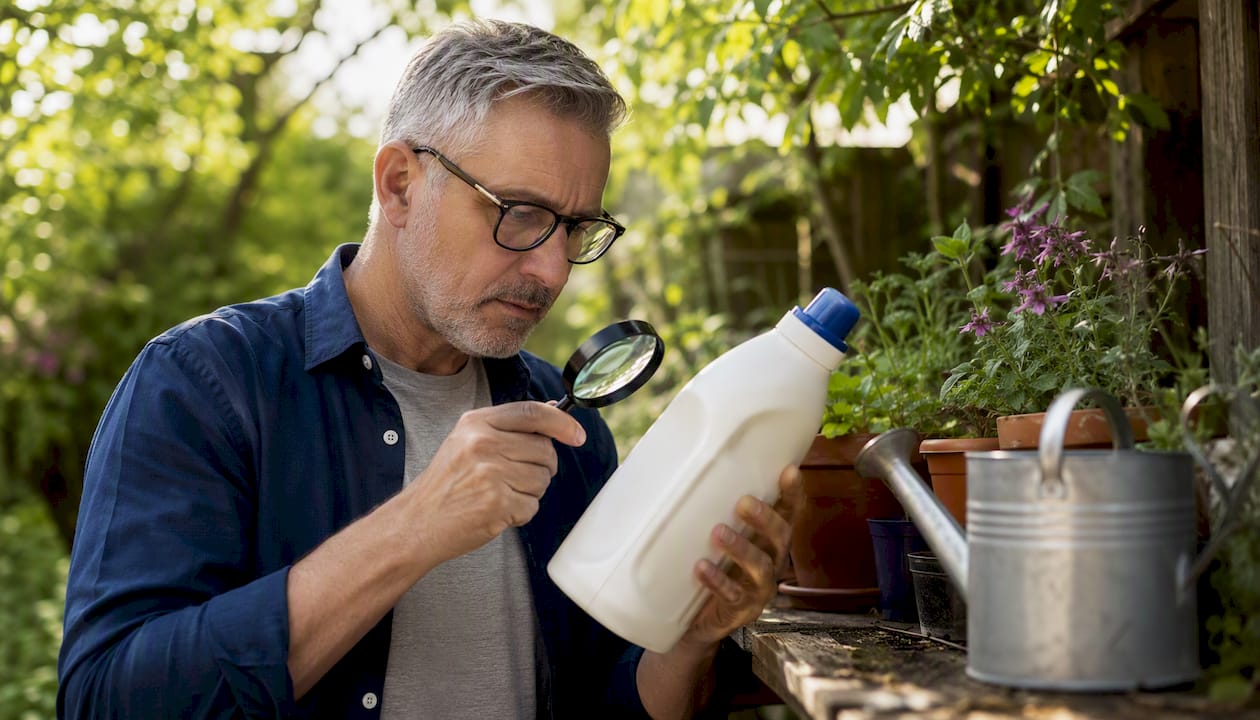
Step 1: Check for a credible third-party certification. Look for EPA Safer Choice, EWG Verified, or MADE SAFE. Then go to the certifier’s website and confirm the product appears in their database. EPA Safer Choice has a searchable product finder at epa.gov/saferchoice. EWG’s Healthy Cleaning database at ewg.org/guides/cleaners gives A–F ratings and full ingredient transparency that you can cross-check yourself.
Step 2: Find the full ingredient list using INCI names. INCI (International Nomenclature of Cosmetic Ingredients) names are the standardized chemical names that let you look up each ingredient in a database. If the label only lists marketing descriptions like “plant-derived cleaning agents” without chemical names, the brand is not being transparent. California’s SB 258 (the Cleaning Product Right to Know Act) requires manufacturers selling in California to disclose all intentionally added ingredients above a low threshold, so a California-compliant product page is a useful baseline even if you live elsewhere.
Step 3: Verify biodegradability and recyclability claims. Ask which OECD test standard was used for biodegradability. For recyclability, check your municipality’s accepted materials list at earth911.com or your local waste authority’s website, then compare it to the packaging material the brand describes.
Step 4: Look for qualified claims. A brand that says “recyclable where facilities exist” or “biodegradable per OECD 301B” is being more honest than one that uses unqualified versions of those words. Qualified claims are a positive signal.
If the ingredient list is missing entirely, contact the brand before buying. A brand that cannot or will not disclose its ingredients has no business calling its product “transparent” or “clean.”
Pro Tip: Search the product name in EWG’s Healthy Cleaning database before you buy. Products with an A or B rating have disclosed ingredients and passed EWG’s screening. A product that doesn’t appear at all is worth questioning.
Which certifications actually mean something for laundry products
Independent third-party certifications perform more rigorous pre-market ingredient reviews than brand self-declarations. Here is what the main ones actually cover:
- EPA Safer Choice: Reviews every ingredient in the formula against EPA’s Safer Chemical Ingredients List. Requires disclosure of all intentionally added ingredients and prohibits a list of chemicals of concern. Covers the formula, not just packaging. Searchable at epa.gov/saferchoice.
- EWG Verified: Requires full ingredient disclosure above 0.001% concentration, prohibits EWG-flagged chemicals, and includes a manufacturing review. Products appear in EWG’s Healthy Cleaning database with individual ingredient ratings.
- MADE SAFE: Screens ingredients against a prohibited chemicals list that includes known carcinogens, endocrine disruptors, and persistent pollutants. Covers human health and ecosystem impacts. Products are listed at madesafe.org.
What these seals don’t cover: None of them certify the full lifecycle carbon footprint, supply-chain labor practices, or whether the packaging is actually recycled by your local program. A certified product is meaningfully better on ingredient safety, but it is not a complete environmental guarantee.
To verify a certification, always go directly to the certifier’s product database rather than trusting the logo on the label. Seals can be used after they expire, applied to reformulated products, or simply copied without authorization.
What brands hide behind “fragrance,” “plant-based,” and “natural”
The fragrance loophole is the most underappreciated ingredient trap in laundry products. A single “fragrance” entry on a label can represent a blend of 30 or more individual chemicals, including synthetic musks, phthalates, and allergens, none of which appear by name. Experts recommend choosing fragrance-free products or those that fully disclose their essential-oil components to avoid these hidden synthetic irritants.
The “plant-based” claim is a different kind of trap. It answers the question “where did this come from?” but not “is it safe?” or “was it processed cleanly?” Ethoxylated surfactants, which are common in both conventional and “natural” detergents, can carry 1,4-dioxane as a processing contaminant. Because 1,4-dioxane is not intentionally added, it does not appear on ingredient lists. The only way to know whether a product has been tested for it is to ask the brand directly or look for third-party test results.
Optical brighteners and PFAS are two more ingredients worth checking. Both persist in waterways and have been found in products with “green” front panels. A full INCI ingredient checklist helps you flag these by their chemical names before you buy.
Biodegradability claims need a test standard to mean anything. OECD 301B and 301F specify that an ingredient must reach at least 60% degradation within 28 days under aerobic conditions to qualify as “readily biodegradable.” Without that standard cited, “biodegradable” is a word, not a measurement.
Packaging and lifecycle claims: what they mean and what they hide
Packaging claims are where some of the most technically-true-but-practically-misleading statements live. Here is what the common ones actually mean:
- “Recyclable” — without a qualifier: may be accepted by fewer than 60% of U.S. curbside programs. The FTC’s Green Guides say this is deceptive if most consumers lack access to the needed recycling infrastructure.
Format matters for lifecycle impact too. Concentrated sheets and powders ship lighter than liquid jugs, which reduces transportation emissions per load. Liquid detergents are mostly water by weight, meaning a significant portion of what you are shipping and storing is water you already have at home. Concentrated detergent sheets address this directly by removing the water from the formula entirely.
Pods present a different trade-off: they reduce measuring errors and overdosing, but the polyvinyl alcohol (PVA) film that dissolves in the wash has raised questions about whether it fully breaks down in wastewater treatment or passes through into waterways.
Pro Tip: Go to earth911.com, enter your zip code, and search the specific packaging material (e.g., “HDPE plastic,” “cardboard,” “flexible film”). A claim is only as good as your local infrastructure.
What to look for instead, and how Purecise’s sheets address these mistakes
When you strip away the marketing, a genuinely better laundry product has five concrete attributes:
- Full ingredient disclosure using INCI names, either on the label or a publicly accessible product page, ideally meeting California SB 258 standards.
- A credible third-party certification (EPA Safer Choice, EWG Verified, or MADE SAFE) verified in the certifier’s own database.
- A concentrated, low-water format that reduces shipping weight and packaging volume per load.
- Recyclable or minimal packaging tied to real infrastructure, with qualified claims and a clear material description.
- Fragrance-free or fully disclosed fragrance components, not a blanket “fragrance” entry.
Purecise’s Laundry Detergent Sheets Box and Laundry Detergent Sheets Envelopes are built around several of these attributes. Each sheet is pre-dosed, which eliminates the overdosing that wastes product and increases chemical load in wastewater. The format is concentrated and water-free, so there is no plastic jug to dispose of and the shipping footprint per load is substantially lower than liquid detergent. The formula is plant-based and hypoallergenic, designed for sensitive skin and families. Purecise publishes its ingredient information so shoppers can review what is in the formula rather than taking a front-panel claim on faith.
Your buyer’s checklist before you buy any laundry product
Use this before you add anything to your cart, in-store or online:
- Certification check: Is there an EPA Safer Choice, EWG Verified, or MADE SAFE seal? Confirm it in the certifier’s database.
- Ingredient list present: Are full INCI chemical names listed, not just marketing descriptions like “plant-derived surfactants”?
- Fragrance disclosure: Does the label say “fragrance-free,” or does it list specific essential oils by name? A bare “fragrance” entry is a red flag.
- Recyclability qualification: Does the packaging claim say “recyclable where facilities exist,” and have you checked your local program?
- Biodegradability standard cited: Does the brand name an OECD test (301B, 301F) or another recognized standard?
- Company transparency: Does the brand have a publicly accessible ingredient page, a contact method, and a clear response to direct questions?
- Format efficiency: Is the product concentrated, low-water, or in a format that reduces packaging per load?
- Seal verification: Have you gone to the certifier’s website and confirmed the product is listed?
Three questions to ask customer service or post in a product Q&A:
- “Which biodegradability test did you run, under what conditions, and what was the result?”
- “Does your ‘fragrance’ entry cover synthetic chemicals, or can you provide a full disclosure of fragrance components?”
- “Is your packaging accepted by curbside recycling programs in most U.S. cities, and how do you define ‘recyclable’ on your label?”
Key Takeaways
Greenwashing in laundry products almost always relies on the same handful of tactics: vague words, selective disclosures, and unverified seals. Demanding a third-party certification, a full INCI ingredient list, and qualified packaging claims cuts through most of it.
| Point | Details |
|---|---|
| Ignore front-panel words | “Eco-friendly,” “natural,” and “green” are unregulated; treat them as marketing until a certification backs them up. |
| Demand ingredient disclosure | Look for full INCI names on the label or product page; “fragrance” alone can hide dozens of synthetic chemicals. |
| Verify every seal | Go to the certifier’s database (EPA, EWG, MADE SAFE) and confirm the product is actually listed before trusting the logo. |
| Qualify packaging claims | “Recyclable” without “where facilities exist” is often misleading; check your local program at earth911.com. |
| Purecise detergent sheets | Pre-dosed, water-free, and published ingredient list; avoids plastic jugs and the overdosing that increases chemical load per wash. |
Why Purecise publishes this guide
The laundry aisle is genuinely confusing, and most of that confusion is manufactured. Brands spend real money on green packaging and vague certifications because those signals work on shoppers who are trying to do the right thing. Purecise publishes guides like this one because the only way to compete on actual transparency is to help shoppers understand what transparency looks like.
Here is the part most eco-product brands won’t say out loud: a “plant-based” label on a laundry product is not a promise. It is a starting point. The questions that follow, about processing byproducts, fragrance disclosure, packaging recyclability, and third-party verification, are the ones that separate a genuinely better product from a well-designed bottle.
Purecise’s approach is to publish its ingredient information openly, use recyclable packaging, and back the product with a 100% money-back guarantee because confidence in a product should not require a leap of faith. Shoppers who want to verify the formula before buying can do so at Purecise’s ingredient page rather than taking a front-panel claim at face value.
The broader point: greenwashing persists because verification takes effort and most shoppers don’t have time for it. The checklist in this guide is designed to make that effort take about two minutes. Use it every time.
Purecise detergent sheets: a practical alternative to greenwashed products
If you have read this far, you already know what to look for: full ingredient disclosure, a verified third-party seal, concentrated format, and packaging claims that hold up to scrutiny. Purecise’s Toss & Go detergent sheets are built to meet those standards rather than just claim them.
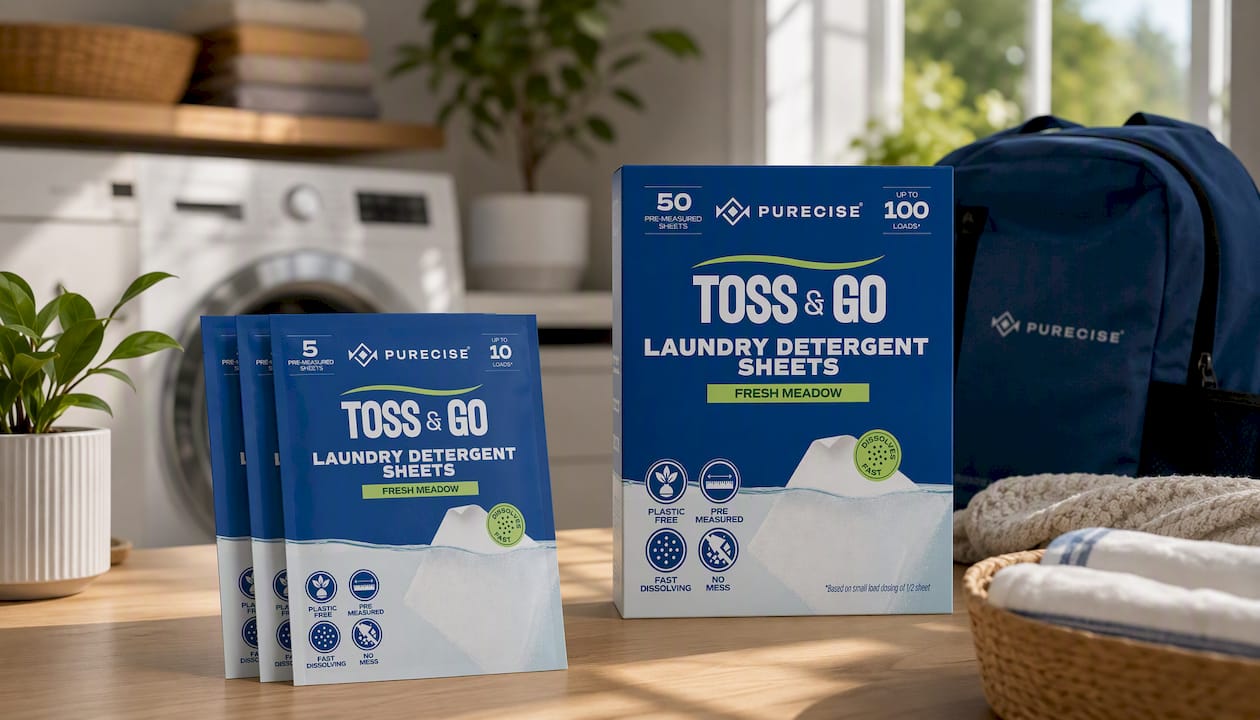
Each sheet is pre-dosed and water-free, which means no plastic jug, no measuring, and a shipping footprint per load that is a fraction of liquid detergent. The plant-based, hypoallergenic formula is designed for sensitive skin and dissolves completely in any machine type or temperature. Packaging is recyclable, and the full ingredient list is publicly available so you can check it yourself before buying. The Laundry Detergent Sheets Box covers a full month’s supply, and the travel envelope packs are sized for trips or apartment laundry rooms. Every order is backed by a 100% money-back guarantee. Try them and see whether they hold up to the checklist you just built.
Useful sources and verification tools
| Resource | What it is | How to use it |
|---|---|---|
| EPA Safer Choice Product Search | Database of EPA-certified cleaning products | Search by product name or brand to confirm certification status |
| EWG Healthy Cleaning Database | A–F ingredient ratings for thousands of cleaning products | Search the product name; check individual ingredient flags and overall score |
| FTC Green Guides | FTC guidance on what environmental claims require to be legal | Use to understand what “recyclable,” “biodegradable,” and “compostable” must mean legally |
| FTC Consumer Advice: Eco-Friendly Claims | Plain-language summary of green claim rules for shoppers | Read before shopping to know which claims are regulated and which are not |
| Earth911 Recycling Search | Municipal recycling lookup by material and zip code | Enter your zip and the packaging material to confirm local acceptance |
| California SB 258 Disclosure | State-level ingredient disclosure law for cleaning products | Use as a baseline: products sold in California must disclose ingredients above set thresholds |
| OECD Biodegradability Standards | OECD 301 series test protocols for biodegradability | Ask brands which OECD test number their formula passed; 301B and 301F are the most common ready-biodegradability standards |
Recommended
How to Wash Uniforms Without a Washer or Dryer
Wash Clothes with Limited Water on Deployment
Related Posts

Remove Berry Stains: Cold Water First, Detergent Sheets on the Go

Remove Makeup Stains on the Go With a 10–15 Minute Pretreat

Remove Lipstick Stains: The First 15 Minutes, Plus Detergent Sheets

How Often to Wash Towels: Bath Weekly, Hand Towels Every Few Days

Detergent Allergy Rash: Test a Low Residue Wash Without Fragrance

Save Clothes From Mud Stains in 1–2 Hours With Premeasured Sheets

Fabric First Sweat Stain Fixes: Measured DIY Recipes and Sheets


