

Sustainable Laundry Packaging Alternatives Explained
Sustainable laundry packaging is defined as any container, wrapper, or enclosure for laundry products that reduces environmental harm through biodegradable materials, recycled content, or minimal plastic use. The category covers everything from fiber-based pod boxes and water-soluble pouches to high-recycled-content flexible bags. With sustainable laundry packaging alternatives explained across materials, regulations, and end-of-life options, you can make purchasing decisions that actually hold up to scrutiny. The EU Packaging and Packaging Waste Regulation (PPWR) began phased implementation in 2026, mandating 35% post-consumer recycled plastic content in detergent flexible packaging by 2030. That regulatory pressure is accelerating real innovation across the entire laundry aisle.
What materials are leading sustainable laundry packaging today?
The four material categories driving eco-friendly laundry packaging right now are bio-based plastics, fiber-based board, water-soluble films, and high-recycled-content polyolefins. Each solves a different piece of the plastic waste problem, and none is a perfect universal answer.
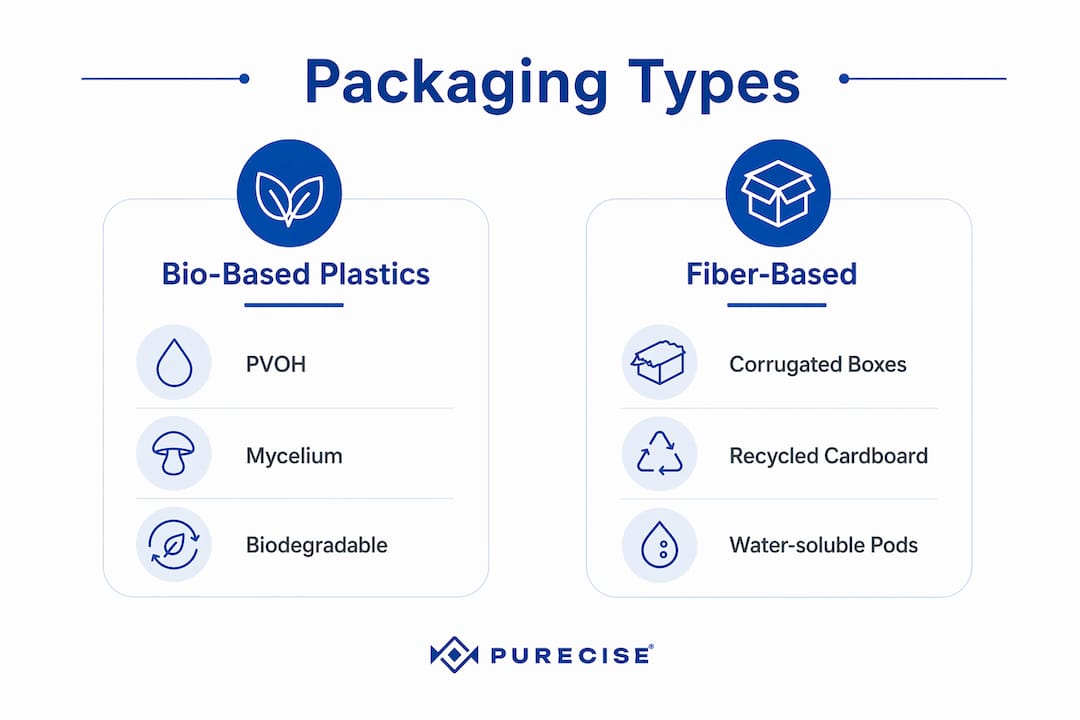
Bio-based and biodegradable plastics include polyvinyl alcohol (PVOH) and mushroom-derived mycelium composites. PVOH dissolves in water and is the film used in most laundry pods today. Mushroom packaging remains a niche option for outer shipping boxes rather than direct product contact.
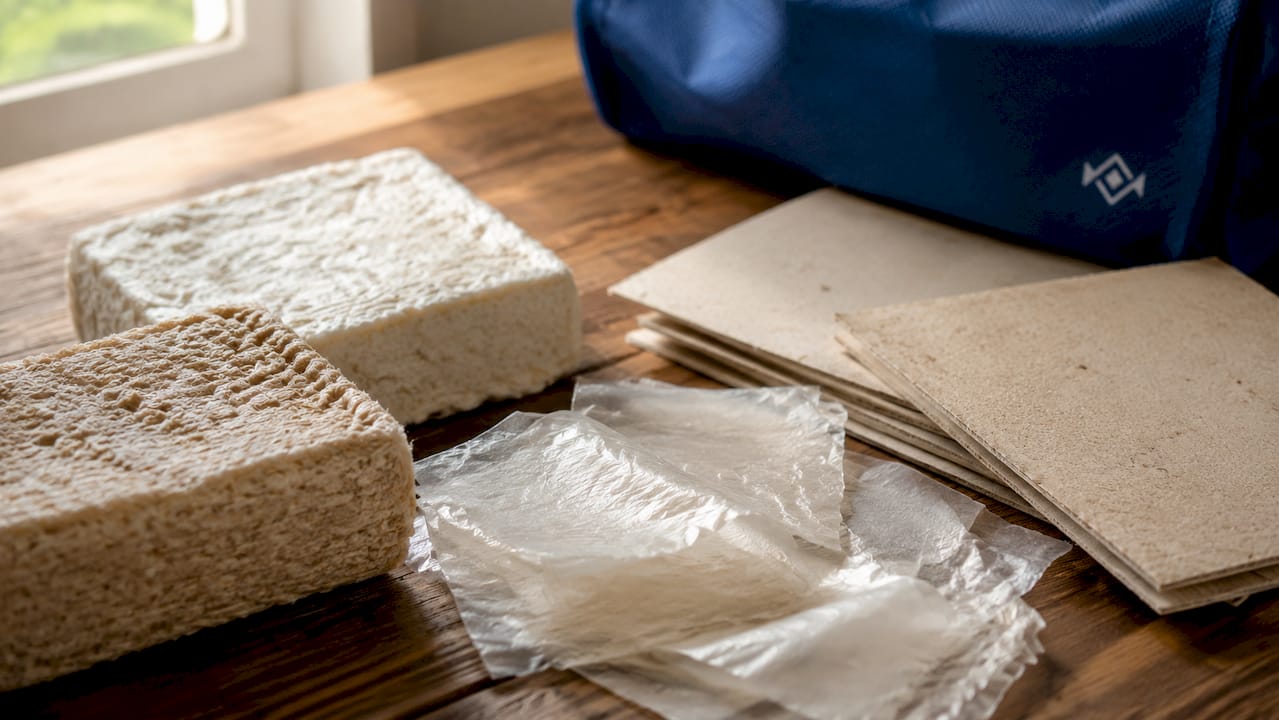
Fiber-based packaging is the fastest-growing format for laundry pods. STI Group’s Click-Box is a single-piece corrugated board design with child-resistant snap-locks and water-based barrier coatings. After use, the entire box goes into the paper recycling stream. That combination of child safety, moisture protection, and paper recyclability is rare in one package.
Water-soluble pouch stock from SmartSolve’s X-Series takes a different approach. The material is 75% bio-based, dissolves in water in under 30 seconds, and leaves no microplastic residue. It uses FSC-certified wood pulp fibers with a PVOH coating and works on standard vertical form-fill-seal equipment. That last detail matters because it means brands can switch without buying new machinery.
High post-consumer recycled content flexible packaging rounds out the category. Mondi and Dreco’s re/loop PillowBag contains 50% post-consumer recycled plastic while still meeting moisture protection requirements for detergent powder. It is designed for mechanical polyolefin recycling streams, which means it can re-enter the recycling loop after use.
- Fiber-based boxes: Paper-recyclable, child-resistant, require barrier coatings for moisture
- Water-soluble films: Dissolve completely, bio-based options available, no microplastic residue
- Recycled-content flexible bags: Maintain performance, support PPWR compliance, mechanically recyclable
- Bio-based plastics: Reduce virgin fossil inputs, but end-of-life options vary by local infrastructure
Pro Tip: When comparing packaging claims, check whether “biodegradable” refers to the outer box, the inner pod film, or both. They often have completely different end-of-life pathways.
How do sustainable packaging choices affect product performance?
Sustainability and product protection are in direct tension for laundry packaging. Laundry pods are hygroscopic, meaning they absorb moisture from the air and clump or dissolve prematurely if packaging fails. That single fact drives most of the engineering complexity in this category.
- Moisture barriers are non-negotiable. Fiber-based boxes require water vapor barrier coatings to keep pods dry. STI Group’s Click-Box uses water-based barrier chemistry that preserves paper recyclability while blocking humidity. Without that coating, a cardboard box would fail within weeks in a humid bathroom.
- Child resistance adds structural requirements. Snap-lock mechanisms on fiber packaging must meet regulatory standards without adding non-recyclable components. STI Group’s design achieves this with the corrugated board itself rather than plastic inserts.
- Barrier coatings create recyclability trade-offs. Some barrier coatings contaminate paper recycling streams. Water-based coatings are generally compatible with paper recycling, but solvent-based or foil laminate coatings are not. Always check the specific coating chemistry before assuming a box is paper-recyclable.
- Solid detergent formats sidestep many of these challenges. Sheets, tiles, and tablets contain no water, so they need far less protective packaging than liquid or gel formats. Less packaging volume also means lower shipping weight and a smaller carbon footprint per wash.
- Consumer experience shapes adoption. Packaging that is hard to open, prone to spilling, or confusing to reseal drives consumers back to conventional options. The best sustainable designs match or exceed the convenience of plastic bottles.
The Mondi and Dreco PillowBag demonstrates that recycled-content packaging can meet the same moisture protection standards as virgin plastic. That removes one of the most common objections brands raise against switching.
What recycling and end-of-life options should consumers know?
Recycling laundry packaging is more complicated than the bin on the label suggests. The gap between what is technically recyclable and what your local program actually accepts is where most good intentions break down.
Plastic flexible pouches are the hardest category. Most curbside programs reject them because thin films jam sorting machinery at materials recovery facilities (MRFs). Wish-cycling — tossing items into the recycling bin and hoping for the best — actually contaminates clean loads and increases landfill rates. The correct path for flexible plastic pouches is store drop-off programs at retailers like Target or Walmart, which collect them separately for film recycling.
How2Recycle labels are the clearest consumer signal available. A How2Recycle label specifies whether packaging goes curbside, to a store drop-off, or in the trash. Brands using this labeling system have done the work of verifying end-of-life pathways. If a package lacks this label, treat recycling claims with skepticism.
| Packaging type | Curbside recyclable? | Best end-of-life option |
|---|---|---|
| Fiber-based pod box (water-based coating) | Yes, paper stream | Curbside recycling |
| Plastic flexible pouch | Rarely | Store drop-off film recycling |
| Water-soluble pod film (PVOH) | No, dissolves in wash | Dissolves during laundry cycle |
| High-PCR polyolefin bag | Check locally | Curbside where accepted |
| Cardboard detergent box | Yes | Curbside recycling |
The PPWR’s recyclability requirements will force brands to redesign packaging that cannot meet these standards by 2030. That means the options in the table above will improve, but only if consumers also push for better local infrastructure.
Pro Tip: Before buying any laundry product, search your zip code on How2Recycle’s website to confirm whether the packaging type is accepted in your area. Manufacturer claims and local reality often differ.
How are detergent formats evolving to reduce packaging needs?
The most radical reduction in laundry packaging waste does not come from better boxes. It comes from changing the detergent itself. Solid formats — sheets, tiles, and tablets — eliminate the need for large, heavy containers entirely.
- Shipping efficiency: Solid detergents contain no water, which is the primary weight in liquid detergents. A home-mixing approach can cut carbon footprint by 95% versus traditional liquid products due to shipping weight alone. Even without home mixing, solid formats ship far more washes per kilogram than liquid equivalents.
- Detergent sheets: Thin, pre-dosed sheets dissolve completely in the wash. Researchers are actively exploring microfibrillated cellulose as a replacement for PVOH in sheet formulas, which would improve biodegradability and eliminate any residual microplastic concern.
- PVA controversy in pods: Detergent-grade PVA is claimed by manufacturers to fully dissolve without leaving microplastics. Independent researchers continue to study whether all PVA fully mineralizes under real-world wastewater treatment conditions. Third-party validated studies carry more weight than brand claims alone.
- Packaging volume: A month’s supply of detergent sheets fits in an envelope-sized package. That same supply in liquid form requires a 100-ounce plastic jug. The packaging reduction is not incremental. It is structural.
- Material compatibility: Solid formats pair naturally with minimal packaging. A small cardboard box, a paper envelope, or a compostable pouch can hold dozens of washes. None of those options require the moisture barriers that pod packaging demands.
Purecise’s solid detergent sheets are a direct example of this format shift. Plant-based, plastic-free, and pre-dosed, they represent the clearest path to reducing both packaging waste and per-wash carbon output simultaneously.
Key Takeaways
Sustainable laundry packaging requires matching material choice, product format, and local recycling infrastructure — no single solution works for every consumer or every product.
| Point | Details |
|---|---|
| Material choice matters | Fiber-based, water-soluble, and high-PCR options each serve different products and recycling streams. |
| Solid formats cut packaging volume | Detergent sheets and tiles eliminate the need for large containers and moisture-heavy shipping. |
| Curbside recycling has limits | Flexible plastic pouches require store drop-off programs, not curbside bins, for proper recycling. |
| PPWR sets a 2030 deadline | EU regulations mandate 35% post-consumer recycled content in detergent flexible packaging by 2030. |
| Third-party verification counts | How2Recycle labels and independent dissolution studies are more reliable than brand sustainability claims. |
Purecise’s take on what actually moves the needle
The packaging conversation in laundry care gets tangled up in material science debates that most consumers cannot resolve. I have watched brands spend enormous energy defending their PVOH pod films while shipping 90% water in plastic jugs. That is the wrong problem to focus on.
The clearest sustainability gain available right now is switching to a solid detergent format with minimal packaging. Not because it is fashionable, but because the math on shipping weight and packaging volume is unambiguous. A cardboard envelope holding 30 wash sheets beats a 100-ounce plastic jug on every metric: weight, volume, carbon per wash, and end-of-life simplicity.
The PVA microplastic debate is real and worth watching. But waiting for perfect third-party data before making any change is a trap. The practical move is to choose formats where the packaging question is simple: paper envelope, paper recycling bin. Done.
Local recycling infrastructure is the variable most consumers underestimate. A packaging type that is technically recyclable in Germany may go straight to landfill in rural Texas. Check How2Recycle before you buy, not after. That one habit closes the gap between good intentions and actual impact.
The future of this category points toward bio-based films, multifunctional packaging that doubles as a measuring tool or storage container, and full supply chain transparency. Brands that get ahead of PPWR requirements now will have a real competitive advantage. Consumers who understand the difference between upstream material choices and downstream recycling options will make better decisions than any label can guide them to.
— Purecise
Purecise Toss & Go sheets: packaging-free laundry done right
Purecise Toss & Go laundry detergent sheets are plant-based, plastic-free, and pre-dosed for one wash. Each sheet dissolves completely in any water temperature, leaving no residue and requiring no measuring.
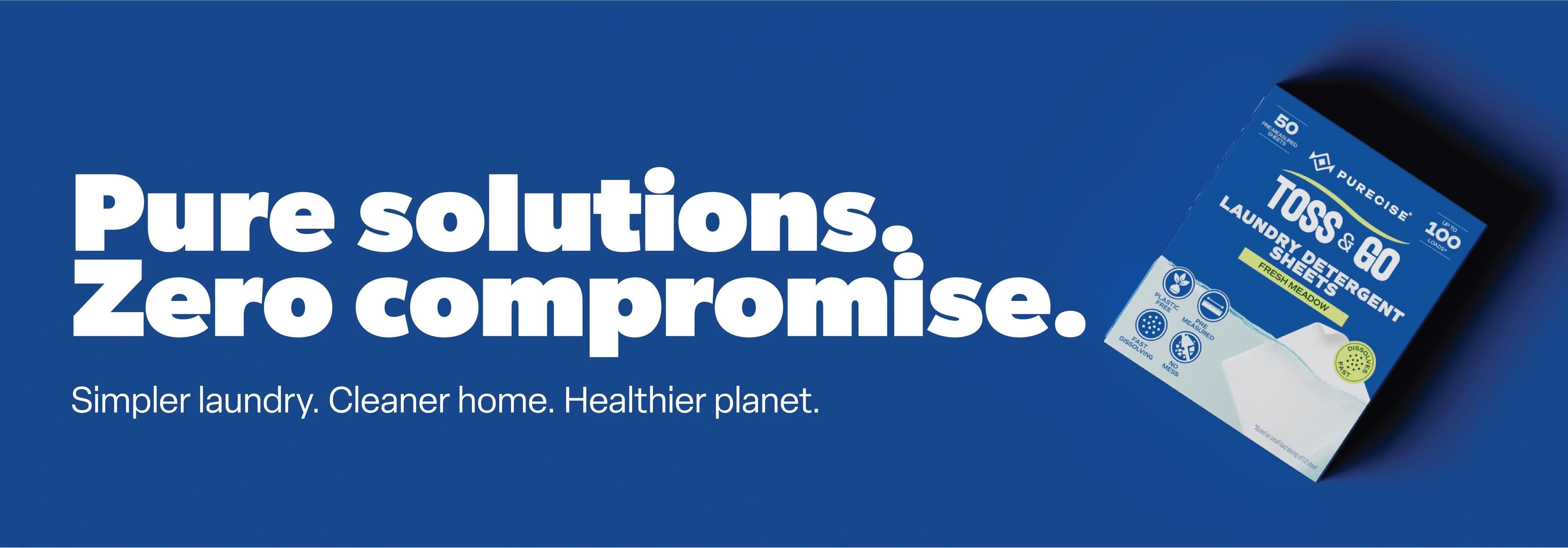
A full month’s supply ships in a compact, minimal-waste envelope. That means no plastic jugs, no bulky storage, and no guessing on dose. The hypoallergenic formula is free from harsh chemicals, making it safe for sensitive skin and families. Purecise backs every order with a 100% money-back guarantee. Pick up detergent sheets in envelopes or grab the boxed sheet format for a packaging-free laundry routine that actually works.
FAQ
What is sustainable laundry packaging?
Sustainable laundry packaging is any container or wrapper for laundry products that reduces environmental impact through recycled content, biodegradable materials, or minimal plastic use. Examples include fiber-based pod boxes, water-soluble pouches, and high-recycled-content flexible bags.
Are laundry pod films biodegradable?
Detergent-grade PVA films are claimed by manufacturers to fully dissolve during the wash cycle, but independent research on complete mineralization under real wastewater conditions is still ongoing. Consumers seeking certainty should look for third-party validated dissolution data.
Can I recycle flexible laundry detergent pouches at home?
Most curbside programs reject flexible plastic pouches because they jam sorting machinery. The correct disposal method is a store drop-off film recycling program at retailers like Target or Walmart.
What are compostable laundry packaging options?
Compostable options include mushroom-based outer packaging and some certified compostable mailers, but these require industrial composting facilities rather than home compost bins. Always check the certification mark (such as BPI or TÜV) and confirm your local facility accepts the specific material.
Why do detergent sheets use less packaging than liquid detergents?
Detergent sheets contain no water, so they ship at a fraction of the weight and volume of liquid detergents. A month’s supply fits in a paper envelope, which is curbside recyclable and requires no moisture barrier coatings.
Recommended
Why Minimalists Prefer Laundry Sheets Over Liquid
Why Liquid Detergent Spills in Laundry Bags: Real Fixes
Related Posts

Remove Lipstick Stains: The First 15 Minutes, Plus Detergent Sheets

How Often to Wash Towels: Bath Weekly, Hand Towels Every Few Days

Detergent Allergy Rash: Test a Low Residue Wash Without Fragrance

Save Clothes From Mud Stains in 1–2 Hours With Premeasured Sheets

Fabric First Sweat Stain Fixes: Measured DIY Recipes and Sheets

Whiten White Clothes, No Chlorine: 4–8 Hour Soak, Premeasured Sheets

Remove Blood Stains from Clothes: Cold Water, Enzyme Soak, No Dryer


