

How to Switch to Zero Waste Laundry in 2026
A zero waste laundry routine is defined as a system that eliminates single-use plastics, reduces synthetic chemical exposure, and cuts microfiber pollution from every wash cycle. When you switch to zero waste laundry, you are not just swapping products. You are changing how your household interacts with water, energy, and the environment. The good news is that the most effective changes cost less over time, not more. Purecise Toss & Go detergent sheets, GOTS-certified natural fibers, and cold water washing are the three pillars that make this routine work without adding inconvenience.
What tools and products do you need to switch to zero waste laundry?
The right products make the difference between a routine that sticks and one that falls apart after two weeks. Start with your detergent, since it is the most frequent purchase and the biggest source of plastic waste in the laundry room.
Detergent options ranked by waste impact:
- Powder detergent in cardboard boxes. Enzyme-based powder detergents outperform liquid formulas on stain removal and generate zero plastic packaging waste.
- Detergent sheets without PVA film. Most laundry sheets use PVA, a plastic that may not fully biodegrade in wastewater treatment. Choose PVA-free sheets, like Purecise Toss & Go sheets, which dissolve completely without leaving plastic residue.
- Soap nuts. A natural, compostable option for light loads and sensitive skin.
- Refillable liquid detergent. Reduces plastic if a local refill station is available, though it still uses water-heavy formula.
Reusable laundry aids:
- Wool dryer balls. These last over 1,000 loads and cut drying time by improving airflow. They replace disposable dryer sheets entirely.
- Guppyfriend laundry bag. This mesh bag captures 86–99% of microfibers released during washing. That capture rate makes it one of the most effective consumer tools for reducing household microplastic pollution.
- External washing machine filters. Installed on the drain hose, these catch fibers that bypass the drum entirely.
| Product | Replaces | Waste reduction |
|---|---|---|
| PVA-free detergent sheets | Plastic liquid jugs | Eliminates plastic packaging |
| Wool dryer balls | Disposable dryer sheets | 1,000+ loads per set |
| Guppyfriend bag | No equivalent | 86–99% microfiber capture |
| Cardboard-boxed powder | Plastic-bottled powder | Zero plastic packaging |
Pro Tip: Start with one swap, not four. Replace your current detergent first. Once that feels normal, add wool dryer balls. Stacking changes too fast leads to abandonment.
How can you optimize washing machine settings to reduce microfiber pollution?
Your machine settings matter as much as your products. Changing them costs nothing and delivers measurable results immediately.
-
Wash in cold water. Heating water accounts for 90% of a washing machine’s energy use per cycle. Switching to cold water saves roughly 3.2 kWh per load and reduces microfiber shedding by about 30%. That is a significant environmental win from a single setting change.
-
Choose shorter, gentler cycles for synthetics. Longer cycles with more agitation break fibers down faster. A quick wash on a delicate setting releases fewer microplastics than a standard 60-minute cycle.
-
Lower your spin speed. Reducing spin speed to 800–1,000 RPM reduces mechanical stress on fabric fibers during the final spin. Most machines default to 1,200–1,400 RPM, which is harder on synthetic fabrics.
-
Wash full loads. Running half-empty machines wastes water and energy per item cleaned. Consolidating loads also means fewer total cycles per week.
-
Consider your machine type. Front-loading machines shed approximately 35% fewer microfibers than top-loading agitator models. The gentler tumbling action causes less fiber breakage. If you are replacing a machine, this data point should influence your decision.
Pro Tip: Set cold water as your machine’s default temperature right now. You will not notice a difference in cleanliness for most loads, but your energy bill and microfiber output will both drop immediately.
What zero waste alternatives replace common single-use laundry products?
Most single-use laundry products have a direct, lower-waste replacement. The substitutions below work for everyday laundry without sacrificing results.
-
Replace liquid detergent jugs with powder in cardboard or PVA-free sheets. Liquid detergents are mostly water, which adds weight, shipping emissions, and plastic packaging. Powder and sheet formats eliminate all three problems. Purecise Toss & Go sheets are pre-dosed, so you never overdose and waste product.
-
Replace fabric softener with white distilled vinegar. Add half a cup to the rinse cycle. It softens fibers naturally, removes detergent residue, and leaves no chemical fragrance. The vinegar smell disappears completely once clothes dry.
-
Replace disposable dryer sheets with wool dryer balls. Add five to seven drops of essential oil to a ball before drying if you want scented laundry. This replaces synthetic fragrance boosters entirely.
-
Replace spray stain removers with solid soap sticks. A solid stain bar made from plant-based ingredients handles most food and grease stains with zero plastic packaging. Wet the stain, rub the bar directly on it, and let it sit for ten minutes before washing. For tougher stains, the stain removal guide from Purecise covers fabric-specific techniques.
-
Avoid synthetic scent boosters. These products contain microplastics that release directly into wastewater during every wash.
Pro Tip: Keep a small jar of white vinegar next to your machine as a visual reminder. Once it becomes a habit, you will never buy fabric softener again.
How do fabric choices affect your zero waste laundry routine?
The clothes you buy determine how much microplastic pollution your laundry generates. This is the part of zero waste laundry that most guides skip.
Natural fibers like GOTS-certified organic cotton, linen, hemp, and wool shed cellulose fibers when washed. Cellulose is biodegradable. Synthetic fibers like polyester, nylon, and acrylic shed microplastics, which persist in waterways and marine ecosystems indefinitely. The fiber content label on your clothing tells you exactly what you are releasing into the water supply every time you wash.
Reducing synthetic purchases is the most upstream solution available to you. When shopping, avoid garments with more than 20% synthetic content if microplastic reduction is a priority. GOTS certification guarantees that organic cotton was grown and processed without toxic pesticides or synthetic dyes, making it the gold standard for low-impact fabric.
Garment care habits that extend clothing life and reduce washing frequency:
- Spot clean small stains instead of washing the full garment.
- Rewear lightly used clothes, especially outer layers like jeans, sweaters, and jackets.
- Wash delicates inside out on a gentle cycle to reduce surface abrasion.
- Air dry whenever possible. Tumble drying degrades fabric faster and uses significant energy.
| Fiber type | Microplastic risk | Biodegradable? |
|---|---|---|
| GOTS organic cotton | None | Yes |
| Linen | None | Yes |
| Wool | None | Yes |
| Polyester | High | No |
| Nylon | High | No |
| Polyester/cotton blend | Medium | Partial |
How do you build a zero waste laundry routine that actually sticks?
The biggest reason people abandon eco laundry habits is that they try to change everything at once. Incremental habit changes produce higher long-term adherence than full routine overhauls. Start with cold water washing. It requires zero new products and delivers immediate energy savings. Once that feels automatic, add one more swap.
A practical sequence looks like this:
- Switch to cold water washing on all regular loads.
- Replace your current detergent with a zero plastic option when it runs out.
- Add wool dryer balls at your next purchase.
- Use a Guppyfriend bag for synthetic garment loads.
- Swap fabric softener for white vinegar.
Common mistakes to avoid: overdosing detergent (it leaves residue and wastes product), washing clothes that are not actually dirty, and relying on a microfiber bag alone without also addressing fabric choices. The bag captures what is already shed. Choosing natural fibers reduces shedding at the source.
“Systemic solutions like mandated microfiber filters on new washing machines offer the most effective pollution control. Consumer habits matter, but supporting legislation that requires built-in filters addresses the problem at scale.” — Earth911
The sustainable laundry habits guide from Purecise covers how these changes compound over time, both for your wallet and your environmental footprint.
Key Takeaways
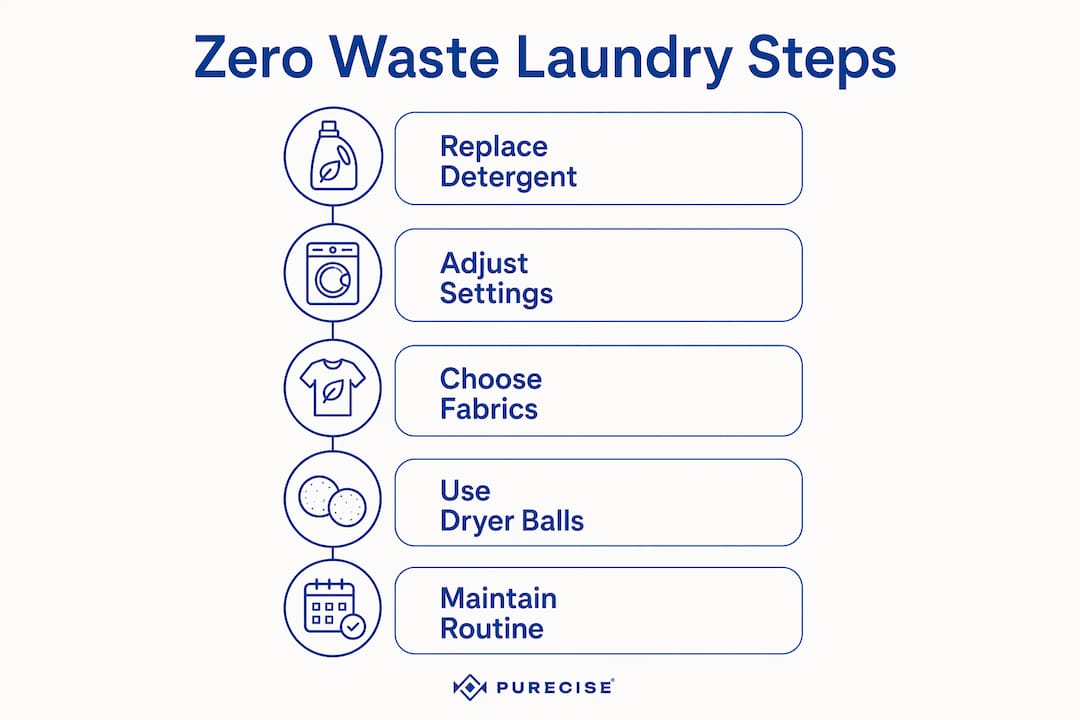
Switching to a zero waste laundry routine requires three things: replacing plastic-packaged products, adjusting machine settings, and choosing natural fibers.
| Point | Details |
|---|---|
| Cold water washing | Saves 3.2 kWh per load and cuts microfiber shedding by 30%. |
| PVA-free detergent sheets | Eliminate plastic packaging without introducing hidden microplastics. |
| Wool dryer balls | Last 1,000+ loads and replace disposable dryer sheets entirely. |
| Natural fiber choices | GOTS-certified cotton, linen, and hemp shed cellulose, not microplastics. |
| Incremental swaps | One change at a time produces higher long-term adherence than full overhauls. |
What I have learned from building a zero waste laundry routine
The first thing I noticed when Purecise started working closely with people making this switch is that the barrier is almost never cost. It is inertia. People assume that eco products will not clean as well, or that the routine will become complicated. Neither is true.
Cold water washing was the change that surprised people most. Clothes came out just as clean, energy costs dropped, and the adjustment took about two cycles to feel normal. The detergent switch was the second revelation. Pre-dosed sheets like Purecise Toss & Go remove the measuring, the mess, and the plastic jug entirely. Most people who try them do not go back.
The harder truth is that fabric choices matter more than most guides admit. You can use every eco product on the market and still release thousands of microplastic fibers per wash if your wardrobe is mostly synthetic. Addressing what you buy is as important as how you wash it.
Zero waste laundry is not a sacrifice. It is a simplification. Fewer products, less packaging, lower energy bills, and cleaner water. The routine gets easier, not harder, once the initial swaps are in place.
— Purecise
Purecise Toss & Go sheets: a practical starting point
If you are ready to make your first swap, replacing your detergent is the highest-impact move with the lowest friction. Purecise Toss & Go laundry detergent sheets are plastic-free, PVA-free, and pre-dosed, so there is no measuring and no plastic jug to dispose of. Each sheet dissolves completely in any wash temperature, works in all machine types, and is formulated without harsh chemicals, making it safe for sensitive skin and families.
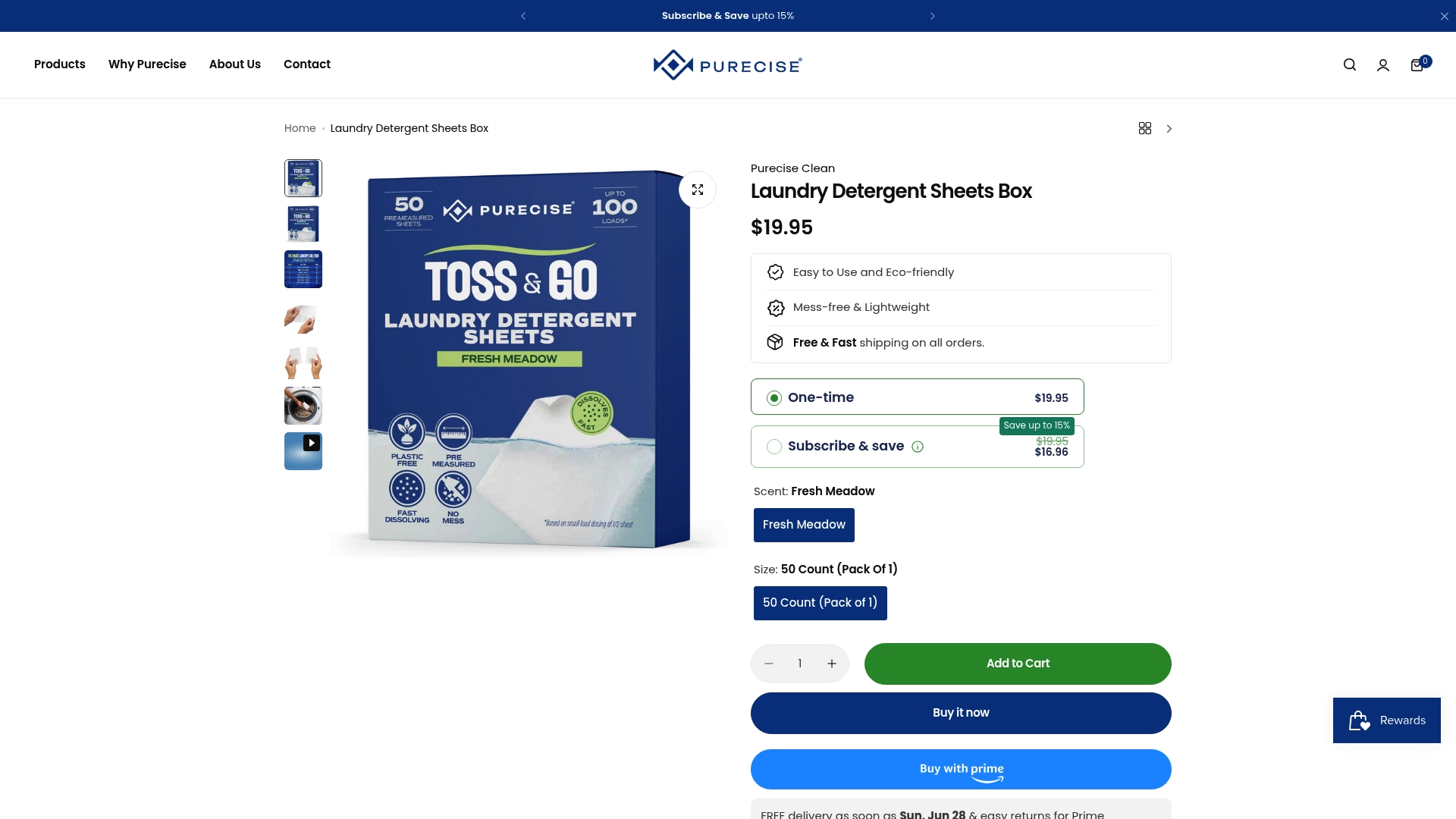
A full month’s supply fits in your pocket. The hypoallergenic formula handles tough stains without synthetic fragrances or fillers. Purecise backs every order with a 100% money-back guarantee, so the switch carries zero financial risk. Pick up a detergent sheets box or try the envelope format if you want a smaller starter quantity. Either option gets you out of the plastic jug cycle immediately.
FAQ
What is a zero waste laundry routine?
A zero waste laundry routine eliminates single-use plastic packaging, synthetic chemicals, and unnecessary energy use from every wash cycle. It typically includes plastic-free detergents, reusable laundry aids, cold water washing, and natural fiber choices.
Do laundry detergent sheets actually work as well as liquid detergent?
Yes. PVA-free detergent sheets dissolve completely in cold and hot water and clean effectively across all machine types. Purecise Toss & Go sheets are pre-dosed, which also prevents the overdosing that reduces cleaning performance with liquid detergents.
Does detergent choice affect how many microfibers are released?
No. Microfiber shedding is caused by mechanical agitation and fabric type, not detergent. Reducing spin speed, using shorter cycles, and choosing natural fibers are the most effective ways to cut microfiber pollution.
How much energy does cold water washing actually save?
Switching to cold water saves roughly 3.2 kWh per load because 90% of washing machine energy goes toward heating water. Over a year of regular washing, that adds up to a meaningful reduction in both energy bills and carbon output.
Are wool dryer balls worth buying?
Wool dryer balls last over 1,000 loads, replace disposable dryer sheets, and reduce drying time by improving airflow in the drum. The upfront cost pays for itself within a few months compared to buying disposable sheets regularly.
Recommended
Why Overloading Detergent Damages Clothes and Fabrics
Top 5 Eco-Friendly Laundry Care Alternatives 2026
Related Posts

Remove Lipstick Stains: The First 15 Minutes, Plus Detergent Sheets

How Often to Wash Towels: Bath Weekly, Hand Towels Every Few Days

Detergent Allergy Rash: Test a Low Residue Wash Without Fragrance

Save Clothes From Mud Stains in 1–2 Hours With Premeasured Sheets

Fabric First Sweat Stain Fixes: Measured DIY Recipes and Sheets

Whiten White Clothes, No Chlorine: 4–8 Hour Soak, Premeasured Sheets

Remove Blood Stains from Clothes: Cold Water, Enzyme Soak, No Dryer


