

How to Wash Clothes Without a Laundromat Traveling
Sink washing is the most cost-effective way to wash clothes without a laundromat traveling, costing under $1 per load compared to 7–10 euros at a European laundromat. Travelers who master hand washing, detergent sheets, and the towel-roll drying method can skip laundromats entirely on short trips and reduce visits to just once or twice on longer ones. This guide covers every tool, technique, and fabric choice you need to keep clothes clean, fresh, and dry on the road without wasting time or money.
What do you need to wash clothes without a laundromat when traveling?
The right gear makes hand washing clothes while traveling fast and frustration-free. You do not need much, but each item earns its place.
Detergent options
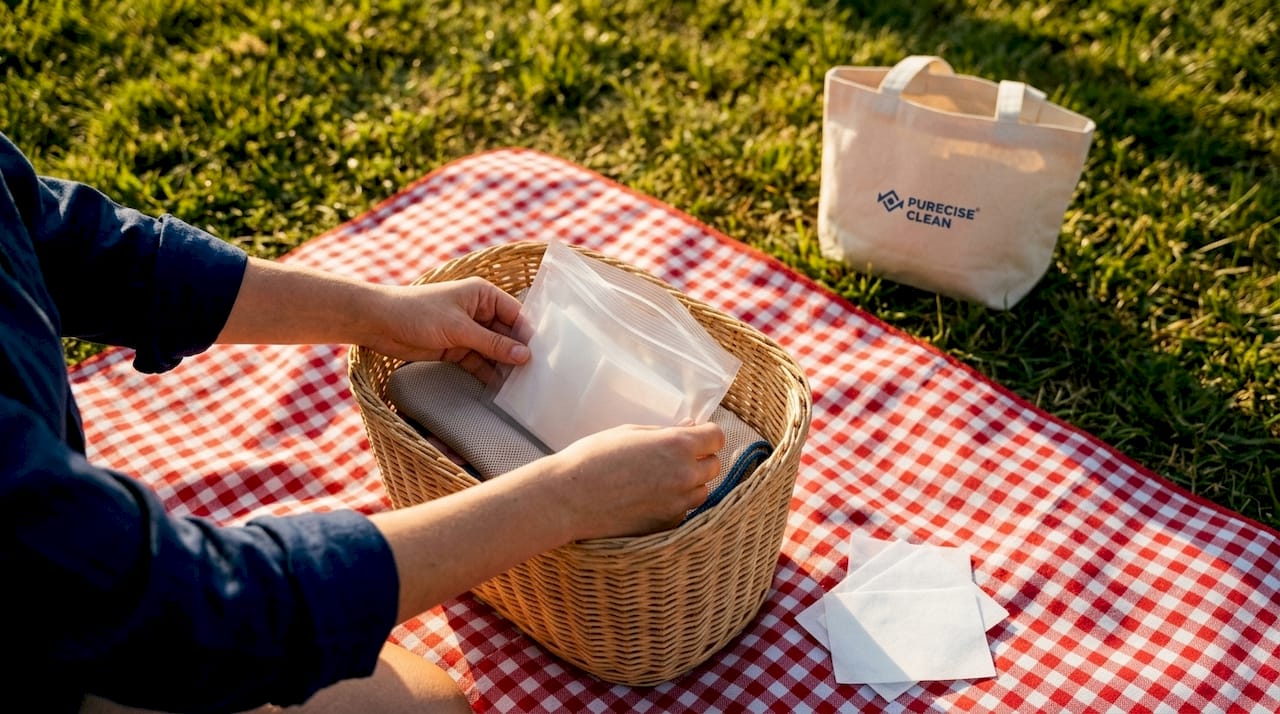
Laundry detergent sheets are the top choice for travelers. They are lightweight, plastic-free, and exempt from TSA 100ml liquid restrictions, costing between $0.10 and $0.80 per load. That price point beats both liquid travel detergent and laundromat fees by a wide margin. Detergent sheets also eliminate guesswork and mess because each sheet is pre-measured, so you never overdose and leave residue in your clothes. For heavily soiled activewear, a small bottle of liquid detergent can supplement sheets, but for everyday travel wear, sheets handle the job cleanly.
Other tools worth packing
- Universal sink stopper: Many hotel sinks drain too fast to hold water. A flat rubber stopper fixes this for under $5.
- Travel clothesline: A bungee-style cord with built-in clips stretches between any two anchor points and holds multiple items without pins.
- Microfiber towel: Doubles as a bath towel and a drying press for the towel-roll method.
- Portable wash bag: A wash bag with an internal washboard scrubs clothes more thoroughly than hand agitation. It only justifies its cost after three or more weeks of travel without reliable sinks.
- Stain remover stick or wipes: A compact stain pen treats spots before they set, reducing the need for full washes.
Pro Tip: Pack your detergent sheets inside a small resealable envelope. They take up almost no space and stay dry even in a wet toiletry bag.
How to hand-wash clothes in a hotel sink step by step
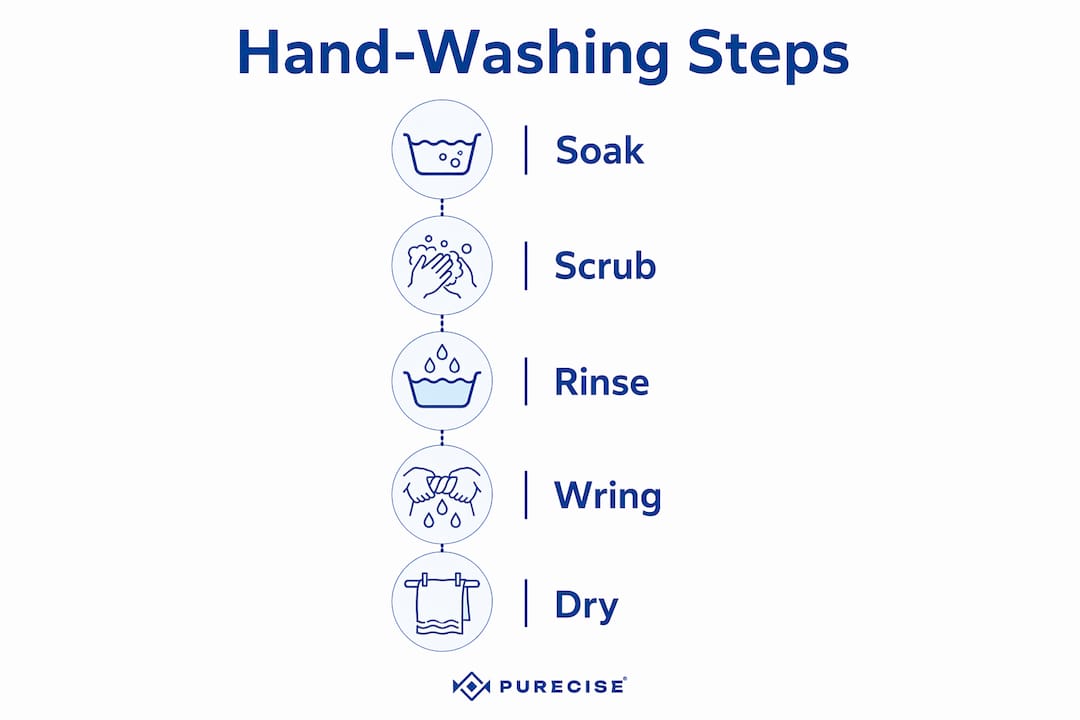
Hand washing clothes while traveling is a straightforward process once you know the sequence. Follow these steps for clean results every time.
- Plug the sink. Use your universal stopper or improvise with a folded washcloth pressed firmly over the drain.
- Fill with cool water. Cool water protects fabric fibers and works well with most detergent sheets. Hot water is rarely needed for lightly soiled travel clothes.
- Add detergent. Drop in half a sheet for one or two light items, or a full sheet for three to five pieces. Let it dissolve for 30 seconds before adding clothes.
- Soak for 5–10 minutes. Submerge clothes fully and press them down. Soaking loosens dirt without aggressive scrubbing.
- Agitate gently. Squeeze and knead each item for 1–2 minutes. Focus on collar areas, underarms, and cuffs where sweat and oils concentrate.
- Drain and rinse. Empty the sink, refill with clean cool water, and squeeze clothes repeatedly until no suds remain. A second rinse pass removes residue that causes stiffness.
- Remove excess water. Never wring delicate fabrics. Instead, press clothes firmly against the sink wall to push out water without twisting fibers.
- Use the towel-roll method. Lay the item flat on a dry microfiber towel, roll both together tightly, and press down firmly for 30 seconds. This technique cuts drying time by roughly half by transferring moisture into the towel before you hang the item.
- Hang to dry. Stretch your travel clothesline near a window or above a bathtub. Smooth out wrinkles by hand before hanging so clothes dry flat and need no ironing.
Pro Tip: Wash clothes in the evening so they have overnight hours to dry. Most travel fabrics are ready to pack by morning.
The table below shows realistic drying times by fabric type in a typical hotel room with moderate airflow.
| Fabric | Drying time (hours) |
|---|---|
| Merino wool | 4–6 |
| Synthetic (polyester, nylon) | 2–4 |
| Cotton t-shirt | 6–10 |
| Denim | 12–18 |
| Linen | 5–8 |
Cotton and denim dry slowly. Washing them the night before a travel day is risky unless you have a fan or open window.
What fabrics work best for washing without a laundromat on the road?
Fabric choice is the single biggest factor in how easy your laundry routine on long trips becomes. The wrong fabrics turn a 20-minute sink wash into a two-day drying ordeal.
Best fabrics for travel laundry
- Merino wool: The top performer for travelers. Merino can be worn 3–5 times between washes thanks to its natural odor resistance. It dries in 4–6 hours and resists wrinkles.
- Synthetic fibers (polyester, nylon, spandex): Dry in 2–4 hours and handle repeated sink washes without losing shape. Odor builds faster than with merino, so plan on washing every 2–3 wears.
- Bamboo blends: Soft, breathable, and faster drying than cotton. A solid middle-ground option for travelers who prefer natural fibers.
Fabrics to limit or avoid
- Cotton: Absorbs water heavily and takes 6–10 hours to dry in a hotel room. One cotton t-shirt is fine, but an all-cotton wardrobe creates a constant backlog.
- Denim: Almost impossible to sink-wash effectively. Denim holds water for 12–18 hours and rarely comes clean without a machine.
- Heavy knits and wool blends: Stretch when wet and take too long to dry for a traveler moving every few days.
Quick-drying, odor-resistant fabrics like merino wool and synthetics reduce how often you need to wash at all. Airing clothes overnight after wearing them extends wearable life and cuts your laundry workload significantly.
How do you build a laundry routine for long-term travel without laundromats?
A consistent routine prevents the laundry pile from becoming unmanageable. The goal is washing small amounts frequently rather than letting clothes accumulate.
- Wash every 2–3 days for a minimal wardrobe. If you travel with 3–4 outfits, a quick sink wash every other evening keeps everything in rotation without buildup.
- Use local wash-and-fold services for bulk loads. In Southeast Asia, wash-and-fold services cost $1–2 per kilogram, making them more economical than multiple sink washes when you have a larger load. These services are widely available in guesthouses and hostels across Thailand, Vietnam, and Indonesia.
- Pack strategically to reduce laundry burden. Seven days of clothes creates seven days of laundry. Four days of clothes forces you to wash, which keeps the pack light and the routine manageable.
- Reserve laundromats for heavy items. Jeans, hoodies, and towels belong in a machine. Sink washing works best for small loads and quick turnarounds. Use a laundromat once every two to three weeks for the items that cannot be hand-washed effectively.
- Dry strategically. Book accommodations with good airflow, a balcony, or a heated bathroom. A warm, ventilated room cuts drying time significantly compared to a sealed, air-conditioned space.
The most effective travel laundry approach combines daily airing, frequent small washes, and occasional machine washes for heavy fabrics. Travelers who try to avoid all machine washing end up with stiff, under-cleaned clothes.
Common mistakes when washing clothes without a laundromat during travel
Most hand-washing problems come from a small set of repeatable errors. Knowing them in advance saves ruined clothes and frustrating mornings.
- Overloading the sink. More than five items at once means nothing gets clean. Clothes need room to move in the water. Wash in two batches if needed.
- Using too much detergent. Extra detergent does not mean cleaner clothes. It means more rinsing, more residue, and stiffer fabric. One detergent sheet per small load is enough.
- Wringing delicate fabrics. Twisting merino wool or synthetic blends stretches fibers and causes permanent distortion. Press water out instead of wringing.
- Skipping the second rinse. One rinse rarely removes all detergent. Residue left in fabric causes stiffness and can irritate skin, especially for travelers with sensitive skin.
- Ignoring humidity. In humid climates like Southeast Asia or coastal cities, clothes take much longer to dry indoors. Use a fan, crack a window, or hang items in the bathroom with the exhaust fan running.
- Washing everything by hand when a machine makes more sense. Hand washing is not always the right call.
Sink washing is best for quick turnarounds and minimal wardrobes. When you have a larger load and time allows, a laundromat or local wash-and-fold service delivers better results and protects your clothes from the wear of repeated hand agitation.
Key Takeaways
Washing clothes without a laundromat while traveling works best when you combine detergent sheets, the towel-roll drying method, and quick-drying fabrics like merino wool or synthetics.
| Point | Details |
|---|---|
| Sink washing costs less | Hand washing costs under $1 per load versus 7–10 euros at European laundromats. |
| Detergent sheets are the best travel option | They are pre-measured, plastic-free, TSA-compliant, and cost $0.10–$0.80 per load. |
| Towel-roll method speeds drying | Pressing clothes into a microfiber towel before hanging cuts drying time by roughly half. |
| Fabric choice determines your workload | Merino wool lasts 3–5 wears between washes; cotton needs washing after every 1–2 wears. |
| Routine beats reactive washing | Washing small loads every 2–3 days prevents buildup and keeps a minimal wardrobe in rotation. |
What I’ve learned from years of washing clothes on the road
The biggest mindset shift for me was accepting that not every item needs a full wash after every wear. Airing out merino wool overnight genuinely works. I started doing this on a three-week trip through Portugal and cut my washing frequency in half without any odor issues. That single habit changed how I packed entirely.
On the product side, detergent sheets replaced liquid detergent in my kit years ago and never went back. The pre-measured format means I never accidentally overdose, and the sheets take up almost no space. I keep a small envelope of Purecise Toss & Go sheets in my toiletry bag at all times. They dissolve completely in cool water, which matters when you are washing in a cold hostel bathroom at midnight.
The eco-conscious angle matters to me too. Every sink wash with a plastic-free sheet is one less plastic bottle entering the waste stream. For travelers who move frequently, those small choices add up fast. The goal is not perfection. It is building a routine that is simple enough to actually follow when you are tired after a long travel day.
— Purecise
Purecise Toss & Go sheets: the travel laundry solution that fits in your pocket
Purecise Toss & Go laundry detergent sheets were built for exactly the kind of travel laundry routine this article describes. Each sheet is pre-dosed, dissolves completely in cool water, and is free from harsh chemicals, making it safe for sensitive skin and delicate travel fabrics.
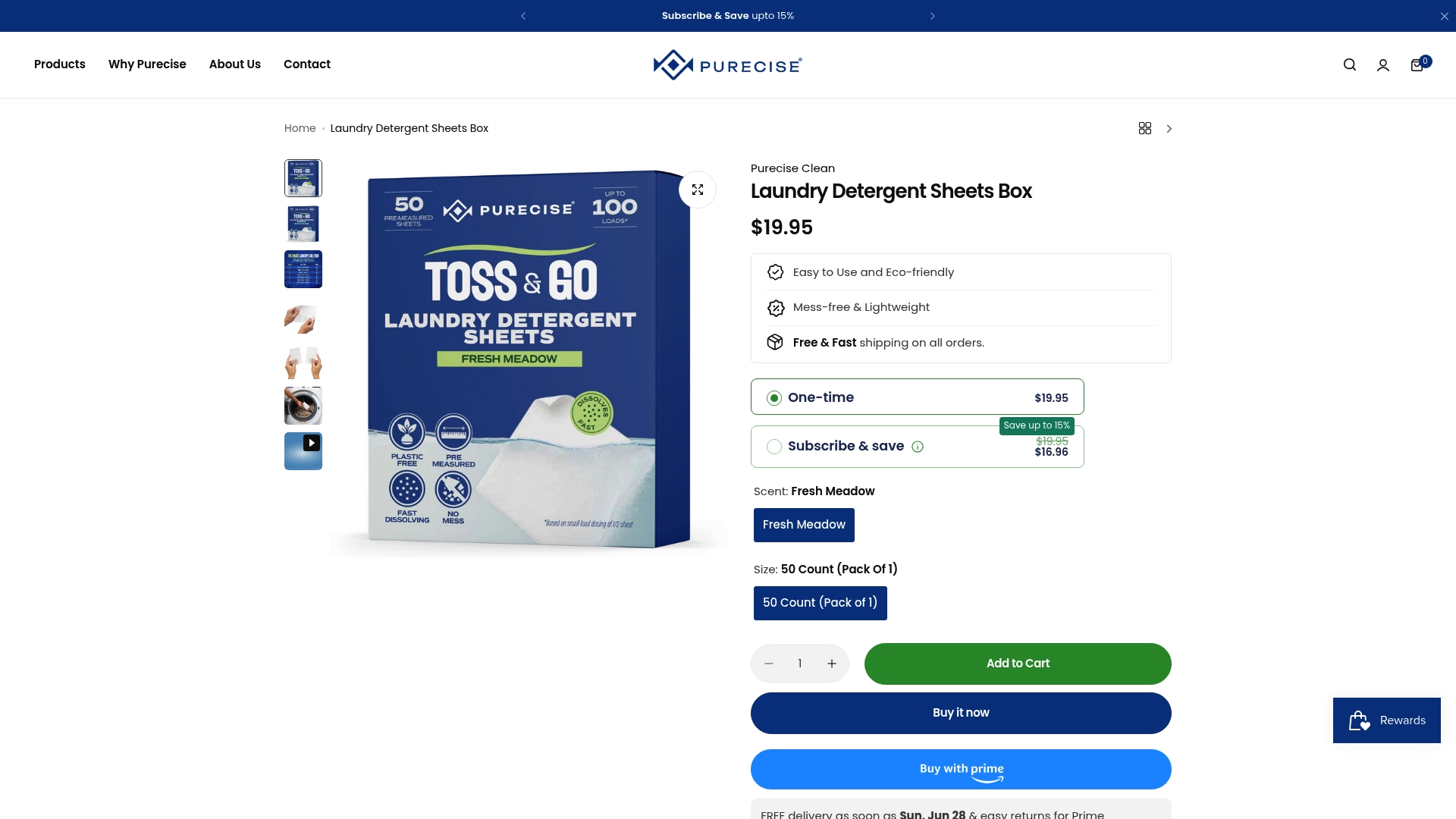
The sheets are plastic-free, weigh almost nothing, and pass TSA carry-on rules without any liquid restrictions. A full month’s supply fits in your pocket. Purecise backs every order with a 100% money-back guarantee, so there is no risk in trying them. Pick up a travel-ready pack of detergent sheet envelopes for short trips, or grab a full box if you travel frequently and want to stay stocked. Either way, you get a cleaner, lighter, and more sustainable way to do laundry on the road.
FAQ
How much does sink washing cost compared to a laundromat?
Sink washing costs under $1 per load. European laundromats typically charge 7–10 euros per load and require 1–2 hours of waiting time.
Are laundry detergent sheets allowed on planes?
Yes. Detergent sheets are solid, not liquid, so they are fully exempt from TSA 100ml liquid restrictions and can go in any carry-on bag.
How often should you wash clothes when traveling long-term?
Wash every 2–3 days for a minimal wardrobe of 3–4 outfits. Merino wool and synthetics can go 3–5 wears between washes, which reduces that frequency further.
What is the towel-roll drying method?
The towel-roll method involves laying a wet garment flat on a dry microfiber towel, rolling both together tightly, and pressing firmly. It transfers moisture into the towel and cuts drying time by roughly half.
When should you use a laundromat instead of sink washing?
Use a laundromat for heavy items like jeans, hoodies, and towels, or when you have accumulated more than five or six pieces. Local wash-and-fold services in Southeast Asia cost $1–2 per kilogram and are often the most practical option for bulk loads.
Recommended
- How to Wash Clothes Without a Washing Machine (And the One Supply Most – Purecise Clean
- How to Do Laundry While Traveling: What Works and What Doesn’t – Purecise Clean
- Best Travel Laundry Detergent for Carry-On Packing – Purecise Clean
- Traveling Green: Laundry Detergent Sheets for an eco-friendly RV Journ – Purecise Clean
Benefits of Plant-Based Laundry Cleaners for Families
Why Overloading Detergent Damages Clothes and Fabrics
Related Posts

Remove Lipstick Stains: The First 15 Minutes, Plus Detergent Sheets

How Often to Wash Towels: Bath Weekly, Hand Towels Every Few Days

Detergent Allergy Rash: Test a Low Residue Wash Without Fragrance

Save Clothes From Mud Stains in 1–2 Hours With Premeasured Sheets

Fabric First Sweat Stain Fixes: Measured DIY Recipes and Sheets

Whiten White Clothes, No Chlorine: 4–8 Hour Soak, Premeasured Sheets

Remove Blood Stains from Clothes: Cold Water, Enzyme Soak, No Dryer


