

What Does Fully Dissolving Detergent Mean for Your Laundry
Fully dissolving detergent is defined as any cleaning product that breaks down completely in water during the wash cycle, leaving no undissolved solids, film, or residue on fabrics or inside the machine. The industry term for this property is complete dissolution, and it applies to detergent pods, sheets, liquids, and powders alike. Products like Tide PODS use a water-soluble polyvinyl alcohol (PVA) film that dissolves fully when submerged and biodegrades afterward. The American Cleaning Institute confirms that complete dissolution is the standard for effective laundry cleaning. Understanding what does fully dissolving detergent mean is the first step to getting cleaner clothes and a cleaner machine.
What does fully dissolving detergent mean in the wash cycle?
Complete dissolution happens through a combination of water contact, agitation, and temperature. When water enters the drum, it saturates the detergent and breaks apart its chemical structure. Surfactants, enzymes, and builders then disperse evenly through the water to lift soil from fabric fibers.
Detergent pods add one layer to this process: the PVA film. This film stays strong when dry but dissolves fully once submerged in water. After the wash cycle, the PVA breaks down into water, carbon dioxide, and biomass, leaving nothing behind in the drain or on your clothes.
Incomplete dissolution produces visible signs. Streaks, white patches, or a stiff texture on fabric all indicate that detergent did not fully break down. This happens when water contact is limited, the cycle is too short, or the detergent is placed incorrectly in the machine.
- Water contact is the single most critical factor. A pod that sits on top of dry clothes cannot dissolve until water reaches it.
- Agitation spreads dissolved detergent through the load. Low-agitation cycles slow this process.
- Temperature affects dissolution speed. Cold water slows the breakdown of some detergent types, though modern formulas are engineered to compensate.
- Cycle length determines how long the detergent has to dissolve and distribute before rinsing begins.
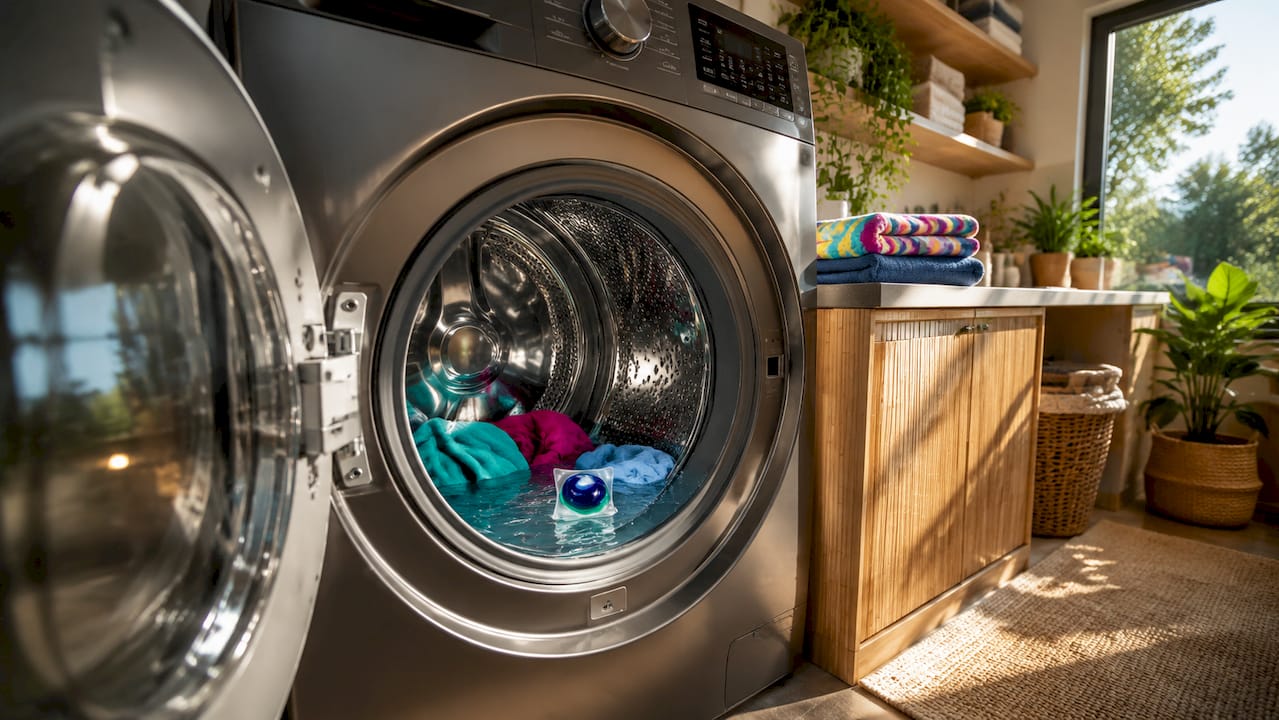
Pro Tip: Place pods directly in the empty drum before loading clothes. The machine fills water from the bottom, so a pod placed first gets fully submerged immediately, giving it the maximum time to dissolve.
What factors affect whether detergent fully dissolves?
Several variables determine whether your detergent dissolves completely or leaves residue behind. Water temperature is the most discussed, but machine type and load size matter just as much.
Water temperature and cold water formulas
Cold water slows the dissolution of most detergent ingredients. Cold-water-specific detergents solve this by including surfactants such as alcohol ethoxylates and sodium xylene sulfonate. These ingredients maintain solubility at low temperatures and prevent microbial growth that can cause odors. Standard powders without these agents are most at risk of partial dissolution in cold cycles.
High-efficiency washers and water volume
High-efficiency (HE) washers use 10–20 liters of water per cycle. That low volume creates a narrow window for detergent to dissolve and distribute. The limited dilution in HE washers makes powder detergent especially sensitive to cycle length and temperature, raising residue risk significantly. Pods and liquid detergents perform more reliably in these machines because they disperse faster.
Detergent format comparison
| Format | Dissolution speed | Residue risk | Best machine type |
|---|---|---|---|
| Powder | Slow | High (especially in cold water) | Traditional top-load |
| Liquid | Fast (pre-dissolved) | Low | HE and traditional |
| Pod/sheet | Fast (PVA dissolves on contact) | Low if placed correctly | HE and traditional |
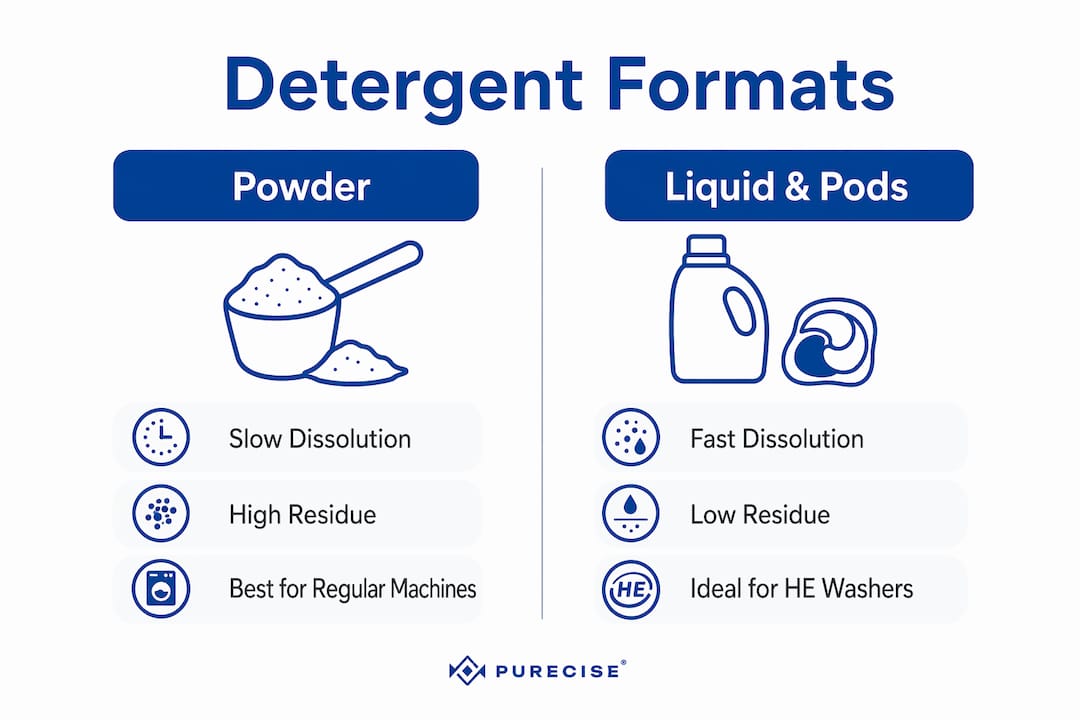
Liquid detergents pre-dissolve on contact with water, which reduces residue risk in HE washers. Their limitation is enzyme load: without added enzyme additives, they are less effective on heavy grease stains. Pods combine fast dissolution with a concentrated formula, making them a strong choice for most machines and temperatures.
Load size and pod placement
Overloading the washer reduces water circulation around the detergent. Placing pods on top of laundry or in the dispenser drawer instead of the drum reduces water exposure and leads directly to undissolved residue. A full drum also limits agitation, which slows distribution of the dissolved detergent through the load.
What are the benefits of fully dissolving detergents?
The advantages of fully dissolving detergent go beyond cleaner clothes. They affect fabric longevity, machine health, energy costs, and environmental impact.
- No residue buildup. Undissolved detergent accumulates in fabric fibers over time, causing stiffness, discoloration, and odor. Complete dissolution eliminates this cycle entirely.
- Fabric protection. Detergent residue left on fabric can degrade fibers with repeated washing. Clothes washed with fully dissolving formulas last longer and feel softer.
- Machine maintenance. Residue builds up inside the drum, dispenser, and hoses. A detergent that dissolves completely reduces the frequency of machine cleaning cycles.
- Energy savings. Pods formulated for cold water cycles save up to 90% energy compared to hot water washing. That translates to roughly $200 in annual savings on average. Switching to cold water is one of the fastest ways to cut household energy costs.
- Environmental impact. PVA film biodegrades after the wash cycle. Detergent sheets and pods eliminate plastic jugs entirely, reducing plastic waste at the source.
Fully dissolving formulas also reduce the risk of skin irritation. Residue left on fabric is a common trigger for contact dermatitis, particularly for people with sensitive skin. Choosing a hypoallergenic detergent that dissolves completely removes this risk from the equation.
How to use fully dissolving detergent for the best results
Getting complete dissolution every time requires consistent technique. The detergent formula matters, but so does how you use it.
- Place pods or sheets in the empty drum first. Never put them in the dispenser drawer. The drum placement guarantees full water submersion from the start of the fill cycle.
- Do not overload the washer. Leave enough space for clothes to move freely. A packed drum restricts water flow and prevents even distribution of dissolved detergent.
- Match detergent type to water temperature. Use a cold-water-formulated detergent or pod for cycles below 60°F. Standard powders may not dissolve fully at those temperatures.
- Use one pod per standard load. Using two pods in a small load increases concentration without increasing water volume, raising residue risk rather than cleaning power.
- Check for residue after the cycle. White streaks or stiff patches on fabric signal incomplete dissolution. Act on this immediately rather than letting it accumulate over multiple washes.
Pro Tip: If you spot residue on clothes, rewash the load immediately with no added detergent on the largest load setting. The American Cleaning Institute and The Spruce both confirm that rewashing without detergent restores water circulation and clears undissolved residue effectively.
Choosing the right format for your machine type also matters. For HE washers, pods and sheets outperform powders because they dissolve faster in low-water environments. If you use powder in a traditional top-load machine, dissolve it in a cup of warm water before adding it to the drum. This pre-dissolving step eliminates the cold-water dissolution problem entirely.
For people with sensitive skin, the stakes are higher. Residue from undissolved detergent sits directly against skin throughout the day. Reviewing laundry ingredients to avoid alongside choosing a fully dissolving formula gives you the most complete protection.
Key takeaways
Fully dissolving detergent is the most reliable way to get clean clothes, protect fabric, and reduce both energy use and plastic waste in one step.
| Point | Details |
|---|---|
| Complete dissolution defined | Detergent breaks down entirely in water, leaving no residue on fabric or inside the machine. |
| Pod placement is critical | Always place pods in the empty drum before clothes to guarantee full water submersion. |
| HE washers need fast-dissolving formats | Low water volume in HE machines makes pods and sheets more reliable than powders. |
| Cold water requires specific formulas | Surfactants like sodium xylene sulfonate keep detergent soluble at low temperatures. |
| Residue fix: rewash without detergent | Run the load again on the largest setting with no detergent to restore water circulation. |
The mistake most people make with detergent
After years of working with laundry care products at Purecise, the most consistent mistake I see is treating detergent placement as an afterthought. People drop a pod on top of a full load, run a cold quick cycle in a HE washer, and then wonder why their clothes feel stiff or smell off after drying. Every one of those choices works against complete dissolution.
The second mistake is assuming that more detergent equals cleaner clothes. In a HE washer with limited water, excess detergent has nowhere to go. It sits in the fabric and builds up over weeks. The result is clothes that trap odors rather than release them.
What actually works is simpler than most people expect. Place the pod or sheet first. Do not overpack the drum. Use a cold-water formula if you wash below 60°F. These three habits eliminate the vast majority of residue problems without changing anything else about your routine.
The shift to fully dissolving formats like sheets is also worth taking seriously from an environmental standpoint. Plastic detergent jugs are not recycled at the rate most people assume. A format that dissolves completely and ships without plastic packaging removes that problem entirely, not just partially.
— Purecise
Purecise laundry sheets: a fully dissolving, plastic-free option
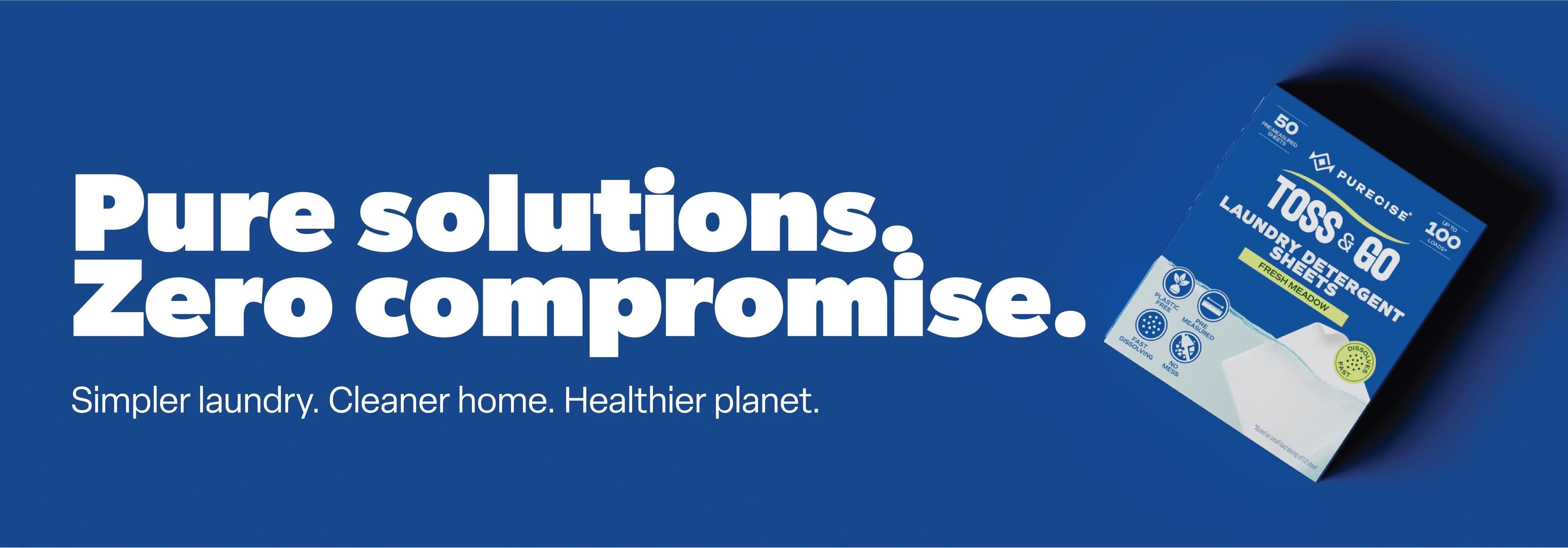
Purecise Toss & Go laundry detergent sheets are pre-dosed, plant-based, and designed to dissolve completely in any wash cycle, including cold water and HE machines. There are no plastic jugs, no measuring, and no residue. Each sheet is free from harsh chemicals and formulated with a hypoallergenic blend that is safe for sensitive skin. A full month’s supply fits in your pocket. Purecise backs every order with a 100% money-back guarantee. If you want a detergent that dissolves completely and leaves nothing behind, the Purecise detergent sheets box is a direct, practical solution.
FAQ
What does “fully dissolving” mean on a detergent label?
Fully dissolving means the detergent and any carrier film break down completely in water during the wash cycle, leaving no undissolved solids or residue on fabric or inside the machine.
Does detergent fully dissolve in cold water?
Standard powders often do not dissolve fully in cold water, but pods and sheets formulated with cold-water surfactants dissolve completely at low temperatures and are specifically engineered for this purpose.
What is dissolvable detergent made of?
Dissolvable detergent pods and sheets use a PVA (polyvinyl alcohol) film that dissolves on contact with water and biodegrades into water, carbon dioxide, and biomass after the wash cycle.
Why is there white residue on my clothes after washing?
White residue indicates incomplete dissolution, most often caused by placing a pod on top of clothes, overloading the washer, or using a powder detergent in a cold or short cycle without adequate water volume.
Are fully dissolving detergents better for HE washers?
Yes. HE washers use 10–20 liters of water per cycle, which limits the time and volume available for dissolution. Pods and sheets dissolve faster than powders in this low-water environment, making them the more reliable choice for HE machines.
Recommended
Clean Laundry Ingredient Checklist: Your 2026 Guide
Why Minimalists Prefer Laundry Sheets Over Liquid
Related Posts

Remove Makeup Stains on the Go With a 10–15 Minute Pretreat

Remove Lipstick Stains: The First 15 Minutes, Plus Detergent Sheets

How Often to Wash Towels: Bath Weekly, Hand Towels Every Few Days

Detergent Allergy Rash: Test a Low Residue Wash Without Fragrance

Save Clothes From Mud Stains in 1–2 Hours With Premeasured Sheets

Fabric First Sweat Stain Fixes: Measured DIY Recipes and Sheets

Whiten White Clothes, No Chlorine: 4–8 Hour Soak, Premeasured Sheets


