

Van Life Laundry: Save Water and Pack a Month of Detergent Sheets
Most van lifers handle laundry with a three-part system: laundromats for full loads, a portable washer or wash bag for quick in-between washes, and hand-washing for delicates and emergencies. Compact detergent sheets replace bulky jugs in all three approaches. Plan on a full laundry cycle roughly every couple of weeks, and the whole routine gets easier once you stop treating it as one big chore and start treating it as three small, flexible ones.
TL;DR:
- Full loads are best handled at laundromats with large-capacity machines costing $3 to $8, though dryer performance varies widely.
- Manual and electric portable washers save time but use water and power differently, making manual options ideal for very low resource setups.
- Hand-washing is effective for delicates and small loads, requiring proper sorting, pre-treating, and immediate drying to prevent mildew.
- Proper greywater disposal with biodegradable detergents at designated sites is essential to meet regulations and protect environments.
- Most van lifers do laundry every 10 to 14 days, using odor-resistant fabrics and strategic planning around resupply stops to maintain a manageable routine.
Table of Contents
- Where to Do Van Life Laundry When You Need a Full Load
- Portable Washers and Spin Dryers: Which One Fits Your Van
- How to Hand-Wash Clothes in a Van, Step by Step
- Drying and Storing Clothes Without Getting Mildew
- Building a Compact Laundry Kit for Van Life
- Water and Greywater Rules Every Van Lifer Should Know
- How Often Van Lifers Actually Do Laundry
- Why Purecise Designed Sheets Around Van Life Constraints
- Pick Your Van-Ready Detergent Sheets
- Sources
Where to Do Van Life Laundry When You Need a Full Load
Some laundry jobs just need real machines. Bedding, towels, and a two-week backlog of jeans are not going to happen in a five-gallon bucket, no matter how motivated you are.
Laundromats remain the default for full loads. Prices vary by region, but expect somewhere between $3 and $8 per load depending on machine size and local rates. Skip the small washers if you have the option. A large-capacity machine costs a little more per load but often works out cheaper per pound of laundry, and it cuts your total time at the facility. Dryers are the real wildcard: some run hot and fast, others barely warm the drum after 40 minutes. If a dryer isn’t cutting it, add 10 more minutes rather than pulling out damp clothes that will mildew in a storage bin.
Campground and RV park laundry rooms are convenient when you’re already staying there, but quality swings wildly from one park to the next. If a working laundry room matters to your stop, check campground filters and reviews before booking rather than gambling on-site.
Beyond laundromats and campgrounds, a few other options fill in the gaps:
- Friends or family with a home washer, if your route passes through
- Airbnb stays that list laundry access as an amenity
- Wash-and-fold drop-off services in bigger towns, useful when you’re slammed on time
- Truck stops and travel centers, some of which run coin-op machines
The smartest move is treating laundromat time as errand time, not dead time. Charge every device you own, knock out email, shower if the facility has one, or use the wait to plan your next few stops. Vanlife that experienced travelers rarely just sit and watch the machines spin. An hour at the laundromat can double as an hour of work, admin, or planning if you walk in with a short list of tasks.
Portable Washers and Spin Dryers: Which One Fits Your Van
A portable washer isn’t a laundromat replacement. It’s a supplement that cuts how often you need one. Bulky items like comforters and heavy jackets still belong in a commercial machine, but everyday clothes can often skip the laundromat entirely with the right setup.
Non-electric options sit at the low end of resource use. A wash bag like the Scrubba, or a hand-crank drum such as the Wonder Wash, cleans small loads using less than a gallon of water and zero electricity. These fit solo travelers and anyone working with a tight water tank or minimal solar setup. You supply the muscle instead of the power.
Compact electric twin-tub washers step things up. They hold more per load, which suits couples or anyone doing laundry weekly instead of biweekly, but they draw moderate power and use noticeably more water per cycle than a manual option. The trade-off is speed: a twin-tub can turn a weekly laundromat trip into roughly a 30-minute in-van task when your tank and battery bank can support it.
Portable spin dryers solve a different problem. Wet clothes take forever to air dry inside a small living space, and a spin cycle strips out most of the excess moisture before you ever hang anything up. That alone can cut drying time by half.
A few setup rules matter regardless of which unit you pick:
- Run any electric unit on a stable, flat surface, never while driving
- Keep a window or vent cracked during operation to manage humidity
- Store the unit somewhere it won’t shift in transit, ideally strapped down
- Empty and dry the unit fully before packing it away to stop mold before it starts
Pro Tip: If you’re deciding between a hand-crank washer and a twin-tub, count your average laundry days per month first. Fewer than four and a manual unit earns its storage space. More than that and the twin-tub’s water cost starts paying for itself in time saved.
How to Hand-Wash Clothes in a Van, Step by Step
Hand-washing covers the gap between laundromat runs, especially for underwear, socks, and anything you need clean again before your next full load. It also works for delicates that shouldn’t go anywhere near a dryer.
- Sort first. Separate anything stained or heavily soiled from lightly worn items; they need different treatment.
- Pre-treat stains with a stick or bar directly on the fabric before it touches water.
- Wash in a partial fill. A collapsible basin, the Scrubba bag, or even your sink with a half-inch of water and a detergent sheet handles most small loads.
- Agitate briefly. A few minutes of scrubbing or bag-rolling is usually enough; van life laundry doesn’t need a 45-minute soak.
- Rinse thoroughly. Dump the wash water, refill with clean water, and rinse until no suds remain.
- Wring or spin. Twist out as much water as you can by hand, or run the item through a portable spin dryer if you have one.
- Towel-roll before hanging. Roll the item tightly in a dry towel and press to pull out residual moisture. This step alone cuts hang-dry time significantly.
- Hang immediately. Wet clothes left balled up in a small van start smelling within hours.
For anything sanitary or delicate enough to want fully clean rinse water, use the sink or a dedicated bucket rather than reusing wash water. Reserve laundromats for bulky items and anything with tough, set-in stains that a quick hand-wash won’t lift.
Drying and Storing Clothes Without Getting Mildew
Drying is where van life laundry actually gets tricky. Water is easy to plan for. Humidity trapped in a closed box on wheels is not.
Outdoor lines solve most of it when weather cooperates. A retractable line under your awning, a couple of carabiners clipped to roof rails, or a simple paracord strung between mirrors handles a full load of lightweight clothes in a few hours of sun. Indoors, a compact expandable rack or a retractable line over the shower or sink catches the overflow on rainy or cold days.
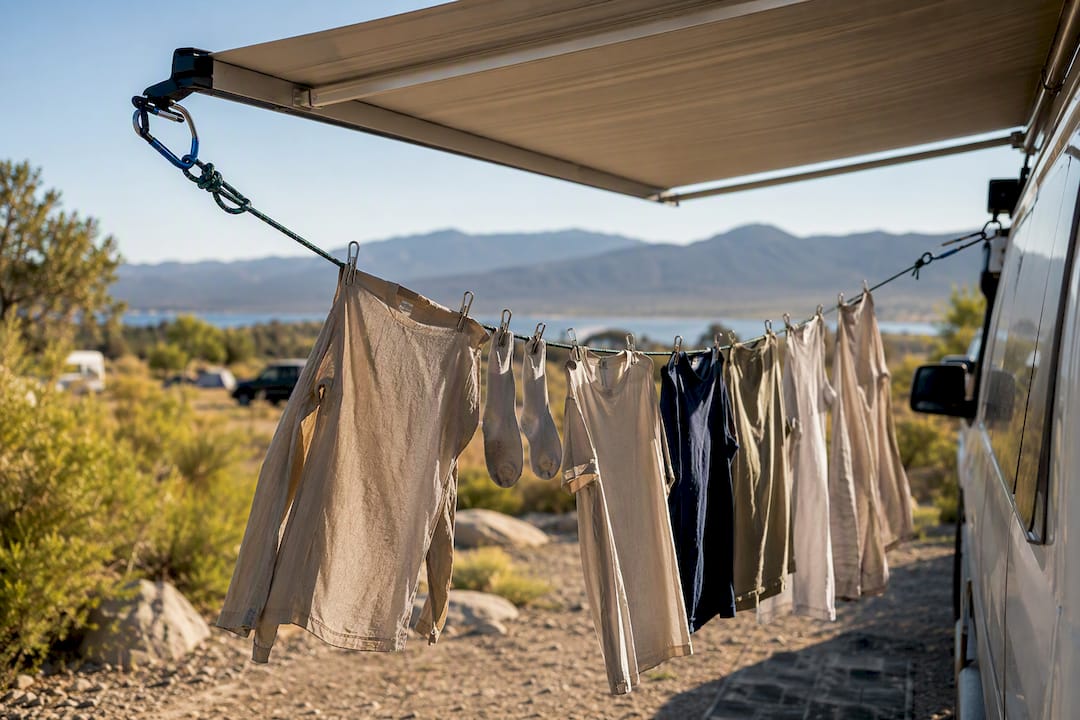
Spin-drying before you hang anything cuts total dry time noticeably, since most of the water weight is gone before the fabric ever meets air. Running your roof vent fan on exhaust while clothes dry indoors pulls that extra moisture out of the cabin instead of letting it settle into your walls and cushions.
Storing dirty laundry needs its own strategy, and it depends on timing:
- Sealed waterproof bags work well for short gaps between laundry days, since they contain odor completely.
- Breathable mesh bags are the better call if clothes will sit for several days before washing; sealed bags trap moisture and encourage mildew over time.
- A multi-compartment laundry basket helps separate clean, dirty, and damp items in a small space without everything turning into one pile on the floor.
Pro Tip: Never store damp clothes in a sealed bag overnight, even for “just a few hours.” Mildew smell can set into fabric fast in a warm van, and it’s far harder to wash out than it is to prevent.
Building a Compact Laundry Kit for Van Life
A van-friendly laundry kit should fit in one bin. Beyond a washer or wash bag, you want: compact detergent, a stain stick, a collapsible basin, mesh wash bags for delicates, a packable clothesline, a lint roller, and a small folding drying rack.
Detergent format matters more in a van than almost anywhere else. Liquid jugs are heavy, they leak in transit, and measuring caps in a moving vehicle is a mess waiting to happen. RVersity’s laundry checklist points to sheets and concentrated pods as the better fit precisely because they eliminate both problems: no measuring, no spills, minimal storage space.
This is where Purecise Toss & Go sheets solve a problem specific to van life. Each sheet is pre-dosed, so there’s no cap to eyeball while parked on a slope. They dissolve completely in any wash type and any water temperature, which matters when you’re running a cold, low-water portable cycle rather than a full hot laundromat load. The hypoallergenic formula also matters more on the road, where skin reacts differently to hard water, well water, and whatever a campground happens to run through its pipes. A full month’s supply fits in a jacket pocket, which is difficult to say about a jug of liquid detergent.
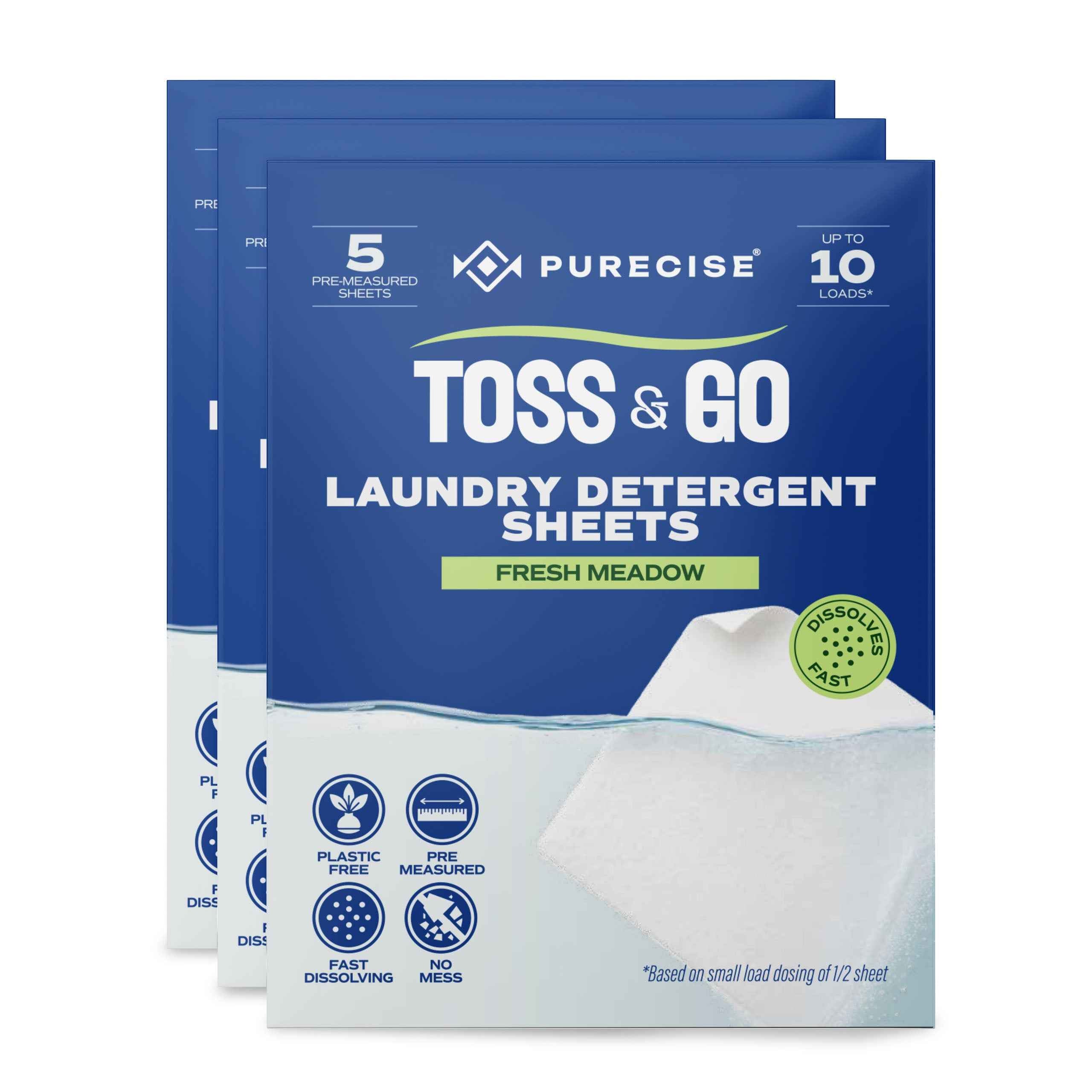
Store any detergent sheets in their original sealed packaging or a small zip pouch away from your water tank fittings, since humidity is the one thing that shortens their shelf life.
Water and Greywater Rules Every Van Lifer Should Know
Water planning matters more than power planning for in-van laundry. Run a wash cycle right after refilling your tank, not right before you’re due for one, so you’re never choosing between clean clothes and drinking water.
Resource use varies a lot by method. A wash bag or hand-crank drum might use under a gallon per small load. A twin-tub electric washer uses considerably more. Match the method to how full your tank actually is that week, not to what worked at the last campground with unlimited hookups.
Greywater disposal is where good intentions go wrong fastest. Responsible practice means using biodegradable detergents and disposing of laundry water only at approved dump stations or under whatever rules the campground or public land sets. Dumping it near streams, lakes, or in undeveloped wild areas isn’t just against most local regulations, it also introduces soap and lint into ecosystems that weren’t built to filter them.
A few habits keep boondocking laundry days simple:
- Wash on the same day you refill, not several days later
- Use a biodegradable, low-suds detergent so greywater tanks and disposal sites handle it cleanly
- Check state and local greywater rules before dumping on public land, since they vary widely
- Skip laundry entirely on days you’re already tight on water for cooking or drinking
How Often Van Lifers Actually Do Laundry
Most full-time travelers land somewhere between 10 and 14 days for a full laundry cycle. Active, outdoor-heavy lifestyles push that closer to weekly, while smart wardrobe choices can stretch the gap to around 21 days for some travelers.
Fabric choice does most of the work here. Merino wool and technical synthetics resist odor far longer than cotton, which means fewer items need washing at all between stops. A wardrobe built around a handful of quick-dry, odor-resistant pieces beats a closet full of heavier cotton clothes that all need washing at once.
A few habits keep the whole cycle predictable:
- Time laundry days around resupply stops, so you’re already near water and a laundromat
- Pack one or two “emergency” outfits for hand-washing between full cycles
- Rotate technical fabrics into daily wear and save cotton for downtime
- Treat laundromat visits as errand time rather than wasted time
Once laundry becomes part of your resupply rhythm instead of its own separate task, it stops feeling like a chore you’re always behind on.
Why Purecise Designed Sheets Around Van Life Constraints
Van life laundry runs on a handful of hard limits: little water, tight storage, and unpredictable machine access. Purecise built Toss & Go sheets around exactly those limits. Pre-dosed doses remove the guesswork of measuring liquid detergent in a moving vehicle, and full dissolvability means they work whether you’re running a hot laundromat cycle or a cold, low-water hand-wash in a bucket. The hypoallergenic formula matters most for anyone dealing with unpredictable water quality from one stop to the next, and a pocket-sized month’s supply solves the storage problem better than any jug ever could.
— Purecise
Pick Your Van-Ready Detergent Sheets
If you’re weighing formats, the choice usually comes down to how long you’re on the road. The travel envelope packs suit shorter trips or anyone testing sheets for the first time. Slim, flat, and easy to tuck into a glove box or backpack pocket, they carry just enough sheets to cover a few weeks without taking up real storage space. The box format is built for full-timers who’d rather restock monthly than think about laundry supplies every other week. It holds a larger supply while still taking up a fraction of the space a liquid jug would need in a cabinet or bin.
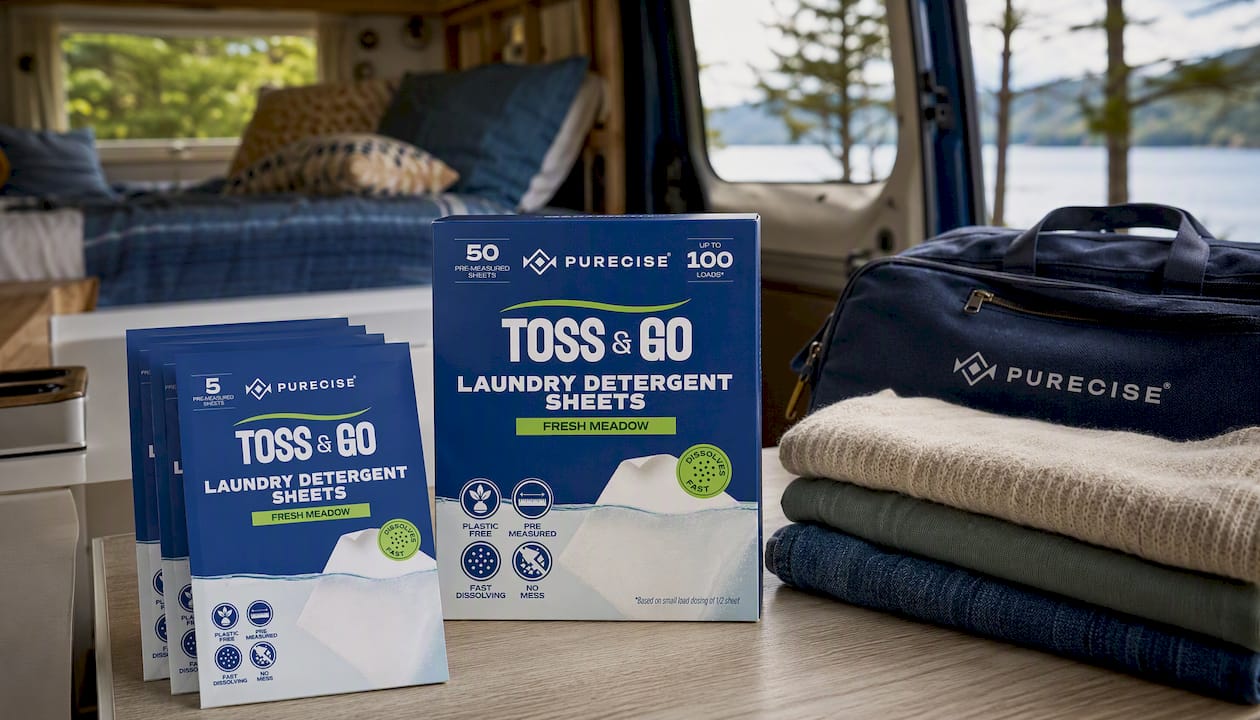
Every Purecise order carries a 100% money-back guarantee, so trying a format that fits your rig comes with no real downside. If your skin reacts to hard water, campground supply, or unpredictable well water on the road, the hypoallergenic formula is worth starting with regardless of which pack size you choose. Order the envelopes for a short trip or the box for your next full restock, and see how much cabinet space you get back.
Sources
For deeper detail on the methods covered here, Vanlife.us’s laundry guide covers routine planning, Epic Van Life’s portable washer breakdown compares equipment trade-offs, and Purecise’s own guide to washing clothes without a laundromat expands on low-water hand-wash techniques.
Recommended
Remove Sunscreen Stains Within an Hour, With a Packable Pretreat Kit
Hotel Sink Laundry: Cut Drying Time in Half With Detergent Sheets
Related Posts

6 Quick Steps to Remove Oil Stains at Home Without Ruining Clothes

Save Space: 50 Sheets Cover 50–100 Loads for Airbnb Hosts

Cut Detergent 25–50%: Use Premeasured Sheets for Soft Water

Lab Tests and LCA: When Powder Beats Detergent Sheets

Cold Water Cleans: Evidence, Energy Savings, and When to Use 150°F

Color-Safe Detergent for Sensitive Skin: Premeasured Sheets

Remove Ink Stains With 70% Alcohol and Premeasured Detergent Sheets


