

How to Prevent Color Bleeding in the Wash
The most reliable way to prevent color bleeding is to wash in cold water, sort by color, and wash new or brightly dyed pieces on their own for the first few loads. Cold water keeps dye in the fabric, and sorting keeps any loose dye away from your whites. Toss & Go sheets are designed to dissolve in cold water, so a cold wash doesn’t mean a different detergent routine: one pre-measured sheet goes in the drum on top of the clothes and you start the cycle.
This guide covers why dye bleeds, how to sort, what to do with new clothes, which popular tricks don’t work, and how to rescue a load that has already gone wrong.
TL;DR
- Use the cold setting whenever the care label allows. Hot and warm water open up fibers and release dye.
- Sort into whites, lights, brights and darks, and wash new, dark or neon pieces alone for the first two to five washes.
- Salt and vinegar soaks don’t fix dye in store-bought clothes. They may only rinse away loose dye.
- If dye has already transferred, keep the load wet, skip the dryer, and rewash or soak in oxygen bleach.
- A Toss & Go sheet is pre-measured and designed to dissolve in cold water, which makes the cold-wash habit easy to keep.
Table of Contents
- Why dye bleeds in the first place
- Use cold water
- Sort your laundry the way it actually bleeds
- Treat new clothes as a separate laundry category
- What doesn’t work: salt, vinegar and other myths
- How many washes until dye stops bleeding?
- If the color has already bled
- A color-safe wash routine in six steps
- Perspective
- Get a cold-wash routine that stays simple
- FAQ
- Sources
Why dye bleeds in the first place
Clothes get their color from dye molecules that bond to the fibers. When the dye hasn’t fully bonded, or the fabric is heavily saturated, some of it escapes into the wash water and settles on whatever else is in the drum. That is color bleeding.
It helps to separate three problems that look alike:
- Bleeding: dye leaches out in water and discolors other items in the load.
- Crocking: color rubs off onto another surface because the dye hasn’t properly set into the fabric, for example dark denim on a light couch.
- Fading: a gradual loss of color from wear and care over time.
Iowa State University Extension draws these distinctions, and they matter because each one has a different fix. Sorting and temperature address bleeding. Washing garments inside out and skipping rough handling address crocking and fading.
Some colors are riskier than others. The American Cleaning Institute notes that neon and fluorescent shades, plus bright reds, greens, blues, purples, pinks, black and peach, are the most likely to lose color because of unstable dyes. Treat those as the first pieces to wash separately.
Use cold water
Temperature is the biggest lever you control. Hot water, and to a lesser degree warm water, opens clothing fibers so they release dye, while cold water keeps the fibers closed and holds the dye in. Choosing the cold setting removes most color-bleeding problems.
A dry cleaner’s guide to mixed loads adds a useful detail: when water is warm or hot, dye becomes more soluble and enters the wash water more easily, which is especially true for the reactive dyes common in cotton clothing.
Two practical notes:
- Follow the care label. If a garment says cold, wash it cold. If it allows cold, cold is the safer choice for color.
- Cold water only helps if your detergent works in it. Toss & Go sheets are designed to dissolve in cold water, and they work in HE and standard machines, front-load and top-load. That means you can run cold loads all year without switching products.
Sort your laundry the way it actually bleeds
Two piles, lights and darks, is a start. Four is better. The American Cleaning Institute recommends washing whites separately, pastels and medium colors together, and brights and darks by themselves, and warns that white and lightly colored synthetics are especially prone to picking up dark dyes.
A simple routine:
- Whites: white cotton, white socks, white sheets.
- Lights: pastels, light grays, beige, light denim.
- Brights: reds, oranges, pinks, purples, bright blues and greens.
- Darks: black, navy, charcoal, dark denim.
If you live in an apartment and share a laundry room, you probably don’t have a machine for every pile. Smaller loads help. A half sheet covers a small load, so you aren’t wasting detergent when you split a pile of brights into a mini-load. Our guide on avoiding detergent overdosing in shared machines walks through that scenario.
Don’t overload the drum
A packed washer creates friction, and friction can raise the risk of dye transfer. Leave room for clothes to move and rinse. A full drum is also harder to rinse evenly, so loose dye has more chances to settle back onto fabric.
Treat new clothes as a separate laundry category
Freshly dyed fabric often carries excess dye that hasn’t fully bonded. Dark denim, black knits and bright red or orange cotton are the usual culprits. A dry cleaner’s advice is to wash new items separately for the first two or three washes, after which the risk drops sharply. Other sources are more cautious: a household guide notes that some garments may release dye for years if washed in hot water, so the safe habit is to keep vivid, saturated pieces on their own and stay with cold water.
A 30-second colorfastness test
Before the first wash, dampen a hidden spot, such as an inside seam or hem, and blot it with a white cloth. If color transfers to the cloth, wash the item alone the first few times.

Jeans deserve their own routine
Dark denim sheds dye longer than almost anything else in the hamper. Wash it alone or with other dark items, inside out, in cold water. We cover the full routine, including drying, in how to wash jeans without fading them.
What doesn’t work: salt, vinegar and other myths
Search results are full of advice to soak new clothes in salt or white vinegar to “set” the color. The evidence doesn’t back it up.
Iowa State Extension explains that salt is used during dyeing to open the fiber so it can absorb dye, and acids help set some acid dyes during manufacturing. Once a garment is finished, soaking it in vinegar or salt offers no fixing protection. A home-care editor reaches the same conclusion: neither is a dye fixative for purchased garments.
Why does it seem to work? A soak rinses away loose surface dye, so the garment looks more stable afterward. A dry-cleaning specialist describes it this way: the soak removes some dye that was already waiting to escape rather than locking anything in. A plain cold wash, on its own, does the same job without the extra steps.

Dye fixatives and color catcher sheets
Dye fixatives exist for cotton, but they come with conditions. Iowa State notes that one common fixative needs a 140°F water temperature, doesn’t work in energy-efficient front-loading machines, and that fixatives in general don’t work on polyester or acrylic. That is a lot of setup for a shirt.
Color catcher sheets absorb loose dye in the wash. In independent testing, they did absorb dye and kept it from transferring, yet the reviewers concluded that keeping whites apart from colors and washing non-colorfast items separately matters more. Iowa State agrees that washing like colors together is the only sure way to prevent transfer. Think of a color catcher as a backup to sorting, not a replacement.
How many washes until dye stops bleeding?
There is no single number, and it depends on the fabric and dye. A dry cleaner’s guide says the risk falls dramatically after two to three washes for most new garments. Heavily saturated pieces, such as deep reds, black knits and dark denim, can take longer, so keep them out of mixed loads until the rinse water runs clear and your test cloth stays white.
A workable rule:
- Wash alone, cold, for at least the first three washes.
- Keep neon and deep reds in their own pile for good.
- Repeat the damp-cloth test if you’re unsure.
If the color has already bled
It happens to everyone: one red sock, one pink load. Move quickly, because heat sets dye.
- Stop and sort. Take the stained items out of the wash as soon as you spot the transfer and keep them apart from other laundry.
- Skip the dryer. Heat may set the stain. Leave items damp or hang them while you work.
- Rewash in cold water. A second cold wash right away can flush out loose dye while it is still fresh.
- Soak in oxygen bleach. For white or light items, dissolve oxygen bleach in cool water and soak for up to eight hours, as one appliance maker’s stain guide describes, then wash as usual with a Toss & Go sheet placed in the drum on top of the clothes.
- Use chlorine bleach only where the label allows. For dye transfer on white fabric that remains after laundering, the American Cleaning Institute suggests laundering again with sodium hypochlorite bleach if it is safe for the fabric, or an oxygen bleach soak for non-colorfast fabrics.
- Repeat before drying. Check the fabric in daylight after each round. Only dry when the color is gone.
If the stain remains after two cold washes, a professional laundry service can treat it with dye-release agents. For more on restoring whites without chlorine, see our guide to whitening white clothes with a 4 to 8 hour soak and the one on choosing the best detergent for white clothes.
A caution on pretreatment: the American Cleaning Institute advises against using stain removers on bright fabrics until you’ve tested them in an inconspicuous spot, since strong products can take color out of unstable dyes.
And if a garment loses color even though you followed the care label, the same source suggests returning it to the store for a refund or replacement.
A color-safe wash routine in six steps
Put it all together and the routine takes no longer than a regular load:
- Check care labels and do the damp-cloth test on anything new.
- Sort into whites, lights, brights and darks, and put new or neon pieces in their own pile.
- Turn dark and printed items inside out.
- Load the drum loosely. Don’t pack it.
- Set the machine to cold. Place one Toss & Go sheet in the drum on top of the clothes, never in the dispenser drawer. Use two sheets for a large or heavily soiled load, or half a sheet for a small one.
- Remove the load promptly and check for dye before using the dryer.
With a pre-measured sheet there is nothing to pour or measure, which matters when you’re juggling three small loads instead of one big one. If you want the full picture on picking a detergent that suits colored loads, we wrote about color-safe detergent in detail.
Perspective
Most advice on color bleeding fails at the same point: it tells you to add something extra, a soak, a fixative, a second product. In our experience of how people actually do laundry, the habits that work are the plain ones: cold water, sorted piles, new clothes washed alone.
That is why we designed Toss & Go sheets around a simple routine. Each sheet is pre-measured, so a regular load takes one sheet, a big or heavily soiled load takes two, and a small load or a sink wash takes half. The sheets are designed to dissolve in cold water, they work in HE and standard machines, front-load and top-load, and they go in the drum on top of the clothes.
Those same details help when you’re splitting laundry into smaller color-sorted loads, whether that’s in a dorm, a shared laundry room or an RV. Fragrance Free sheets have no added fragrance or dyes, and every intentionally added ingredient is listed on our ingredients page, so you know exactly what is going into your wash.
Purecise
Get a cold-wash routine that stays simple
If you’re building a color-safe routine, the Box of 50 is $19.95 and covers up to 100 loads, which is plenty for sorting laundry into small separate piles. The Travel 3-Pack is $15.95 for up to 30 loads, three envelopes of five sheets, and is handy for laundromat runs, trips and dorm life. Both come in plastic-free cardboard packaging, in Fresh Meadow (lightly scented, with fragrance that includes Linalool) or Fragrance Free.
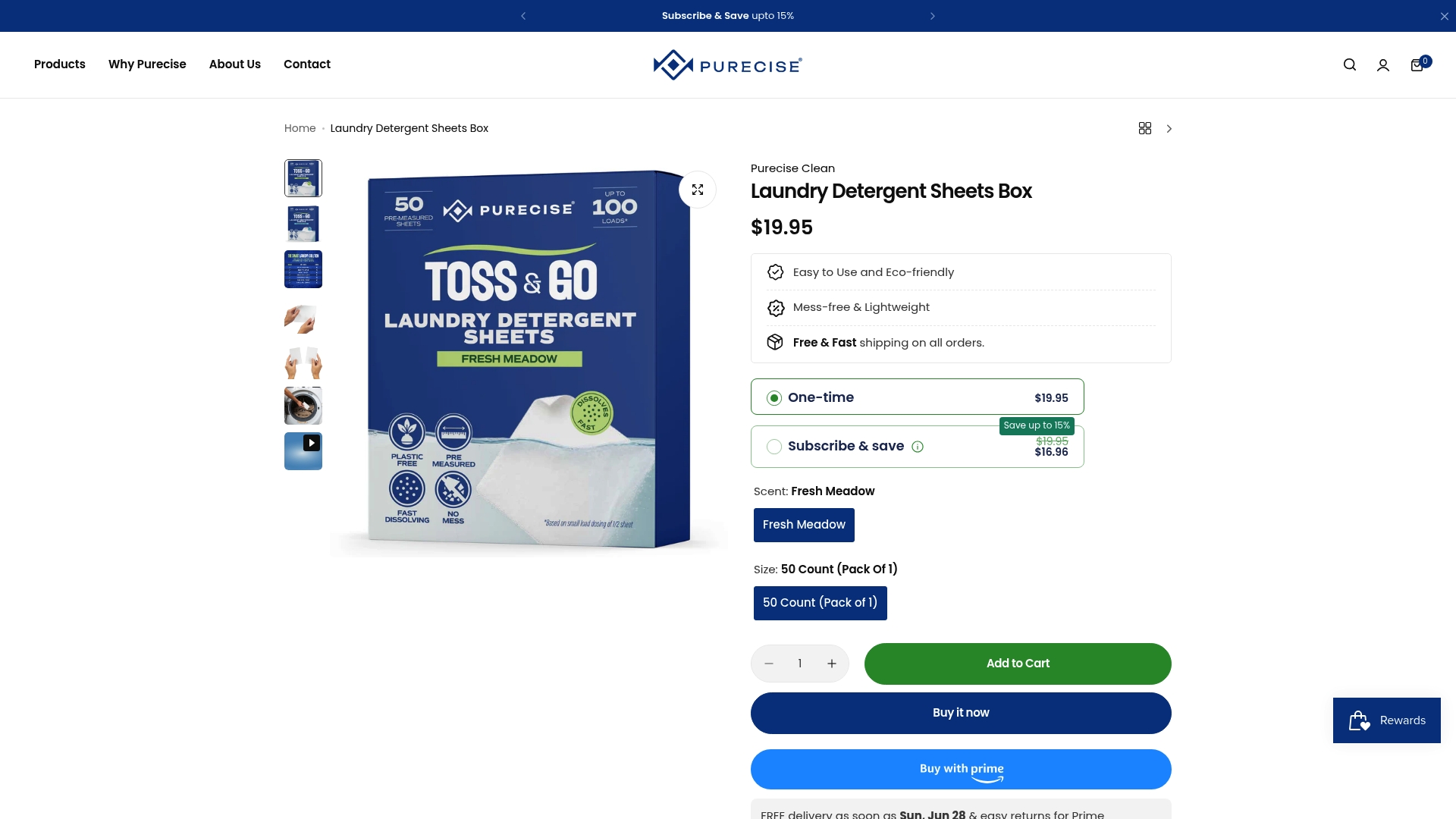
Every order is covered by our Keep It or Toss It Guarantee: 30 days, a refund or a replacement, nothing to send back. You can also subscribe and save 15%. See the full range on the Purecise Clean homepage, or grab the Travel 3-Pack for your next trip.
FAQ
Will cold water prevent color bleeding?
In most cases, yes. Warm and hot water open up fibers and release dye, while cold water keeps fibers closed and holds the dye in. It is the single most effective setting for colored loads, as long as the care label allows it.
Will vinegar stop dye from bleeding?
Not in finished clothing. Iowa State Extension says vinegar offers no fixing protection once a garment is already dyed. A soak may rinse away loose dye, which can look like it worked. Sorting and cold water do more.
Does oxygen bleach prevent color bleeding?
It is a cleanup tool, not a prevention tool. Oxygen bleach helps lift dye that has already transferred onto white or light items when you soak them in cool water for up to eight hours. To prevent bleeding in the first place, sort by color and wash cold.
How many washes until dye stops bleeding?
For most new garments, the risk drops sharply after two or three washes. Deeply saturated items like dark denim, black knits and bright reds can take longer, so keep them out of mixed loads and run the damp-cloth test if you’re unsure.
Can I wash a bleeding garment with other clothes if I use a color catcher?
A color catcher sheet can absorb loose dye, but Iowa State notes that sheets are not totally reliable and that washing like colors together is the only sure way to prevent transfer. Keep the garment in its own load.
Sources
- Preventing color transfer by bleeding or crocking, Iowa State University Extension
- Laundry basics, American Cleaning Institute
- Laundering problems and solutions, American Cleaning Institute
- Stain removal guide, American Cleaning Institute
- How to wash colored clothes without color bleeding, HowStuffWorks
- How to set color and stop dye bleeding in clothes, The Spruce
- How to prevent color bleeding in mixed loads, dry cleaner guide
- How to lock color in new clothes and prevent dye bleeding, dry cleaner guide
- How to remove color bleeding from clothes, appliance maker guide
- Color catcher sheet test, Reviewed
Recommended
How to Sort Laundry by Color: A Simple Guide
How to Wash Bedding to Reduce Dust Mites
Related Posts

How to Wash Bedding to Reduce Dust Mites

How to Sort Laundry by Color: A Simple Guide

How to Prevent Color Fading in Your Laundry

Oxygen Bleach vs. Chlorine Bleach: Which to Use

How to Prevent Clothes From Shrinking: Wash, Dry, Store

How to Wash Jeans Without Fading Them


