

The Best Detergent for White Clothes and How to Use It Right
Use an enzyme and oxygen-capable detergent, or a pre-dosed detergent sheet, and add an oxygen-based whitener whenever whites look gray or dingy. Then pretreat visible stains and wash on the hottest setting the fabric care label allows. That combination handles the two real enemies of white laundry: buildup from residue and stains that set before you get to them.
Here’s your quick-start checklist:
- Sort whites away from anything that bleeds color, even faintly tinted whites.
- Pretreat stains before they hit the wash, not after.
- Wash at the hottest safe temperature with the correct detergent dose. More is not better.
- Add an oxygen whitener to the load if whites look yellowed or gray.
- Skip the dryer until you’re sure smells and stains are actually gone.
For everyday loads, Purecise’s Laundry Detergent Sheets work well because each sheet is pre-measured, so there’s no eyeballing a cap and no leftover soap film. They’re backed by a 100% money back guarantee if they don’t perform.
Key Takeaways
The fastest way to keep white clothes bright is pairing a pre-dosed, enzyme-based detergent with an oxygen whitener for dingy loads, while avoiding chlorine bleach as a default habit.
| Point | Details |
|---|---|
| Pretreat before washing | Enzyme cleaners on protein stains and dish soap on grease work better before the wash cycle, not after. |
| Oxygen bleach over chlorine | Oxygen whiteners brighten without the fiber damage and yellowing risk of repeated chlorine bleach use. |
| Don’t dry musty loads | Dryer heat locks odor into fibers, so rewash first if any smell lingers after the wash cycle. |
| Correct dosing prevents graying | Overdosing leaves residue that traps bacteria and dulls white fabric over time. |
| Purecise sheets simplify dosing | Pre-measured, hypoallergenic Toss & Go sheets dissolve fully in any machine and carry a 100% money back guarantee. |
Table of Contents
- Which Detergent for White Clothes Actually Works Best?
- How Should You Wash White Clothes, Step by Step?
- What Are the Right Treatments for Common White-Fabric Stains?
- How Do You Get Mildew and Musty Smells Out of Clothes?
- Chlorine Bleach or Oxygen Bleach: Which Should You Use?
- What Everyday Habits Slowly Ruin White Clothes?
- How Purecise Detergent Sheets Fit Into Your White Laundry Routine
- Do Whitening Detergents Really Outperform Regular Detergent?
- Does Detergent Choice Affect Skin and the Environment?
- How Do You Keep Whites Bright Wash After Wash?
- How Do Popular White-Laundry Detergent Brands Compare?
- What the Research Actually Supports About Whitening Whites
- Skip the Guesswork With Pre-Dosed Detergent Sheets
- Sources
Which Detergent for White Clothes Actually Works Best?
Not all detergent formats treat whites the same way, and the format matters almost as much as the formula. Liquid detergent gives you flexibility, since you can pour extra on a stained collar before tossing it in the drum. Powder detergent tends to have stronger cleaning agents for mineral and ground-in dirt, but it can leave residue in cold water. Detergent sheets solve a different problem entirely: dosing accuracy. A sheet is measured once, at the factory, so you can’t accidentally double-dose a small load or under-dose a heavy one.
That distinction matters more than most people think. Overdosing is one of the most common reasons whites turn gray over time, because undissolved detergent redeposits onto fabric instead of rinsing away. Martha Stewart’s laundry guidance points to exactly this problem: too much detergent, or the wrong detergent for a high-efficiency machine, leaves residue that traps odor-causing bacteria and dulls fabric.
For whites specifically, two ingredient categories matter more than brand name:
- Enzymes break down protein-based soil like sweat, food, and body oils at the fiber level, rather than just masking it with fragrance.
- Oxygen-based whiteners (sodium percarbonate, usually) lift dinginess without the fiber damage that comes from repeated chlorine bleach use.
When you’re standing in the aisle or scrolling a product page, check for three things on the label: an HE (high efficiency) symbol if you own a front-loading or HE machine, a mention of enzymes or “bio” formula, and compatibility with oxygen bleach or whiteners. If a detergent doesn’t list a dosing line or fill mark, that’s a small red flag. It usually means you’re guessing.
Pro Tip: Keep an oxygen whitener like OxiClean on hand separately from your regular detergent. Adding it as a booster gives you more control than relying on an all-in-one “whitening detergent,” which often has a weaker dose of the same active ingredient.
How Should You Wash White Clothes, Step by Step?
A repeatable routine beats a memorized product name every time. Here’s the order that actually prevents grayed-out whites over months of washing, not just one load.
- Check care labels first. Cotton and polyester blends tolerate hot water and oxygen bleach; wool, silk, and anything marked “dry clean only” do not. Skipping this step is how a $40 blouse ends up ruined.
- Sort by fabric weight and soil level, not just color. A heavily soiled white sock load needs different treatment than lightly worn white t-shirts.
- Pretreat before washing. For protein stains (sweat, food, blood), apply an enzyme pretreater and let it sit 10 to 15 minutes. For grease, a drop of dish soap worked into the fabric does more than most stain sticks.
- Mix an oxygen soak if whites look dingy. Following the OxiClean White Revive guidance, dissolve one scoop in a gallon of the warmest water the fabric allows, then soak for an hour, or overnight for heavy dinginess.
- Dose correctly for the load. With detergent sheets, that’s one sheet for a standard load, two for an oversized or heavily soiled one. With liquid or powder, follow the fill line, not habit.
- Choose water temperature by fabric, not convenience. Hot water (130°F or higher) works best on sturdy cotton whites; warm suits blends; cold protects elastic and delicate weaves.
- Run the wash, then check before drying. Smell the load and inspect stains while damp. If anything lingers, rewash before it hits the dryer.
- Dry fully, and consider sunlight. Sun exposure has a natural, mild bleaching effect on cotton whites, and a full dry cycle prevents mildew from taking hold in a damp pile.
One detail gets skipped constantly: Maytag’s washing guidance warns that dryer heat locks odor into fibers. If a shirt still smells musty coming out of the wash, drying it doesn’t fix that. It bakes the smell in. Rewash first, always.
For heavily soiled whites, an overnight oxygen soak followed by a normal enzyme-detergent wash outperforms repeated chlorine bleach cycles for fabric longevity, according to OxiClean’s own product guidance on treating dingy cotton whites.
What Are the Right Treatments for Common White-Fabric Stains?
Different stains need different chemistry, and treating them the same way is how permanent stains happen. Here’s what actually works, stain by stain.
- Protein stains (sweat, blood, food residue): Rinse in cold water first, since hot water sets protein into fibers. Apply an enzyme cleaner directly to the stain and let it work before washing. Repeat if the stain is still visible after one cycle.
- Grease and oil: Skip water entirely at first. Work a small amount of liquid dish soap into the stain, let it sit five minutes, then wash on the hottest safe setting. For a deeper breakdown of this method, see what removes grease stains from clothes fast.
- Coffee, tea, and red wine: Blot, never rub. Rubbing pushes the dye deeper into the weave. Follow with an oxygen bleach soak rather than scrubbing, and check the food stain treatment guide for fabric-specific timing.
- Yellowing and deodorant buildup on collars and underarms: A gentle scrub with a soft brush loosens buildup before washing. Follow with an enzyme detergent and an oxygen soak for stubborn cases. This is one of the slowest stains to fix and often needs two or three treatment cycles, not one.
The common thread across all four: agitation and heat make dye and protein stains worse before you’ve had a chance to break them down chemically. Chemistry first, then mechanical action, then heat, in that order.
How Do You Get Mildew and Musty Smells Out of Clothes?
Musty smells almost always trace back to one of three causes: leftover detergent residue feeding bacteria, clothes sitting damp too long before or after washing, or a washing machine with a contaminated seal or drum. Fixing the smell without fixing the cause just means it comes back in two weeks.
Here’s the rescue sequence that works for most fabric-safe whites:
- Wash once with distilled white vinegar in place of detergent, using hot water. Vinegar breaks down the bacteria causing the odor. Consumer Reports notes this two-step approach works well, but warns that frequent vinegar use can degrade rubber seals and hoses over time, so check your washer’s manual before making it a habit.
- Follow with a baking soda wash, which neutralizes remaining odor without the acidity risk to machine parts.
- If smell persists, run an oxygen bleach wash in hot water, provided the fabric care label allows it.
- Clean the machine itself. Run an empty hot cycle with a washer-cleaning tablet or a cup of vinegar (machine only, not clothes), and wipe down the door seal where moisture collects.
Prevention beats repeating this cycle every month. Don’t leave wet laundry sitting in the drum. Air-dry or sun-dry towels and whites between uses when possible, since sunlight has natural odor-fighting properties. Whirlpool’s maintenance guidance recommends a monthly washer-clean cycle as routine upkeep, not just a fix for when things already smell off.
Pro Tip: If you’re rescuing a whole hamper of musty towels at once, do the oxygen soak overnight rather than the standard one-hour version. Musty odor sits deeper in terrycloth loops than in flat-weave fabric.
Chlorine Bleach or Oxygen Bleach: Which Should You Use?
Chlorine bleach has a reputation as the default whitening fix, but it’s the riskier option for regular use. It works fast on stubborn stains, but repeated exposure weakens cotton fibers over time and can actually cause yellowing instead of preventing it, according to Apartment Therapy’s laundry guidance. It’s also unsafe on wool, silk, spandex blends, and anything with elastic.
Oxygen bleach is the safer first choice for most white loads. Here’s how to decide between them:
- Reach for oxygen bleach first for routine dinginess, sweat stains, and general brightening. It’s gentler on fibers and works on a wider range of fabrics.
- Save chlorine bleach for isolated, severe cases on sturdy 100% cotton items only, and never on anything blended with spandex or synthetic fiber that reacts poorly to chlorine.
- Check the care label every time, not just the first time you buy a garment. Fabric treatments and blends aren’t always obvious from touch alone.
- Always spot-test on an inside seam before treating the whole garment, especially with any bleach product you haven’t used on that fabric before.
- Pair oxygen bleach with an enzyme detergent for the best results. Enzymes handle organic stains; oxygen bleach handles overall dinginess. They’re not competing solutions, they’re complementary ones.
What Everyday Habits Slowly Ruin White Clothes?
Most white laundry disasters aren’t a single bad wash. They’re small habits repeated fifty times. Here’s what actually causes the slow fade from bright white to dull gray.
- Overdosing detergent. More soap doesn’t mean cleaner clothes. It means more residue left behind when the rinse cycle can’t fully clear it, and that residue is exactly what traps odor-causing bacteria against fabric fibers.
- Using regular detergent in an HE machine. HE machines use less water, so regular detergent doesn’t rinse clean and leaves a sudsy film behind.
- Overloading the drum. Crammed loads can’t agitate properly, which means detergent and water don’t reach every fiber evenly.
- Masking odor with fragrance instead of fixing it. Fabric softener and perfumed sprays cover a musty smell temporarily. They don’t remove the bacteria causing it.
- Storing damp laundry in plastic bins. Sealed, non-breathable storage without airflow is a mildew starter kit.
If you’re washing in a shared laundry room, dosing errors get worse, not better, since machines vary in size and cycle length. A closer look at avoiding detergent overdosing in shared machines covers this specific situation in more depth.
How Purecise Detergent Sheets Fit Into Your White Laundry Routine
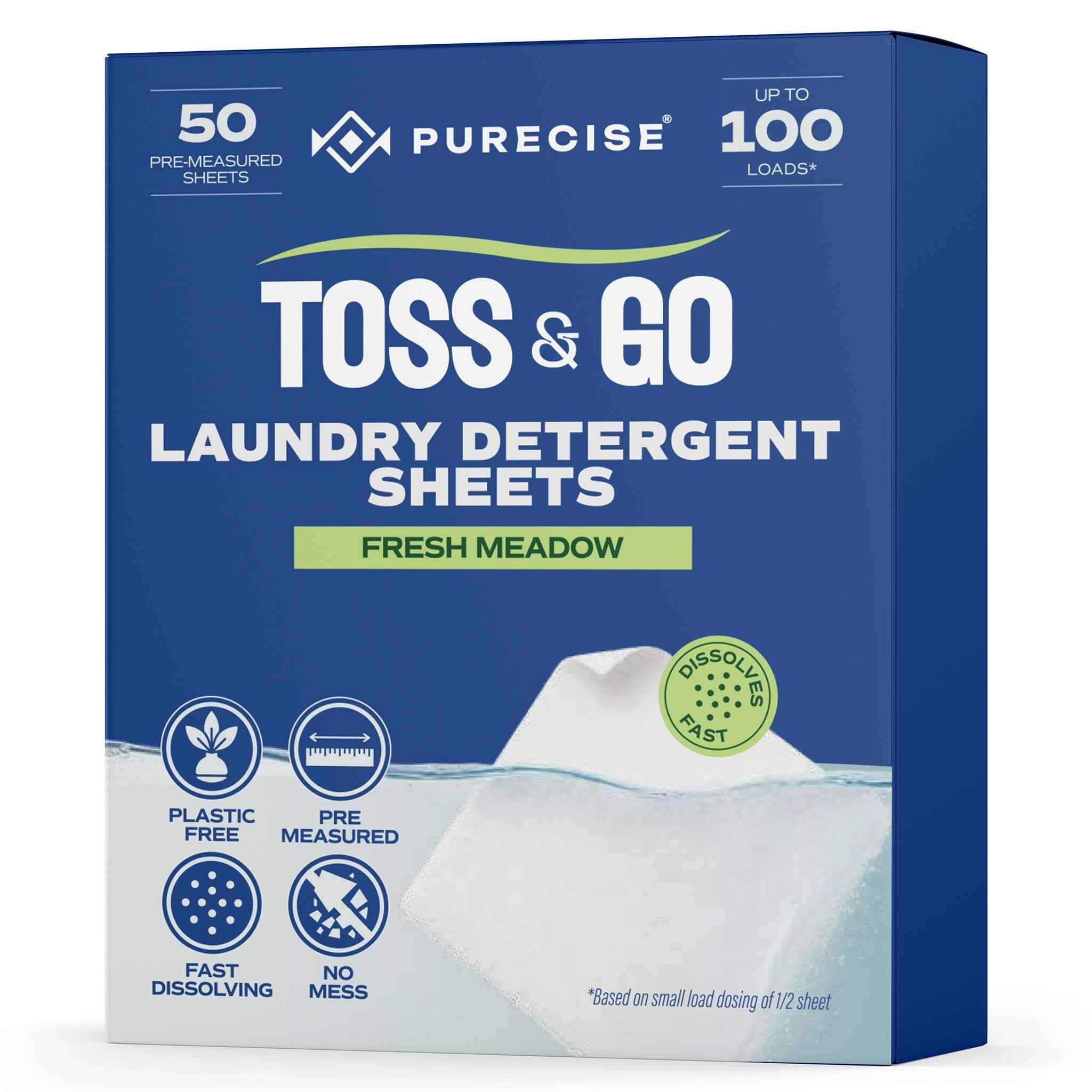
Pre-dosed formats solve the overdosing problem before it starts, because there’s no cap to eyeball or line to guess at. Each Purecise Toss & Go sheet dissolves completely in any wash type, hot or cold, HE or standard, which means no film left behind to gray out white fabric over time.
Here’s how the sheets fit into the workflow already covered above:
- For everyday loads, one sheet handles a standard wash. For larger or heavily soiled loads, use two. A closer breakdown lives in how many detergent sheets per load you actually need.
- For dingy or gray whites, add an oxygen whitener to the same load rather than switching detergents entirely. The sheet handles daily cleaning; the whitener handles the revival job.
- For HE machines, sheets work exactly as designed, since they’re formulated to dissolve fully without the suds buildup regular detergent can cause in low-water cycles.
- For travel or shared laundry, a month’s supply fits in a pocket, which matters if you’re doing laundry in a shared building or on the road and don’t want to carry a jug.
- For pre-soaking, dissolve a sheet in warm water first if you’re treating a heavily soiled item before the full wash cycle.
The formula is hypoallergenic, which matters for households managing sensitive skin or small children’s clothing, and it’s built to reduce plastic waste since there’s no bottle involved. Every order carries a 100% money back guarantee if the sheets don’t perform for your household.
| What it solves | How it helps |
|---|---|
| Overdosing residue | Pre-measured sheets eliminate guesswork on detergent amount. |
| HE machine compatibility | Sheets dissolve fully in high-efficiency and standard machines alike. |
| Sensitive skin | Hypoallergenic formula suits households with allergies or young kids. |
| Travel and storage | A month’s supply fits in a pocket, replacing bulky liquid jugs. |
Do Whitening Detergents Really Outperform Regular Detergent?
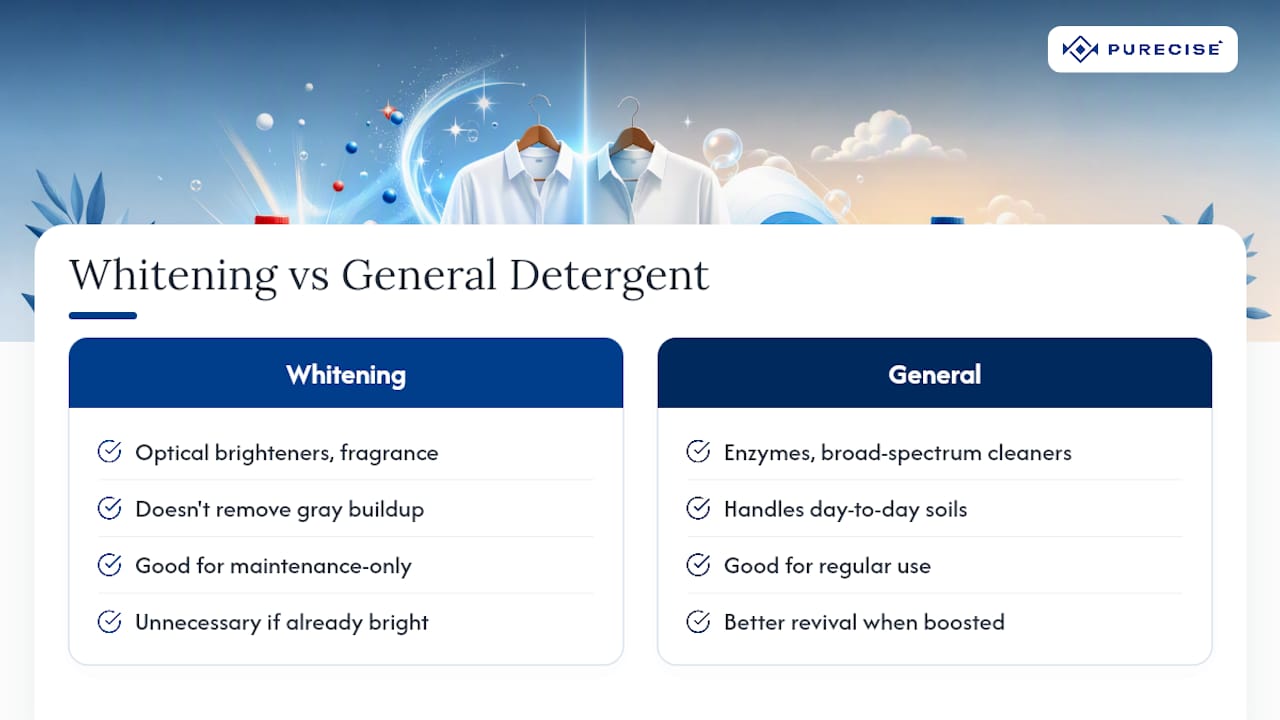
Detergents marketed specifically “for whites” usually contain a higher concentration of optical brighteners and enzyme blends than general-purpose formulas. Optical brighteners don’t actually remove dinginess; they reflect light to make fabric look brighter, which works fine for maintenance washing but does nothing for a shirt that’s already gray from buildup.
General-purpose detergent with a solid enzyme profile handles day-to-day cleaning just as well as a “whitening” label, provided you pair it with an oxygen booster when whites actually need revival. The real difference between the two categories isn’t cleaning power. It’s marketing emphasis. A whitening detergent leans on brighteners and fragrance; a general detergent leans on broad-spectrum cleaning agents.
The smarter approach: pick a detergent (or sheet) with strong enzyme performance for everyday use, and keep a dedicated oxygen whitener as a separate tool for the loads that actually need brightening. That two-part system beats relying on one “whitening” product to do both jobs at once, since no single formula does maintenance cleaning and deep revival equally well.
If your whites are already bright and you’re just maintaining them, a specialized whitening detergent isn’t necessary. If they’ve drifted gray over months of regular washing, no detergent alone fixes that. You need the oxygen soak step described earlier in this guide.
Does Detergent Choice Affect Skin and the Environment?
Fragrance and dye additives in conventional liquid detergent are among the most common triggers for skin irritation, particularly for households managing eczema or sensitive skin in kids. A hypoallergenic, fragrance-free formula reduces that risk without sacrificing cleaning performance, since the enzymes and surfactants doing the actual work don’t require added fragrance to function.
Packaging is the other half of the equation people overlook. A single household doing laundry weekly goes through multiple plastic detergent jugs a year, most of which aren’t reused even when they’re technically recyclable. Detergent sheets replace that plastic footprint with a cardboard or paper-based envelope, cutting down on the bulk liquid detergent requires for shipping and storage.
There’s a fabric-care angle too. Linen responds differently to repeated washing than cotton does, softening over time rather than degrading, which means harsh detergent chemistry isn’t always necessary to get a comfortable result. Gentler formulas often do the job just as well as aggressive ones, especially on natural fibers.
If you’re washing delicate white silks or lingerie, the calculus shifts further toward gentle formulas and hand-washing over machine cycles. Guidance on washing silk lingerie covers the safe steps for fabrics that can’t handle standard detergent concentrations at all.
How Do You Keep Whites Bright Wash After Wash?
Keeping whites bright long-term is less about any single product and more about consistency in a few key habits. The washes that matter most are the ones you do without thinking, week after week.
Rotate an oxygen whitener into your routine every few weeks, not just when whites already look dingy. Prevention is easier than revival. A load that’s starting to look slightly gray responds to a quick oxygen boost far faster than one that’s been building residue for months.
Keep white loads separate from everything else, always, even items that seem “basically white.” A pale gray sock or an off-white towel mixed into a bright white load will pull the whole wash slightly duller over repeated cycles, since dye transfer compounds gradually.
Watch your detergent dose as your machine ages. Older washing machines sometimes need slightly less detergent than the manufacturer’s original fill line suggests, since efficiency changes over years of use. If you notice suds lingering after a rinse cycle, that’s your cue to dial back.
Finally, don’t skip the machine maintenance step. A washer that hasn’t been cleaned in months redeposits its own residue onto every load that runs through it, no matter how good the detergent is. A clean machine is half the battle for keeping whites bright.
How Do Popular White-Laundry Detergent Brands Compare?
Walking down the detergent aisle, most white-specific claims fall into a few recognizable categories, each with real tradeoffs.
Enzyme-heavy liquid detergents clean well on protein and food stains and work across a wide temperature range, but they require careful dosing since overuse leaves residue, and liquid formulas are the heaviest to ship and store.
Powder detergents often pack stronger cleaning agents for mineral deposits and ground-in dirt, which helps in hard-water regions, but they dissolve poorly in cold water and can leave visible residue on dark or textured fabric if underdissolved.
Specialized whitening detergents lean on optical brighteners and added enzymes, which help maintain already-bright whites but do little for genuinely dingy fabric without a separate oxygen booster.
Detergent sheets, including Purecise’s Toss & Go format, solve the dosing and storage problems the other three formats share. Each sheet is pre-measured, dissolves fully in any water temperature or machine type, and skips the plastic jug entirely. The tradeoff worth knowing: sheets work best for standard and heavy loads dosed at one or two sheets respectively, so extremely large commercial loads may need adjustment beyond typical household use.
No single format wins on every axis. The right pick depends on whether your priority is dosing accuracy, ingredient strength, or environmental footprint, and for most households managing everyday white laundry, dosing accuracy solves more long-term problems than raw cleaning power alone.
What the Research Actually Supports About Whitening Whites
The conventional advice on white laundry hasn’t caught up with what the evidence actually shows. Most people still reach for chlorine bleach first, treating it as the default whitening tool. The research says otherwise. Oxygen-based whiteners and enzyme detergents do the job with less fiber damage and less risk of the yellowing that chlorine causes over repeated use.
The bigger blind spot, though, is dosing. Almost nobody thinks about how much detergent they’re using until suds start lingering in the rinse, and by then, residue has already been building for weeks. That’s the quiet cause behind most “my whites just look tired” complaints, not stain buildup, not fabric age.
If there’s one thing worth prioritizing above all the stain-specific tricks in this guide, it’s fixing the dosing problem at the source. A pre-measured format removes the guesswork entirely, which is a more reliable fix than any single stain remedy. Get that right, and the rest of your white-laundry routine gets dramatically simpler.
— Purecise
Skip the Guesswork With Pre-Dosed Detergent Sheets
Purecise’s Toss & Go sheets exist for exactly the problem this guide keeps circling back to: dosing accuracy determines whether your whites stay bright or slowly turn gray. Each sheet is pre-measured, so there’s no cap to fill or line to squint at, and it dissolves completely whether your machine runs hot, cold, HE, or standard.
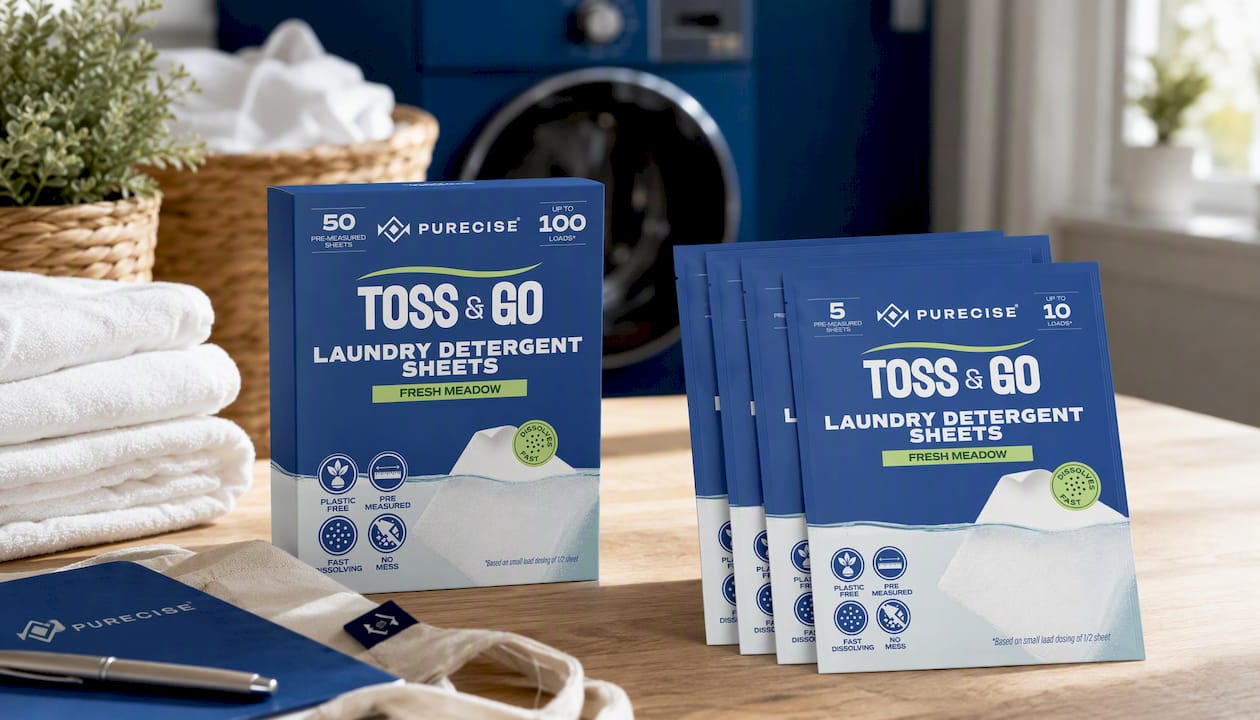
The hypoallergenic, fragrance-free formula works well for households managing sensitive skin or kids’ laundry, and a full month’s supply fits in your pocket, so travel and shared laundry rooms stop being a dosing gamble. Every order is backed by a 100% money back guarantee, which means trying the sheets on your next load of whites costs you nothing if they don’t deliver. Browse the Laundry Detergent Sheets Box for home use or the travel-friendly envelope format for on-the-go laundry, and start your next wash with the dosing question already solved.
Sources
- How to get mildew smell out of clothes | Consumer Reports
- How to get mildew smell out of clothes | Martha Stewart
Recommended
Front Load Washer Detergent: What to Buy and How to Use It
What Is a pH Neutral Laundry Detergent, and Do You Need One?
Related Posts

140°F Heat or 3% Peroxide: Sanitize Laundry Without Bleach

For Homeowners: Wash Pillows at Home Without Overdosing Detergent

Store Detergent Sheets Right for Travel, Small Spaces, and Eco Shoppers

Stop Detergent Residue on Clothes: Cut Dosing 25–50% or Use Premeasured Sheets

5–15 Minute Fix for Baby Poop on Clothes With Enzymes and Purecise

Travel Friendly Way to Remove Deodorant Stains Using Detergent Sheets

Cut Detergent 50–75%: Portable Washer Detergent for Travel & RVs


