

How to Remove Tea Stains From Clothes and Mugs
To remove a tea stain from clothing, blot it, rinse it from the back with cool water, work in a little liquid detergent or dish soap, and wash the garment. Keep it out of the dryer until the stain is gone, because heat can set it. Mugs are easier: a vinegar and hot water soak or a baking soda paste lifts the brown film in a few minutes. Below you’ll find both routines, the fixes for old stains, and the mistakes that make tea marks permanent.
TL;DR
- Act fast: blot, then rinse the stain from the back with cool water before it dries.
- Pretreat with liquid detergent or dish soap. For stubborn marks, try a white vinegar soak or an oxygen bleach soak, or chlorine bleach only if the care label allows it.
- Never dry a garment with a tea stain still showing. Heat can lock it in.
- For mugs, use a half-and-half vinegar and hot water soak, a baking soda paste, or a bottle brush.
- Old stains often need several rounds. Repeat the treatment instead of scrubbing harder.
Table of Contents
- Why tea stains are stubborn
- What you need before you start
- How to remove a fresh tea stain from clothes
- What to do if the stain survives the first wash
- Old or set-in tea stains
- Match the method to the fabric
- How to remove tea stains from mugs and cups
- Stop tea stains before they start
- Our perspective: simple steps, fewer products
- Keep a stain-ready laundry routine
- FAQ
- Sources
Why tea stains are stubborn
Tea is mostly water, so the stain starts out easy to move. What makes it stick is the color. Tea’s high tannin content makes its stains harder to remove than coffee stains, which is why a splash of black tea can leave a tan shadow on a white shirt that outlasts a coffee drip.
There is also a fabric factor. Coffee and tea are water-based stains, and how well they come out depends on the fiber type and finish of the textile. Cotton tees, polyester blends, silk and wool do not respond the same way, so the care label matters before you reach for anything stronger than water.
Three things decide how easy the job will be:
- Time. A stain you treat in the first few minutes is mostly liquid sitting on the fibers. A dried one has bonded with them.
- Milk and sugar. Tea with milk or sugar leaves a stickier mark. You may need a soap step as well as a rinse.
- Heat. Hot water, an iron or a dryer cycle can set the stain. Heat can permanently set a fresh tea stain in clothing, so keep the garment out of the dryer until you’ve checked it in daylight.
What you need before you start
Most of this is already in your kitchen or laundry room:
- A clean white cloth or paper towels for blotting
- Liquid laundry detergent or clear dish soap
- White vinegar
- Oxygen bleach (follow the directions on its label)
- Chlorine bleach, only for white or colorfast items whose care label allows it
- A soft toothbrush or sponge
- A basin or clean sink
- Baking soda, for mugs
Check the care label first. If the garment says dry clean only, or it’s silk, wool or an antique textile, take it to a professional cleaner. Rubbing and soaking can damage those fibers. Museum conservators warn that treating a fresh stain on an old textile can stress the fabric enough to leave a rip where there was only discoloration.
How to remove a fresh tea stain from clothes
Follow these steps in order. Don’t skip the rinse, even if the stain looks small.
- Blot, don’t rub. Press a clean cloth on the spill to pull up what you can. Conservators advise avoiding rubbing and applying treatments by tamping up and down with a sponge or swab, and the same habit protects everyday fabric from fuzzing and spreading the stain.
- Rinse from the back. Hold the stain under cool running water with the back of the fabric facing the stream. This pushes tea out the way it came in. Sponging or soaking coffee and tea stains in cool water is the standard first move.
- Pretreat with soap. Rub a few drops of liquid detergent or dish soap into the mark. The University of Georgia’s textile specialists suggest rubbing liquid heavy-duty detergent, or a paste of granular detergent and water, into the stain before laundering. Let it sit for 5 to 10 minutes.
- Rinse again. Flush out the soap with cool water and look at the stain.
- Wash. Use the warmest setting the fabric allows. The American Cleaning Institute says to wash using the warmest setting that is safe for the fabric.
- Check before drying. Look at the wet garment in good light. If any brown shadow remains, repeat the treatment and let the item air-dry in the meantime.
Washing the load with Toss & Go sheets
Once the stain is pretreated, the wash itself is simple. Our pre-measured Toss & Go sheets go in the drum on top of the clothes, never in the dispenser drawer. One sheet is a full dose for a regular load; use two for a large or heavily soiled one. The sheets are designed to dissolve in cold water and are for HE and standard machines, front-load and top-load, so you can choose the water temperature by what the garment’s label says rather than by what the detergent needs.
If you’re away from home and the only thing you have is a sink, dissolve half a sheet in a basin of water, add the garment and let it soak. That works for a single tea-splashed shirt in a hotel room or a dorm bathroom.
What to do if the stain survives the first wash
Sometimes the tea mark fades but doesn’t vanish. That is normal, and you have options before you give up on the garment.
Vinegar and dish soap soak
This is a gentle step for cotton and many synthetics. The University of Georgia’s guidance for stubborn clothing stains is to soak for 15 minutes in 1 quart of warm water with 1/2 teaspoon of dishwashing liquid and 1 tablespoon of white vinegar, then rinse and launder.
Oxygen bleach soak
For white and colorfast fabrics, an oxygen bleach soak can lift what soap leaves behind. Mix it in a basin according to the product’s directions, soak the garment, then rinse and wash. Test on a hidden seam first, because some dyes fade.
Chlorine bleach, only if the label allows
Chlorine bleach is a last resort for white cotton and other fabrics whose care label permits it. Extension specialists say to use chlorine bleach only if it is safe for the fabric and to pretest cleaning agents on an inconspicuous area. Never mix bleach with vinegar or other cleaners, and ventilate the room.
Be patient and repeat
Conservators describe stain removal as sequential and repetitive, and note that five to seven applications may be needed to remove a stain fully. In laundry terms, three gentle rounds usually beat one aggressive one. Rinse between rounds, and keep the garment out of the dryer between attempts.

Old or set-in tea stains
A stain that has been through the dryer or sat for weeks can still improve. Start with the same sequence, but make it longer:
- Dampen the stain with cool water and rub in liquid detergent or dish soap. Let it sit for 30 minutes.
- Soak in the vinegar and dish soap solution above for 15 minutes, then rinse.
- If the fabric is white or colorfast and the label allows, try an oxygen bleach soak for the time its directions give.
- Wash, check, and repeat if the mark has faded but not gone.
Set expectations honestly. Some stains on delicate or older fabric will lighten rather than disappear, and a tea mark that has faded to a faint beige may be as good as it gets. If the item is valuable, a professional cleaner is a better bet than a fifth home attempt. For tips on avoiding damage while you work, washing hoodies in cold water on a gentle cycle shows how to keep fit and prints intact when a garment has a graphic or stretch to protect.
Match the method to the fabric
| Fabric | First move | If the stain stays |
|---|---|---|
| White cotton | Cool rinse, liquid detergent or dish soap | Vinegar and dish soap soak, oxygen bleach soak, or chlorine bleach if the label allows |
| Colored cotton | Cool rinse, liquid detergent | Vinegar and dish soap soak; test any bleach on a hidden seam |
| Polyester and blends | Cool rinse, dish soap | Vinegar soak; avoid high heat |
| Items with zippers or hardware | Treat the stain by hand first | Close zippers before washing, as in these tips on washing zippered clothing safely |
| Silk, wool, antiques | Blot and stop | See a professional cleaner |
The care label always wins. If it says cold wash only, rinse and soak in cold water.
How to remove tea stains from mugs and cups
The brown film inside a mug is a different problem, since you’re cleaning a hard surface and not a fiber. These methods all work, and you can pick whichever matches what’s in the cupboard.
Vinegar and hot water
Fill the mug halfway with distilled white vinegar and the rest with very hot water, let it sit for at least 10 minutes, then scrub and rinse.
Baking soda paste
Mix baking soda with a few drops of water until it forms a paste, rub it over the stain with a soft sponge, and rinse. For old marks on ceramic glass, enamel, glass or melamine, extension specialists suggest a soft damp cloth dipped in baking soda. It’s abrasive enough to lift the film without scratching most glazes.

Lemon and baking soda
Cover the inside with lemon juice, add baking soda to create a fizzing reaction, then scrub. It’s fun to watch and works well on light staining.
Bleach for stubborn rings
For heavy staining on a white ceramic mug, one guide suggests swirling in 1/2 tablespoon of bleach and filling with hot water at about 120 degrees Fahrenheit for 10 to 15 minutes. Rinse the mug thoroughly afterward and never combine bleach with vinegar.
Other options
The Spruce also lists toothpaste, a melamine eraser and denture tablet soaks as mug cleaners. A bottle brush helps with tall mugs, and one with a small scrubber head can reach travel mug lids and other nooks.
Stop tea stains before they start
A few habits cut the work down:
- Rinse mugs right away. Rinsing with water as soon as you finish your drink removes lingering drops before they leave a ring.
- Keep a pretreat kit handy. A small bottle of dish soap and a cloth in your desk or bag lets you blot and treat within minutes. Our guide to removing sunscreen stains with a packable pretreat kit shows how to put one together.
- Don’t iron or tumble-dry a mark. Heat is the main reason a fixable stain becomes permanent. Our post on fixing deodorant stains before heat sets them covers the same rule for another common mark.
- Treat every similar stain the same way. Tea, coffee and berry stains all start with cool water. We cover related ones in How to Remove Coffee Stains (and Tomato Sauce Too) and Remove Berry Stains: Cold Water First.
Our perspective: simple steps, fewer products
We make laundry detergent sheets, and we see the same pattern in stain questions. People reach for the strongest product first, and the stain gets worse. In our experience, cool water, a drop of dish soap or liquid detergent and patience cover most tea stains. The harsher steps (oxygen bleach, chlorine bleach where the label allows) are for what’s left.
The wash itself should be the easy part. A Toss & Go sheet is pre-measured, so you don’t have to guess at a dose while you’re thinking about a stained shirt. Our sheets are designed to dissolve in cold water, which fits the cool-water rule for stain treatment. They come in plastic-free cardboard packaging, and Fragrance Free sheets have no added fragrance or dyes. Every intentionally added ingredient is listed on our ingredients page, so you can see what’s in your wash before you buy.
We’d rather you treat the stain correctly and wash it with a simple routine than buy a different product for every spill. For more of that approach, see our guide on treating food stains on different fabrics.
— Purecise
Keep a stain-ready laundry routine
If tea spills happen at your desk, in a dorm or on the road, a compact setup helps. The Toss & Go Travel 3-Pack is $15.95 and holds three envelopes of 5 sheets, up to 30 loads, in under 2 oz. It fits in a carry-on or a gym bag, and half a sheet in a sink handles a single shirt.
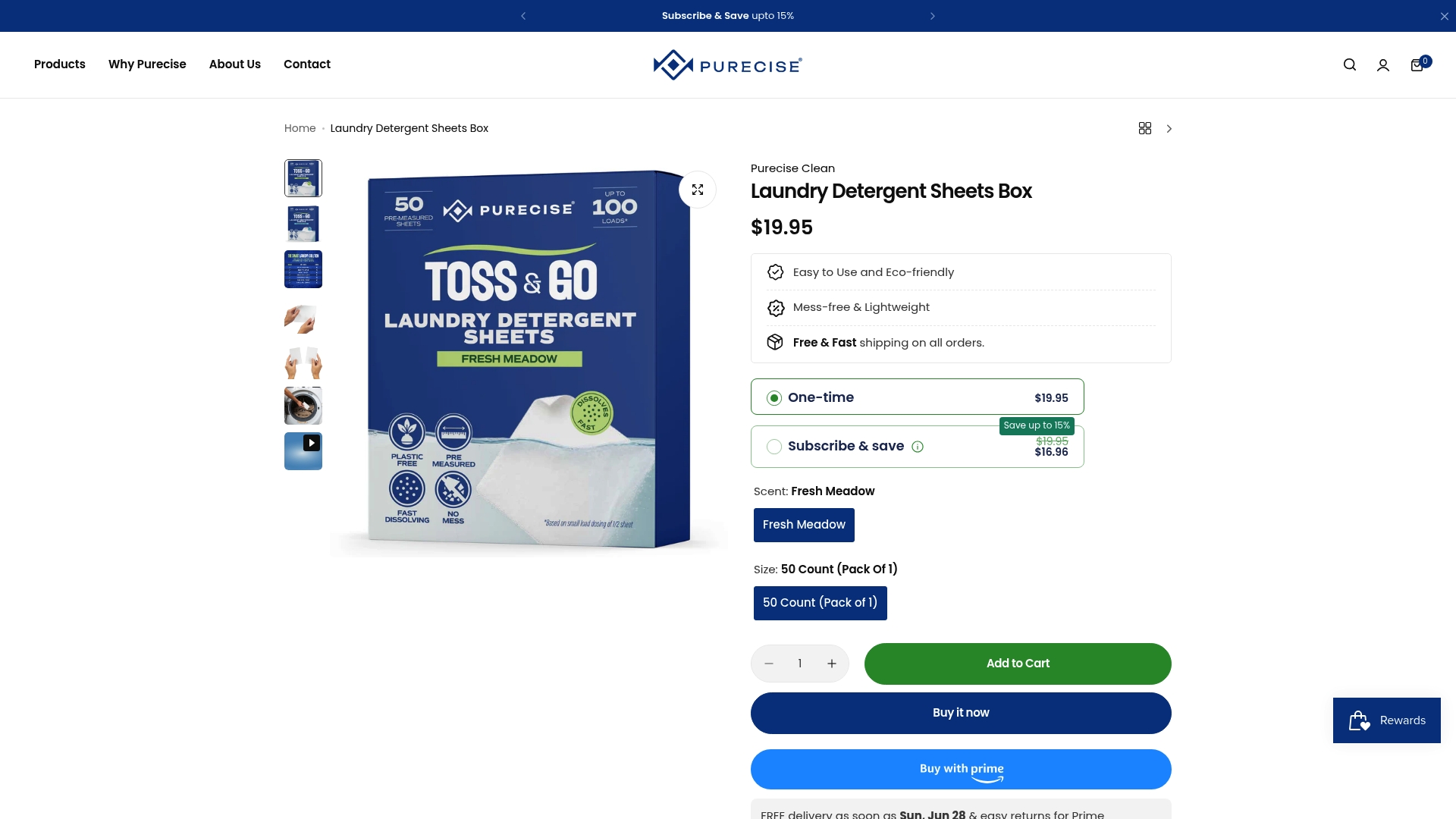
For home, the Box of 50 is $19.95 and covers up to 100 loads at about 3 oz. You can also subscribe and save 15%. Every order comes with our 30-day Keep It or Toss It Guarantee: a refund or a replacement, with nothing to send back. You can also browse the Travel 3-Pack on its own page.
FAQ
Does vinegar remove tea stains from clothes?
It can help. A soak of 1 tablespoon white vinegar and 1/2 teaspoon dish soap in 1 quart of warm water for 15 minutes is a recommended step for stubborn marks. Rinse and launder afterward, and test colored fabric on a hidden seam first.
Can old tea stains still come out?
Often they lighten, and sometimes they disappear. Repeat the soak and wash cycle, since stain removal may take several rounds. Delicate or antique textiles are better left to a professional cleaner.
Is it okay to put a tea-stained shirt in the dryer?
Not until the stain is gone. Heat can set a tea stain permanently. Air-dry the garment, check it in daylight, and re-treat if you still see a mark.
Why are tea stains harder to get out than coffee stains?
Tea has a high tannin content, which makes the color cling to fibers more than coffee does. That’s why a quick cool-water rinse and a soap pretreat matter so much.
What is the easiest way to clean tea stains from a mug?
Fill the mug halfway with white vinegar, top it with very hot water, and wait at least 10 minutes. Then scrub with a sponge or bottle brush and rinse. A baking soda paste works well on stains the soak leaves behind.
Sources
- How to Remove Tea Stains, The Spruce
- How to Remove Coffee and Tea Stains from Mugs, Better Homes & Gardens
- How to get tea and coffee stains off your mugs, Popular Science
- Remove Stains From Coffee, Tea, University of Georgia Extension
- Stain Removal Guide, American Cleaning Institute
- Stain Removal, Museum Conservation Institute
Recommended
Shopping on Amazon? The Toss & Go Fragrance Free Box of 50 is also available on Amazon.
Laundry Detergent and Microplastics: What the Evidence Shows
Indoor Clothes Drying: How to Do It Fast and Fresh
Related Posts

Why Detergent Bottles Are Hard to Recycle, and What to Do

How to Reduce Static Without Dryer Sheets

TSA-Approved Detergent Sheets: How to Fly With Them

Detergent Sheets Shelf Life: How Long They Last and How to Store Them

Detergent Sheets for Coin Laundry: How to Use Them Right

How to Wash Bedding to Reduce Dust Mites

How to Prevent Color Bleeding in the Wash


