

Remove Sunscreen Stains Within an Hour, With a Packable Pretreat Kit
Blot off excess sunscreen, pretreat with a grease-cutting soap or detergent, and launder on the warmest temperature the fabric allows. Skip the dryer entirely until the stain is gone. Dryer heat can set sunscreen residue permanently, turning a five-minute fix into a ruined shirt.
TL;DR:
- Prompt treatment within the first hour using dish soap and cold water significantly increases the chances of removing sunscreen stains completely.
- Different fabrics require tailored approaches, such as hand washing delicate swimwear with no heat or testing treatments on hidden areas first to prevent damage.
- Chemical sunscreen stains tend to turn yellow or orange and react poorly to bleach, requiring specific pretreatment steps, unlike mineral stains that can often be brushed off.
- If a stain survives multiple washes and dryer cycles, professional cleaning with specialized solvents is advisable to avoid further fabric damage.
- Using enzyme-based detergent sheets offers a convenient, pre-dosed solution that effectively breaks down oily residues and minimizes environmental waste.
Table of Contents
- How to remove sunscreen stains fast, step by step
- Is it a mineral stain or a chemical one?
- Do certain fabrics need different treatment?
- What if the stain already went through the dryer?
- How can you stop sunscreen stains before they start?
- Why enzyme-based detergent sheets fit this routine
- How do you test a stain remover before using it?
- Does your washing machine setting actually matter?
- When should you call in a professional cleaner?
- What actually separates a saved shirt from a ruined one
- A practical stain kit worth packing: Purecise detergent sheets
- Sources
How to remove sunscreen stains fast, step by step
Speed decides everything here. A fresh stain treated within the hour comes out far more often than one that’s already dried into the fibers.
- Blot, don’t rub. Use a clean cloth or paper towel to lift excess sunscreen off the surface. Rubbing just pushes the oils deeper into the weave.
- Scrape off any dried clumps. A dull butter knife or the edge of a spoon works fine for lotion that’s already crusted.
- Rinse from the back. Run cold water through the reverse side of the fabric so you’re pushing the stain out, not further in.
- Apply a grease-cutting agent directly. Liquid dish soap or a concentrated liquid laundry detergent, worked in gently with your fingers or a soft brush, breaks down the oils that cause the discoloration. Laundry experts consistently point to this dish-soap trick as the most reliable first move for sunscreen residue.
- Let it sit for some time. Don’t rush this part. The soap needs time to break the bond between the oil and the fabric.
- Wash on the warmest safe temperature. Check the care label first, then run the load.
- Inspect before drying. If any shadow of the stain remains, repeat the pretreatment. Never dry a garment with an active sunscreen stain.
Pro Tip: Keep a travel-size bottle of dish soap in your beach bag. Treating a stain poolside, even roughly, beats waiting until you’re home and the sunscreen has had six hours to bond with the fabric.
Is it a mineral stain or a chemical one?
Not all sunscreen stains behave the same way, and figuring out which type you’re dealing with changes your approach.
- Mineral sunscreens (zinc oxide or titanium dioxide) leave a chalky, whitish residue that often brushes off dry before you even reach for soap.
- Chemical sunscreens containing ingredients like avobenzone can react with minerals in hard water or with sweat, producing a yellow or orange discoloration that looks more like a rust stain than a lotion mark.
- Combination stains happen when either type mixes with body oil and sand, creating a greasy film on top of the residue.
- When you can’t tell which one you’re facing, treat it as a chemical, grease-first stain. Dish soap and enzyme detergents handle both categories reasonably well, so defaulting to grease-cutting methods is the safer bet.
Knowing the difference matters because a purely mineral stain sometimes needs nothing more than a stiff brush and a rinse, while a chemical stain almost always needs a real pretreatment step before it goes anywhere near the wash.
Do certain fabrics need different treatment?
Swimwear, delicates, and upholstery all react differently to sunscreen, and the wrong move on one can do more damage than the stain itself.
- Swimwear: Hand wash with a mild detergent instead of tossing it in the machine. Skip heat entirely, since spandex and elastane degrade fast under high temperatures. Reshape the suit back into its original form while it’s still damp.
- Delicates like silk and wool: Spot-clean with a mild detergent and a light touch. Abrasive scrubbing weakens these fibers quickly. Air dry flat rather than hanging, which can stretch the fabric.
- Whites: Oxygen bleach handles persistent discoloration without the risk chlorine bleach carries. Only reach for chlorine bleach if the care label explicitly allows it.
- Colored garments: Avoid chlorine bleach and skip the lemon juice hack you’ll see online. Citric acid can lighten dye just as easily as it lightens a stain. Test any product on a hidden seam first.
- Upholstery: Blot, never soak. A mild soap solution applied with a cloth, tested in an inconspicuous spot first, is the safest starting point. For detailed upholstery-safe techniques, a light touch and patience beat aggressive scrubbing every time.
What if the stain already went through the dryer?
Set-in and dryer-heated stains are harder, not hopeless. Plan on repeating the process rather than expecting one wash to fix it.
- Repeat the blot, pretreat, and wash cycle two or three times before reaching for stronger chemicals. Many stains fade a little more with each pass.
- Oxygen-based stain boosters are usually safe on colored fabrics and worth trying before anything harsher.
- Chlorine bleach is a last resort for whites whose care label allows it. On some chemical-sunscreen stains it can actually worsen the discoloration, so test it first.
- An enzyme detergent combined with a long soak (an hour or more) can lift older oil-based residue that a quick wash cycle misses. A grease-stain approach built around enzyme action tends to work here too.
- Some heat-set stains never fully disappear. Test any stronger product on a hidden area first, and keep the item out of the dryer until you’re sure the stain is gone.
Pro Tip: If a stain survives three full treatment cycles, stop escalating the chemicals and start considering whether the garment is worth a trip to a professional cleaner instead.
How can you stop sunscreen stains before they start?
Prevention takes less effort than treatment, and a few habit changes cut down on repeat damage to your favorite clothes.
- Apply sunscreen before getting dressed, and give it roughly 10 minutes to absorb and dry before pulling on a shirt.
- Cut down on friction points. Backpack straps, life jacket buckles, and car seat belts all rub sunscreen into fabric faster than normal wear.
- Reapply thoughtfully. Step away from clothing when you top up sunscreen midday rather than reapplying while already dressed.
- Pack a compact stain kit for outings. A small bottle of dish soap and a little travel detergent sheets tucked into a beach bag mean you can act the moment a spot appears.
- If staining keeps happening no matter what you do, consider switching sunscreen formulas. Some chemical formulations stain more readily than others, and a different product might solve the problem at the source.
Why enzyme-based detergent sheets fit this routine
Enzymes are built to break apart the exact kind of oily, protein-based residue sunscreen leaves behind. Purecise’s own guide on how enzyme cleaners work breaks down why enzyme action outperforms plain surfactants on oily stains, and that same mechanism is what makes a wash cycle effective after you’ve already pretreated a sunscreen mark.
- Purecise sheets dissolve completely in any wash type or temperature, so there’s no undissolved residue left to compound the stain.
- Each sheet is pre-dosed, which matters on beach trips where you’re not measuring anything in a hurry.
- The hypoallergenic formula works for kids’ swim towels and sensitive skin without added fragrance irritation.
- Purecise backs every purchase with a 100% money-back guarantee, which says something about how confident the formula is against tough stains.
How do you test a stain remover before using it?
Never apply a new product directly to a visible part of a garment. Test it first, always, even when a product claims to be safe for all fabrics.
Pick a hidden spot, an inside seam, the inner hem, or a swatch of fabric folded under a collar. Apply a small amount of the product exactly as you plan to use it on the actual stain. Wait the full recommended time (usually 5 to 10 minutes for most pretreatments, longer for bleach-based products), then blot and check for any color change, fading, or texture shift.
This step matters most with three categories of product: oxygen or chlorine bleach, enzyme-heavy stain removers left to soak for extended periods, and anything acidic like lemon juice or vinegar. Dark and brightly dyed fabrics are the most likely to show damage, and synthetic blends sometimes react to solvents in ways natural fibers don’t.
If the hidden spot shows no change after the wait time, you’re generally clear to move to the actual stain. If you see any lightening, stop. Rinse the tested area thoroughly and switch to a gentler method, like plain dish soap and cold water, instead of pushing forward with something stronger.
This thirty-second check has saved more garments than any single cleaning product on the market. Skipping it is the single most common way a sunscreen stain turns into a bleach spot instead.
Does your washing machine setting actually matter?
Yes, and the wrong setting can undo everything you did during pretreatment. Water temperature is the biggest variable. Warm to hot water helps dissolve oils and activate detergent enzymes, but only use the highest temperature your fabric’s care label permits. Cotton and most synthetics used in swimwear or activewear often tolerate warm water fine; some elastane blends do not.
Cycle length and agitation level matter almost as much. A heavy-duty or “sanitize” cycle runs longer and agitates more, giving detergent extra contact time with the stain, which helps on stubborn or older residue. A delicate or quick-wash cycle shortens that contact time, which is appropriate for fragile fabrics but less effective against grease-based stains.
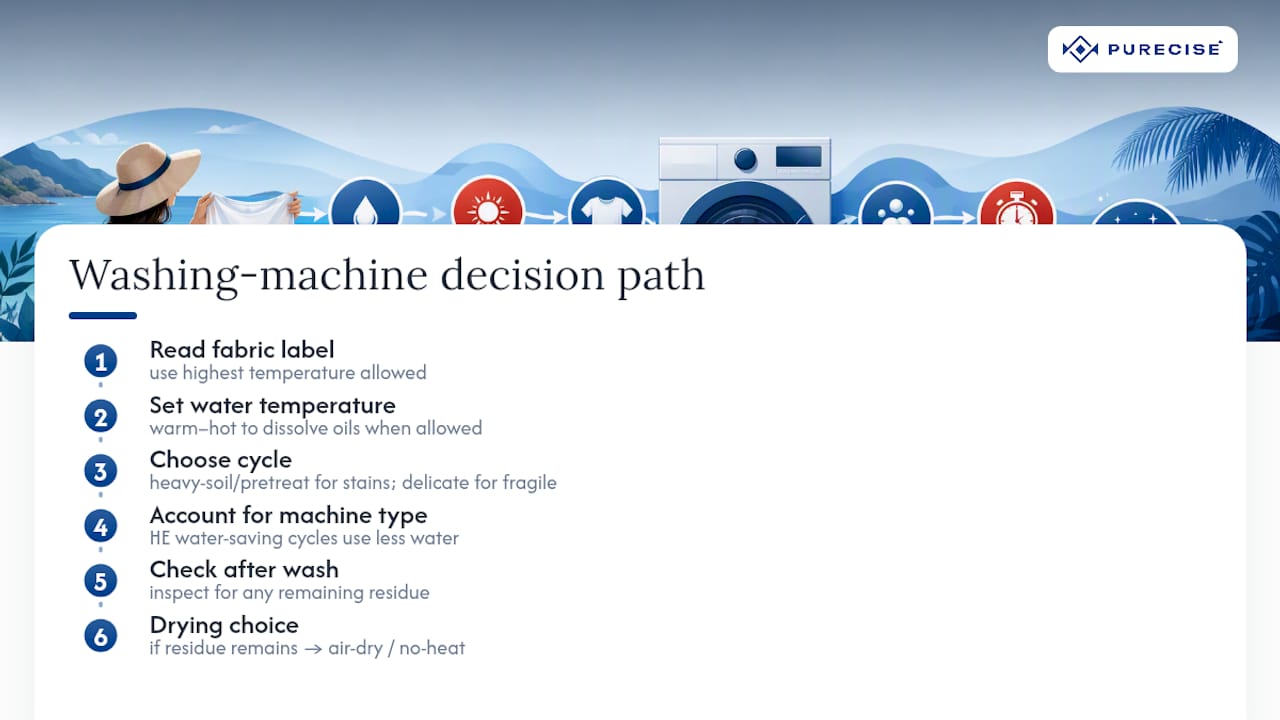
Spin speed affects how much moisture remains before the item goes to dry, and that’s where the real danger sits. Skip the dryer’s heat cycle entirely if any trace of the stain remains after washing, and use an air-dry or no-heat setting instead. A high-efficiency machine’s water-saving cycles sometimes use less water than a standard wash, which can leave detergent and lifted stain residue less diluted. If your machine has a “heavy soil” or “pretreat” cycle option, that setting is usually your best bet for a garment you’ve already worked on by hand.
When should you call in a professional cleaner?
Some sunscreen stains are beyond what a home routine can fix, and knowing when to stop trying saves the garment from further damage.
A stain that’s gone through the dryer more than once and still shows color after three full treatment attempts is a strong signal to bring it to a professional. Same goes for anything on silk, wool, or a dry-clean-only label. Professional cleaners have access to solvents and equipment that aren’t safe to use at home, and they know how to work around a fabric’s specific limitations.

Discoloration that’s spread or deepened rather than faded after treatment often means the fabric dye itself has reacted with the sunscreen chemicals, not just the residue sitting on top. That kind of damage sometimes can’t be reversed by anyone, but a professional cleaner is still your best shot before writing off the garment entirely.
For anything expensive, sentimental, or structurally delicate, like a wedding dress, a tailored suit, or upholstered furniture with a stain that’s spread, it’s worth paying for an expert opinion before you experiment further at home. The cost of a professional treatment is usually far less than replacing the item.
What actually separates a saved shirt from a ruined one
The advice you’ll find most places treats every sunscreen stain the same way, and that’s the biggest mistake in most guides on this topic. A chalky mineral residue and a spreading orange chemical stain call for different first moves, and lumping them together wastes the narrow window you have before the stain sets.
What the research actually supports is speed over strength. A basic dish soap pretreatment applied within the first hour outperforms almost any specialty stain remover applied the next day. The conventional wisdom oversells fancy products and undersells the simple habit of checking a garment before it ever reaches the dryer.
If you take one thing from all this, prioritize the heat rule above everything else. You can always run a garment through another wash cycle. You cannot always undo what a hot dryer just did to a stain that wasn’t fully gone. Build your routine around that one constraint, and the rest of the process gets a lot more forgiving.
— Purecise
A practical stain kit worth packing: Purecise detergent sheets
Once you’ve blotted, pretreated with dish soap, and let it sit, the wash cycle is what finishes the job, and that’s exactly where Purecise’s Toss & Go sheets earn their place in your routine. Drop one sheet into the machine after pretreating, and it dissolves fully in cold, warm, or hot water, no scooping detergent with sandy beach hands, no bottle to leak in a beach bag.
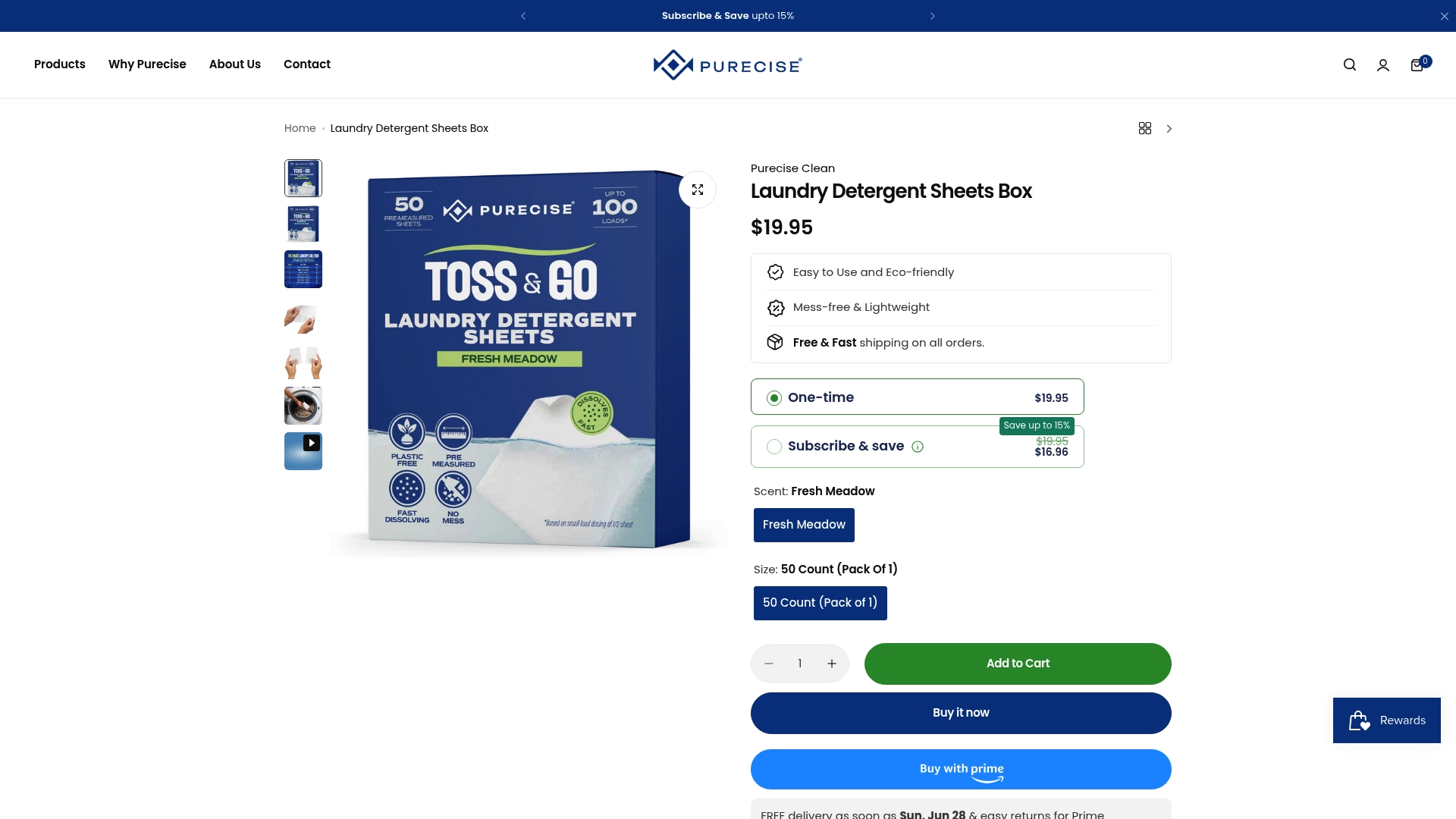
That pre-dosed format is the real advantage here. A pack of envelope sheets fits flat in a beach bag or glove compartment, so you always have a wash-ready solution on hand the moment you get home from a stained day at the pool. For everyday use, the full box covers a household’s regular laundry while cutting the plastic waste of jug-style detergent. The hypoallergenic formula is gentle enough for swim towels and kids’ clothes alike. Always check the garment’s care label before washing, then let a Purecise sheet handle the rest. If it doesn’t perform, the 100% money-back guarantee has you covered.
Sources
For deeper reading on the guidance above, see Good Housekeeping’s laundry expert advice, The Pioneer Woman’s stain-removal steps, Wirecutter’s fabric-specific guide, and the American Cleaning Institute’s tips.
- How to Get Rid of Sunscreen Stains, According to Laundry Experts
- Here’s How To Get Sunscreen Stains Out of Clothes, According to an Expert
- How to remove all four of the most common summer stains
- Sunscreen can stain clothing and furniture. Here’s how to get it out. | Wirecutter
Recommended
Certified Palm Oil Free Detergent: Pocket Sized Sheets That Work
Van Life Laundry: Save Water and Pack a Month of Detergent Sheets
Related Posts

Remove Lipstick Stains: The First 15 Minutes, Plus Detergent Sheets

How Often to Wash Towels: Bath Weekly, Hand Towels Every Few Days

Detergent Allergy Rash: Test a Low Residue Wash Without Fragrance

Save Clothes From Mud Stains in 1–2 Hours With Premeasured Sheets

Fabric First Sweat Stain Fixes: Measured DIY Recipes and Sheets

Whiten White Clothes, No Chlorine: 4–8 Hour Soak, Premeasured Sheets

Remove Blood Stains from Clothes: Cold Water, Enzyme Soak, No Dryer


