

Laundry Symbols Meaning: Pocket Cheat Sheet and a Detergent That Works
Laundry symbols meaning comes down to five icons: a washtub, a triangle, a square, an iron, and a circle. Each one shows the maximum treatment your garment can safely handle, never the minimum. An X across any symbol means “do not do this.” Everything else on the tag is just detail layered on top of that one rule.
TL;DR:
- Laundry symbols indicate the maximum safe treatment for fabrics, not the minimum; exceeding these limits risks damage or color transfer.
- The five core symbols represent washing, bleaching, drying, ironing, and professional cleaning, all based on the fabric’s maximum tolerance.
- Temperature and agitation details for washing are shown via dots and lines, with gentler settings necessary for delicate materials like silk and wool.
- Drying icons specify the method and heat level, with flat drying and shade drying marked by specific symbols, and no tumble drying requiring full restriction.
- Bleach and ironing symbols use simple icons and dots, but ignoring the instructions like no bleach or low heat can cause permanent fabric damage.
Table of Contents
- What Are the Five Core Laundry Symbols?
- How Do You Read Drying Symbols on Clothes?
- What Do the Bleach Symbols Mean?
- How Do You Decode the Ironing Symbol?
- What Does the Dry-Clean Circle Mean?
- Laundry Symbol Cheat Sheet You Can Save
- How Should You Sort and Wash Clothes Based on Labels?
- Does Detergent Choice Affect Symbol-Safe Washing?
- Why Reading the Tag Still Matters Most
- A Detergent That Works With Every Label, Not Around It
- Where to Verify These Care Symbol Meanings
- Sources
What Are the Five Core Laundry Symbols?
Every care label on the planet, regardless of the country it was printed in, builds on the same five pictograms. The GINETEX international care labeling standard defines a washtub for washing, a triangle for bleaching, a square for drying, an iron for ironing, and a circle for professional care. That consistency is deliberate. A shirt made in Vietnam, sold in Ohio, and washed in a New York apartment carries the same five shapes, so nobody has to translate anything.
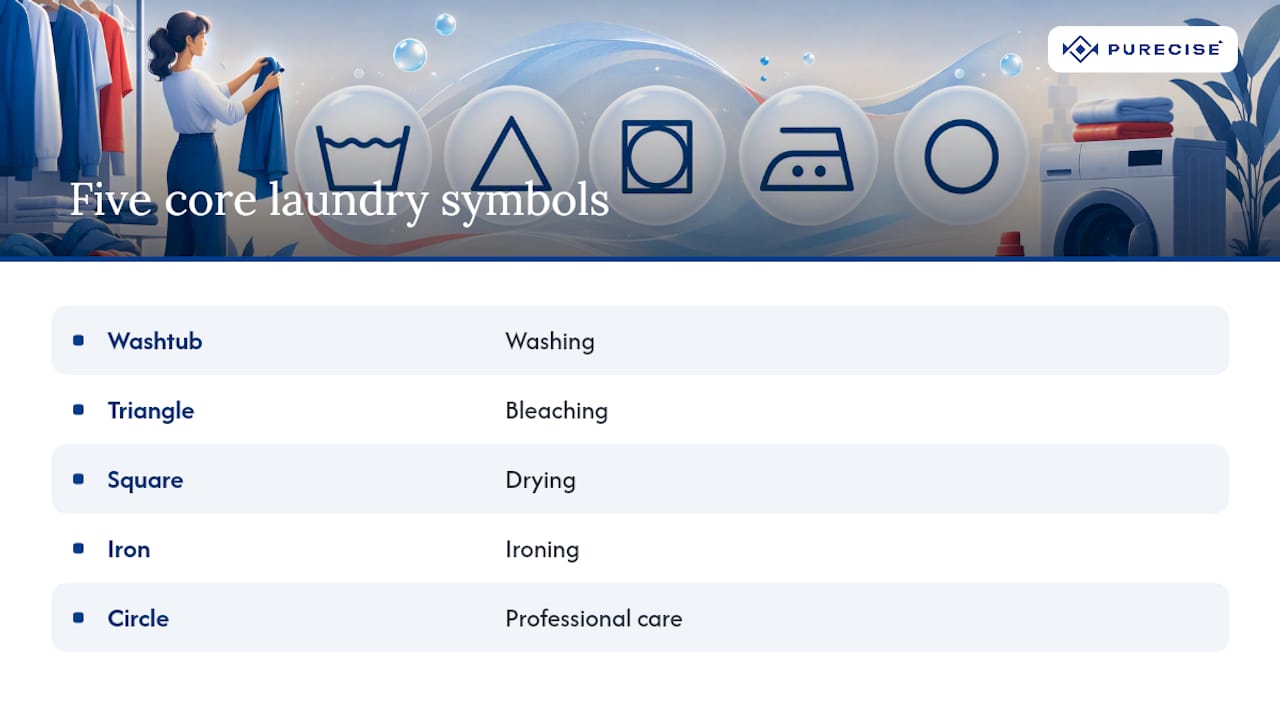
The part most people miss is the “maximum severity” principle behind the whole system. A symbol doesn’t tell you what to do. It tells you the harshest treatment the fabric can survive without falling apart. Wash it colder or gentler than the symbol allows and you’re fine. Push past what the symbol shows and you risk shrinkage, color bleed, or a garment that no longer fits the way it did off the rack.
Reading the washtub: temperature and cycle severity
The washtub icon governs machine and hand washing, and it carries two layers of information at once.
- Dots or numbers inside the tub set the temperature ceiling. One dot usually means a cold wash, two dots a warm wash, and three dots a hot wash, though some tags print the actual Celsius number instead.
- Lines under the tub control mechanical agitation. No line means a normal cycle is fine. One line calls for permanent press. Two lines mean gentle or delicate, which is really a message about how much stress the fibers can take, not just about softness.
- A hand inside the tub restricts the item to hand washing only, and a crossed-out tub means don’t wash it in water at all.
Silk and wool typically show one dot and a hand or gentle-cycle mark. Cotton often shows three dots because the fiber tolerates heat well. Synthetics usually land at two dots, since heat can warp or melt certain finishes.
Pro Tip: When a tag shows only a number in Celsius, that figure is the maximum safe temperature. Convert it to Fahrenheit and round down when you set the dial, not up.
Bars under the tub are a stronger signal than most people give them credit for. HowStuffWorks notes that they describe mechanical agitation tolerance, which explains why a delicate blouse can technically survive hot water but still shred itself in a normal spin cycle. When you’re unsure which detail matters more, temperature or agitation, default to whichever reading is gentler.
How Do You Read Drying Symbols on Clothes?
Drying instructions split into two families that look similar but mean very different things: a square with a circle inside for machine drying, and a plain square for air-drying methods.
- Circle inside a square means tumble dry is allowed, and dots inside that circle set the heat level the same way dots work for washing.
- Bars under the square mirror the wash tub’s logic: no line for normal heat, one line for permanent press, two lines for low or delicate heat.
- A crossed circle-in-square means never tumble dry, full stop, and it’s usually paired with a natural-drying icon instead.
- A square with a horizontal line means dry flat. A square with a curved line means drip dry. Three vertical lines mean line dry. A square with diagonal lines in the corner means dry in the shade, which matters for anything prone to fading.
Whirlpool’s care symbol guide points out that the dots-and-bars pattern in drying symbols deliberately echoes the washing symbols, so once you’ve learned one set, the other becomes almost intuitive.
Pro Tip: If you see a crossed tumble-dry symbol next to a flat-dry icon, that garment has structural padding or bonding, like a swimsuit or a padded jacket, that heat will warp permanently. Lay it flat, no exceptions.
What Do the Bleach Symbols Mean?
The triangle is the smallest symbol on the tag, but ignoring it is how white shirts turn pink and dark shirts turn splotchy.
- An empty triangle means any bleach, including chlorine bleach, is safe to use.
- A triangle with two diagonal lines inside it restricts you to oxygen-based, non-chlorine bleach only, according to Whirlpool’s symbol breakdown.
- A crossed-out triangle means no bleach of any kind, ever.
If a tag skips the triangle entirely, treat that as a red flag rather than a green light. When in doubt, an oxygen-based booster is the safer stain-fighting choice, and it’s worth pairing with a smarter stain-removal routine for the specific fabric you’re treating.
How Do You Decode the Ironing Symbol?
The iron icon is one of the more forgiving symbols once you know the dot system, and one of the most damaging to ignore.
- One dot means low heat, roughly the setting for synthetics and silk.
- Two dots means medium heat, the range for cotton blends and wool.
- Three dots means high heat, generally safe for cotton and linen.
- A crossed-out iron means don’t iron this item under any circumstances.
- A crossed-out steam line through the iron means no steam, even if the base symbol allows ironing at a given temperature.
Steam matters more than people assume. Small structural details like a crossed steam line exist because steam can permanently bond or shine certain synthetic finishes, even when dry heat at that same temperature would be perfectly safe. For silk and wool, iron inside out with a press cloth. For cotton and linen, you generally have more room to work directly on the fabric.
What Does the Dry-Clean Circle Mean?
The circle governs professional care, and the letters inside it aren’t decoration. They’re instructions for the dry cleaner, not for you.
- A plain circle means dry cleaning is fine.
- A circle with an A allows any solvent.
- A circle with a P restricts the cleaner to specific petroleum-based solvents.
- A circle with an F is rare in the US but signals a similarly restricted solvent range.
- A crossed-out circle means never dry clean, which usually pairs with washable-fabric guidance instead.
- An underlined circle flags reduced moisture or reduced mechanical action, a caution for the cleaner rather than for you.
The letter codes exist for the professional handling the item, not the home launderer, so don’t try to reverse-engineer a home-wash substitute from them. “Dry clean only” should be followed literally on structured garments, tailored suits, and anything with fusible interfacing. Experienced hand-washers sometimes get away with careful hand washing on simple silk or rayon pieces, but that’s a judgment call made at your own risk, not a loophole the label grants you.
Laundry Symbol Cheat Sheet You Can Save
Bookmark this before laundry day and you’ll rarely need to look anything else up.
- Washtub – washing method, temperature (dots/numbers), and agitation level (bars).
- Triangle – bleach permission: empty allows any bleach, two lines mean oxygen-only, crossed means none.
- Square – drying method, either tumble dry (circle inside) or natural drying (lines and curves).
- Iron – ironing temperature by dot count, with steam allowed unless crossed out.
- Circle – professional care instructions, readable to your dry cleaner even if the letters mean nothing to you.
| Symbol | Quick Meaning |
|---|---|
| Washtub, 1 dot | Cold wash |
| Washtub, 3 dots | Hot wash |
| Triangle, empty | Any bleach okay |
| Square with circle, crossed | Never tumble dry |
| Circle, crossed | Never dry clean |
The tag’s Celsius numbers are the ceiling, not the target. Setting your machine a notch below the number is always the safer bet.
How Should You Sort and Wash Clothes Based on Labels?
Color-sorting alone misses the point. A black cotton tee and a black rayon blouse can carry completely different care symbols, and washing them together on the wrong cycle punishes the more delicate piece.
- Sort by symbol group first, color second. Group items by temperature and agitation tolerance, then split by color within those groups.
- Use a mesh laundry bag for anything with zippers, hooks, embellishments, or a gentle-cycle mark, so it doesn’t snag on heavier items sharing the load.
- Match spin speed to the gentlest item in the load. If one piece shows a delicate mark, run the whole load on that setting rather than hoping it survives a normal spin.
- When a garment’s care tag is missing or unreadable, treat it as if it carries the most protective instructions you’d expect for that fabric type. Cold water, gentle cycle, air dry. It’s a conservative fallback, but it’s cheaper than a ruined shirt.
Following the more protective instruction when labels conflict, or when a garment blends fabrics, is exactly the approach GINETEX recommends for mixed-fiber items: treat the whole garment according to its most delicate component. This logic applies just as much to embroidered uniforms and workwear, where protecting logos and fit depends on following the harshest restriction on the tag, not the average of everything printed on it.
Pro Tip: Keep a small pair of reading glasses or your phone’s zoom camera near the laundry room. Care tags are printed small on purpose to save fabric, and misreading a dot count is the single most common cause of shrunk sweaters.
Does Detergent Choice Affect Symbol-Safe Washing?
Reading the symbols correctly only solves half the problem. The other half is what you’re washing with, and pre-dosed sheets remove one common failure point: overdosing. A liquid detergent measured by eye tends to run heavy, and excess detergent residue is a frequent cause of stiffness and fading on delicate fabrics washed in shared machines.
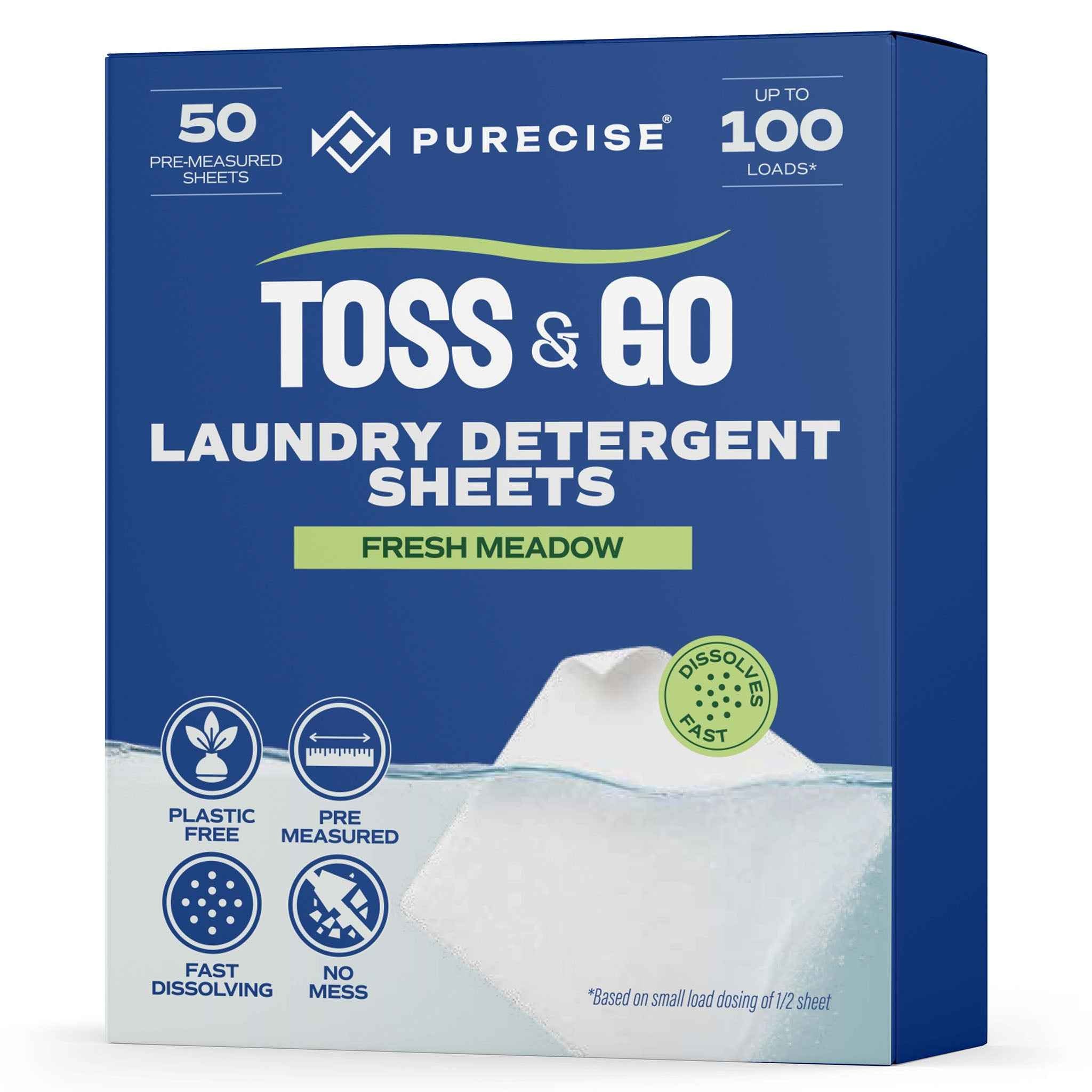
Purecise sheets are formulated to dissolve fully across cold, warm, and hot cycles, which matters directly for garments carrying a one-dot or two-dot washtub symbol. The hypoallergenic, plant-based formula also matters for anyone whose skin reacts to fragrance or residue left behind by heavier detergents. None of that changes what the care label allows. A crossed washtub still means don’t machine wash it, no matter what detergent sits in the drawer. Reading the full ingredient list alongside the care tag is still the responsible move before washing anything unfamiliar.
Why Reading the Tag Still Matters Most
Every detergent claim in the world doesn’t override a crossed symbol on a care tag. The habit of checking the label before the wash cycle, not after a garment comes out wrong, is the cheapest insurance a closet ever gets, and it’s the same instinct behind reducing plastic waste one detergent bottle at a time.
— Purecise
A Detergent That Works With Every Label, Not Around It
Purecise sheets are built for exactly the label-reading habits this guide just walked through. Since each sheet is pre-dosed and dissolves completely whether the washtub symbol calls for a cold hand wash or a hot cotton cycle, you never have to guess how much detergent a delicate item can handle.
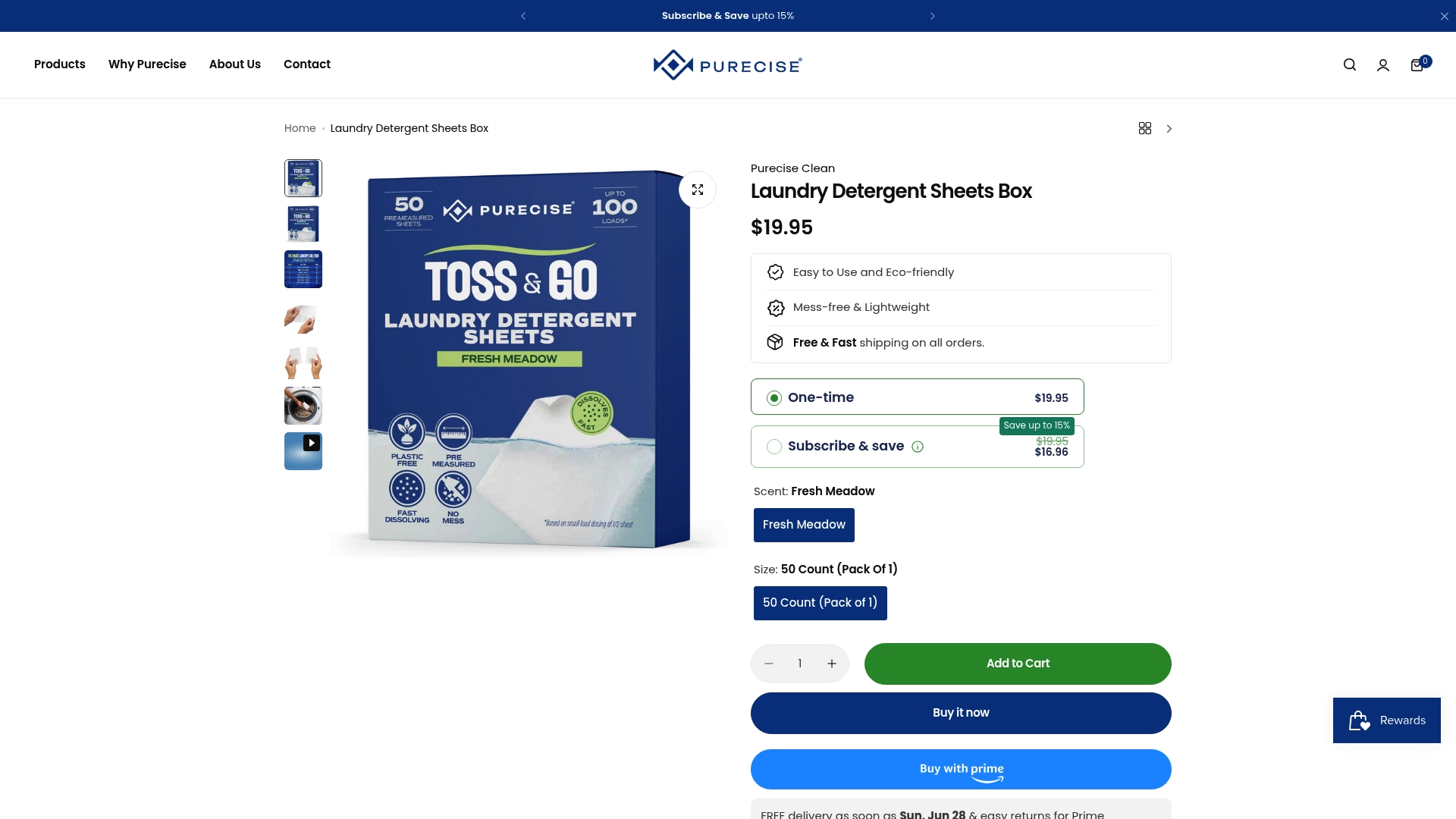
The plant-based, hypoallergenic formula skips the harsh additives that cause residue buildup on sensitive fabrics, and the flat, lightweight packaging means a full month’s supply fits in a pocket or carry-on. For home laundry, the Laundry Detergent Sheets Box covers regular washing across every load type described above. For travel, RV life, or a dorm room, the Laundry Detergent Sheets Envelopes pack flat and skip the bulky bottle entirely. Purecise also backs every order with a 100% money-back guarantee, so trying a box costs nothing if it doesn’t fit your routine. Order a box or a travel pack today and pair it with the label habits above for cleaner, longer-lasting clothes.
Where to Verify These Care Symbol Meanings
- The GINETEX Textile Care Symbols PDF is the closest thing to an official rulebook for the five-symbol system used worldwide.
- Whirlpool’s washer care symbol guide breaks down appliance-specific settings that match each pictogram.
- The Spruce’s international laundry symbol guide covers the dry-clean letter codes in more depth than most tags explain on their own.
- HowStuffWorks’ laundry symbol explainer is a solid plain-language reference for anyone who wants the mechanical reasoning behind bars and dots.
Sources
- Textile care symbols — GINETEX
- Laundry symbols explained — HowStuffWorks
- Laundry care symbols explained — Whirlpool
- International laundry care symbols — The Spruce
Recommended
What Is a pH Neutral Laundry Detergent, and Do You Need One?
Certified Palm Oil Free Detergent: Pocket Sized Sheets That Work
Related Posts

Remove Lipstick Stains: The First 15 Minutes, Plus Detergent Sheets

How Often to Wash Towels: Bath Weekly, Hand Towels Every Few Days

Detergent Allergy Rash: Test a Low Residue Wash Without Fragrance

Save Clothes From Mud Stains in 1–2 Hours With Premeasured Sheets

Fabric First Sweat Stain Fixes: Measured DIY Recipes and Sheets

Whiten White Clothes, No Chlorine: 4–8 Hour Soak, Premeasured Sheets

Remove Blood Stains from Clothes: Cold Water, Enzyme Soak, No Dryer


