

How Many Detergent Sheets per Load Do You Actually Need?
Use half a sheet for a small or lightly soiled load, one full sheet for a normal medium load, and extra sheets for large, heavily soiled, or extra-large loads. That single rule covers most laundry days, and it lines up with the dosing bands most manufacturers publish: smaller loads get a half sheet, medium loads get one sheet, and larger or more soiled loads get two.
A few exceptions matter more than the base rule:
- Very light loads (a couple of shirts, a single towel): half a sheet is plenty, and using more just wastes product.
- Delicates and small hand wash items: stick to a half sheet on a gentle cycle.
- Heavily soiled towels, bedding, or gym clothes: go with two full sheets, especially if you’re washing on warm or hot.
The quick action: tear the sheet if needed, lay it flat on top of your laundry inside the drum, then start the wash. That’s it. No cup, no cap, no guessing.
Key Takeaways
Correct dosing for detergent sheets depends primarily on load weight and soil level, not a fixed number that applies to every wash.
| Point | Details |
|---|---|
| Base dosing rule | Use a half sheet for small loads, one sheet for medium loads, and two for large or heavily soiled loads. |
| Placement matters | Lay the sheet on top of the laundry in the drum so water reaches it fast during fill. |
| Adjust for fabric type | Towels and bedding need the higher dose; delicates need the half-sheet, gentle-cycle approach. |
| Check your water | Hard water can call for an extra sheet, so it’s worth knowing your local hardness level. |
| Purecise fits the routine | Pre-dosed Purecise sheets follow the same half-to-two-sheet rule and dissolve fully in HE, cold, or hot cycles. |
Table of Contents
- How to Estimate Load Size Before You Grab a Sheet
- How to Use Detergent Sheets for a Full Dissolve
- When to Adjust Your Detergent Sheet Dose
- Detergent Sheets vs. Liquid or Powder: Quick Pros and Cons
- Getting the Most Out of Purecise Sheets
- Your Path to Simpler Laundry Days
- Frequently Asked Questions
- Sources
How to Estimate Load Size Before You Grab a Sheet
Getting the dose right starts with sizing up the load correctly, and most people overestimate how much a “large load” actually is. A quick look at the drum tells you almost everything: a small load fills about a quarter of the drum, a medium load fills half, a large load fills three quarters, and an extra-large load is packed snugly without laundry mounding above the rim.
If you’d rather count items than eyeball the drum, use these rough benchmarks:
- Small loads comprise a few shirts or a single bath towel, medium loads consist of several shirts or everyday clothes, large loads cover a family’s worth of clothes or a bedding set, and extra-large loads include multiple bedding sets, heavy jackets, or a full hamper.
Manufacturers tie their sheet counts to dry weight for a reason: a load of towels weighs far more than the same volume of t-shirts, so bulk alone can mislead you.
Pro Tip: High-efficiency (HE) washers often look like they hold less because the drum sits lower and wider, but capacity by weight is usually similar to a standard machine. Judge by fabric weight, not how empty the drum looks.
How to Use Detergent Sheets for a Full Dissolve
Sheets only work if they dissolve completely, and that comes down to placement and water temperature more than the sheet itself. Follow these steps:
- Tear the sheet along its perforation if you’re using a half dose.
- Lay the sheet flat on top of the clothes already in the drum, not underneath.
- Add your laundry as usual, then close the door and select your cycle.
- Choose a temperature suited to the load (see below), then start the machine.
Placing the sheet directly on top of the laundry lets water hit it fast as the drum fills, whether you’re running a front-load or top-load machine. Front-loaders spray water in from the side, so a sheet buried at the bottom can sit half dissolved by the time the cycle finishes; top position solves that.
Temperature changes what the wash accomplishes:
- Cold water protects colors and works fine for lightly soiled everyday clothes.
- Warm water is the middle ground for most regular loads.
- Hot water helps break down grease, sweat, and set-in stains on whites and heavily soiled items.
Detergent sheets are formulated to work in HE machines when used as directed, since HE cycles use less water and rely on tumbling rather than soaking. No dispenser drawer needed. Some brands do allow drawer placement, so check your specific packaging if you’d rather not touch the drum directly.
When to Adjust Your Detergent Sheet Dose
A standard load rarely stays standard for long. Soil level changes everything: a load of lightly worn clothes can get away with a half sheet, while heavily soiled work clothes or muddy kids’ outfits often need the full two-sheet dose plus warm water to actually lift the grime.
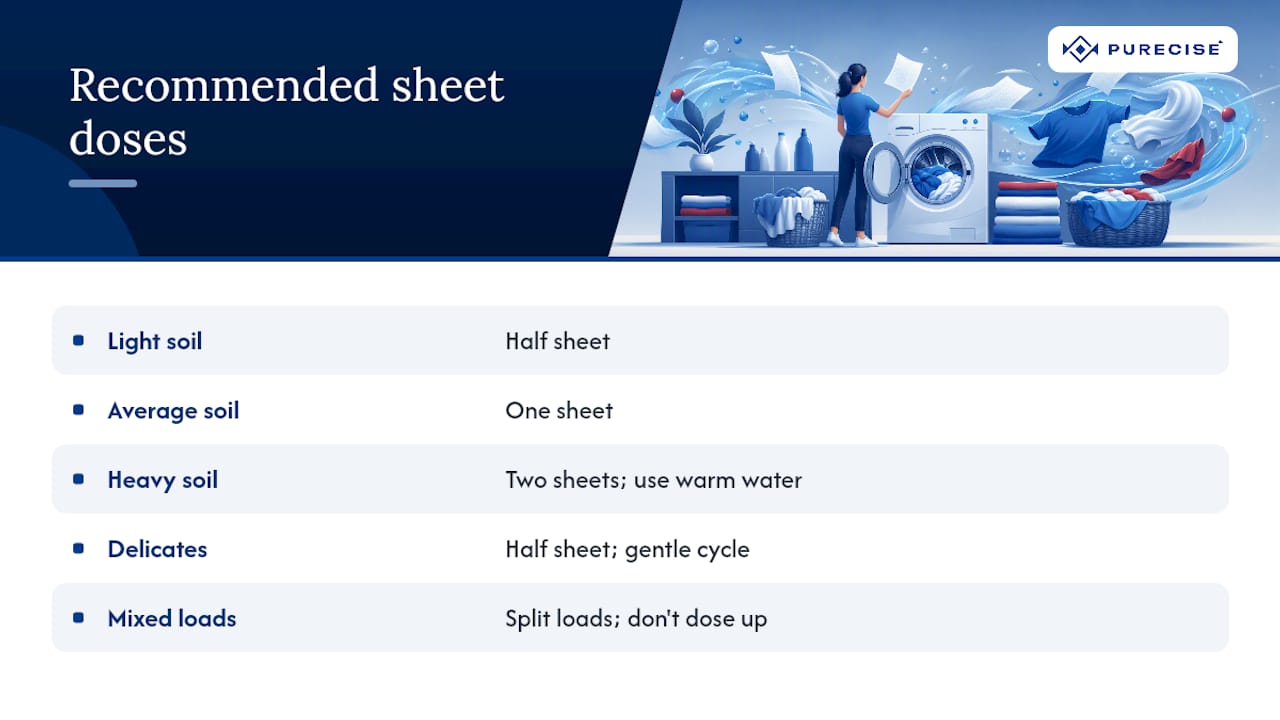
Towels, bedding, and sweat-heavy gym gear deserve the higher end of the range almost every time, which can also influence dryer lint and vent maintenance dryer vent cleaning service. These fabrics absorb odor and oil deep into the fibers, and a single sheet often just isn’t enough surfactant to cut through it. Bump up to two sheets and run warm water when you can.
Delicates go the opposite direction. Lace, silk, and other small, low-soil items do better with a half sheet and a gentle cycle. Overdosing delicates doesn’t clean them any better. It just leaves more residue to rinse out.
Mixed loads are trickier. If you’re combining heavily soiled items with delicate ones, split the load instead of dosing up to compensate. One oversized dose won’t fix the mismatch between what a heavy towel needs and what a silk blouse can tolerate.
Pro Tip: For a single stubborn stain on an otherwise clean load, spot-treat before washing instead of adding a second sheet. Extra detergent spread across the whole load doesn’t concentrate on the one spot that needs it.
Detergent Sheets vs. Liquid or Powder: Quick Pros and Cons
Sheets win on convenience. Each one is pre-measured, so there’s no cap to overfill, no bottle to lug around, and no powder to spill on the laundry room floor. They pack flat, which makes them genuinely useful for travel, dorms, or apartments with limited storage.
The tradeoffs are real too. Some sheet formulas need an extra sheet for heavily soiled loads compared to a liquid detergent’s adjustable pour, and sheets aren’t sold in every grocery store yet, so availability can be spottier than a jug of liquid.
Cost callout: per-sheet pricing typically runs $0.25 to $0.60 depending on pack size and brand, which lands in a similar range to mid-tier liquid detergents once you account for how many loads a bottle actually covers.
- Convenience: pre-dosed, no measuring, easy to pack for trips
- Performance: strong on regular and light soil, may need doubling up on tough stains
- Packaging: far less plastic waste than jugs, a real plus if you’re trying to cut down what goes in the recycling bin
Getting the Most Out of Purecise Sheets
Every Purecise sheet is pre-dosed to match the standard rule: one sheet for a normal load, a half sheet torn along the perforation for small or delicate loads, two for anything large or heavily soiled. Lay it flat on top of your laundry and start the machine. It dissolves fully in any wash type, hot or cold, HE or standard.
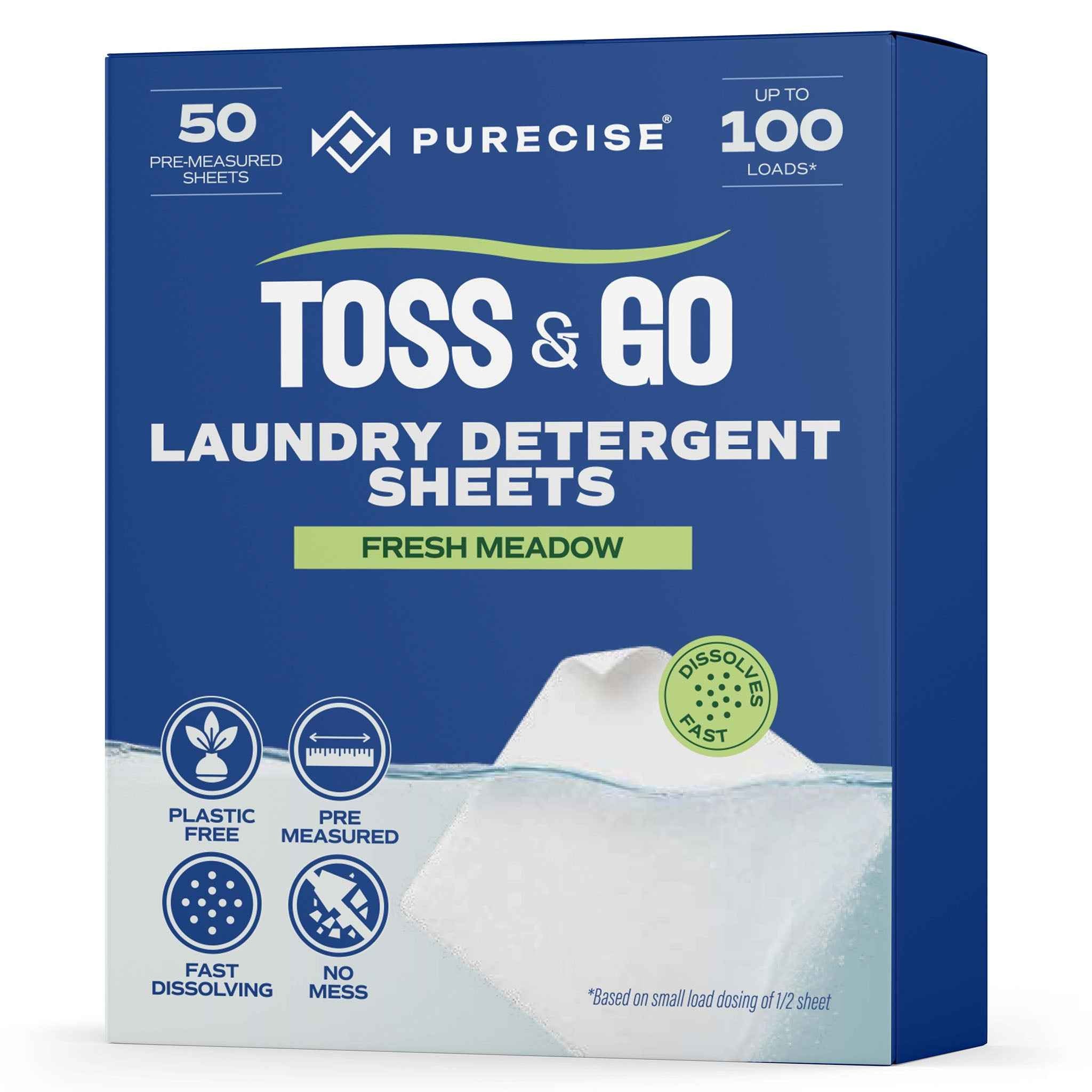
Keep sheets in their original packaging, away from direct sunlight and moisture, to preserve the formula between uses. If a box doesn’t perform the way you expect, Purecise backs it with a 100% money back guarantee, so checking the product page for full details costs you nothing.
Pro Tip: Toss a few sheets in a bag when you travel. A month’s supply fits in a pocket, which beats hauling a bottle through airport security.
Your Path to Simpler Laundry Days
Purecise is the alternative to bulky liquid jugs and messy powder scoops for anyone tired of guessing at dosing. Each sheet is pre-measured, hypoallergenic, and dissolves completely in cold or hot water, front-load or top-load, so you skip the cap-squinting and the spills that come with traditional detergent.
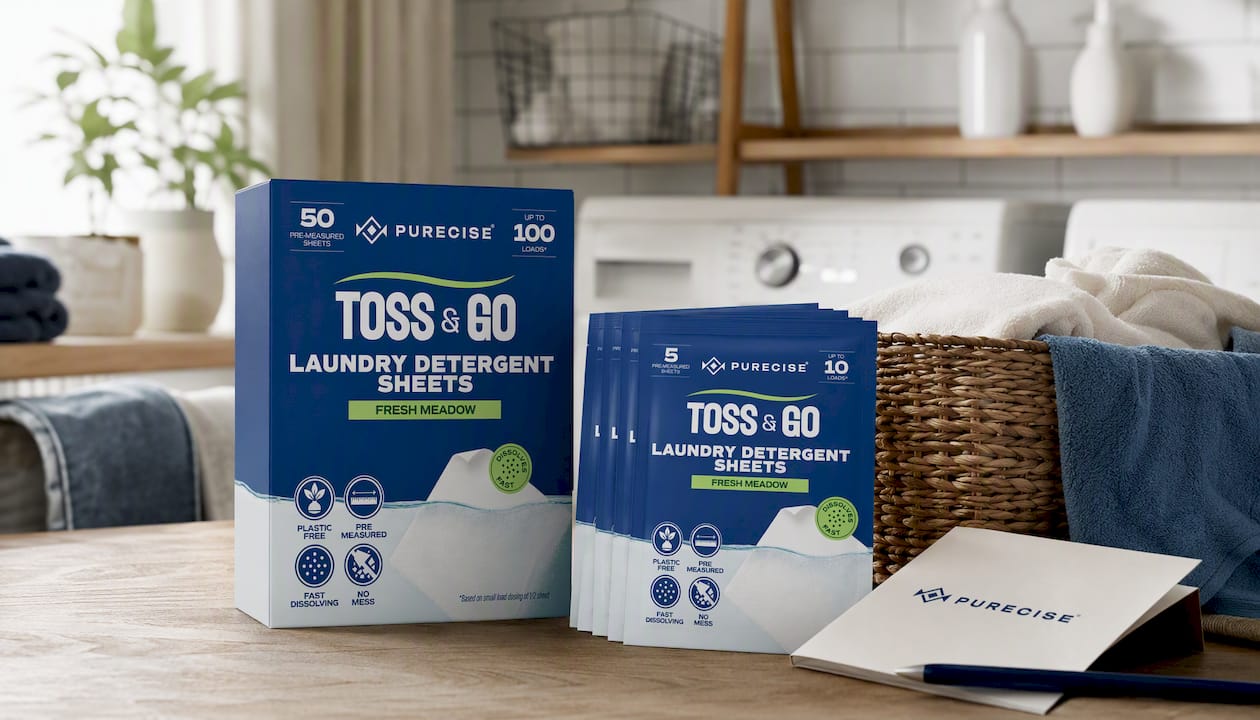
If you’re doing laundry for a family, the boxed format covers a full supply without a single bottle taking up shelf space. Frequent travelers or anyone short on storage might prefer the envelope pack, small enough to carry in a bag and still deliver a properly dosed wash wherever you land. For households managing laundry across multiple bathrooms or a shared building, Purecise’s guide to avoiding overdosing in shared machines is worth a read before you buy. Pick a format, check the full Purecise Clean lineup, and place your first order.
Frequently Asked Questions
How many detergent sheets per load should I use for a normal wash? One full sheet handles most standard, medium-sized loads with average soil levels. Save the half sheet for small or lightly soiled loads, and reserve two sheets for large or heavily soiled ones.
Can I use half a detergent sheet for a small load? Yes. Tear the sheet along its perforation and use half for a small load of one to three items or lightly soiled clothes. It dissolves just as completely as a full sheet.
Do I need more sheets for hard water? Possibly. Hard water can reduce detergent effectiveness, so if your local water is notably hard, bumping up to the next dosing tier can help maintain cleaning power.
Are detergent sheets safe for HE washers? Yes, detergent sheets are formulated to dissolve fully in HE machines when used as directed, since they don’t produce excess suds the way some liquid detergents can.
Should I add extra sheets for really dirty laundry? For heavily soiled towels, bedding, or workout clothes, use two sheets and wash on warm water. That combination handles ground-in dirt and odor far better than one sheet alone.
Sources
- Today
- How to Use Laundry Detergent Sheets | Whirlpool
- How to use laundry detergent sheets (Maytag blog)
Recommended
How to Remove Food Coloring From Hands: Fast, Safe Fixes
What Removes Grease Stains From Clothes Fast
Related Posts

Whiten White Clothes, No Chlorine: 4–8 Hour Soak, Premeasured Sheets

Remove Blood Stains from Clothes: Cold Water, Enzyme Soak, No Dryer

Pet Owners: Remove Hair from 5 Surfaces with a Washer and Dryer Trick

Wash Sheets Weekly, Dry Them Fully, and Stop Dosing Guesswork

6 Quick Steps to Remove Oil Stains at Home Without Ruining Clothes

Save Space: 50 Sheets Cover 50–100 Loads for Airbnb Hosts

Cut Detergent 25–50%: Use Premeasured Sheets for Soft Water


