

How to Wash Jeans Without Fading Them
To wash jeans without fading them, turn them inside out, close the zipper, wash them in cold water on a gentle cycle with other dark colors, and air dry them in the shade. Wash them less often than you think you need to. Every wash removes a little dye, so the goal is to slow fading, not stop it. The rest of this guide explains each step, what the major denim makers and cleaning experts say, and which popular tricks (like vinegar) don’t hold up.
TL;DR
- Turn jeans inside out, zip them up, and wash cold on a gentle cycle with similar dark colors.
- Skip hot water, long cycles, fabric softener and the dryer. Hang jeans to dry in the shade, away from direct sun.
- Wash less often: spot-clean small spills and wash about every 10 wears.
- Vinegar and salt do not lock in dye, so don’t count on them.
- Our Toss & Go sheets are pre-measured and designed to dissolve in cold water, which makes a cold-wash routine easy.
Table of Contents
- Why jeans fade in the first place
- The wash routine, step by step
- Quick reference: what to do and what to skip
- How often should you wash jeans?
- Keeping black jeans black
- Does vinegar stop jeans from fading?
- Can you wash jeans with dish soap?
- How to hand wash jeans
- Where our sheets fit in
- Perspective: why we think a pre-measured sheet suits denim care
- Try the cold-wash routine with Toss & Go
- FAQ
- Sources
Why jeans fade in the first place
Denim fades because dye sits mostly on the surface of the yarn, and washing rubs it off. Consumer Reports notes that every wash removes some dye, especially from denim, and that agitation and tumbling break down fibers so clothes look faded.
That answers a common question: yes, denim can still fade even when you do everything right. Careful washing slows the process. It cannot stop it. Fading is also part of why people like denim, since the worn-in look is the result of use and washing over time. What you can control is how fast it happens.
There are four things that speed it up:
- Friction. The Spruce, drawing on professional dry-cleaning experience, explains that wet-fiber abrasion from other garments, zippers, buttons and studs adds wear. Long cycles and high spin speeds raise the risk.
- Heat. Hot water and tumble drying make fading happen faster, according to the American Cleaning Institute.
- Sunlight. Consumer Reports says sunlight fades black clothes, and Wrangler says UV light can fade denim.
- Frequency. More washes mean more dye lost, whatever else you do right.
Everything below follows from those four.
The wash routine, step by step

1. Sort by color
Wash dark jeans with other dark colors. A laundry pro quoted by The Spruce advises sorting by color and washing black jeans with other dark colors. Keep light items out of the load, since dye that rubs off a new pair can land on them.
Try to wash jeans with similar-weight clothes too. A load of jeans with a few soft T-shirts means the heavy denim rubs against lighter fabric for the whole cycle.
2. Turn them inside out and zip up
The dyed outer surface is where color loss is most visible. Wrangler calls turning jeans inside out the single most important step. Levi’s customer service also recommends turning denim inside out and closing all zippers. Button the top button too, so the hardware doesn’t catch on other clothes or the drum.
Empty the pockets first. A forgotten pen or tissue causes more trouble than fading.
3. Choose cold water and a gentle cycle
Levi’s says to wash denim in cold water only, because hot water increases the chance of shrinkage and color loss. Their black jeans guide adds a gentle cycle to the same advice. A gentle cycle also cuts the mechanical stress of a high spin, which Wrangler points out as well.
Cold water is also the setting most detergents struggle with, because powders and some tablets can stay gritty in a cold drum. That’s why we designed our sheets to dissolve in cold water.
4. Use a mild detergent, and the right amount
Levi’s recommends a mild detergent, or one made for dark colors on darker washes. The American Cleaning Institute says some laundry products are formulated to lessen fading and suggests reading labels for phrases like “for black” or “dark clothes,” and always following the garment label.
Skip fabric softener. Several jeans guides advise leaving it out, and it does nothing for color.
Measuring matters too. Too much detergent is harder to rinse out, and too little may not clean. This is where pre-measured sheets help: one sheet is a full dose for a regular load, so there is no pouring and no guessing. Put the sheet in the drum on top of the clothes, not in the dispenser drawer. For a small load, such as a single pair of jeans, half a sheet is the dose. For a large or heavily soiled load, use two.

5. Keep the load small and the cycle short
Don’t cram the drum. Jeans need room to move so that water and detergent pass through without more scrubbing than necessary. A short or normal-length gentle cycle beats a heavy-duty or extended one. The Spruce lists long cycles and high spin speeds among the things that raise the risk of wear.
6. Dry them the slow way
Levi’s says to air dry whenever possible, hanging or laying flat, and to dry denim inside out in a shaded area to help preserve color. Their denim guide says a dryer can damage and shrink denim, while air drying preserves fit, color and fabric.
The Spruce’s laundry pro suggests that for air drying, you take jeans out while still damp, turn them right-side out and let them finish drying. If you must use a dryer, the same source says low heat. Wirecutter quotes a denim expert who would never suggest a dryer, but allows that if jeans are very stiff after hang drying, 10 minutes in a cool dryer can soften them.
No outdoor space? Our guide to indoor clothes drying covers how to dry things fast and fresh, and it works well for heavy denim.
Quick reference: what to do and what to skip
| Step | Do this | Skip this |
|---|---|---|
| Sorting | Dark jeans with dark colors | Mixing with whites or lights |
| Prep | Inside out, zipped, pockets empty | Washing right-side out |
| Water | Cold | Hot or warm |
| Cycle | Gentle, short, modest load | Heavy-duty, long, high spin |
| Detergent | Mild, measured | Overdosing, fabric softener |
| Drying | Hang or lay flat in shade | Dryer, direct sun |
| Frequency | Spot-clean, wash about every 10 wears | Washing after every wear |
How often should you wash jeans?
Less often than most people do. Levi’s recommends washing denim approximately every 10 wears to help maintain shape and fit. For black jeans, they suggest going as long as you can between washes and spot-cleaning accidents with gentle detergent in between.
Here is how to spot-clean:
- Blot the spill with a clean cloth. Don’t rub.
- Rinse the spot with cold water from the back of the fabric.
- If it’s greasy, dab a small amount of liquid detergent or dish soap on it and work it gently with a damp cloth.
- Rinse again with cold water and let it air dry.
For a stubborn stain on jeans that are not black, an oxygen bleach soak is an option. Check the care label first, and test on an inside seam, because bleaching agents can lift dye along with the stain. Chlorine bleach is only for white or bleach-safe denim where the label allows it, and you would not use it on dark jeans you want to keep dark.
If jeans just smell a little stale, airing them out on a hanger, away from direct sun, often does the job without a wash.
Keeping black jeans black
Black denim loses color in a way that is easy to see, because the fade shows as gray. The routine is the same, with a few extra points.
Levi’s describes it for black jeans this way: wash like with like, inside out, in cold water, on a gentle cycle, and avoid the dryer. Hang them to dry in the shade, out of direct sun. The American Cleaning Institute adds that the same approach, cold water then air drying, helps lessen fading on any dark clothes.
If you want a detergent made for darks, look at the label for “for black” or “dark clothes,” as the American Cleaning Institute suggests. Whatever you use, follow the dose on the package.
Care for dark garments is a theme well beyond denim. If you enjoy this kind of detail, these fashion preservation tips cover looking after richly colored and handcrafted clothing.
Does vinegar stop jeans from fading?
No. This is the most common tip online, and it doesn’t hold up. Iowa State University Extension’s AnswerLine says the idea that vinegar or salt “fixes” color and stops bleeding is a myth. These treatments may only appear to work because loose dye is rinsed away during the wash.
Older research agrees. A University of Nebraska-Lincoln study found that home dye-setting treatments were ineffective at reducing color loss, and some increased color loss after laundering.
White vinegar still has a use in the laundry room as a stain-treatment option, but don’t rely on it to protect dye. Cold water, inside-out washing, short cycles and air drying do far more.
Can you wash jeans with dish soap?
Not as a replacement for laundry detergent. Consumer Reports says dish soap makes more suds than laundry detergent and isn’t formulated to protect clothing. At most, a few drops can go on a greasy stain before a normal detergent wash. That’s the use we’d suggest: dab it on the spot, rinse in cold water, then run the jeans through a regular wash.
How to hand wash jeans
Hand washing is the gentlest option, and it’s the one to use when you have no machine, such as on the road or in a dorm. Wirecutter’s method is to wash jeans inside out in a bathtub of cold water to keep them looking like new, then hang them to dry right-side out.
Here is a simple version:
- Fill a tub or large basin with cold water.
- Dissolve half a Toss & Go sheet in the water. Stir until it has dissolved before adding the jeans.
- Turn the jeans inside out and submerge them. Press them down and swish gently for a few minutes.
- Drain, refill with cold water and rinse until the water runs clear of suds.
- Press out water without wringing hard. Roll the jeans in a towel if you need to speed things up.
- Hang to dry in the shade, then turn right-side out when they are nearly dry.
A single sink works for a small item. For a full pair of jeans, a bathtub is easier.
Where our sheets fit in
We don’t claim a sheet can stop denim from fading. Nothing can. What a pre-measured sheet does is make the other steps simpler. One sheet per regular load means no overdosing, and sheets are designed to dissolve in cold water, so a cold gentle cycle doesn’t require a different product. They work in HE and standard machines, front-load and top-load, which covers most home and laundromat setups.
Remember to place the sheet in the drum on top of the clothes, never in the dispenser drawer. Our guide to washing jeans properly walks through the cold, inside-out, air-dried routine in more detail.
Perspective: why we think a pre-measured sheet suits denim care
Most jeans damage comes from habits, not from the detergent. Hot water, packed drums, heavy cycles and washing after a single wear all do more harm than any product. We built Toss & Go sheets around making the careful habit the easy one.
A sheet is pre-measured, so a regular load takes one sheet, and a small load or a hand wash takes half. There is no jug to tip, no cap to fill and no guessing, which is how detergent ends up overdosed. The sheets are designed to dissolve in cold water, so cold washing needs no workaround.
Fragrance Free sheets have no added fragrance or dyes, and every intentionally added ingredient is listed at purecise.com/pages/ingredients, for people who like to read the label before they buy. The packaging is plastic-free cardboard, and it takes up far less room than a jug, which matters in a dorm, an apartment closet or a van.
If you’re not sure, try them. Our Keep It or Toss It Guarantee runs 30 days: a refund or a replacement, with nothing to send back.
Purecise
Try the cold-wash routine with Toss & Go
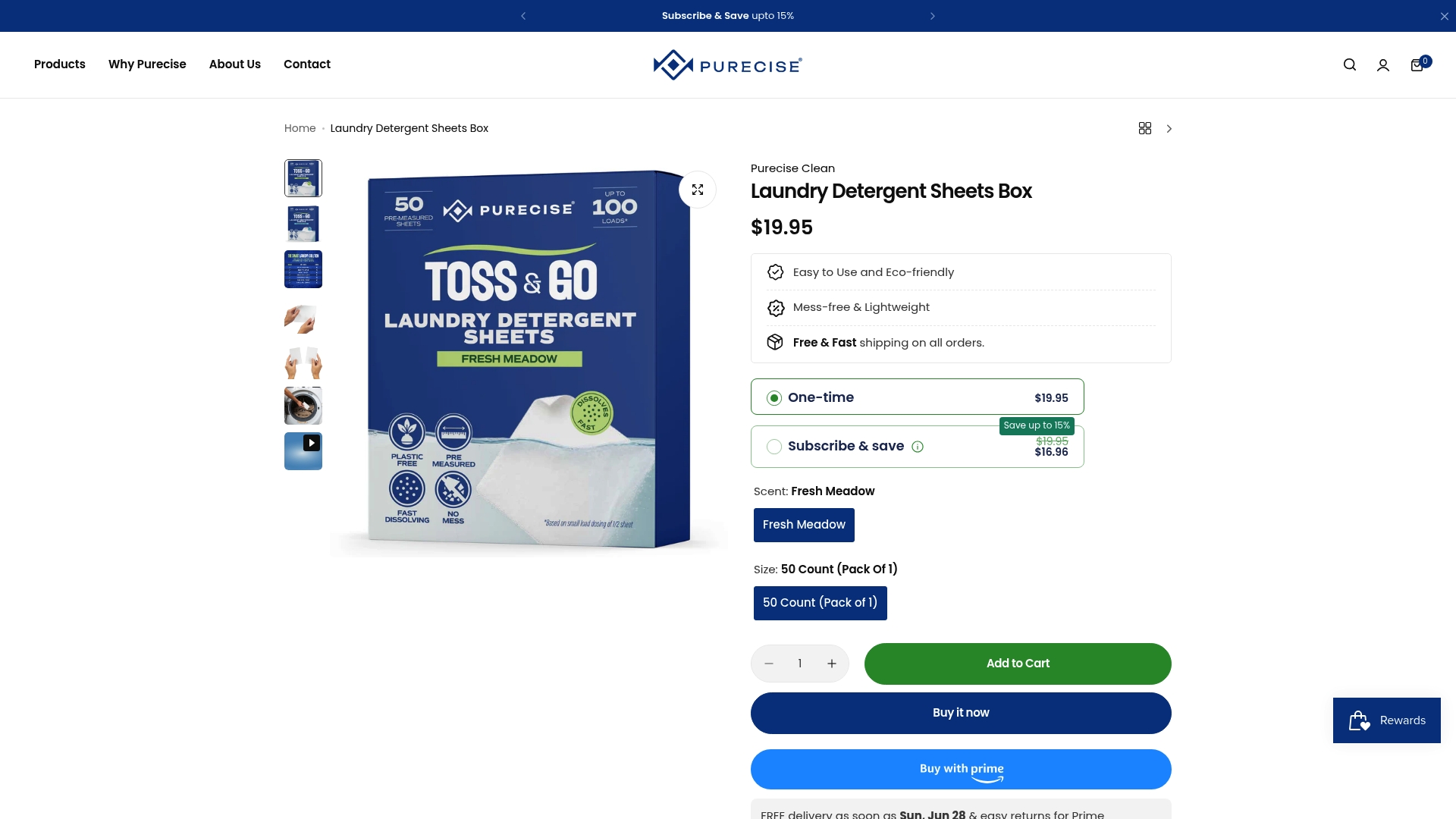
If you want a pre-measured, cold-water-ready detergent for your jeans and the rest of your wash, the Box of 50 is $19.95 and covers up to 100 loads. Heading out with your jeans? The Travel 3-Pack is $15.95, with three envelopes of 5 sheets for up to 30 loads, and it fits in a bag. Both come in plastic-free cardboard packaging, and you can choose Fresh Meadow (lightly scented) or Fragrance Free. Subscribe and save 15%.
Every order is covered by our 30-day Keep It or Toss It Guarantee. You can see all options on the Purecise home page.
FAQ
How can I keep black jeans from fading when I wash them?
Separate them from lighter clothes, turn them inside out and wash in cold water on a gentle cycle, as Levi’s recommends for black denim. Skip the dryer and hang them in the shade. Wash them only when they need it, and spot-clean in between.
Can denim still fade after washing?
Yes. Consumer Reports notes that every wash removes some dye, and friction from tumbling adds to it. Careful washing slows the fading but can’t prevent it, and some fading is part of how denim ages.
Does vinegar stop clothes from fading?
No. Iowa State University Extension calls the idea that vinegar or salt fixes dye a myth, and University of Nebraska-Lincoln research found home dye-setting treatments ineffective. Cold water, inside-out washing and air drying are better choices.
Is it okay to use dish soap on my jeans?
Only as a few drops on a greasy spot before a regular wash. Consumer Reports says dish soap creates too many suds for a washing machine and isn’t made to protect clothing. Use laundry detergent for the actual wash.
How many Toss & Go sheets do I need for jeans?
Use one sheet for a regular load and half a sheet for a small load, like a single pair of jeans. Use two for a large or heavily soiled load. Place the sheet in the drum on top of the clothes, not in the dispenser drawer.
Sources
- Denim care and washing, Levi’s Customer Service
- How to Clean, Wash, & Dry Jeans: Denim Cleaning Guide, Levi’s
- How to Wash and Keep your Black Jeans from Fading, Levi’s
- How to Wash Your Wrangler Jeans: Denim Care Tips
- Keep Dark Clothes from Fading, American Cleaning Institute
- How to Keep Your Black Clothes Looking Their Best, Consumer Reports
- How Often Should You Wash Your Jeans?, The Spruce
- Should You Wash Jeans Inside Out?, The Spruce
- How to Wash Your Jeans, Wirecutter
- Preventing Color Transfer by Bleeding or Crocking, Iowa State University Extension
- Ineffectiveness of Home Remedy Dye Setting, University of Nebraska-Lincoln
- Should You Use Dish Soap in Your Washing Machine, Consumer Reports
Recommended
Related Posts

How to Wash Medical Scrubs at Home, Step by Step

How to Save Money on Laundry Detergent: 8 Practical Moves

Indoor Clothes Drying: How to Do It Fast and Fresh

How to Remove Tea Stains From Clothes and Mugs

Laundry Detergent and Microplastics: What the Evidence Shows

How to Wash Jeans Properly: Cold, Inside Out, Air-Dried


