

Front Load Washer Detergent: What to Buy and How to Use It
Yes, use a high-efficiency (HE) detergent in a front-load washer, and use less than you think. Manufacturers build these machines around low water volumes and a tumbling wash action, so a low-sudsing HE formula is not optional. A typical medium load needs about two tablespoons of liquid or powder HE detergent, far less than the old measuring-cup habits from top-load machines. Pre-dosed options like pods or detergent sheets solve the guesswork entirely, as long as you use them exactly as directed.
- Use HE detergent only. Non-HE formulas oversuds in low-water front-loaders.
- Start at roughly two tablespoons for a medium load, then adjust for soil level and water hardness.
- Pods and sheets remove the measuring step, cutting the single biggest cause of residue and odor problems.
Key Takeaways
Front-load washers clean best with HE, low-sudsing detergent measured in tablespoons, not cupfuls, and pre-dosed formats remove the single most common dosing mistake.
| Point | Details |
|---|---|
| Always use HE detergent | Non-HE formulas oversuds in low-water front-loaders, risking leaks and poor rinsing. |
| Start with two tablespoons | Adjust up for large or heavily soiled loads and hard water, down for concentrates. |
| Match the format to the drawer | Liquid and powder use the dispenser drawer; pods and sheets go straight in the drum. |
| Clean monthly to stop odor | Run a hot-water or tub-clean cycle and wipe the door gasket to prevent mildew. |
| Purecise sheets remove the guesswork | Pre-dosed, hypoallergenic sheets dissolve fully in HE cycles and skip the plastic jug. |
Table of Contents
- Why Front Load Washer Detergent Has to Be HE
- How Much HE Detergent Should You Use?
- Liquid, Powder, Pods, or Sheets: Which Format Works Best?
- Where Detergent Actually Goes in a Front-Load Dispenser
- Why Front-Load Washers Develop Residue and Odor (and How to Fix It)
- How Purecise Sheets Fit a Front-Load Routine
- What I’d Tell a Friend Buying Detergent Today
- Get Front-Load-Ready Detergent Without the Measuring Cup
- Sources
Why Front Load Washer Detergent Has to Be HE
Front-load washers use a fraction of the water a top-load machine fills with, and they clean by tumbling clothes through that water rather than agitating them in a full tub. Regular detergent, built for high-water agitation, produces way more suds than that small water volume can handle.
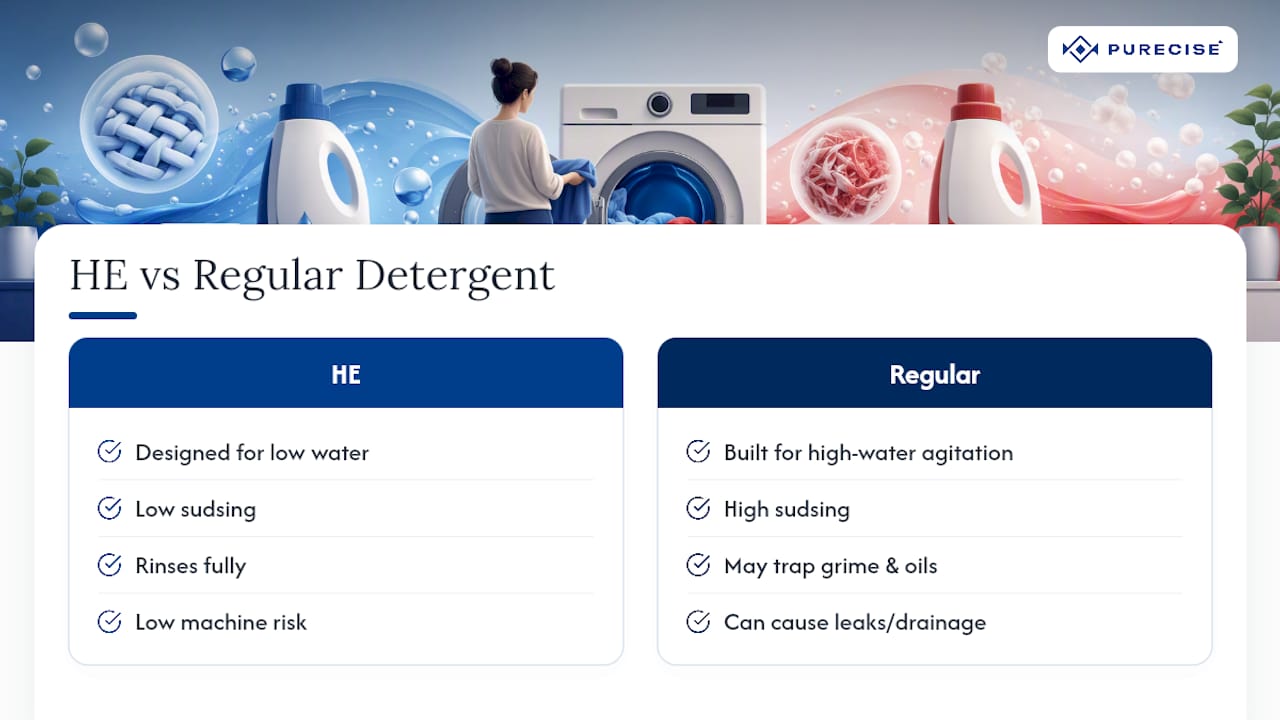
Excess foam does more than look messy. It cushions the fabric and softens the mechanical friction that actually lifts soil out of fibers, so a sudsy load can come out looking clean but still carrying grime and oils. Maytag’s own dispenser guidance warns that overdosing or using non-HE detergent can trigger excessive suds, water leaking from the door seal, and drainage trouble. Whirlpool’s comparison of detergent types makes the same point: front-loaders need low-sudsing, quick-dispersing formulas to rinse fully.
HE detergent use has become the default, not the exception. Consumer Reports notes that most detergent sold at grocery stores now carries the HE label, which makes picking the wrong bottle harder than it used to be, but overdosing even HE formulas remains a common consumer mistake.
How Much HE Detergent Should You Use?
Two tablespoons. That is the starting point Maytag gives for a medium load in an HE washer, and it surprises almost everyone who grew up filling a cap to the brim. Old-style detergent cups train you to eyeball a much bigger dose, and that habit is the single fastest way to end up with a filmy, sour-smelling front-loader.
- Start with the amount printed on your detergent’s HE dosing chart, not the cap’s fill line, since concentrated formulas need noticeably less.
- Add a bit more only for oversized loads, heavily soiled work clothes, or hard water, since minerals in hard water can blunt detergent’s cleaning power.
- Scale down for ultra-concentrated liquids and single-dose pods, which are engineered for one specific volume per load.
- If your washer has an automatic dispensing system like Whirlpool’s Load & Go, check the fill level regularly and switch it off when you want to use pods or sheets instead, since those are single-dose products already.
Pro Tip: Keep the little dosing cup that came with your detergent bottle. It’s calibrated for that specific formula, and eyeballing a “regular” scoop is how most overdosing happens in the first place.
Liquid, Powder, Pods, or Sheets: Which Format Works Best?
Every format can work in a front-loader, but each has a habit that trips people up.
- Liquid detergent is the most familiar option and pours easily into the dispenser drawer, but overfilling past the max line on the cup insert causes early dispensing mid-cycle rather than at the right wash stage.
- Powder detergent cleans well on ground-in dirt, but it needs the liquid cup insert removed from the dispenser drawer first, or it cakes and clogs the compartment.
- Pods go straight into the drum, underneath the clothes, not the dispenser drawer. Cold, short cycles can leave an undissolved pod behind, and pods need to be stored well away from kids given their concentrated form and bright color.
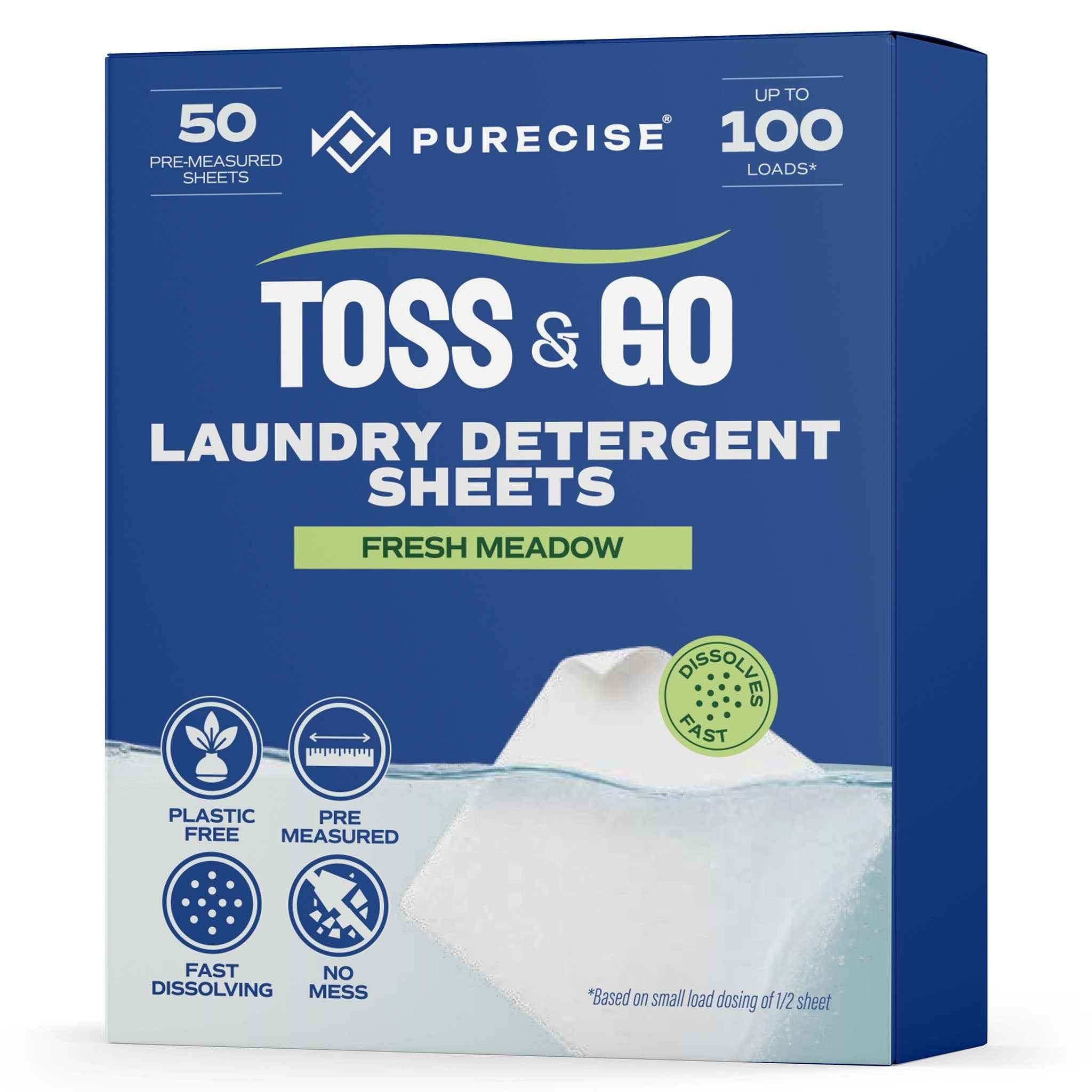
- Detergent sheets, including options like Laundry Detergent Sheets Envelopes for travel and the full-size Laundry Detergent Sheets Box, are pre-dosed by design, fold flat, skip the plastic jug entirely, and are built to fully dissolve in HE cycles including cold water.
Consumer Reports points out that format and packaging directly affect both dissolving performance and how much plastic waste a household generates over a year. For a deeper look at how sheets stack up against pods specifically, see this comparison of detergent formats.
Where Detergent Actually Goes in a Front-Load Dispenser
Every front-load dispenser drawer has separate compartments, and using the wrong one is a leading cause of half-dissolved detergent and dispenser buildup.
- Find the main wash compartment, usually marked with a “II” or a similar symbol, and check whether it has a removable liquid cup insert.
- For liquid detergent, pour it directly into that compartment up to the max fill line, never above it.
- For powder, pull the liquid cup insert out first. LG’s support documentation is specific on this: leaving the liquid insert in place while using powder is one of the most common causes of clogged dispensers.
- For pods or sheets, skip the drawer completely and place them directly in the drum, ideally against the back wall or under the first layer of clothes.
- If your machine has a Load & Go style reservoir, use it only for its matched liquid detergent, and turn it off when running pods or sheets so you don’t double-dose the load.
Why Front-Load Washers Develop Residue and Odor (and How to Fix It)
That musty smell coming from your washer almost always traces back to one of three habits: too much detergent, the wrong (non-HE) detergent, or too much fabric softener. All three leave a filmy residue on the rubber door gasket and drum, and that residue traps moisture and soil, which is exactly what mildew needs to take hold.
- Run your washer’s dedicated machine-clean or tub-clean cycle monthly, using hot water.
- Wipe down the door gasket and dispenser drawer after heavy-soil loads, since that’s where residue collects first.
- Leave the door and dispenser drawer cracked open between loads so trapped moisture can actually evaporate.
- A plain hot-water cycle with nothing but a cup of white vinegar can loosen soap film manufacturers’ cleaning cycles miss.
Pro Tip: If odor persists after two full cleaning cycles, or you notice standing water in the drum after a cycle finishes, that’s a mechanical drainage issue, not a detergent problem. Call a service technician instead of adding more cleaner.
How Purecise Sheets Fit a Front-Load Routine
Purecise’s Toss & Go sheets are built around the exact problem this article keeps circling back to: dosing errors. Each sheet is pre-measured, so there’s no cup to overfill and no concentrated formula to misjudge for hard water or a bigger load.
- Fully dissolves in HE front-load cycles, including cold water, without leaving sheet residue behind.
- Hypoallergenic formula, which matters for households managing sensitive skin or a baby’s laundry.
- Flat, compact packaging, so a full month’s supply fits in a bag or a glove compartment for travel.
- Backed by a 100% money-back guarantee if a household doesn’t see the results they expect.
Shared laundry rooms, dorms, and multi-family households benefit the most, since a pre-dosed sheet removes the guesswork that causes repeated overdosing when different people use the same machine. Read more about what pre-dosed laundry detergent actually is and how it compares to measuring cups.
What I’d Tell a Friend Buying Detergent Today
Honestly, most front-load problems trace back to one habit: eyeballing the dose instead of measuring it. Fix that one thing and residue, odor, and suds complaints mostly disappear. If measuring isn’t your strong suit, a pre-dosed sheet takes the decision away entirely, and Purecise backs its sheets with a money-back guarantee if they don’t work for your machine.
— Purecise
Get Front-Load-Ready Detergent Without the Measuring Cup
If dosing correctly every single load sounds like one more thing to remember, Purecise sheets are built to remove that step. Each sheet is pre-measured for a standard load, dissolves fully in HE cycles at any temperature, and skips the plastic jug most liquid detergents ship in.
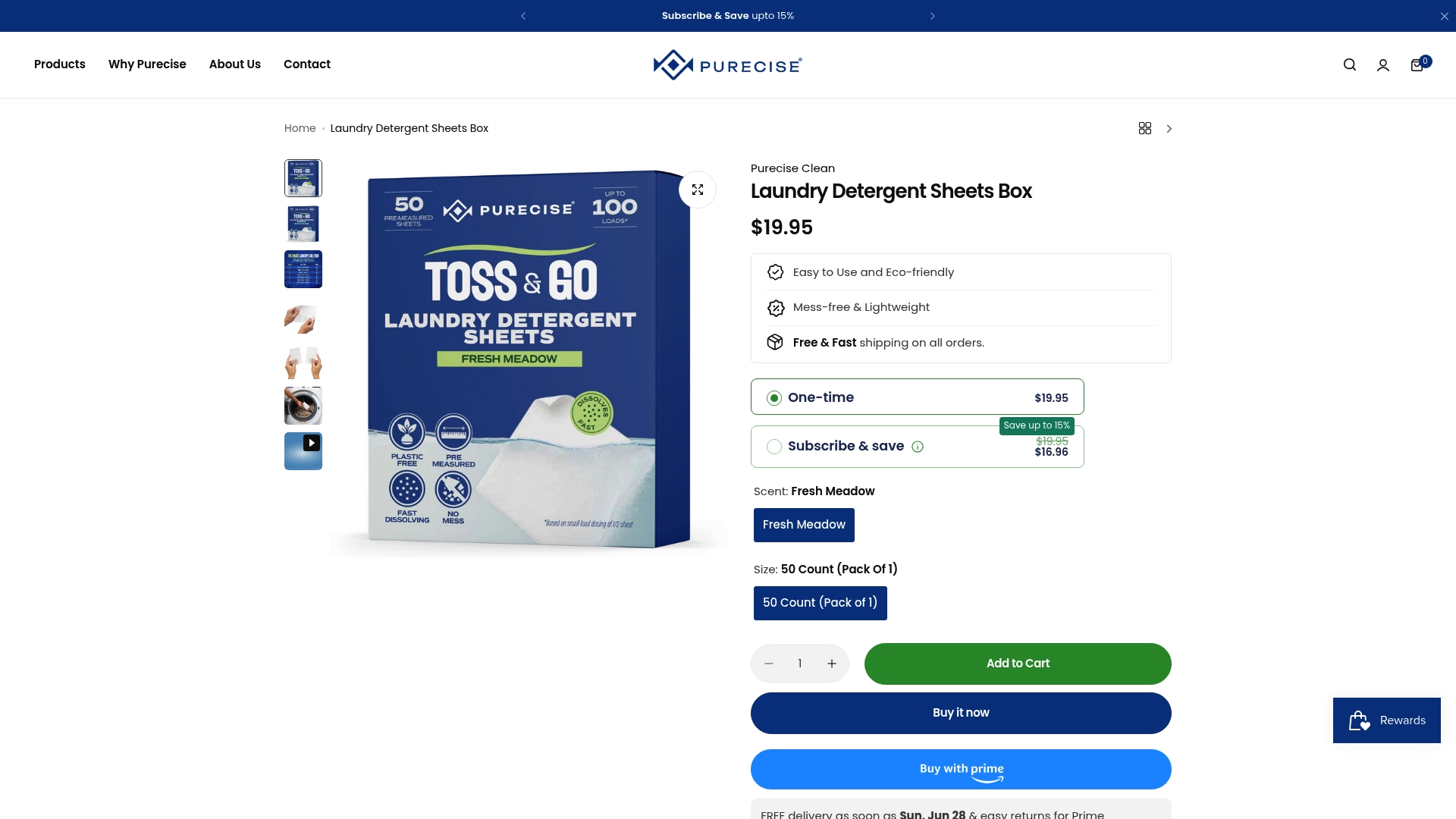
The hypoallergenic formula works for households with sensitive skin or young kids, and a flat pack of sheets tucks into a bag for travel or a dorm room without the risk of a leaking bottle. Grab a full-size box of Purecise sheets for everyday use at home, or pick up the travel envelope pack if you’re packing for a trip. Every order carries Purecise’s 100% money-back guarantee, so trying a box costs you nothing if it doesn’t fit your washer the way you hoped.
Sources
This article draws on dispenser and dosing guidance from Maytag, Whirlpool, and LG, along with Consumer Reports’ buying guide and safety context from poison prevention resources.
- Using the Single Load Dispenser Drawer - Front Load Washer - Product Help | Maytag
- Comparing Laundry Detergents: Find the Best One for You | Whirlpool
- LG Washer - Detergent and Additive Usage | LG USA Support
- Laundry detergents buying guide | Consumer Reports
Recommended
How Long Is Laundry Detergent Good For?
The Best Detergent for White Clothes and How to Use It Right
Related Posts

Whiten White Clothes, No Chlorine: 4–8 Hour Soak, Premeasured Sheets

Remove Blood Stains from Clothes: Cold Water, Enzyme Soak, No Dryer

Pet Owners: Remove Hair from 5 Surfaces with a Washer and Dryer Trick

Wash Sheets Weekly, Dry Them Fully, and Stop Dosing Guesswork

6 Quick Steps to Remove Oil Stains at Home Without Ruining Clothes

Save Space: 50 Sheets Cover 50–100 Loads for Airbnb Hosts

Cut Detergent 25–50%: Use Premeasured Sheets for Soft Water


