

How Long Is Laundry Detergent Good For?
Most liquid detergent stays effective for about 12 to 18 months unopened and roughly six months once you crack the bottle open, while powder holds up almost indefinitely if you keep it dry, pods perform best within 6 to 18 months depending on packaging, and detergent sheets can last 2 to 3 years when stored dry and sealed. Storage conditions, not the calendar, usually decide which end of that range you land on. Heat and humidity break formulas down faster than time alone ever will.
- Liquid: about a year unopened, roughly half a year once opened
- Powder: effectively indefinite if kept dry
- Pods/pacs: several months to over a year depending on packaging and storage
- Sheets/tablets: multiple years when kept dry and sealed
Better Homes & Gardens and The Spruce both back these ranges up, and it’s worth noting that Purecise built its sheet formula around exactly this math: less water in the product means less time-related breakdown.
Key Takeaways
Storage conditions, more than the calendar, determine whether your detergent still works, and dry formats consistently hold up longer than wet ones.
| Point | Details |
|---|---|
| Liquid detergent ages fastest | Unopened lasts 12 to 18 months; once opened, use within about 6 months. |
| Powder lasts if kept dry | Moisture, not time, is what actually ruins powdered detergent. |
| Sheets hold up longest | Detergent sheets can last 2 to 3 years when stored cool, dry, and sealed. |
| Trust your senses over the date | Clumping, sour smell, or residue on clothes mean it’s time to toss it, regardless of the printed date. |
| Purecise sheets avoid the problem | Purecise’s dry, pre-dosed sheets skip the water-related breakdown that shortens liquid and pod shelf life. |
Table of Contents
- How Long Does Detergent Last by Format?
- Signs of Old Detergent You Shouldn’t Ignore
- Detergent Storage Tips That Actually Extend Shelf Life
- What Happens When You Use Expired Detergent?
- Why Dry, Pre-Dosed Sheets Sidestep the Expiration Problem
- A Detergent That Doesn’t Fight the Clock
- Sources
How Long Does Detergent Last by Format?
Liquid detergent has the shortest practical window of any format, and the reason comes down to chemistry, not marketing. Enzymes and surfactants suspended in water start breaking down the moment the bottle leaves the factory, and that process speeds up once oxygen and air get in every time you open the cap. The Spruce puts unopened liquid at 12 to 18 months of full effectiveness, dropping to around six months after opening. You’ll usually see separation first: a cloudy layer floating above a thicker one at the bottom of the bottle.
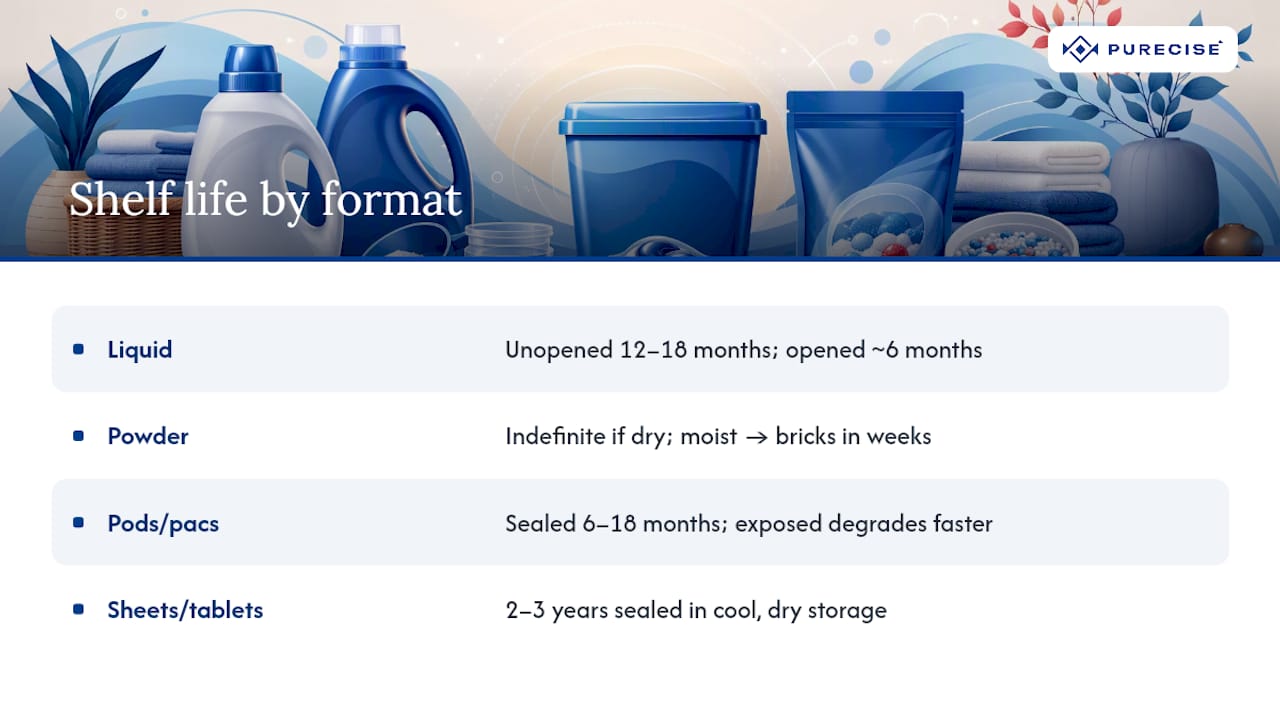
Powder is the tortoise of the group. Kept dry, it doesn’t really expire on any meaningful timeline, though moisture is its one weakness. A damp scoop or a humid laundry room will turn loose powder into a solid brick inside weeks, and once that happens, no amount of stirring brings it fully back.
Pods and pacs sit in an odd middle ground. Each pod is a small pouch of concentrated liquid or gel wrapped in a water-soluble film, which is more sensitive to humidity than the detergent inside it. Manufacturers generally recommend using pods within 6 to 18 months, with the outer packaging playing a bigger role than most people expect. A torn box or a pod left loose in a humid cabinet degrades far faster than one still sealed in its original container.
Detergent sheets and tablets last the longest of any format, and Better Homes & Gardens puts that shelf life at 2 to 3 years when the product is stored cool, dry, and sealed. No water means no separation, no leaking, and no enzyme breakdown from prolonged contact with liquid. Blueland’s research on detergent shelf life lands on a similar one to two year range across formats, with dry products consistently outlasting liquids and pods.
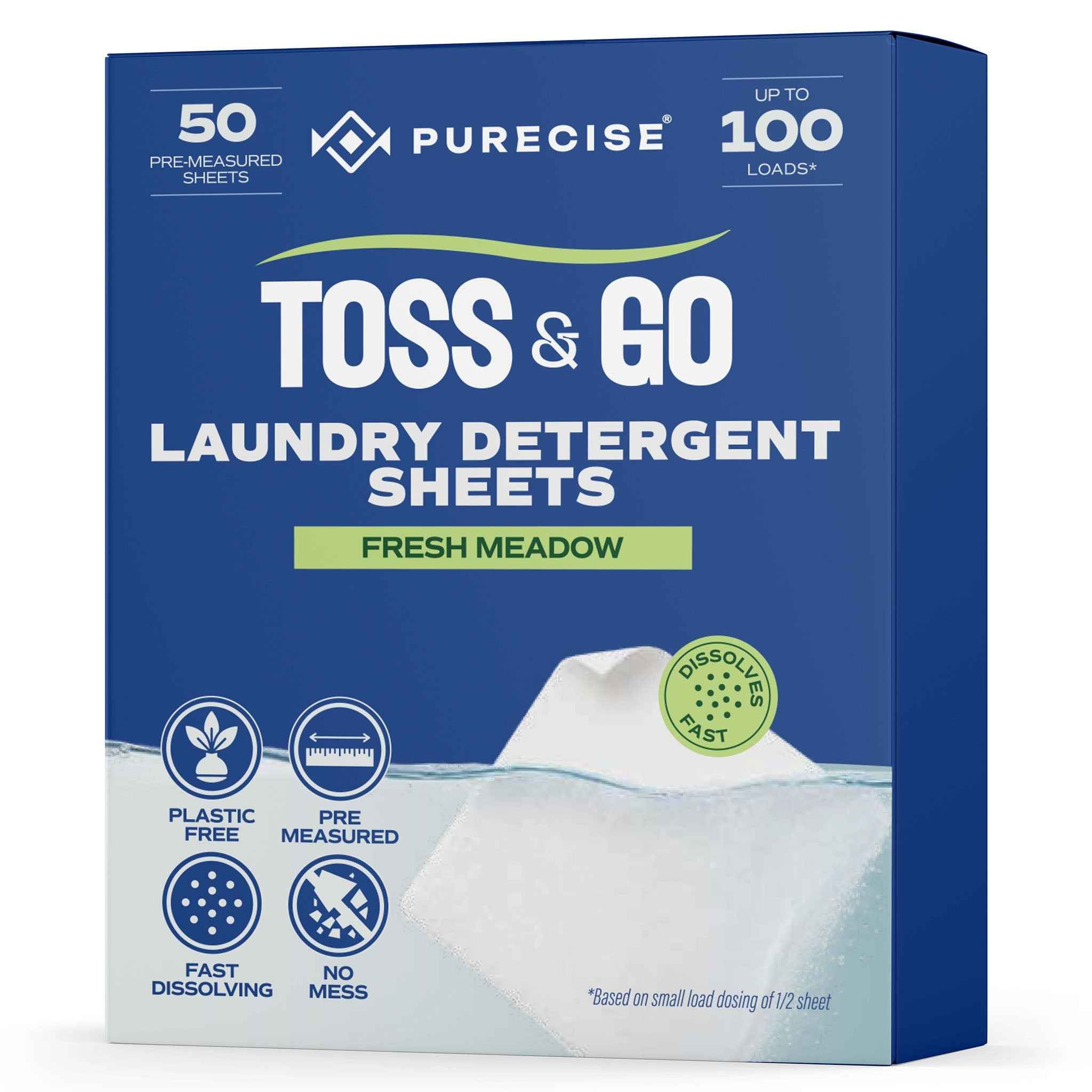
Before tossing anything, check the clothing labels and care symbols on the packaging. Most brands stamp a “best by” date or a manufacture code somewhere on the bottle, box, or bag, and tools like SmartLabel’s product search let you look up batch and packaging details directly from the manufacturer if the print has faded. If the date has passed but the product still looks, smells, and performs normally, it’s usually fine to keep using. If it hasn’t passed but the detergent already looks off, trust your eyes over the label.
Signs of Old Detergent You Shouldn’t Ignore
- Separation or clumping. Liquid that’s split into layers, or powder that’s turned into hard chunks, has likely absorbed moisture or aged past its useful window.
- A sour or rancid smell. Faded fragrance is normal aging; a sour, musty, or chemical odor signals actual spoilage, not just weaker scent.
- Residue left on clothes. White streaks, stiff fabric, or a film inside the cap after washing point to degraded surfactants that aren’t rinsing clean.
- Poor stain removal on loads that used to come out clean. This is the clearest performance signal that enzymes have broken down.
Never force clumpy detergent through an automatic dispenser. It clogs the mechanism, and you’ll end up with a repair bill instead of clean laundry.
Detergent Storage Tips That Actually Extend Shelf Life
Where you keep your detergent matters more than how long you’ve owned it. Repeated heat and humidity swings, the kind common in bathrooms, laundry closets next to a dryer, or garages, speed up separation in liquids and clumping in powders far faster than steady conditions would.
- Store detergent somewhere cool and dry, away from direct sunlight and out of rooms that regularly climb above 75°F.
- Keep liquid bottles sealed tightly between uses to slow oxidation.
- Transfer powder to an airtight bin if the original bag has torn or lost its seal.
- If a pod box or sheet pack gets damaged, move the contents into a sealed container rather than leaving them exposed to air.
- Choose a cabinet or closet over a laundry room shelf that sits above a hot dryer.
If a liquid detergent has separated but still smells normal, a firm shake will usually re-emulsify it enough for one more load. If it smells sour or off in any way, skip the shake and toss it.
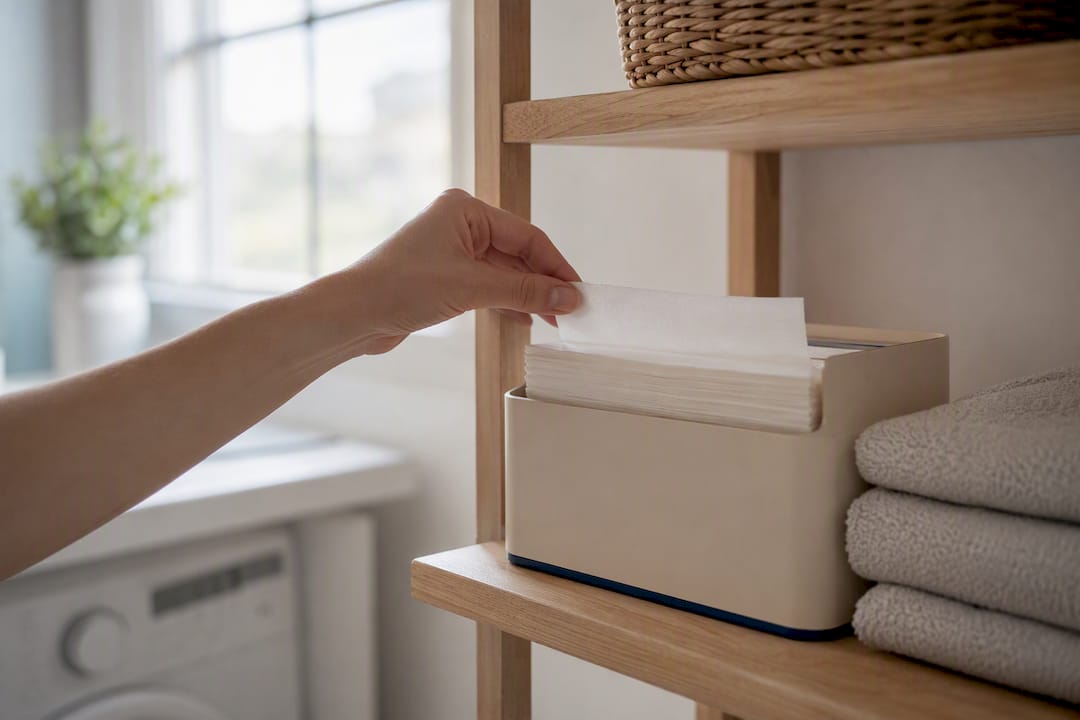
Pro Tip: Keep detergent sheets in their original resealable pack or a small airtight tin. Because there’s no liquid to separate or powder to clump, a sealed dry environment is really the only variable you need to control.
What Happens When You Use Expired Detergent?
Old detergent generally isn’t dangerous, The Spruce notes that degradation is mainly a performance issue rather than a safety one. But performance loss is real and noticeable:
- Weaker stain removal and dingier-looking clothes over time
- Residue buildup on fabric or inside the washing machine’s dispenser tray, which can eventually clog it
- Rare mold or mildew smell if moisture got into the container
- Reduced but not eliminated cleaning action, since surfactants degrade gradually rather than all at once
If a detergent has clearly gone bad, don’t pour it down the drain in bulk. Small amounts can still be used for mopping floors or wiping down non-delicate surfaces, and anything left over should go out with household waste rather than the sewer system.
Why Dry, Pre-Dosed Sheets Sidestep the Expiration Problem
Water is the root cause of almost every detergent failure mode: separation, clumping, rancid smells, dispenser clogs. Purecise builds its sheets without that variable. Each sheet is pre-dosed and completely dry, so there’s no emulsion to break down and no moisture for mold to feed on, which is a big part of why dry formats consistently outlast liquids in independent testing.
That matters most for bulk buyers, travelers, and anyone in a small apartment without room for a shelf of jugs. A month’s supply fits in a pocket, and the hypoallergenic formula dissolves fully in any wash type without leaving the residue that aging liquid detergent tends to leave behind.
— Purecise
A Detergent That Doesn’t Fight the Clock
If shelf life and storage headaches are what brought you here, the fix is simpler than rotating stock or babysitting a laundry closet. Purecise’s Laundry Detergent Sheets Box gives you a 2 to 3 year shelf life when stored dry, a pre-dosed sheet for every load so there’s no measuring, and a hypoallergenic formula safe for sensitive skin and kids’ clothes.
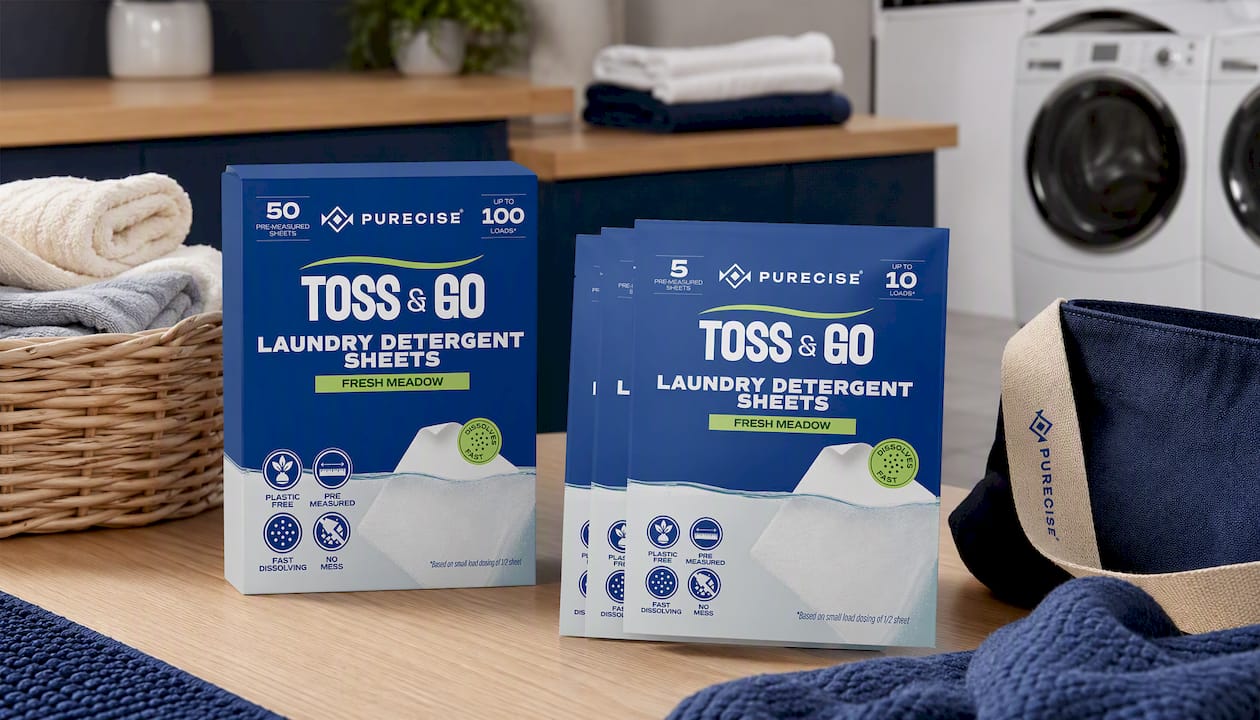
Every sheet dissolves fully in hot or cold water, in any machine type, so you skip the residue and dispenser clogs that come with aging liquid detergent. If you travel often or just want a smaller footprint in your laundry closet, the Laundry Detergent Sheets Envelopes pack the same formula into a slim, travel-ready option. Order a box today and back it with Purecise’s 100% money back guarantee if it doesn’t work for your routine.
Sources
- Does Laundry Detergent Expire? What to Know Before You Wash Your Next Load — Better Homes & Gardens
- Does Laundry Detergent Expire? — The Spruce
- Can Laundry Detergent Expire? — Blueland
Recommended
How to Use Laundry Detergent Pods the Right Way
Front Load Washer Detergent: What to Buy and How to Use It
Related Posts

Whiten White Clothes, No Chlorine: 4–8 Hour Soak, Premeasured Sheets

Remove Blood Stains from Clothes: Cold Water, Enzyme Soak, No Dryer

Pet Owners: Remove Hair from 5 Surfaces with a Washer and Dryer Trick

Wash Sheets Weekly, Dry Them Fully, and Stop Dosing Guesswork

6 Quick Steps to Remove Oil Stains at Home Without Ruining Clothes

Save Space: 50 Sheets Cover 50–100 Loads for Airbnb Hosts

Cut Detergent 25–50%: Use Premeasured Sheets for Soft Water


