

How Enzyme Cleaners Work for Natural Stain Removal
Enzyme cleaners break down organic stains biologically, splitting complex stain molecules into small, water-soluble fragments that rinse away cleanly. They’re the right first choice for:
- Pet urine on carpet or upholstery (uric acid and protein components)
- Fresh blood or sweat on clothing (protein-based stains)
- Food grease and cooking oils on kitchen textiles
- Laundry pre-treatment before washing
One honest caveat: enzyme cleaners are not disinfectants, and they won’t touch mineral deposits, rust, or dye transfer. For those, you need a different tool entirely.
Key Takeaways
Enzyme cleaners work by matching the right biological catalyst to the right organic stain molecule, and every step from dwell time to rinse temperature determines whether that match succeeds.
| Point | Details |
|---|---|
| Match enzyme to stain type | Protease for protein, lipase for fat, amylase for starch — wrong enzyme means no result. |
| Keep treated area moist | Enzymes stop working when dry; cover with a damp cloth through the full dwell time. |
| Avoid heat and oxidizers | Hot water and bleach denature enzyme proteins before they can act on the stain. |
| Enzymes don’t disinfect | A separate disinfection step is needed when sanitization is required after stain removal. |
| Purecise sheets for laundering | Pre-dosed, plant-based Purecise sheets are a low-waste follow-up after enzyme pretreatment. |
Table of Contents
- How do enzyme cleaners work on organic stains?
- Which enzyme targets which stain?
- Where enzyme cleaners shine and where they don’t
- How to use enzyme cleaners step by step
- When enzyme cleaners aren’t the right tool
- Why enzyme treatments fail and how to fix it
- Are enzyme cleaners safe for your family and the environment?
- A cleaning pro’s honest take on enzyme basics
- Purecise laundry sheets fit naturally into an enzyme-aware routine
- Sources
How do enzyme cleaners work on organic stains?
The role of enzyme cleaners in natural stain removal comes down to biology, not brute chemistry. Enzymes are proteins that act as biological catalysts, meaning they speed up the breakdown of specific molecules without being consumed in the process. Each enzyme has an active site shaped to fit one type of molecule, the way a key fits a lock. That’s called substrate specificity, and it’s why a protease works on blood but does nothing to cooking oil.
The process, in plain terms:
- Attach: The enzyme binds to its target molecule in the stain.
- Cleave: It breaks the molecular bonds, splitting the stain into smaller pieces.
- Dissolve: Those fragments become water-soluble.
- Rinse: Water carries them away during blotting or laundering.
For this to work, conditions matter. Enzymes need moderate temperatures (typically cool to warm water, not hot), a pH close to neutral or slightly alkaline, and enough moisture to stay active. Recommended contact times range from 15–30 minutes for fresh stains to several hours for older, set-in ones, which is why rushing the process is one of the most common mistakes.
Pro Tip: After applying an enzyme cleaner, lay a damp cloth over the treated area. This keeps the surface moist so the enzymes stay active and keep working through the full dwell time, rather than drying out and stopping mid-process.
Which enzyme targets which stain?
Different enzyme families target different molecule classes, so reading a product label isn’t just a formality. It tells you whether the formula will actually work on your specific stain.
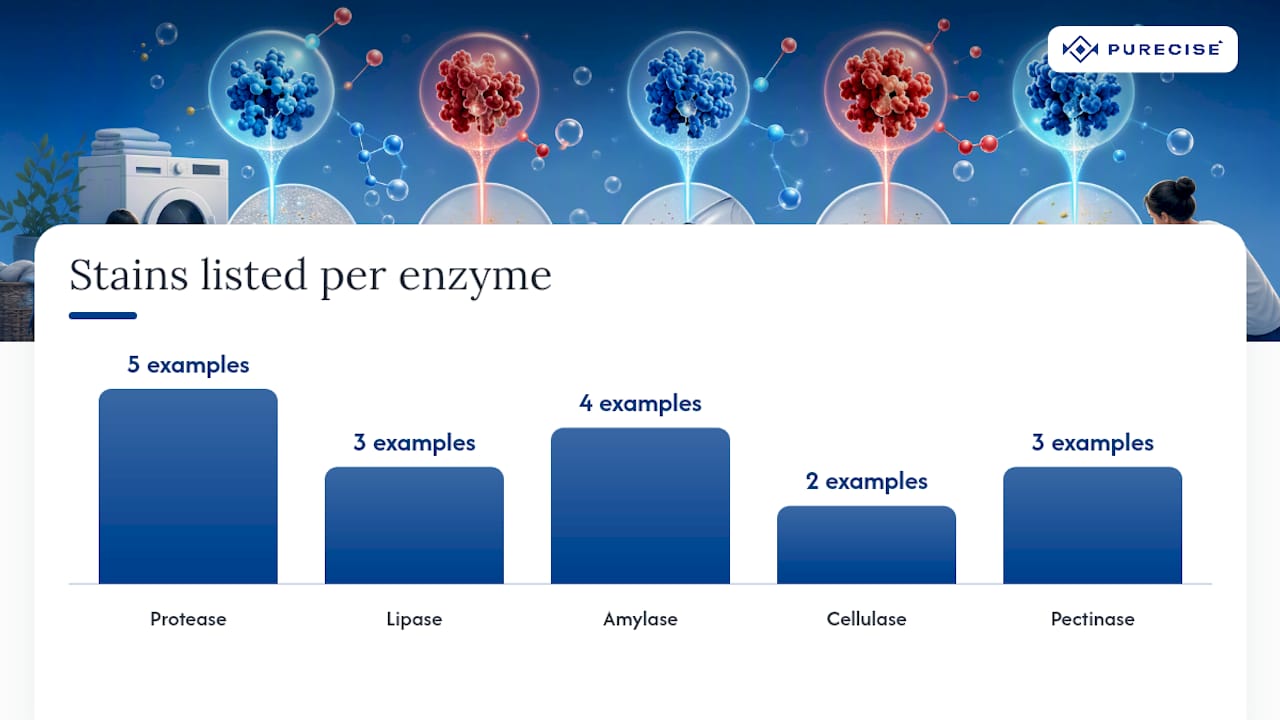
| Enzyme | What it breaks down | Common household stains |
|---|---|---|
| Protease | Proteins | Blood, sweat, urine, vomit, dairy |
| Lipase | Fats and oils | Cooking grease, body oils, salad dressing |
| Amylase | Starches | Pasta sauce, baby food, gravy, chocolate |
| Cellulase | Cellulose fibers | Grass stains, cotton fabric pilling |
| Pectinase | Pectin (plant cell walls) | Fruit juice, jam, berry stains |
Most household stains are a mix. A spaghetti sauce stain contains protein (meat), starch (pasta residue), and fat (olive oil), so a single-enzyme formula will only partially clean it. That’s why multi-enzyme formulas consistently outperform single-enzyme products on complex food soils. Lab research confirms that optimized enzyme mixtures, particularly protease combined with polysaccharidase, achieved roughly 90–95% biofilm removal in controlled assays and substantially improved blood-soil cleaning compared to non-enzymatic cleaners. The synergy is real.
Enzyme limits worth knowing:
- Inorganic stains (rust, hard water deposits, mineral scale) have no organic substrate for enzymes to bind to.
- Dye transfer from colored fabrics requires an oxidizer, not an enzyme.
- Heavily set synthetic dyes are outside enzyme range entirely.
Where enzyme cleaners shine and where they don’t
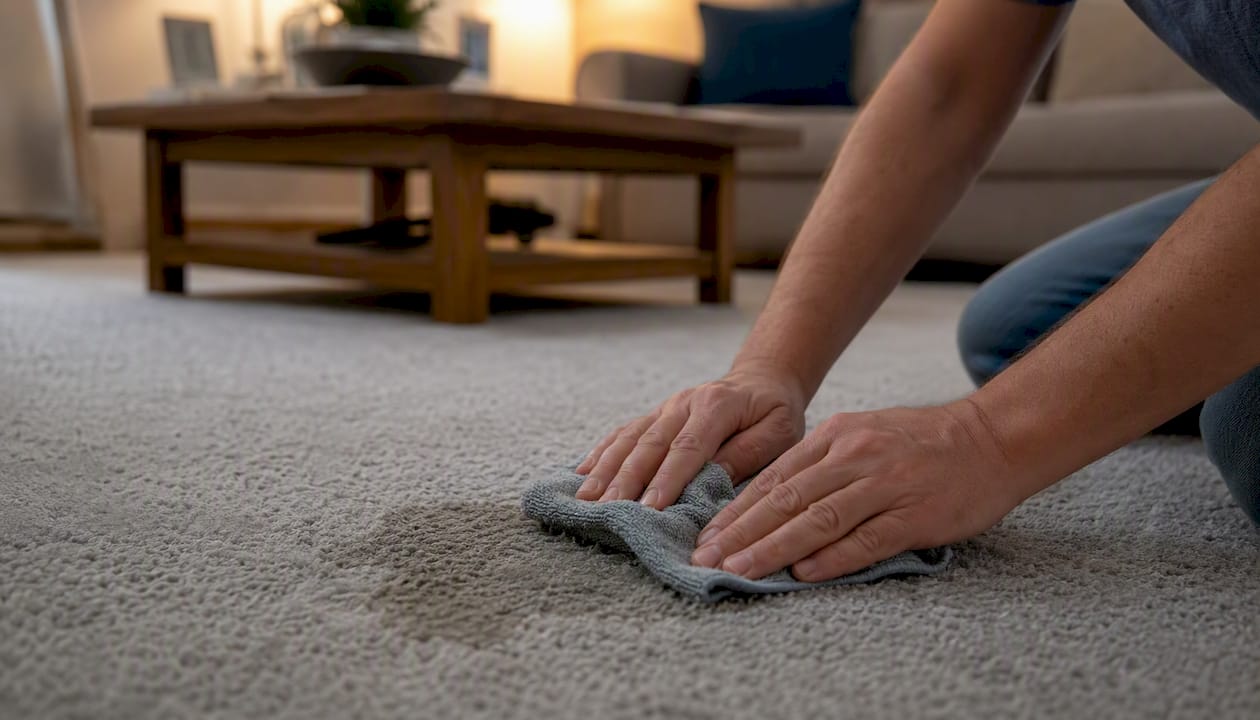
Pet urine on carpet or upholstery — enzyme recommended. Urine contains uric acid crystals, proteins, and ammonia compounds. Enzymatic cleaners break down the uric acid components that cause both the stain and the lingering odor. Fully breaking down these components also discourages pets from re-marking the same spot, which is a practical bonus most other cleaners miss.
Fresh blood on clothing — enzyme recommended. Protease-based formulas work quickly on fresh blood. The critical rule: always use cold water. Hot water cooks the proteins and sets the stain permanently, the same way heat turns raw egg into a solid.
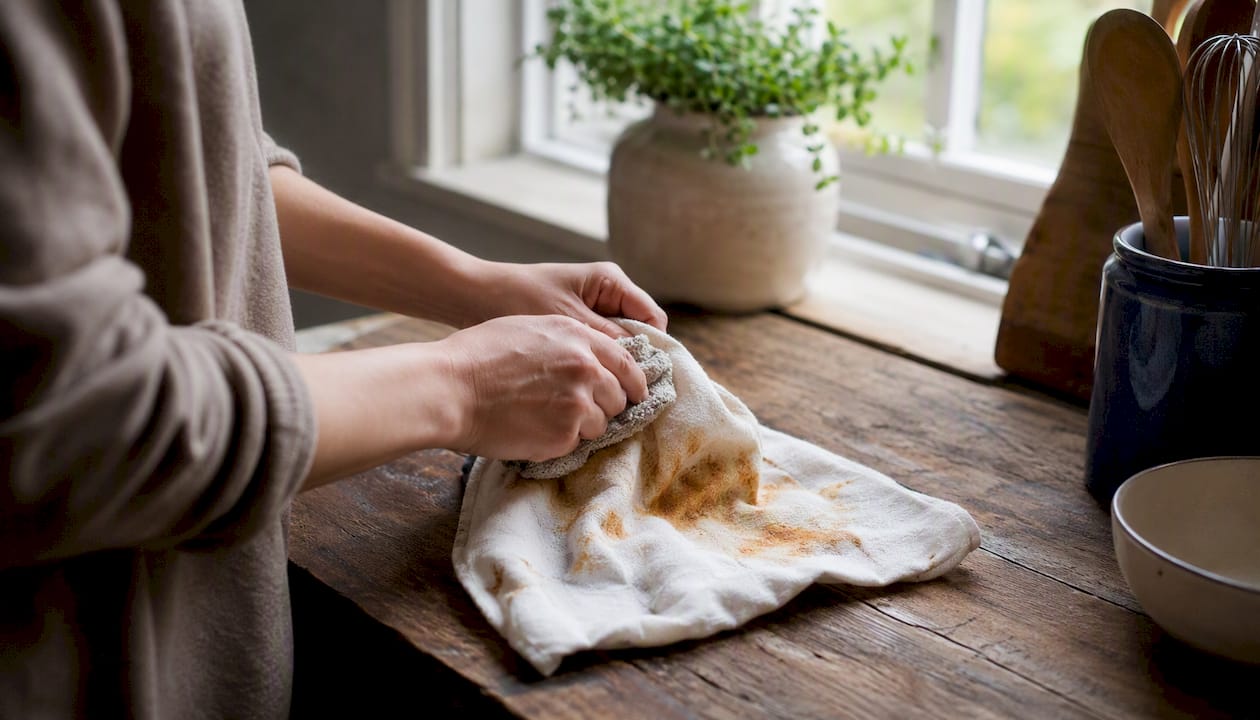
Food grease on kitchen towels or aprons — enzyme recommended with a multi-enzyme formula. Lipase handles the fat, amylase handles any starchy residue. A single-enzyme product labeled only “protease” won’t do much here.
Baby formula or breast milk — enzyme recommended. These are protein-fat combinations that respond well to protease-lipase blends.
Grass stains — enzyme recommended. Cellulase and protease together handle the chlorophyll-protein-cellulose matrix in grass.
Drain organic buildup — enzyme recommended for maintenance. Slow-acting enzyme drain treatments break down hair, soap scum, and food residue over several hours. They won’t clear a fully blocked drain, but they’re effective for routine maintenance.
Rust, hard water scale, or mineral deposits — use an acid-based cleaner instead; enzymes have nothing to bind to here.
Dye transfer or ink — use a solvent or oxidizer, as enzymes won’t touch synthetic dyes.
Caution: Never put a protein-stained garment in the dryer before confirming the stain is gone. Heat sets protein stains permanently, and no enzyme treatment will reverse that. Always check in natural light before applying heat.
How to use enzyme cleaners step by step
The single best-practice rule: pre-treat the stain, keep the area moist, allow full dwell time, then rinse or launder in cool water.
- Blot the stain immediately. Remove as much of the stain material as possible with a clean cloth. Don’t rub — blot from the outside edge inward to avoid spreading.
- Apply the enzyme cleaner generously. The formula needs to saturate the stain, not just coat the surface. For carpet, work it down into the fibers.
- Keep the area moist. Cover with a damp cloth or plastic wrap. Enzymes stop working when they dry out.
- Allow full dwell time. See the timing guide below. Resist the urge to rinse early.
- Blot or rinse with cool water. Remove the broken-down residue. For laundry, follow immediately with a wash cycle.
- Check before applying heat. Inspect the stain in good light. If any trace remains, repeat the treatment before drying.
Dwell time by stain age:
| Stain condition | Recommended dwell time |
|---|---|
| Fresh (under 1 hour old) | 15–30 minutes |
| Dried but recent (same day) | 1–3 hours |
| Set-in (overnight or longer) | Several hours or overnight |
What not to mix with enzyme cleaners:
- Bleach or oxidizing agents — these denature enzyme proteins on contact, rendering the formula inactive before it can work.
- Strong acids or alkalis — pH extremes outside the enzyme’s working range shut down activity.
- Hot water — heat above roughly 130°F (54°C) denatures most household enzymes. Always start with cool or lukewarm water.
Pro Tip: Before treating a visible area, apply a small amount to a hidden seam or corner and wait 10 minutes. Some enzyme formulas can affect delicate dyes on wool or silk. For older, set-in stains, plan for two or three treatment cycles rather than one long soak — fresh enzyme application each round works better than extending a single dried-out treatment.
When enzyme cleaners aren’t the right tool
Enzymes are for organic stains. They are not disinfectants, and they won’t work on mineral deposits, inorganic residues, or dye transfer. Knowing when to reach for something else saves time and prevents damage.
Consumer Reports testing found that oxidizers and bio-enzymatic blends often outperformed pure enzyme cleaners on carpet urine and strong odors, with enzyme-only formulas requiring longer dwell times. That’s a useful calibration: enzymes are gentler and biodegradable, but they’re not always the fastest option.
Enzyme cleaners vs. alternatives:
- Hydrogen peroxide (oxidizer): Faster on surface stains, good for whitening and mold spots on whites, but can bleach colored fabrics. Not biodegradable in the same way. Best for: white cotton, tile grout, surface mold.
- Solvent-based degreasers: Effective on industrial grease, adhesives, and oil-based paints. Faster than enzymes on heavy petroleum-based soils, but harsher on surfaces and skin. Best for: garage floors, heavy machinery residue.
- Enzyme cleaners: Slower, gentler, biodegradable, and safe for most colored fabrics and carpets. Best for: organic household stains where surface safety and color preservation matter.
When to choose an oxidizer: Fast color-safe bleaching on white or light fabrics, or when you need visible results in under 10 minutes.
When to choose a solvent: Heavy petroleum-based grease or adhesive residue that enzymes can’t bind to.
When to call a professional: Antique rugs, heirloom textiles, or large-scale water damage where DIY treatment risks permanent damage.
Surfaces and fabrics to avoid:
- Non-washable silk or rayon (enzyme activity can degrade delicate protein fibers in silk)
- Dry-clean-only items (check the care label before any liquid treatment)
- Unfinished wood (moisture damage risk, not enzyme-specific)
For beverage stains like red wine, where tannins and pigments combine with sugars, a targeted approach by surface type often works better than a single-product solution.
Why enzyme treatments fail and how to fix it
The primary reason enzyme treatments fail is using the wrong enzyme for the stain. A lipase-only formula on a blood stain won’t do much. An amylase on a grease stain is equally mismatched. Checking the label for listed enzyme types before buying is the single most effective quality control step a homeowner can take.
Two other common failure modes:
- Insufficient dwell time. Enzymes work slowly compared to chemical cleaners. Wiping the area after five minutes and calling it done is the most common mistake.
- Enzyme denaturation. Hot water, bleach, or strong cleaning agents applied before or alongside the enzyme formula will destroy the enzyme proteins before they can work.
Research published in Antimicrobial Agents and Chemotherapy found that enzyme-containing formulations removed up to approximately 95% of S. aureus biofilm and approximately 90% of P. aeruginosa biofilm in lab assays, substantially outperforming non-enzymatic cleaners on blood soils. The key variable was formulation: the enzyme mix and the base formula together determined performance, not enzyme concentration alone.
What this means practically: a well-formulated multi-enzyme product from a reputable brand will outperform a cheap single-enzyme spray even at lower enzyme concentrations. When reading labels, look for at least two enzyme types listed, and check that the formula doesn’t include bleach or oxidizers in the same bottle.
Pro Tip: Manufacturers test enzyme formulas at specific pH and temperature ranges. If a label says “use with cool water,” that’s not a suggestion — it’s the condition under which the formula was validated. Deviating from it means you’re outside the tested performance window.
Are enzyme cleaners safe for your family and the environment?
Enzyme cleaners are generally biodegradable and far gentler than chlorine bleach or harsh solvent-based cleaners, but they’re not without precautions.
Safe use guidelines:
- Keep away from eyes; rinse immediately with water if contact occurs.
- Ventilate the area during application, especially in enclosed spaces.
- Remove pets from the treated area until dry, particularly for concentrated formulas.
- Follow the label’s dilution instructions — more concentrated is not always more effective.
Environmental benefits:
- Enzyme-based formulas are biodegradable, breaking down into non-toxic byproducts after use.
- Research on eco-friendly stain removers shows that enzyme-active products work effectively at lower wash temperatures, which reduces energy and water use per laundry cycle. That’s a meaningful reduction over hundreds of wash cycles per year.
- Reduced need for repeat heavy wash cycles means less water consumption overall.
Storage and shelf life:
- Store in a cool, dry place away from direct sunlight. Heat degrades enzyme proteins over time, shortening shelf life.
- Most enzyme cleaners remain active for 1–2 years when stored correctly. Check the expiration date.
- Never store near bleach or strong cleaning agents — even vapor contact can degrade enzyme activity.
- Once opened, use within the period stated on the label; enzyme potency decreases after exposure to air.
For families with sensitive skin, plant-based laundry options offer a gentler complement to enzyme pretreatment routines.
A cleaning pro’s honest take on enzyme basics
Most homeowners either over-trust enzyme cleaners or dismiss them after one failed attempt. Both reactions miss the point. Enzymes are genuinely powerful tools for organic stains, but they require the right match between enzyme type and stain chemistry, adequate moisture, and enough time to work. The biology is sound. The failures are almost always procedural.
The habit worth building: read the label before you buy, not after the stain has already set. Knowing whether a product contains protease, lipase, amylase, or a combination takes 30 seconds and determines whether you’re treating the right molecule or wasting your time. Pair that with a patch test on unfamiliar fabrics and a realistic dwell time, and enzyme cleaners will handle the majority of household organic stains reliably. For food stain treatment by fabric type, combining enzyme pretreatment with fabric-specific guidance gives the most consistent results.
Purecise laundry sheets fit naturally into an enzyme-aware routine
After enzyme pretreatment, what goes into the wash matters. Purecise Laundry Detergent Sheets Box and Laundry Detergent Sheets Envelopes are pre-dosed, plant-based, and hypoallergenic, dissolving fully in any machine type and temperature. No plastic jugs, no measuring, and no harsh chemicals that could interfere with a pretreated fabric.
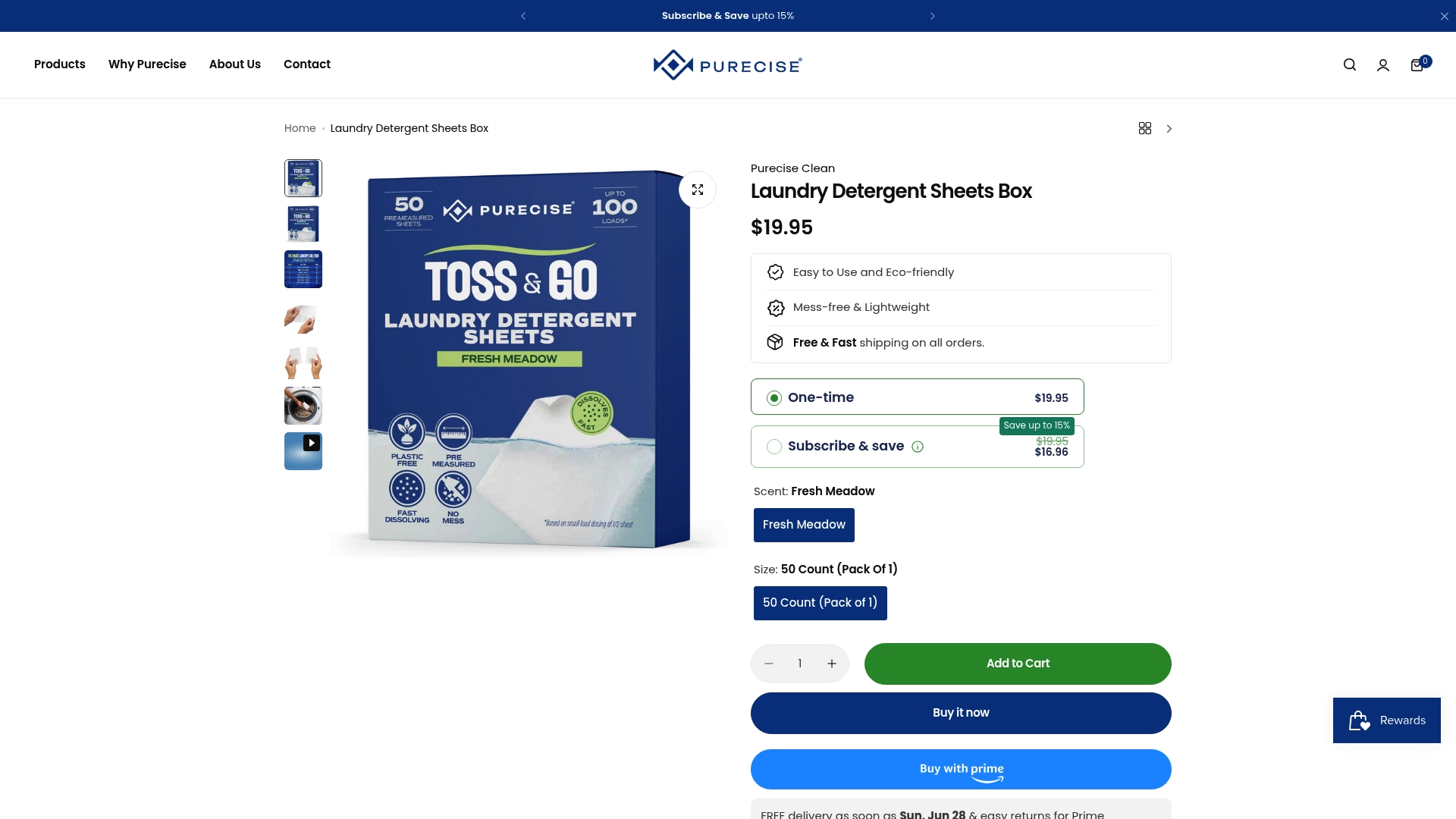
One important note: Purecise laundry sheets are a detergent, not an enzyme pretreatment product. If your stain needs enzymatic action, apply a dedicated enzyme cleaner first, allow full dwell time, then launder with Purecise sheets. Check the product page for current formulation details before combining with other cleaning products or treating sensitive fabrics. Visit the Purecise product page to review the full ingredient list and find the format that fits your routine.
Sources
- The Best Spray for Tackling Pet Stains and Odors Is Not an Enzyme Cleaner
- Enzymes enhance biofilm removal efficiency of cleaners (peer-reviewed study)
- What Is an Enzyme Cleaner? (Better Homes & Gardens)
- What Is an Enzyme Cleaner? How They Work | Enzyme Cleaners
Recommended
- Natural Stain Removal: Say Goodbye to Food Stains – Purecise Clean
- Mastering Stain Removal: How to Treat Food Stains on Different Fabrics – Purecise Clean
- Benefits of Plant-Based Laundry Cleaners for Families – Purecise Clean
- Purecise Laundry Detergent Sheets: Clean Clothes, Greener Planet, More – Purecise Clean
Optical Brighteners in Detergent: What They Do and Why It Matters
How to Wash Canvas Without Ruining It
Related Posts

Whiten White Clothes, No Chlorine: 4–8 Hour Soak, Premeasured Sheets

Remove Blood Stains from Clothes: Cold Water, Enzyme Soak, No Dryer

Pet Owners: Remove Hair from 5 Surfaces with a Washer and Dryer Trick

Wash Sheets Weekly, Dry Them Fully, and Stop Dosing Guesswork

6 Quick Steps to Remove Oil Stains at Home Without Ruining Clothes

Save Space: 50 Sheets Cover 50–100 Loads for Airbnb Hosts

Cut Detergent 25–50%: Use Premeasured Sheets for Soft Water


