

How to Use Laundry Detergent Pods the Right Way
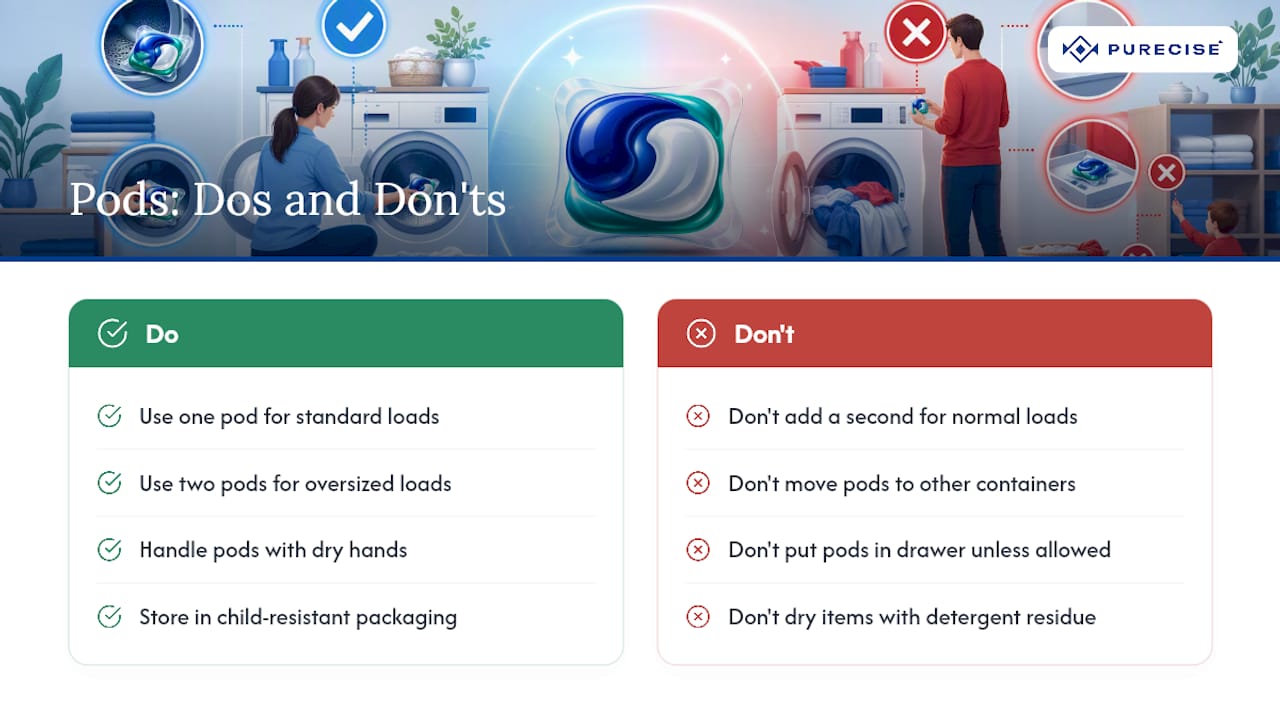
Place the pod in the empty drum, add clothes on top, and use one pod for a normal load. Handle it with dry hands, since wet fingers dissolve the outer film almost instantly. Check whether your machine has an HE auto-dispense feature before you start; if it does, switch it off or skip the dispenser drawer entirely and drop the pod straight into the drum.
- Empty drum first, pod goes in before any clothes
- One pod covers a standard load; two pods may be used for very large or heavily soiled loads
- Dry hands always, no exceptions
- Skip the dispenser drawer unless your washer’s manual says otherwise.
- Store pods sealed and out of reach of kids
Key Takeaways
Correct pod placement in the empty drum, one pod per normal load, and disabling HE auto-dispense features together prevent nearly every common pod failure.
| Point | Details |
|---|---|
| Placement matters most | Drop the pod into the empty drum before adding any clothes on top. |
| Dose by load size | Use one pod for a normal load, two only for oversized or heavily soiled laundry. |
| Watch your water temperature | Water below about 60°F can slow dissolution, so run a warmer cycle if residue keeps showing up. |
| Store pods safely | Keep pods in their original, sealed, child-resistant container, never in a jar or candy-like dish. |
| Consider sheets for simplicity | Purecise Toss & Go sheets dissolve fully at any temperature and skip the dosing and storage risks pods carry. |
Table of Contents
- How to Use Laundry Pods, Step by Step
- Do Front-Load, Top-Load, and HE Washers Need Different Handling?
- How Many Pods Should You Use Per Load?
- How Should You Store and Handle Pods Safely?
- Why Won’t My Laundry Pod Dissolve, and How Do You Fix Residue?
- When Do Pre-Dosed Detergent Sheets Make More Sense Than Pods?
- What Everyday Laundry Habits Get Wrong About Pods
- A Simpler Way to Skip the Pod Guesswork Entirely
- Frequently Asked Questions
- Sources
How to Use Laundry Pods, Step by Step
Getting the sequence right prevents almost every complaint people have about pods, from white streaks on dark shirts to a pod that never dissolved.
- Dry your hands before touching any pod. Moisture triggers the dissolving film early, and a half-dissolved pod in your palm is a mess nobody wants.
- Count your pods. One for a normal load, two only if you’re washing a stuffed hamper or something like a comforter caked in mud.
- Drop the pod into the empty drum first, ideally toward the back or bottom, so it hits water immediately when the cycle starts. Laundry and appliance guidance consistently backs drum-first placement because it gets the pod full water contact before anything else competes for it.
- Load clothes on top of the pod, not underneath it. Don’t cram the drum full; leave room for water and clothes to circulate.
- Pick your cycle and temperature, then start the wash.
If a pod splits open before the cycle begins, don’t panic and don’t just toss it in as-is. Scoop the pooled gel into a cup, dilute it with warm water, then pour that mixture into the drum before starting the wash.
Pro Tip: Keep a spare plastic cup near your laundry area specifically for burst-pod cleanup. It takes the guesswork out of a sticky situation and keeps concentrated detergent off your hands.
Do Front-Load, Top-Load, and HE Washers Need Different Handling?
Your machine type changes a few details, even though the core rule (drum first, dry hands, right dose) stays the same.
- Front-load washers: Use the palm test. If you can slide your hand flat between the top of the clothes and the drum ceiling, you’re not overstuffed. Overpacked front-loaders don’t tumble enough to fully dissolve a pod, no matter how good the detergent is.
- Top-load washers: Keep the load below the agitator, or around two-thirds full if your machine is agitator-free. Too much fabric blocks water flow to the pod sitting at the bottom.
- HE machines: Confirm the pods are HE-rated, since regular formulas can oversuds in low-water HE cycles. Many HE washers also have auto-dispense or “Load & Go” systems that release detergent automatically. Samsung’s own support documentation notes these systems can double-dose your wash if you add a pod on top without disabling the feature first.
When in doubt, pull up your washer’s manual and search for “unit-dose” or “pod compatible dispenser.” Not every dispenser drawer is built to handle a solid pod, and using one anyway is a common reason pods show up half-dissolved on clean clothes.
How Many Pods Should You Use Per Load?
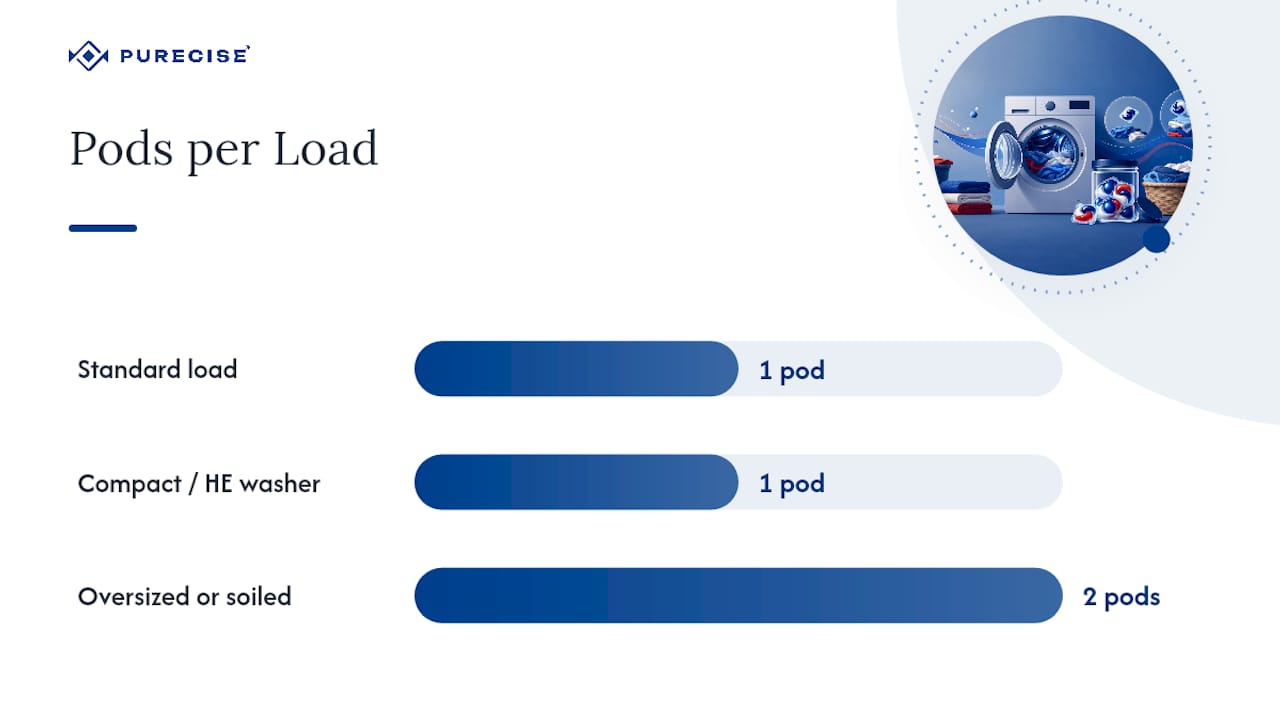
One pod handles a standard load. Reserve two pods for oversized loads, extra-large capacity drums, or laundry that’s genuinely filthy, like sports gear or work clothes covered in grease.
Compact and HE washers often need less detergent than you’d think, since they use far less water per cycle than older top-loaders. Many brands design their pods with that in mind, so doubling up “just to be safe” in a small HE unit usually just means more residue, not cleaner clothes.
Water temperature matters more than most people realize. Pods are engineered to dissolve in cold water, but dissolution slows once water drops below about 60°F, and that lag is exactly what leaves streaky film on dark fabrics. If you’re seeing residue on cold cycles, bump the temperature up on your next wash and see if the problem disappears.
- Normal load: one pod
- Large, extra-large, or heavily soiled load: two pods
- Compact or HE washer: check packaging, often one pod even for a full load
- Water under 60°F: consider a warmer setting if pods aren’t dissolving fully
Always defer to the specific instructions printed on your detergent’s packaging and whatever your washer’s manual says about dosing, since formulas and drum sizes vary enough that a universal rule only gets you so far.
How Should You Store and Handle Pods Safely?
Pods look like candy to a toddler, and that resemblance is the single biggest safety issue tied to this product category.
- Keep pods in their original, child-resistant container. Reseal the lid or zip closure every single time, not just when you remember.
- Never transfer pods to a jar, bowl, or clear container. Moving pods out of their original packaging is one of the most common triggers for accidental ingestion in young children, largely because the new container erases every visual cue that told a kid “don’t eat this.”
- Handle pods only with dry hands, and avoid squeezing or puncturing the film, even out of curiosity.
- If a pod is ingested or gets in someone’s eyes, follow the guidance printed on the packaging and call Poison Control at 1-800-222-1222 or seek medical care right away.
Storage height matters as much as the container. A high shelf or a locked cabinet beats a low laundry room cubby every time, and it’s worth reading through a detailed guide on preventing detergent poisoning if you’ve got young kids at home.
Why Won’t My Laundry Pod Dissolve, and How Do You Fix Residue?
A pod that doesn’t fully dissolve almost always comes down to one of four things: it got added after the clothes went in, the drum was too full, the water ran too cold, or the cycle was too short for the film to break down completely.
- Fix for residue on clothes: Soak the affected item in warm water, then rewash on a warm or hot cycle. Don’t toss it in the dryer until the film is fully gone, since heat can set the residue permanently into the fabric.
- Fix for a pod that burst mid-load: Run a second rinse cycle to clear out any leftover concentrated detergent still clinging to fabric.
- Fix for a burst pod before the wash starts: Collect what pooled in a cup, dilute it with warm water, pour it into the drum, and start the cycle as normal. Wipe up any remnants on the machine’s exterior.
- Fix for recurring residue: Run an empty hot cycle with a washer cleaner or a cup of white vinegar to clear buildup inside the drum and door seal, following your manufacturer’s cleaning guidance.
Pro Tip: If residue keeps showing up on the same fabric type, like towels or heavy denim, the issue is often overstuffing rather than the pod itself. Cut the load size by a third and see if the problem clears up. For food and grease stains specifically, a dedicated stain pre-treatment guide covers fabric-by-fabric fixes that pair well with any detergent format. Heavier textiles like upholstery cushions or slipcovers benefit from similar pre-treatment logic, and practical upholstery cleaning guidance covers washable fabric care in more depth.
When Do Pre-Dosed Detergent Sheets Make More Sense Than Pods?
Pods solve the overdosing problem that plagues liquid detergent, but they still carry a poisoning risk for households with small kids, and they still leave film behind when water runs cold or a drum gets overstuffed. Purecise built its Toss & Go sheets around solving both of those problems at once.
Each sheet is pre-dosed, dissolves completely across every machine type and water temperature, and skips the plastic jug entirely. The formula is hypoallergenic, which matters if pod residue has ever irritated sensitive skin, and a full month’s supply fits in a pocket, which pods and their bulky tubs can’t match for travel.
- Shared laundromats where you don’t want to carry a heavy detergent bottle
- Homes with toddlers, where a flat sheet doesn’t resemble candy
- Travel, RV living, or dorm rooms with limited storage
- Anyone dealing with recurring pod-film residue on dark clothing
A closer look at how the sheets dissolve across wash types or a side-by-side comparison against traditional pods covers the mechanics in more depth.
What Everyday Laundry Habits Get Wrong About Pods
Most laundry mistakes aren’t about the detergent itself. They’re about rushing the load, ignoring the machine’s dispenser guidance, or assuming “more detergent” means “cleaner clothes.” Pods work exactly as designed when they get water contact early and enough room to circulate. The failures people blame on the product are usually failures of sequence: pod after clothes, drum too full, cycle too short.
Purecise exists because that sequence shouldn’t matter so much. A sheet that dissolves at any temperature, in any machine, removes half the variables that trip people up with pods in the first place. Good laundry habits still matter, but the margin for error should be wider than it currently is.
A Simpler Way to Skip the Pod Guesswork Entirely
If dosing math, dispenser compatibility, and cold-water dissolution are starting to feel like more homework than your laundry deserves, Purecise sheets cut all three problems out at once. Each sheet is pre-measured, so there’s no counting pods for a big load or worrying about HE compatibility. They dissolve fully in cold or hot water, in front-load, top-load, or HE machines, with no film left behind on dark clothes.
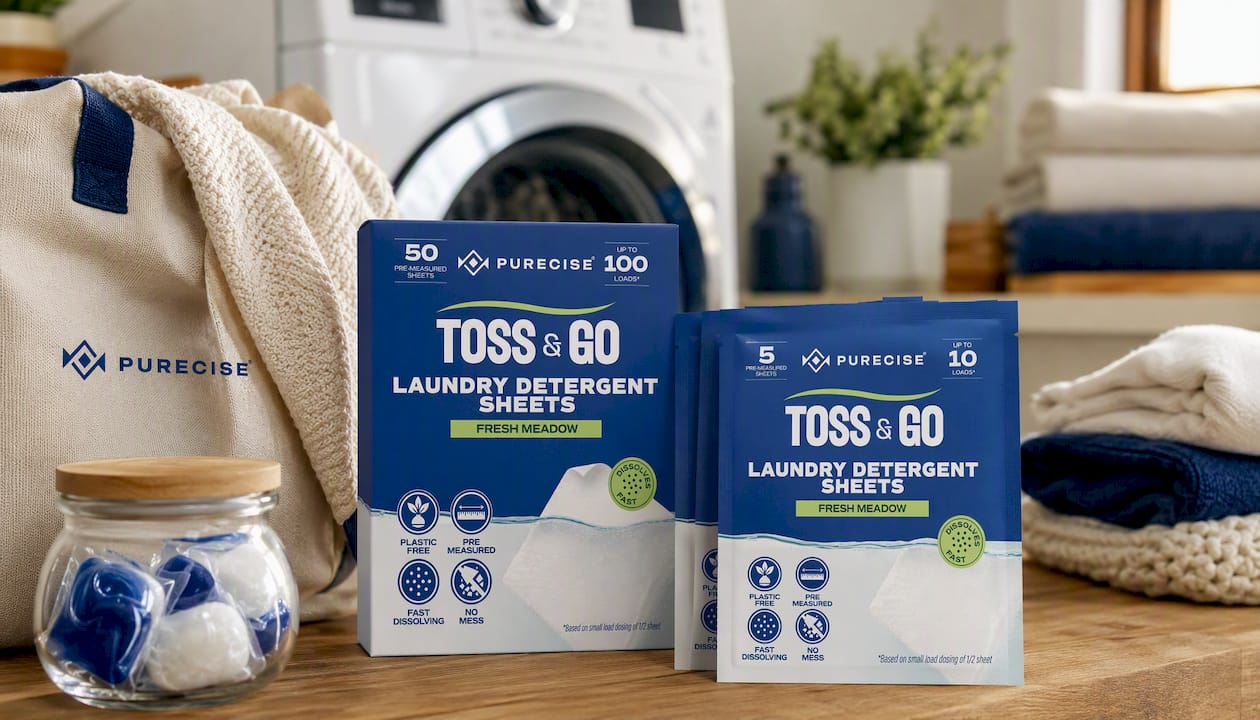
The hypoallergenic formula works for sensitive skin and households with kids, and the flat, plastic-free packaging means no bulky jug taking up shelf space. A full month’s supply fits in a jacket pocket, which makes travel and shared laundry rooms far simpler than hauling a tub of pods. Grab a box of Toss & Go sheets for home, or pick up the travel-sized envelope pack if you’re packing for a trip.
Frequently Asked Questions
Can you use two detergent pods in one load? Yes, but only for oversized loads, extra-large capacity drums, or laundry that’s especially soiled. A standard load only needs one pod; adding a second for a normal wash usually just creates residue instead of cleaner clothes.
Are laundry pods safe to use? Pods are safe when handled with dry hands, placed directly in the drum, and stored in their original child-resistant packaging. The main risk comes from moving them into a different container where kids can mistake them for candy.
Can you put a laundry pod in the dispenser drawer? Only if your washer’s manual explicitly says the dispenser is compatible with unit-dose packets. Many appliance manufacturers warn against it because the drawer may not expose the pod to enough water for it to fully dissolve.
Do laundry pods work in cold water? Most pods are formulated to dissolve in cold water, but very cold water can slow that process down and leave film behind. If you notice residue on cold cycles, try a warmer setting.
What should you do if a pod doesn’t dissolve? Rewash the load on a warm cycle, or run an extra rinse cycle to clear out leftover detergent. If specific items still show residue, soak them in warm water before rewashing rather than drying them right away.
Sources
- Laundry & Dishwasher Pods Explained | How They Work, Benefits & Safe Use
- How to Use Laundry Pods the Right Way
- Learn how to use laundry pods correctly
Recommended
- Comparing Laundry Detergent Sheets vs. Pods: Which is the Ultimate Lau – Purecise Clean
- What Is Pre-Dosed Laundry Detergent? A Family Guide – Purecise Clean
- How to Avoid Detergent Overdosing in Shared Machines – Purecise Clean
- How Many Detergent Sheets per Load Do You Actually Need? – Purecise Clean
Dorm Laundry Essentials: A Space-Saving Kit for Students
How Long Is Laundry Detergent Good For?
Related Posts

Whiten White Clothes, No Chlorine: 4–8 Hour Soak, Premeasured Sheets

Remove Blood Stains from Clothes: Cold Water, Enzyme Soak, No Dryer

Pet Owners: Remove Hair from 5 Surfaces with a Washer and Dryer Trick

Wash Sheets Weekly, Dry Them Fully, and Stop Dosing Guesswork

6 Quick Steps to Remove Oil Stains at Home Without Ruining Clothes

Save Space: 50 Sheets Cover 50–100 Loads for Airbnb Hosts

Cut Detergent 25–50%: Use Premeasured Sheets for Soft Water


