

Dorm Laundry Essentials: A Space-Saving Kit for Students
The dorm laundry essentials worth packing are a pop-up hamper, pre-dosed detergent sheets or pods, a mesh delicates bag, a stain remover pen, dryer balls or sheets, a portable drying rack, a lint brush, and a mini steamer. Of the two detergent formats, pre-dosed sheets win for dorm life. They pack flat in a desk drawer, never leak in a backpack, and skip the guesswork of a liquid detergent cap.
Here’s the shortlist to buy before move-in day:
- Pop-up or backpack-style hamper
- Pre-dosed detergent sheets (or pods as a backup)
- Mesh wash bags for delicates
- Stain remover pen or spray
- Dryer balls or dryer sheets
- Foldable drying rack
- Lint brush or roller
- Mini steamer or wrinkle spray
Key Takeaways
Pre-dosed detergent sheets, a collapsible hamper, and a handful of small tools solve nearly every space and mess problem shared dorm laundry creates.
| Point | Details |
|---|---|
| Detergent format matters most | Pre-dosed sheets dissolve at any temperature and eliminate spills and dosing guesswork in shared machines. |
| Pick a hamper for your building | Backpack-style bags suit walk-ups; rolling hampers work better with elevator access. |
| Timing avoids wasted trips | Early mornings and weekday mid-mornings dodge the Sunday and post-dinner laundry rush. |
| Small habits prevent re-washes | Treating stains fast, using cold water, and checking the lint trap cut down on ruined loads. |
| Purecise fits the dorm use case | Plant-based, hypoallergenic detergent sheets that pack flat, dissolve fully, and carry a money-back guarantee. |
Table of Contents
- Dorm Laundry Essentials: What to Buy and Why
- How to Do Laundry in a Shared Dorm Machine
- Choosing the Right Detergent Format and Dryer Aids for a Dorm
- What Dorm-Tested Habits Actually Prevent
- Printable Dorm Laundry Packing Checklist
- Packing Smart for a Tiny Dorm Room
- Detergent Options for Sensitive Skin and Small Spaces
- Fighting Odors and Mildew in a Damp Dorm Room
- Sorting and Organizing Laundry With No Space to Spare
- Timing Loads to Skip the Laundry Room Wait
- Dorm Laundry Room Rules You’re Likely to Run Into
- Folding Methods That Save Drawer Space
- What Actually Earned a Repeat Purchase
- Why Detergent Sheets Solve the Real Dorm Laundry Problem
- Frequently Asked Questions
- Sources
Dorm Laundry Essentials: What to Buy and Why
Every item on a dorm laundry checklist earns its spot by solving a specific problem: no space, no privacy, no patience for a 40-minute machine cycle that isn’t yours to hog. Here’s the breakdown.
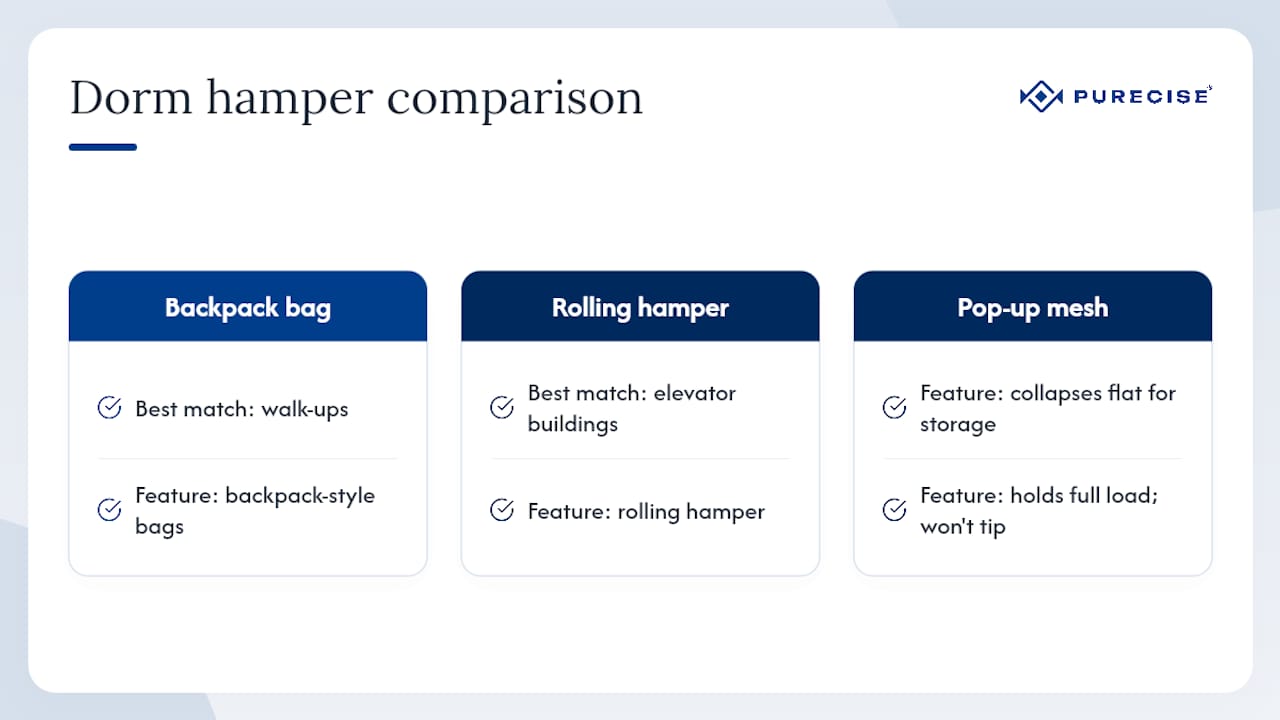
1. Hamper or laundry bag. A rigid basket looks sturdy until you’re hauling it down three flights of stairs. Dorm Life Simplified recommends matching the hamper to your building: backpack-style bags for walk-ups, rolling hampers for elevator buildings. A pop-up mesh hamper collapses flat for storage and holds a full load without tipping over on the walk to the laundry room.
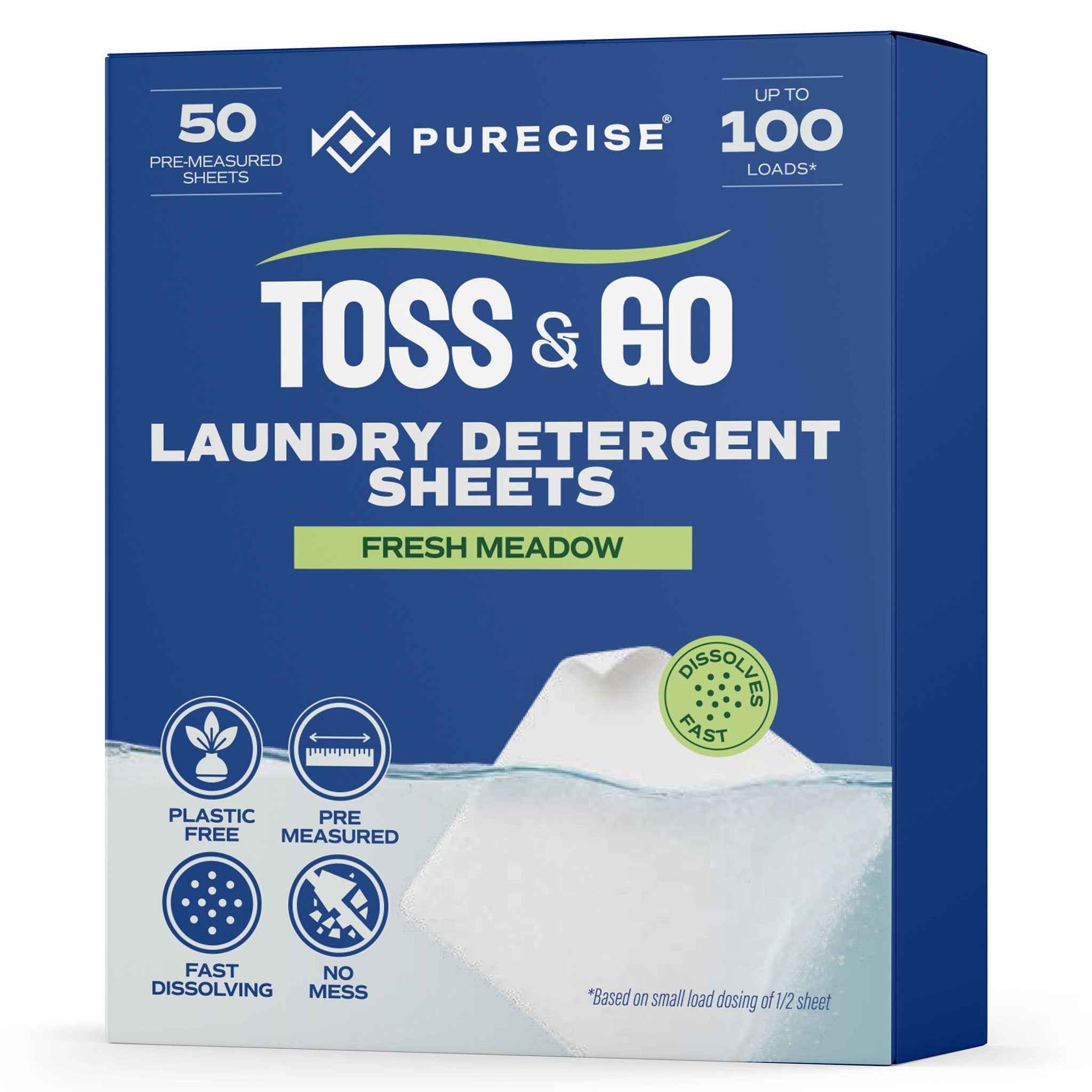
2. Pre-dosed detergent. Sheets and pods both remove the need to eyeball a liquid measuring cap, which matters when you’re juggling a load in a shared laundry room with people waiting behind you. Detergent sheets take this further: they’re flat, don’t leak in a tote bag, and a month’s supply fits in a jacket pocket. Speed Queen’s dorm checklist lists pre-dosed detergent as a top convenience pick for exactly this reason.
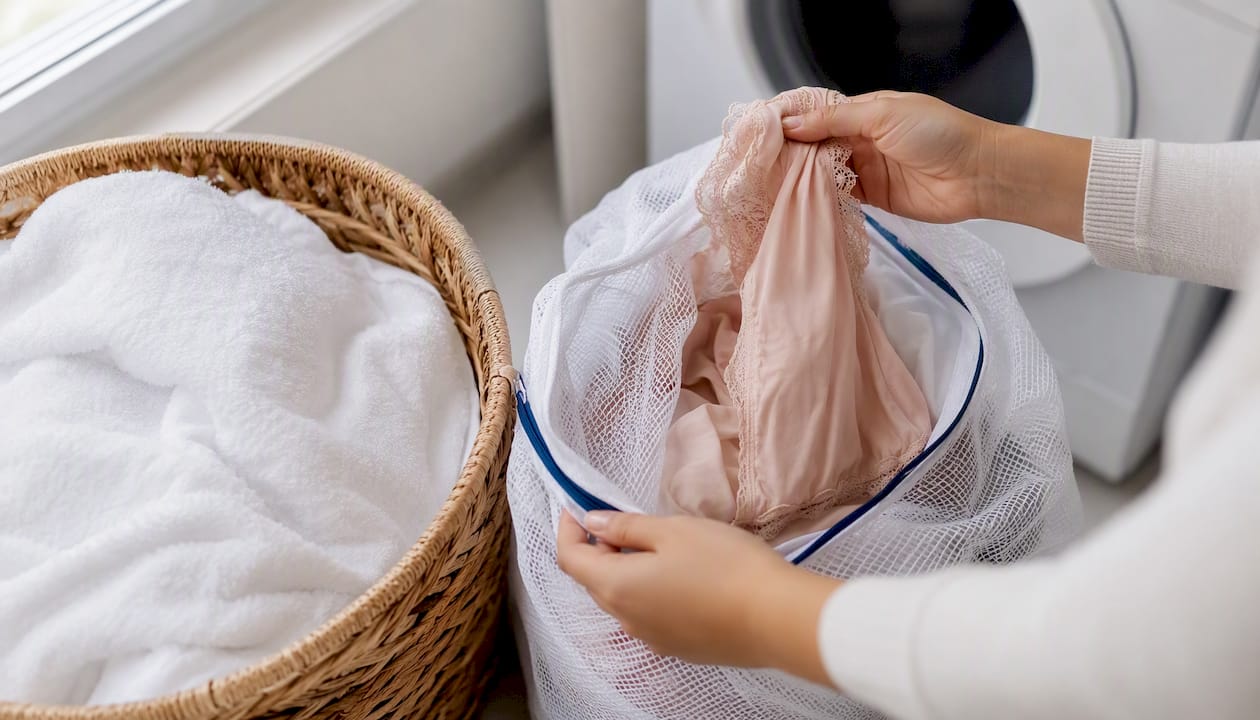
3. Mesh delicates bags. Bras, underwear, and anything with elastic last longer when they’re not tangling with jeans and getting stretched out in a communal machine. Zip a few items into a mesh bag and toss the whole thing in with the rest of the load.
4. Stain remover pen or spray. Cafeteria marinara and dining-hall coffee do not wait for laundry day. A stain pen you can carry in a backpack lets you treat a spill within minutes instead of letting it set for a week until your next wash. For fabric-specific technique, this guide on treating food stains on different fabrics covers what actually lifts grease versus what just spreads it around.
5. Dryer balls or dryer sheets. Wool dryer balls cut drying time slightly and reduce static without leaving a scent residue, which matters in a shared machine where the next person might have fragrance sensitivities. Dryer sheets soften towels and add scent but need replacing every load, so they cost more over a semester.
6. Foldable drying rack. Sweaters, bras, and anything labeled “lay flat to dry” need somewhere to go that isn’t your desk chair. A rack that folds to the thickness of a laptop slides under a bed frame when not in use.
7. Lint brush or roller. Cheap, small, and the fastest fix for the fuzz a shared dryer leaves on dark clothes. A folding version clips onto a keychain or fits in a desk drawer.
8. Mini steamer. A full-size iron and ironing board eat up space no dorm room has to spare. A compact garment steamer handles wrinkles in under a minute and stores standing up in a closet corner.
If assembling each piece separately feels like too much, a bundled dorm laundry kit can work. These typically pack a mesh bag, dryer balls, a stain pen, and a mini lint brush into one box, similar to the six-piece sets sold by retailers like DormCo. Before buying one, check three things: does it include a detergent format you’ll actually use, is the hamper collapsible, and does the mesh bag fit standard bra sizes rather than a one-size-fits-none compromise.
Pro Tip: Keep your entire laundry kit, detergent sheets, stain pen, mesh bag, and dryer balls, zipped inside one small pouch. Grab the pouch and your hamper and you’re out the door in under a minute, no scavenger hunt through drawers required.
One more habit worth building early: Consumer Reports advises separating darks from lights and avoiding overloaded machines, both of which matter more in a dorm than at home, since a machine stuffed past capacity doesn’t clean anything well. It just gets everything equally damp and equally dirty.
How to Do Laundry in a Shared Dorm Machine
A simple routine, plus a small kit you always carry, beats winging it every single time. Follow these steps and you’ll spend less time redoing loads and less money on wasted detergent.
- Sort before you leave your room. Split darks, lights, and delicates into separate bags so you’re not sorting on top of a washer while someone waits.
- Pre-treat stains immediately. Hit any visible spot with your stain pen before the item goes in the machine, not after.
- Choose your detergent and dose correctly. One pod or one to two detergent sheets typically covers a standard load. Oversized loads get more air, not more detergent.
- Pick the right temperature. Cold water saves energy and protects colors; warm or hot works better for towels, sheets, and anything visibly soiled.
- Don’t overfill the drum. Clothes need room to move through the water. A machine packed to the lid leaves detergent residue behind and clothes half-clean.
- Check the machine before you start. A quick glance at the lint trap and drum tells you if the last person left a mess you’re about to inherit.
- Set a timer and return promptly. Damp clothes sitting in a dryer for hours pick up a musty smell fast, and leaving a load too long is the top reason machines sit occupied during peak hours.
A couple of dorm-specific traps to watch for: pods sometimes fail to fully dissolve on a cold cycle in older machines, leaving a gummy residue on clothes, and some dorms restrict pods entirely over drain-clogging concerns. Detergent sheets dissolve at any temperature, so they sidestep both problems. Learn more about avoiding detergent overdosing in shared machines if you’ve ever pulled out a load that still smells like soap.
Pro Tip: Do laundry right after breakfast or late in the evening. Midday and Sunday afternoons are when every machine in the building is running, and a 45-minute wait for an open washer eats up study time fast.
Choosing the Right Detergent Format and Dryer Aids for a Dorm
Liquid detergent is cheap per ounce but bulky, prone to spills in a backpack, and requires a measuring cap you’ll inevitably lose. Pods solve the mess problem but can be restricted in dorms with strict machine policies and don’t always dissolve fully in cold water. Detergent sheets solve both issues: no cap, no spill risk, and full dissolving at any temperature. A 2026 detergent roundup found sheet-format detergents can cost as little as $0.25 per load while performing well in both hot and cold cycles, and WordPlop’s coverage of sheet detergents notes their compact, mess-free packaging fits dorm storage far better than a jug.
For dryer aids, the choice depends on how long you’ll be using them:
- Wool dryer balls cost more upfront but last for hundreds of loads, cut static, and add no scent, useful if roommates have fragrance sensitivities.
- Dryer sheets soften fabric and add scent but get thrown out after one use, so the cost creeps up over a semester.
- Skip liquid fabric softener on towels specifically. It coats the fibers and makes them less absorbent.
Whenever you switch to a new detergent format, run one small test load first. It only takes a few minutes and confirms the sheet or pod dissolves fully in your building’s machines before you commit a whole box to it. Purecise’s plant-based, hypoallergenic sheets are built for exactly this kind of test. They dissolve completely across machine types and temperatures, making them a dependable pick for shared dorm laundry rooms.
What Dorm-Tested Habits Actually Prevent
The habits that matter most in a dorm are the ones that stop small problems from becoming re-washes, ruined sweaters, or an argument with a roommate about mildew smell.
A common freshman mistake: tossing a brand-new dark shirt into a load with barely-worn jeans, then wondering why everything smells faintly of dye a week later. Separating new, deeply colored items for the first wash or two fixes this. Another one: cramming two weeks of laundry into a single overloaded cycle to save quarters, which leaves detergent residue caked into fabric instead of rinsed out.
Consumer Reports backs three habits worth building early: treat stains the moment you notice them, use cold water for anything not visibly filthy, and check the dryer’s lint trap before starting a cycle. That last one isn’t just about safety. A clogged trap can add 10 to 15 extra minutes to a drying cycle, time you don’t get back in a shared laundry room.
“Find a regular laundry time, treat stains quickly, and don’t overload the machine,” Consumer Reports advises for students managing shared laundry rooms.
Printable Dorm Laundry Packing Checklist
Screenshot this or print it before move-in:
- [ ] Pop-up or backpack hamper
- [ ] Pre-dosed detergent sheets or pods
- [ ] Mesh delicates bags (2 to 3)
- [ ] Stain remover pen
- [ ] Dryer balls or dryer sheets
- [ ] Foldable drying rack
- [ ] Lint brush or roller
- [ ] Mini steamer
- [ ] Quarters or laundry card/app
- [ ] Small zip pouch to hold it all
- [ ] Laundry bag lock (shared machines)
- [ ] Extra hangers for line-dried items
Keep everything in one compact pouch or small duffel so laundry day starts with grabbing one bag, not five.
Packing Smart for a Tiny Dorm Room
Space in a dorm room gets fought over before you even unpack a single box, so laundry supplies need to earn their square footage. A flat-packed hamper that lives under the bed beats a rigid basket that eats closet space year-round. IKEA’s dorm laundry collection leans hard into foldable and hanging storage for exactly this reason, since a hanging mesh organizer holds detergent sheets, a stain pen, and dryer balls without taking up any floor space at all.
The real trick is picking multi-use over single-use wherever possible. A drying rack that folds to the width of a textbook stores in a closet gap. A detergent format that’s flat rather than bottled stacks in a drawer instead of taking up an entire shelf. If you’re prepping a first dorm move, this guide on packing light for laundry covers the same logic for weekend trips home and back.
For caregivers packing on behalf of a student, the general rule holds: buy fewer, better items for a smooth transition rather than a pile of half-used products. Everything else is optional weight.
Detergent Options for Sensitive Skin and Small Spaces
Dorm rooms are shared air as much as shared space, which makes heavily fragranced detergents a bigger gamble than they’d be at home. A roommate’s allergy or sensitive skin doesn’t announce itself until laundry day goes wrong.
Plant-based, hypoallergenic formulas sidestep this problem by skipping the dyes and heavy fragrances that trigger reactions in the first place. Purecise’s detergent sheets are built this way: free of harsh chemicals, safe for sensitive skin, and effective on tough stains without relying on strong scent to signal “clean.” That matters doubly in a dorm, where the detergent smell lingers in a small room long after the laundry basket is empty.
Beyond the skin-safety angle, sheet detergents solve a packaging problem liquid detergent never will. A jug takes up shelf space and risks leaking in a car trunk during a move; a stack of sheets fits flat in a drawer and travels in a zip pouch. For students managing laundry in a room the size of a walk-in closet, that difference adds up over an entire school year.
Fighting Odors and Mildew in a Damp Dorm Room
Damp laundry left too long in a communal dryer, or a wet towel forgotten on a dorm room floor, turns musty within hours in a room with poor airflow. The fix starts with the dryer step: pull clothes out the moment the cycle ends, don’t let them sit balled up in the drum.
For anything air-dried, like sweaters or delicates on your foldable rack, position it near a window or a fan rather than tucked in a closet corner where air doesn’t move. A closet with no ventilation is basically a mildew incubator for anything slightly damp.
If a musty smell has already set into towels or gym clothes, a plain vinegar rinse cycle (no detergent, just white vinegar) run before the regular wash often lifts it out. Skip fabric softener on anything that already smells off. It masks the smell instead of removing it, and the smell usually comes back within a day. Keeping a small stash of dryer sheets on hand for scent-sensitive loads helps here too, since a fresh scent after a proper wash reads very differently from a fragrance covering up mildew.
Sorting and Organizing Laundry With No Space to Spare
A dorm room rarely has room for the three-bin sorting system your parents’ laundry room might have. The workaround: use one hamper with a built-in divider, or two small mesh bags inside a single larger bag, one for darks, one for lights, so sorting happens gradually instead of all at once on laundry day.
Delicates get their own small mesh bag that lives inside the main hamper rather than mixed loose with everything else. This way, when laundry day arrives, you’re not standing over a pile trying to remember what needs gentle treatment. It’s already separated.
Store detergent sheets, the stain pen, and dryer balls together in one drawer or pouch, not scattered across a desk and a closet shelf. The goal is that grabbing everything for laundry day takes ten seconds, not a five-minute hunt through drawers.
Timing Loads to Skip the Laundry Room Wait
Every dorm has predictable rush hours: Sunday afternoons, weeknights after dinner, and the days right before big breaks. Hitting the laundry room during any of these means watching machines run through their cycles while you wait with a full hamper.
Early mornings and weekday mid-mornings tend to be dead zones, since most students are in class or still asleep. If your dorm has a laundry app or a machine-status board, check it before hauling a full hamper downstairs. Nothing wastes more time than discovering every washer is occupied after you’ve already made the trip.
Dorm Laundry Room Rules You’re Likely to Run Into
Shared laundry rooms come with policies that vary building to building, but a few show up almost everywhere. Machines usually run on a card, app, or quarters, and time limits on machine use exist specifically to stop people from treating a washer as personal storage.
Some dorms explicitly ban laundry pods over concerns about drain clogs and undissolved residue, which is one more argument for a detergent format that dissolves fully regardless of temperature. Others require you to remove your load within a set window after the cycle ends, since a machine sitting full of finished laundry blocks the next person. Quiet hours sometimes extend to laundry rooms too, particularly ones located near residence hall bedrooms rather than in a separate basement.
The simplest way to stay compliant: read the posted rules once at the start of the semester, keep a laundry lock bag if theft has been an issue in your building, and never leave a load unattended past the posted pickup window.
Folding Methods That Save Drawer Space
The file-fold method, standing shirts on their edge rather than stacking them flat, turns a dresser drawer into something closer to a filing cabinet. You can see every shirt at a glance instead of digging through a stack.
For pants and shorts, rolling instead of folding flat cuts the space they take up by close to half and works especially well in a narrow dorm dresser drawer. Towels benefit from a simple tri-fold that keeps them stackable without the bulk of a full unfolded towel taking over a shelf.
None of this requires buying anything. It’s a five-minute habit change that makes a small dresser function like a much bigger one.
What Actually Earned a Repeat Purchase
Looking back at freshman year, three things from that first laundry haul actually got repurchased: the pop-up hamper, because it survived four stairwell trips a week without falling apart, the mesh delicates bags, because bras and thin tees stopped coming out stretched, and the detergent sheets, because they never leaked in a backpack and a single box lasted the whole semester without refills. The compact kit approach held up. Simple habits, small footprint, no wasted trips to the laundry room for something forgotten upstairs.
Why Detergent Sheets Solve the Real Dorm Laundry Problem
Detergent sheets fix the three things that make dorm laundry annoying: no space for a bottle, no risk of a spill in your backpack, and no confusion about how much to pour. Purecise’s Toss & Go sheets are plant-based, hypoallergenic, and dissolve fully in any wash type and temperature, so a cold cycle in an older dorm machine works just as well as a hot one.
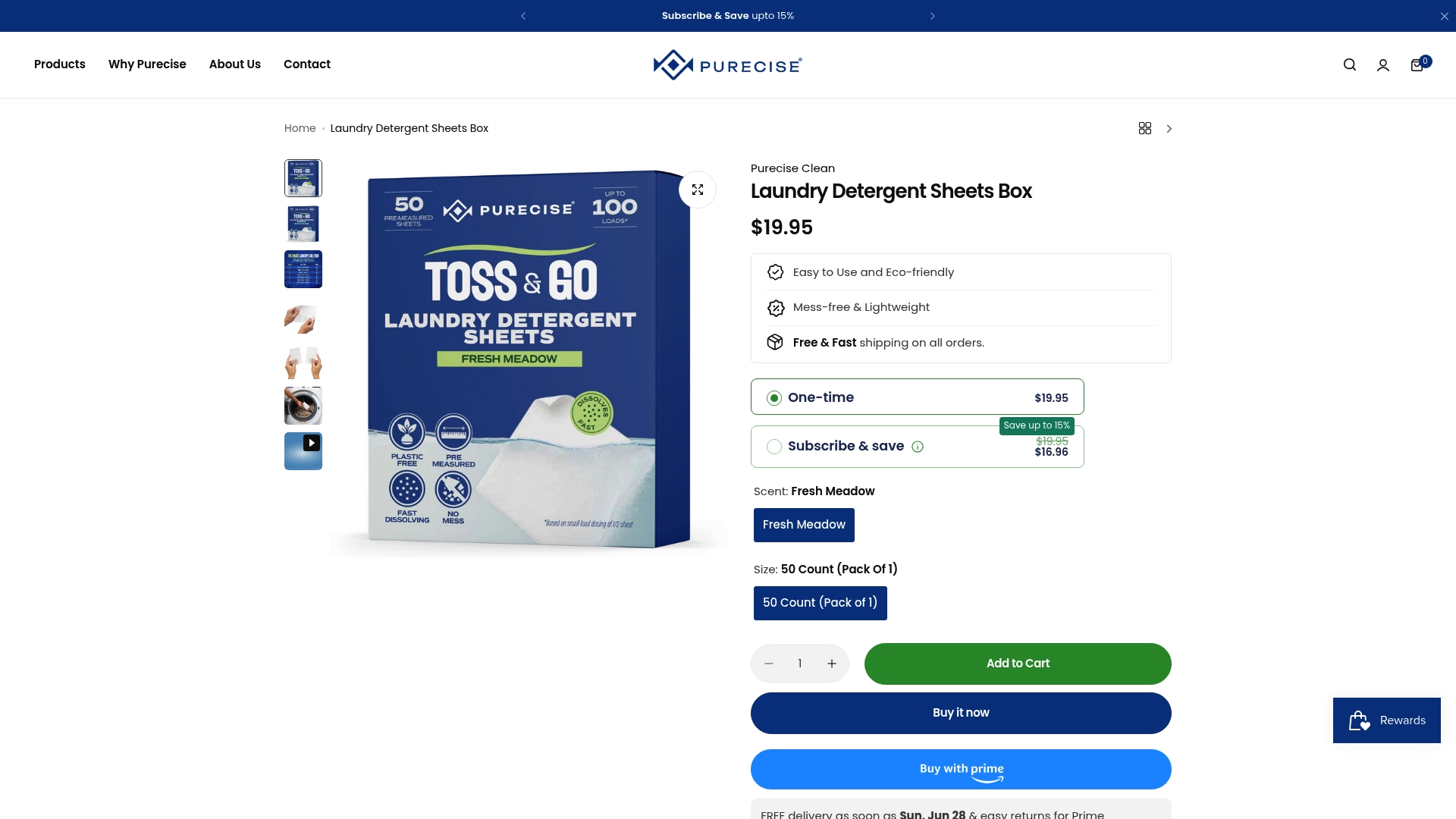
Using them in a shared machine is simple: drop one sheet in for a standard load, two for an extra-large or heavily soiled load, and skip the sheet entirely if you’re hand-washing a single delicate item, just tear a small piece and rub it directly on the fabric under water. Because each sheet is pre-dosed, there’s no measuring cap to lose and no risk of overdosing a shared machine, which is a common complaint in dorm laundry rooms. A full supply folds flat enough to fit in a coat pocket, which matters when your dorm room has very limited shelf space for detergent jugs. Packaging is recyclable, cutting down on the plastic waste a semester’s worth of liquid detergent bottles would otherwise generate.
Grab a box of detergent sheets for a full semester’s supply, or start smaller with an envelope pack if you just want to try one before committing.
Frequently Asked Questions
What are the must-have dorm laundry essentials? A pop-up hamper, pre-dosed detergent sheets or pods, mesh delicates bags, a stain remover pen, dryer balls or sheets, a foldable drying rack, a lint brush, and a mini steamer cover nearly every dorm laundry situation.
Is the best dorm laundry detergent a sheet or a pod? Detergent sheets generally work better for dorms because they dissolve fully at any temperature and never leak in a bag, while pods can fail to dissolve in cold cycles and are restricted in some buildings.
How many detergent sheets should I use per load? One sheet typically covers a standard load, and two sheets handle an extra-large or heavily soiled one.
How do I avoid mildew smell in dorm laundry? Pull clothes from the dryer immediately after the cycle ends, air-dry delicates near a window or fan, and run an occasional vinegar rinse cycle on towels that already smell musty.
When is the best time to do laundry in a dorm? Early mornings and weekday mid-mornings tend to be the quietest, while Sunday afternoons and evenings right before break are the busiest.
Sources
- Laundry tips for college students — Consumer Reports
- 7 Best laundry supplies for college every student needs — Speed Queen
- Laundry in College: Best hampers & detergents for dorm life — Dorm Life Simplified
- The 6 Best Laundry Detergents (Tested & Reviewed for 2026) | The Quality Edit
- Laundry detergent sheets for college students — WordPlop
Recommended
What Removes Grease Stains From Clothes Fast
How to Use Laundry Detergent Pods the Right Way
Related Posts

Travel Friendly Way to Remove Deodorant Stains Using Detergent Sheets

Cut Detergent 50–75%: Portable Washer Detergent for Travel & RVs

Recyclable Detergent Packaging: What MRFs Will Actually Recycle

Cruise Laundry Detergent: Pack 4–6 Sheets for 3–5 Nights

Skip TSA Hassles on U.S. Flights: Pack Detergent 3.4 oz or Use Sheets

At Home: Remove Grass Stains From Clothes in 10–30 Minutes with Enzymes

Cut Detergent Cost Per Load: 6 Budget Moves and When Sheets Save


