

Color-Safe Detergent for Sensitive Skin: Premeasured Sheets
The most reliable way to keep colors from fading is to pair a detergent labeled for colors or darks with cold water, shorter cycles, and a quick colorfastness test before the first wash. Pre-dosed, dye-free options like Purecise Toss & Go detergent sheets fit that formula well for sensitive-skin households. Beyond product choice, three habits matter just as much: test new garments in a hidden spot, wash them separately for the first few cycles, and turn them inside out.
TL;DR:
- Using a color-safe detergent alone cannot prevent all fading since factors like dye quality, fabric abrasion, and drying methods significantly contribute to color loss.
- Conducting a hidden-area colorfastness test with cold water and a white cloth is crucial before washing new or saturated colors to prevent irreversible bleeding.
- Opt for dye-free, fragrance-free, low-residue formulas, and pre-dosed sheets for best protection of sensitive skin and colors, especially when used with cold water and short cycles.
- Avoid optical brighteners on dark or saturated fabrics as they can cause dulling over time, and always verify bleach types, prioritizing oxygen bleach with a proper test.
- Proper laundry routines, including inside-out washing, quick drying, and load splitting, extend garment lifespan by reducing friction, heat damage, and dye transfer.
Table of Contents
- What Does “Color-Safe Detergent” Actually Mean?
- How Do You Choose a Color-Safe Detergent?
- What’s the Best Wash Routine to Prevent Fading?
- How Do Top Color-Safe Detergent Brands Compare?
- Are Color-Safe Detergent Claims Actually True?
- Which Detergent Works Best for Cotton, Synthetics, and Blends?
- What Ingredients Should You Avoid Beyond Fragrance and Dye?
- What Do Customer Reviews Say About Color-Safe Detergents?
- What Formula Features Actually Protect Color and Skin?
- How Purecise Fits the Color-Care Checklist
- Try Purecise Toss & Go Detergent Sheets
- Sources
- FAQ
What Does “Color-Safe Detergent” Actually Mean?
“Color-safe” is not a regulated term. It generally signals a formula designed to clean without stripping or transferring dye the way chlorine bleach or harsh surfactants can. You’ll see it phrased differently across brands: “color guard,” “for darks,” “with color-lock technology,” or “safe with oxygen bleach.” None of these phrases carry a legal definition, so they function more as marketing shorthand than a guarantee.
Here’s the part most shoppers miss: no detergent, no matter how it’s labeled, can prevent every kind of fading. The American Cleaning Institute points out that unstable dyes, fabric abrasion, hot water, and tumble drying all cause color loss that a gentler formula simply can’t undo. A cheap red T-shirt with poorly set dye will bleed in cold water almost as readily as in hot. Fading is often a garment-and-process problem before it’s a detergent problem, and switching wash habits can matter as much as switching brands.
That distinction between “color-safe” and “free & clear” trips people up too. Color-safe addresses dye protection. Free & clear addresses fragrance and dye content in the detergent itself, for skin sensitivity, not fabric care. A detergent can be one, both, or neither. Optical brighteners add another wrinkle: they make whites look whiter by reflecting blue light, but on colored fabrics they can create a dull or hazy cast over time, so dye-free, brightener-free formulas tend to serve darks and brights better.
Before trusting any garment to a full wash cycle, run the hidden-area test the ACI recommends:
- Wet a small hidden seam or hem with cool water.
- Press a white paper towel or clean white cloth against the wet spot.
- Check the towel for any transferred color.
- If color transfers, wash that item alone, in cold water, for at least the first several cycles.
This step matters most for neon, fluorescent, and heavily saturated colors, which are the most prone to irreversible bleeding on that first wash.
Statistic to know: Consumer Reports’ testing found that “gentle” and “free & clear” detergents vary widely in cleaning performance, and detergent sheets in particular often lag behind liquids on tough stain removal. Gentleness and cleaning power are two different specs, and no label claim covers both automatically.
How Do You Choose a Color-Safe Detergent?
Not every “for colors” bottle on the shelf deserves your money. Here’s the order of priorities that actually protects both your clothes and your skin.
- Check for dye-free and fragrance-free formulation first. These two additives are the most common irritants in laundry products, and neither improves cleaning performance. If a family member has eczema or a newborn is wearing the clothes, this is non-negotiable.
- Look past marketing claims to the ingredient list. A detergent that discloses its full ingredient list, or one built to EPA Safer Choice / Design for the Environment criteria, gives you more to verify than a vague “color guard” sticker.
- Confirm the bleach type, if any. Chlorine bleach damages most dyes on contact. Oxygen bleach is milder but still requires a colorfastness test before use, especially on bright or delicate fabrics.
- Rule out optical brighteners on anything dark or saturated. Brighteners are built for whites; on colors, they can leave a chalky film over repeated washes.
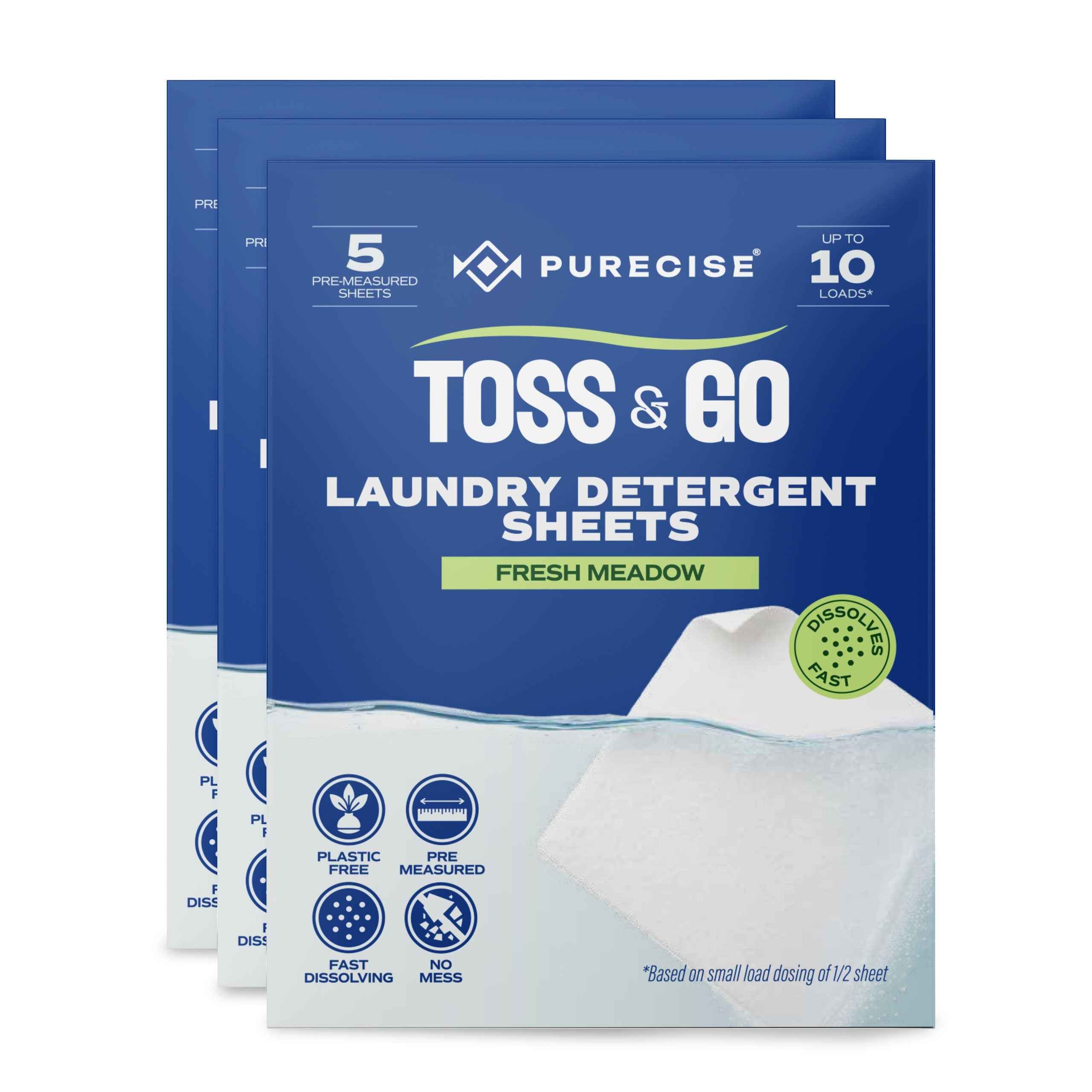
- Match the format to your machine and your patience. Liquid detergents clean aggressively but require accurate measuring, which is where most overdosing happens. Pods are convenient but pre-set the dose regardless of load size. Sheets like Purecise’s are pre-measured per load, dissolve fully in any water temperature, and skip the plastic jug, though Consumer Reports notes sheets can trail liquids slightly on heavy, ground-in stains.
- Verify HE compatibility if you own a high-efficiency machine. HE machines use less water, so detergent needs to be low-sudsing and dissolve quickly, according to the ACI’s HE factsheet. Using a non-HE formula, or overdosing an HE-compatible one, leaves residue behind that can trap and redeposit loose dye onto other garments.
Pro Tip: If a load includes both heavily soiled workwear and delicate colored pieces, split the load instead of compensating with extra detergent. Overdosing to fight stains is one of the most common causes of dye redeposit on lighter items in the same wash.
Dosing accuracy deserves more attention than most laundry guides give it. Liquid detergent caps are notoriously easy to overfill, and excess suds in an HE machine don’t rinse cleanly, leaving a film that can dull colors over several washes. Sheets and pods remove that guesswork by pre-setting the dose, which is one reason format choice isn’t purely about convenience. It’s also a color-protection decision.
What’s the Best Wash Routine to Prevent Fading?
Product choice only gets you halfway. The routine around it determines whether that “color guard” claim actually holds up over a garment’s lifespan.
- Test for colorfastness before the first full wash. Use the hidden-area method described above, especially for anything neon, saturated, or newly dyed.
- Wash new colored items alone for the first two or three cycles. Fresh dye is the most likely to bleed, and separating it protects everything else in the load.
- Pretreat oily or greasy stains before washing, not after drying. Enzyme-based pretreaters break down protein and oil stains that a wash cycle alone won’t fully lift, and once a stain gets baked in by dryer heat, it’s far harder to remove.
- Set the machine to cold water and a shorter or gentler cycle. Cold water slows dye breakdown and reduces the mechanical friction that wears down fibers.
- Turn garments inside out before loading them. This single step cuts down on visible surface abrasion, particularly on denim, printed tees, and anything with a face-side finish.
- Avoid overloading the drum. Overfilled loads increase friction between garments, which speeds up fading regardless of detergent quality.
- Air-dry when it’s practical. Heat is one of the biggest accelerants of fading and fiber breakdown. If you must use a dryer, run it on low heat and pull items out while still slightly damp.
A few extra notes worth keeping in mind as you build this into a habit:
- Color-safe oxygen bleach is an occasional additive, not a detergent replacement, and it still needs a colorfastness test before use on brights or delicates.
- Never apply oxygen bleach undiluted directly to fabric; follow the product’s mixing directions exactly.
- Turning garments inside out and using cold water is consistent with lab guidance for reducing abrasion, particularly on linen and other loosely woven fabrics prone to visible wear.
- Good Housekeeping’s lab testing backs the same combination: cold water plus inside-out washing measurably reduces pilling and color loss on dark garments, though detergents formulated specifically for darks can be milder on stains as a trade-off.
How Do Top Color-Safe Detergent Brands Compare?
Shoppers usually land in one of three categories when comparing options: mainstream liquid detergents marketed “for colors,” dye-free and fragrance-free liquids aimed at sensitive skin, and pre-dosed sheet formats built around convenience.
Mainstream color-guard liquids tend to clean aggressively and handle tough stains well, but many still contain fragrance, dyes, or optical brighteners that undercut their gentleness on sensitive skin. Dye-free liquids solve the skin-safety problem but can cost more per load and still require careful measuring to avoid the overdosing issues discussed earlier. Detergent sheets remove the measuring problem entirely since each sheet is a fixed dose, and they dissolve completely across water temperatures. The trade-off, per Consumer Reports’ testing, is that sheets and some compact formats can trail liquids slightly on the toughest, most ground-in stains.
Price comparisons get murky because “per load” costs vary by concentration and by how much detergent people actually use, which is often more than the label recommends. The more useful comparison is: does the format’s dosing accuracy protect colors and skin, does it disclose ingredients, and does it perform adequately on your household’s typical mess. For most sensitive-skin households doing regular laundry rather than heavy workwear loads, that balance tips toward pre-dosed, dye-free formats.
Are Color-Safe Detergent Claims Actually True?
The biggest misconception is that “color-safe” means “fade-proof.” It doesn’t, and no detergent on the market can make that promise, because dye stability depends on how the fabric was manufactured and dyed in the first place, not just what you wash it with.
A second common mix-up: assuming “free & clear” and “color-safe” are the same claim. They’re not. One is about skin, the other about fabric. A detergent can carry either label independently, so check both if both matter to your household.
There’s also a widespread belief that more detergent means cleaner, brighter clothes. It’s backwards. Excess detergent, especially in HE machines, leaves residue that dulls fabric and can even redeposit dye onto lighter garments in the same load. Precise dosing beats heavy dosing almost every time.
Finally, some shoppers assume oxygen bleach is inherently safe for all colors because it’s marketed as gentler than chlorine bleach. It’s gentler, not risk-free. It can still damage unstable dyes, which is exactly why the colorfastness test exists before you ever add it to a wash.
Which Detergent Works Best for Cotton, Synthetics, and Blends?
Fabric type changes how much risk a given wash routine carries, even with the same detergent.
Cotton holds dye reasonably well but is prone to fiber abrasion, which shows up as fading and a worn, chalky look over time. Cold water and reduced agitation matter more here than detergent choice alone.
Synthetics like polyester and nylon resist fading from washing itself but attract oil-based stains and can trap fragrance and residue from detergent that isn’t fully rinsed out, especially in HE machines that use less water. A low-residue, quick-dissolving formula matters more for synthetics than for natural fibers.
Blends split the difference and often show the most visible fading because the two fiber types absorb dye differently to begin with.
Delicate knits and anything with printed graphics deserve the most caution regardless of fiber content, since prints sit on the surface of the fabric and are the first thing to crack or fade under friction and heat.
What Ingredients Should You Avoid Beyond Fragrance and Dye?
Fragrance and synthetic dye get most of the attention, but they’re not the only common irritants worth screening out.
Optical brighteners, discussed earlier for their effect on colors, are also a known skin sensitizer for some people, particularly babies and anyone with eczema. Formaldehyde-releasing preservatives, sometimes listed under names like DMDM hydantoin, show up in some liquid detergents as a shelf-stability agent and are a recognized contact allergen for a subset of users. Sulfates like sodium lauryl sulfate boost suds but can strip natural oils from skin that comes into contact with residue on fabric, which matters more for babies and anyone with compromised skin barrier function.
Enzymes themselves, oddly, get unfairly blamed here. They’re generally not irritants; they break down protein, starch, and fat stains and rinse away with the rest of the wash. The EPA’s Safer Choice criteria evaluate finished products against a broader ingredient-hazard checklist, which gives sensitive households a more reliable filter than trusting front-label buzzwords alone. If you’re shopping for a household member with diagnosed sensitivities, a full ingredient breakdown is worth more than any single claim on the bottle.
What Do Customer Reviews Say About Color-Safe Detergents?
Review patterns across color-safe and sensitive-skin detergents tend to cluster around two questions: does it actually protect color over repeated washes, and does it clean well enough to skip a second product for tough stains.
Positive reviews for dye-free, fragrance-free formulas consistently mention reduced skin irritation and less noticeable fading on darks after several months of regular use. That tracks with the lab guidance on cold water and gentle formulas reducing abrasion-driven wear. Complaints tend to cluster around one of two issues: heavier stains needing a pretreater or a second wash, which lines up with Consumer Reports’ findings that gentle formulas often trail standard liquids on tough stain removal, and dosing confusion with liquid measuring cups, which sheet and pod formats sidestep by design.
The practical takeaway from that pattern: reviewers who prioritize color protection and sensitive skin over aggressive stain-lifting tend to report high satisfaction with gentler, pre-dosed formats. Reviewers dealing with heavy grease, sports gear, or workwear more often need to supplement with a dedicated pretreater regardless of which detergent they choose.
What Formula Features Actually Protect Color and Skin?
Three technical details separate a genuinely color-protective, skin-safe detergent from one that just claims to be.
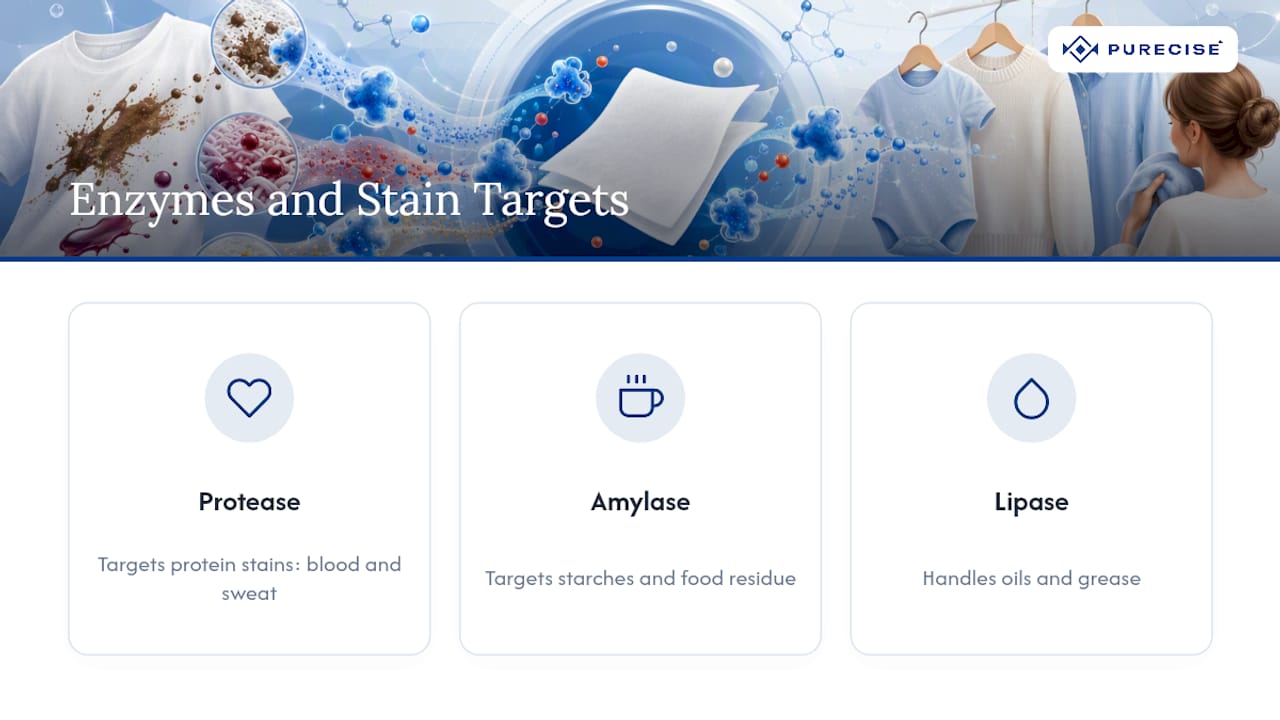
Enzyme type matters more than enzyme presence. Protease breaks down protein stains like blood and sweat. Amylase targets starches like food residue. Lipase handles oils and grease. A formula with a balanced enzyme blend cleans a wider range of stains without needing higher concentrations of harsher surfactants, which indirectly protects color by reducing how hard the wash has to work.
pH level affects both dye stability and skin comfort. Most detergents run mildly alkaline, which helps lift soil, but formulas at the higher end of that range can be more aggressive on dye bonds and on sensitive skin. A near-neutral pH formula is generally gentler on both fronts, though it may need a slightly longer wash time to match cleaning performance.
Absence of chlorine bleach is the single clearest color-protection signal on a label. Chlorine bleach breaks down dye molecules directly, which is exactly what you don’t want on colored fabric. Oxygen bleach, when present, is milder but still calls for a colorfastness test, per the ACI’s guidance, before you trust it on anything bright or delicate.
How Purecise Fits the Color-Care Checklist
Everything in this guide points toward the same short list: dye-free, fragrance-free, precisely dosed, low-residue, and HE-compatible. Some detergent sheets are built around exactly that combination. Each sheet is pre-dosed, which removes the overdosing risk that leads to residue buildup and dye redeposit in HE machines. The formula may dissolve fully across water temperatures, including the cold-water washes recommended for color protection, and can be hypoallergenic, which matters for households managing sensitive skin or a newborn’s laundry. For readers who want to go deeper on the sensitive-skin angle specifically, the difference between sensitive and regular detergent formulas is worth a closer read.
— Purecise
Try Purecise Toss & Go Detergent Sheets
If you’ve read this far, you already know the checklist: dye-free, fragrance-free, precisely dosed, and gentle enough for sensitive skin without giving up on stain performance. Certain detergent sheets check every one of those boxes without the plastic jug or the guesswork of a liquid measuring cap.
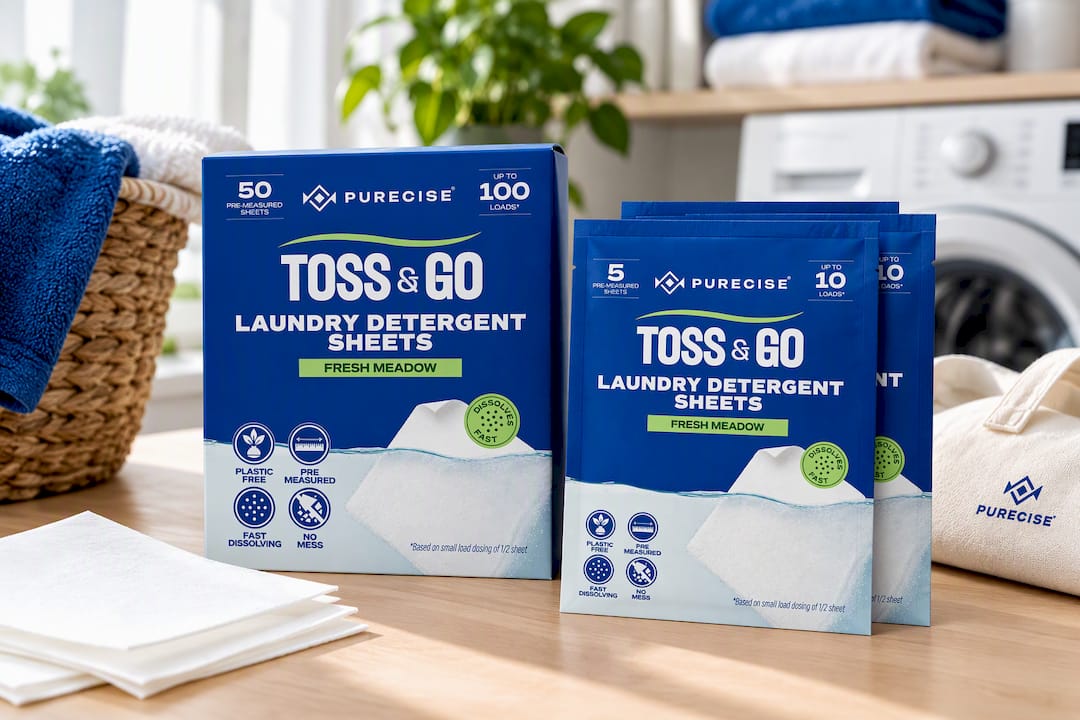
These sheets can be convenient for households managing sensitive skin or eczema, parents doing frequent baby laundry, travelers and RV owners needing a compact supply, and anyone seeking an alternative to heavy jugs. Additional benefits include eliminating measuring cups, saving shelf space, and reducing plastic waste. Some detergent sheet providers offer satisfaction guarantees with no returns required, allowing risk-free trials.
Grab a box of Toss & Go sheets for home use, or start with the travel envelope pack if you want to test it on a smaller scale first.
Sources
- Laundering Problems & Solutions | The American Cleaning Institute (ACI)
- How well do ‘gentle’ laundry detergents actually clean? | Consumer Reports
- EPA Safer Choice and Design for the Environment (DfE) standard (PDF)
- 8 Best Laundry Detergents of 2026, According to Scientists | Good Housekeeping
FAQ
Is Tide Detergent Safe on Colors?
Tide’s standard formulas are designed for general cleaning and aren’t marketed specifically as dye-free or fragrance-free, so they carry the same fading risks as any mainstream liquid on unstable dyes, hot water, or abrasive drying. Its “for colors” variants reduce some risk, but the ACI notes that no detergent formula alone stops fading caused by garment-side factors.
Is All Detergent Color-Safe?
No. Detergents containing chlorine bleach or strong optical brighteners can actively damage or dull colored dyes, and ACI guidance confirms even oxygen bleach requires a colorfastness test before use. Always check the label for bleach type before assuming a product is safe for darks or brights.
What Is the Best Detergent to Prevent Color Fading?
A dye-free, fragrance-free formula without chlorine bleach, used with cold water and a gentle cycle, gives colors the best odds of lasting. Pre-dosed, fully dissolving sheets like Purecise Toss & Go fit that profile since accurate dosing helps prevent the residue buildup that dulls colored fabric over repeated washes.
What Is the Best Dye-Free Detergent?
The best dye-free detergent for your household is the one that’s also fragrance-free, discloses its full ingredient list, and dissolves completely in your specific machine and water temperature. Sheets and liquids marketed as “free & clear” both qualify, but Consumer Reports testing shows performance on tough stains still varies by product, so match your pick to how heavily soiled your typical loads actually are.
How Much Does Purecise Cost?
Purecise doesn’t publish pricing directly in this guide, so check current pricing and available bundle sizes on the product page before ordering.
Recommended
Remove Ink Stains With 70% Alcohol and Premeasured Detergent Sheets
Cold Water Cleans: Evidence, Energy Savings, and When to Use 150°F
Related Posts

Remove Makeup Stains on the Go With a 10–15 Minute Pretreat

Remove Lipstick Stains: The First 15 Minutes, Plus Detergent Sheets

How Often to Wash Towels: Bath Weekly, Hand Towels Every Few Days

Detergent Allergy Rash: Test a Low Residue Wash Without Fragrance

Save Clothes From Mud Stains in 1–2 Hours With Premeasured Sheets

Fabric First Sweat Stain Fixes: Measured DIY Recipes and Sheets

Whiten White Clothes, No Chlorine: 4–8 Hour Soak, Premeasured Sheets


