

Remove Ink Stains With 70% Alcohol and Premeasured Detergent Sheets
Blot the wet ink immediately, keep the item away from heat, and skip the dryer until the mark is fully gone. Cold running water works for washable, water-based ink. Isopropyl alcohol applied to the back of the fabric is commonly recommended for ballpoint and oily inks after proper testing. Always test a hidden spot first, and if the piece is silk, wool, suede, or dry-clean-only, stop and hand it to a professional instead of guessing.
TL;DR:
- Water-based ink stains respond best to cold water rinsing and gentle blotting, while oil-based inks like ballpoint benefit from immediate alcohol application from the back.
- Always test solvents on a hidden fabric area to avoid damage, especially on delicate, dry-clean-only, or synthetic fibers susceptible to acetone or alcohol damage.
- Removing dried or permanent ink becomes increasingly difficult after the stain sets for more than a day, often requiring professional cleaning for valuable or delicate items.
- Avoid using heat from dryers until the stain is fully removed, as heat permanently sets ink into the fabric, making removal impossible.
- Keep a small stain-fighting kit with alcohol wipes, stain pens, and absorbent cloths for quick response to ink spills, treating stains within the first hour for the best chance of removal.
Table of Contents
- How Do You Identify the Ink Type Before Treating It?
- What Do You Need Ready Before You Start?
- How Do You Remove Ballpoint or Oily Ink Stains?
- How Do You Get Water-Based Marker Ink Out of Clothes?
- Can You Remove Permanent Marker or Fully Dried Ink?
- How Do You Treat Ink on Upholstery, Leather, or Delicate Fabrics?
- Why Does Dryer Heat Ruin Your Chances of Full Removal?
- What Belongs in a Stain-Fighting Kit at Home?
- Purecise Author Note on Stain-Aftercare Fit
- Do Vinegar, Baking Soda, or Lemon Juice Actually Remove Ink?
- Are Commercial Ink Stain Removers Worth Buying?
- How Do You Get Ink Off Skin, Wood, or Carpet?
- Our Take: DIY Works More Often Than People Expect
- Finish the Job With Toss & Go Detergent Sheets
- Where to Learn More About Stain Removal
- Sources
- FAQ
How Do You Identify the Ink Type Before Treating It?
Ballpoint ink usually leaves an oily, brownish smudge that spreads slightly at the edges but doesn’t dissolve when you dab it with plain water. Water-based ink, the kind in most kids’ markers and washable felt-tips, runs and feathers the moment water touches it. Permanent marker and India ink sit on top of the fiber and barely react to water at all, which is your clue you’re dealing with something tougher.
That identification step matters more than most people assume. The American Cleaning Institute notes that different ink families call for different first-line solvents, so grabbing rubbing alcohol for a water-based marker (when a cold rinse would’ve done the job) can actually drive pigment deeper.
Before touching any solvent, check the care label:
- Washable fabrics (cotton, poly blends, most denim): safe for alcohol-based treatment after a colorfastness test.
- Dry-clean-only labels: silk, wool, and some rayon blends need a professional, not a home fix.
- Acetate, triacetate, modacrylic, and many acrylics: alcohol can damage these fibers, and acetone is outright unsafe on them.
To colorfastness test, dab a small amount of your chosen product on an inside seam or hem, wait 5 to 10 minutes, then check for fading, bleeding, or texture changes before moving to the visible stain.
What Do You Need Ready Before You Start?
Gather everything before the ink has a chance to set further.
Set the garment stain-side down on a stack of paper towels. Working from the back pushes ink out of the fibers into the absorbent layer below instead of driving it further through the weave, and you’ll want to swap in fresh towels as they pick up color.
- Work in a ventilated room. Alcohol and acetone are flammable and shouldn’t be used near open flame.
- Never mix cleaning chemicals together. Combining bleach, ammonia, or acetone products can create dangerous fumes.
- Always run the colorfastness test first, even on fabrics you’re confident about.
Pro Tip: Keep a second stack of dry towels underneath the wet ones. As soon as the top layer gets saturated, a thin fabric can let ink bleed straight through onto whatever’s beneath it.
How Do You Remove Ballpoint or Oily Ink Stains?
Ballpoint responds best to a solvent-first approach, and speed matters. Follow this sequence:
- Blot excess wet ink gently with a dry paper towel. Don’t rub.
- Lay the stained area face down on absorbent paper.
- Apply 70% isopropyl alcohol to the back of the stain using an eyedropper or a soaked cotton swab, letting it push ink downward into the paper towel.
- Replace the absorbent layer as soon as it picks up color, and repeat until no more transfers.
- Rinse the area, pretreat with a stain remover or a Purecise detergent sheet, and launder at the hottest temperature the fabric allows.
- Inspect the wet fabric closely before it ever goes near the dryer.
Roughly 70% isopropyl alcohol is what shows up consistently in professional guidance for ballpoint and felt-tip ink, according to the ACI’s stain removal guide. They also recommend the colorfastness check before you commit to a full treatment.
If alcohol alone doesn’t finish the job, acetone-based nail polish remover is a reasonable next step, but only as a last resort. Test a hidden seam first, and never use it on acetate, triacetate, modacrylic, or similar synthetic fibers, since UGA Extension warns those materials can be damaged outright by acetone. Dab, don’t soak.
How Do You Get Water-Based Marker Ink Out of Clothes?
Washable markers and most kids’ art supplies respond to plain cold water more often than people expect, which means you can often skip solvents entirely. Here’s the order to work through:
- Flush the back of the stain under cold running water, letting the water push ink out rather than in.
- Blot repeatedly with a clean towel between rinses, checking progress as you go.
- If color still lingers, sponge 70% isopropyl alcohol from the outer edge of the stain inward, never starting in the center.
- Launder as usual once the stain has visibly faded or disappeared.
The ACI’s guidance on marker stains backs this cold-water-first sequence, and it’s a big reason washable markers marketed to kids are so forgiving on laundry day. Check the marker’s packaging: if it says “washable,” you’re almost always fine with water alone. If it doesn’t, or if you can’t tell, treat it more like a permanent-ink case and test before you commit to any solvent.
Can You Remove Permanent Marker or Fully Dried Ink?
Permanent marker and India ink are the toughest calls in this whole process, and honesty matters here: full removal isn’t always possible once the ink has set for more than a day or two.
Start with repeated alcohol blotting from the back of the fabric, giving each application time to work before adding more. If the fiber passed your colorfastness test for acetone, careful spot dabbing can pull more pigment out, but never soak the area. Soaking spreads pigment rather than lifting it.
- Watch for fading or dulling of the surrounding dye. That’s your signal to stop immediately.
- Watch for texture changes, like stiffness or a slightly rough patch. That means the fiber is reacting to the solvent, not the ink.
- If a faint shadow remains after two or three attempts, further scrubbing usually makes things worse, not better.
For anything valuable, silk, structured garments, or pieces you can’t risk, a professional wet-cleaning or solvent-based spot service is worth the cost. That’s genuinely the point where DIY stops being the smart move.
How Do You Treat Ink on Upholstery, Leather, or Delicate Fabrics?
Non-washable surfaces call for restraint, not aggression. The goal is absorbing ink, not flooding it.
- Blot only. Never scrub or press hard on upholstery, suede, or leather.
- Apply solvent in small amounts, and blot immediately after each application rather than letting it sit.
- Slide an absorbent pad underneath the fabric layer before treating so ink doesn’t transfer to whatever’s below.
- Let the area dry fully between attempts. UGA Extension warns that overwetting upholstery can cause a visible ring even after the ink itself improves.
- If you call a professional, tell them the ink type, what you’ve already tried, and any product you applied. That saves them time and prevents a chemical reaction from stacking treatments.
For finished wood surfaces or antique furniture nearby, the same overwetting caution applies. A professional cleaning perspective on delicate surfaces makes the same point: minimal moisture, patience, and testing beat brute force every time.
Why Does Dryer Heat Ruin Your Chances of Full Removal?
Heat sets ink permanently into fiber, which is why the dryer is the one appliance you avoid until the stain is completely gone. Rinse and launder at the hottest water temperature the care label allows, using a pre-wash treatment on the area first.
Once the wash cycle finishes, inspect the fabric while it’s still wet, under good light, before it goes anywhere near heat.
- If a pale shadow remains, repeat the spot-treatment sequence rather than tossing it in the dryer and hoping.
- An oxygen-based soak works well on colorfast washables that still show faint traces after one laundering pass.
- Solvent-soaked towels should be laid flat to air out fully before washing or disposing of them, since alcohol and acetone fumes can linger in an enclosed hamper.
- Any mask or cloth used for ventilation during acetone work should be washed separately from clothing.
Purecise’s Toss & Go detergent sheets work well for this exact aftercare step since they dissolve fully in cold or hot cycles, so there’s no undissolved residue sitting on a spot you just treated.
What Belongs in a Stain-Fighting Kit at Home?
A small kit saves you from scrambling when ink hits a sleeve five minutes before you need to leave the house. Keep travel-size alcohol wipes, a stain-treatment pen, and a few absorbent cloths together in one bag, and toss it in a car console or diaper bag if you’ve got kids who draw on themselves.
- Cap pens the second you’re done with them, and store markers away from soft furniture.
- Label kids’ markers “washable” clearly, or buy only ones that already say so on the barrel.
- Treat any spill within the hour. Ink that sits overnight is dramatically harder to shift.
- Hairspray, hand sanitizer, vinegar, and dish soap can help in a pinch, but their success is inconsistent, and hairspray in particular can leave a sticky residue if it doesn’t have enough alcohol content.
Pro Tip: A packable pretreat kit built for on-the-go spills works just as well for ink as it does for sunscreen or food, since the core idea, treat fast before it sets, is the same.
Purecise Author Note on Stain-Aftercare Fit
Toss & Go sheets are designed to be the last step in this kind of workflow: pre-dosed, hypoallergenic, and formulated to dissolve fully whether washing in cold water or hot. That matters after solvent treatment, since undissolved detergent residue can sit right on top of a spot you just worked hard to lift.
Do treat the stain first, then launder. Don’t skip the colorfastness test just because a product claims to be gentle. Do inspect before drying. Don’t assume every ink stain needs a harsh chemical when a gentler enzyme-based approach might finish the job on its own.
Do Vinegar, Baking Soda, or Lemon Juice Actually Remove Ink?
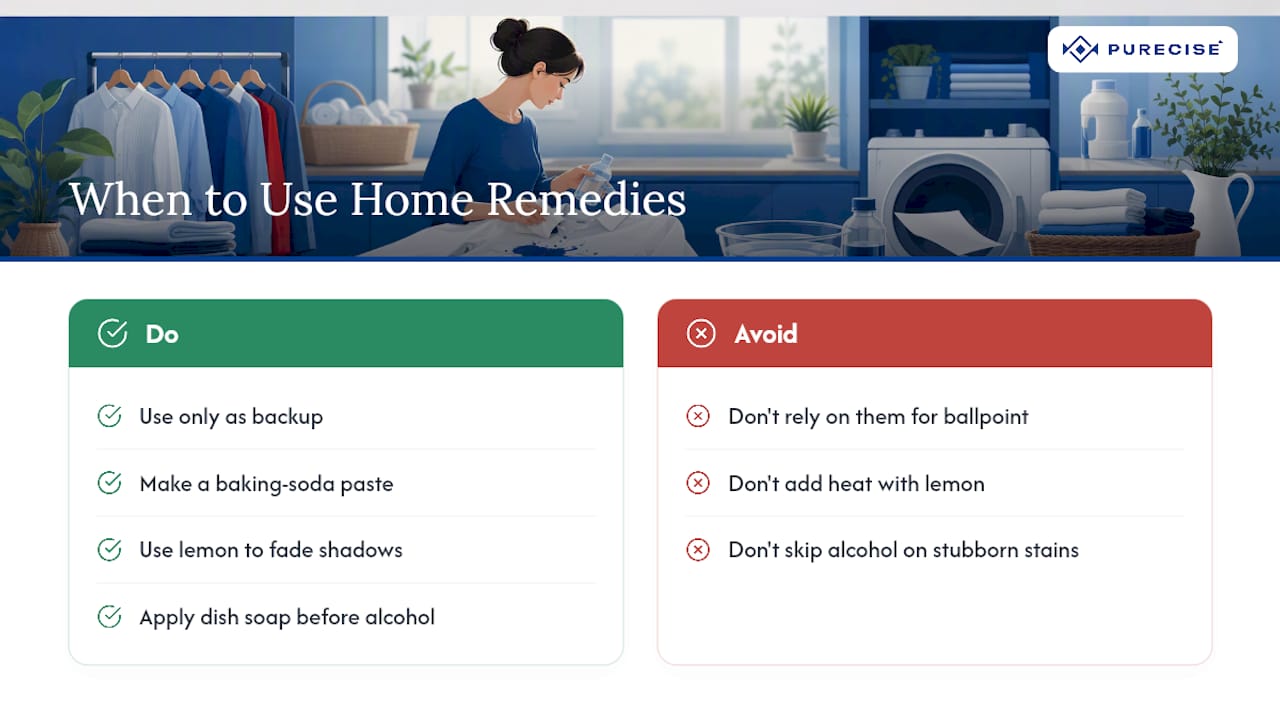
They help sometimes, but treat them as a backup, not your first move. White vinegar’s mild acidity can loosen certain water-based inks when soaked briefly before laundering, though it does very little against oil-based ballpoint pigment. Baking soda works best as a paste mixed with a small amount of water or vinegar, left on the stain for a few minutes to draw out lighter residue, then brushed off before washing.
Lemon juice has a similar mild bleaching effect to vinegar and can help fade a faint shadow left after your main treatment, but it needs sunlight or heat to really activate, and heat is exactly what you’re trying to avoid before the stain is gone. None of these three should replace alcohol on a stubborn ballpoint mark. They’re better suited to giving a mostly treated stain one more gentle push, or to handling a light water-based mark on a fabric you’d rather not expose to alcohol at all.
Dish soap, particularly the grease-cutting kind, deserves a mention here too. A drop worked gently into an oily ballpoint stain before the alcohol step can help break down some of the oil carrier in the ink, though it won’t touch the pigment itself. Combine it with your main solvent step rather than relying on it alone.
Are Commercial Ink Stain Removers Worth Buying?
Commercial pretreatment sprays and stain sticks are worth having on hand, especially for anyone who doesn’t want to measure out alcohol or acetone by eyedropper every time. Most work by combining surfactants with mild solvents, so they lift ink with one product instead of several steps.
The tradeoff is consistency. A Good Housekeeping Home Care Lab evaluation found that rubbing alcohol, ammonia, and acetone-based removers remain reliably effective on fresh ink, which is essentially what most commercial ink removers are built around anyway, just packaged more conveniently. If you already keep isopropyl alcohol at home, a dedicated commercial ink remover often isn’t a dramatic upgrade. But for someone who wants a single grab-and-go product, especially for older or set-in stains where guessing the right solvent ratio feels risky, a purpose-built remover takes the guesswork out.
Whichever product you choose, the same rules apply: test on a hidden area first, follow with a full launder, and check the fabric before it goes in the dryer. Commercial products don’t override fiber restrictions either. A remover containing acetone is still unsafe on acetate or modacrylic fabric no matter what the label promises.
How Do You Get Ink Off Skin, Wood, or Carpet?
Skin is the easiest surface to treat. Rubbing alcohol on a cotton pad lifts most ballpoint and marker ink within a minute or two, and plain soap and warm water handles washable marker just fine.
Wood furniture needs more caution. Test any solvent on a hidden corner first, since finish damage on wood and similarly sealed surfaces can happen fast if the solvent strips the coating along with the ink. A small dab of rubbing alcohol on a soft cloth, applied briefly and wiped away rather than left to sit, is usually the safest starting point.
Carpet calls for the same blot-don’t-rub principle as fabric. Work alcohol into the stain from the outer edge inward, blotting with a white cloth and switching to a clean section as it picks up color. Never pour solvent directly onto carpet. Apply it to your cloth first, then work it into the fibers, and place a dry towel over the damp spot afterward to help pull out any remaining moisture.
Our Take: DIY Works More Often Than People Expect
Most ink stains never needed a trip to the dry cleaner in the first place. Alcohol on the back of the fabric, patience, and a colorfastness test handle the overwhelming majority of ballpoint and marker mishaps. Save the professional route for silk, suede, and anything you genuinely can’t afford to get wrong. The instinct to reach for the harshest product first usually backfires. Gentle, solvent-first treatment followed by a full, low-waste laundering cycle gets better results with less fabric damage than most people assume.
— Purecise
Finish the Job With Toss & Go Detergent Sheets
There are alternatives to bulky liquid detergent jugs for the laundering step that follows every spot treatment in this guide. Tossing a pre-dosed detergent sheet into the wash allows for full dissolution in any temperature, avoiding undissolved residue on the treated spot. Hypoallergenic formulas can help avoid irritating skin that’s been through alcohol or acetone treatment.
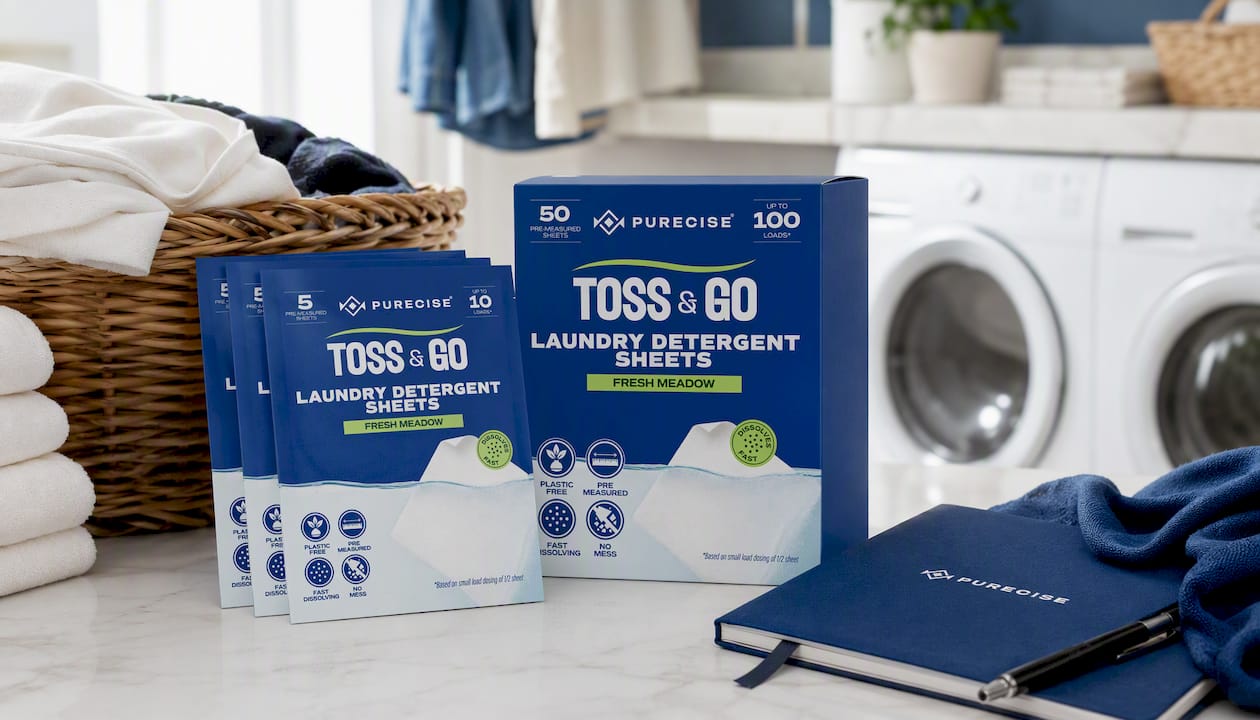
Each sheet is pre-measured to avoid guesswork for different load sizes, and detergent sheets can be compact enough for travel or stain treatment on the road. Some brands offer satisfaction guarantees with easy return policies. If you’re ready to make this your go-to aftercare product, grab the detergent sheets box for home use, the travel envelopes for your stain kit on the go, or browse the full collection to compare sizes.
Where to Learn More About Stain Removal
The American Cleaning Institute’s stain removal guide covers ink and dozens of other stain types. UGA Extension offers detailed fiber-safety guidance. Good Housekeeping and Martha Stewart both provide tested, step-by-step consumer guidance worth bookmarking for the next spill.
Sources
- Stain Removal Guide | The American Cleaning Institute (ACI)
- Remove stains from ink (UGA Extension)
- How to Remove Ink From Clothes (Good Housekeeping)
- How to Get Ink Out of Clothes (Martha Stewart)
FAQ
How Can I Remove Ballpoint Pen Ink Stains?
Rinse, pretreat, and launder at the hottest safe temperature, following the sequence backed by the ACI’s stain removal guide. Finish the wash with a Purecise detergent sheet to avoid leftover residue on the treated spot.
Does WD-40 Remove Ink Stains?
WD-40 can sometimes loosen ballpoint ink because of its oil content, but it also leaves its own oily residue that needs a thorough wash afterward. UGA Extension lists it among household remedies with inconsistent results, so treat it as a last-resort option rather than a first choice.
Will White Vinegar Remove Ink Stains?
White vinegar can help loosen some water-based ink stains when applied before laundering, but it does little against oily ballpoint pigment. It works best as a gentle backup step on lighter, washable marker stains rather than as your main treatment.
Does Dawn Dish Soap Remove Ink Stains?
Dawn and similar grease-cutting dish soaps can help break down the oily carrier in ballpoint ink when worked in gently before your main alcohol treatment.
When Should I Stop Treating an Ink Stain Myself?
Stop if the fabric shows fading, dulling color, or a change in texture after one or two solvent attempts, or if the care label says dry-clean-only, silk, or wool. A professional cleaner can often finish what a home treatment safely started without risking permanent damage.
Recommended
140°F Heat or 3% Peroxide: Sanitize Laundry Without Bleach
Color-Safe Detergent for Sensitive Skin: Premeasured Sheets
Related Posts

Remove Lipstick Stains: The First 15 Minutes, Plus Detergent Sheets

How Often to Wash Towels: Bath Weekly, Hand Towels Every Few Days

Detergent Allergy Rash: Test a Low Residue Wash Without Fragrance

Save Clothes From Mud Stains in 1–2 Hours With Premeasured Sheets

Fabric First Sweat Stain Fixes: Measured DIY Recipes and Sheets

Whiten White Clothes, No Chlorine: 4–8 Hour Soak, Premeasured Sheets

Remove Blood Stains from Clothes: Cold Water, Enzyme Soak, No Dryer


