

140°F Heat or 3% Peroxide: Sanitize Laundry Without Bleach
The most reliable bleach-free options are a hot sanitize cycle at 140°F or above, a 3% hydrogen peroxide boost, oxygen bleach, or an EPA-registered rinse sanitizer. Vinegar and essential oils only mask odor. Any hypoallergenic detergent, including Purecise sheets, works fine alongside these methods since none of them require a specific base detergent to function.
TL;DR:
- Using a sanitize cycle at 140°F or above, a hydrogen peroxide boost, oxygen bleach, or EPA-registered rinse sanitizer effectively disinfects laundry without bleach, depending on fabric and water temperature.
- Heat-based disinfection requires internal water heating to reach 140°F, which many budget washers lack, so check your machine’s capabilities before relying on sanitize cycles.
- Vinegar, essential oils, and borax improve freshness and odor but do not meet EPA disinfection standards and should not replace true sanitizing methods.
- For delicate fabrics or cold-water loads, EPA-registered rinse sanitizers provide a safe, effective disinfectant option without heat or oxidizers.
- Hypoallergenic detergent sheets, such as Purecise Toss & Go, work across all sanitizing methods without influencing their efficacy and are ideal for sensitive skin households.
Table of Contents
- What Sanitizing vs. Disinfecting Actually Means
- Bleach-Free Methods That Actually Sanitize
- Why Vinegar, Essential Oils, and Borax Fall Short
- Your Bleach-Free Sanitizing Routine, Step by Step
- Dryer Heat, Steam, and Sunlight as Finishing Steps
- Fabrics That Don’t Belong Near Heat or Oxidizers
- Why a Hypoallergenic, Pre-Dosed Sheet Fits This Routine
- Our Take: Stop Treating Bleach-Free as a Downgrade
- A Bleach-Free Detergent That Works With Every Method Above
- Sources
- FAQ
What Sanitizing vs. Disinfecting Actually Means
Cleaning removes visible dirt. Sanitizing lowers germ counts to a level public health agencies consider safe, usually a 99.9% reduction. Those numbers sound similar but represent very different levels of protection, and the method you need depends on why you’re washing.
Routine sanitizing covers everyday laundry: gym clothes, kitchen towels, school uniforms. True disinfecting matters more when someone in the house is sick, immunocompromised, or the laundry touched raw meat or bodily fluids. The CDC’s guidance on chemical disinfectants draws this same line, recommending EPA-registered products or sufficient heat when a real disinfect is required.
That heat threshold matters more than most people realize:
- Thermal disinfection needs water at 140°F (60°C) or hotter
- Standard hot water settings on many washers don’t reach that temperature without an internal heater
- A “sanitize” label on the cycle dial is the only reliable clue that the washer can hit it
Bleach-Free Methods That Actually Sanitize
Four approaches consistently hold up: heat, peroxide, oxygen bleach, and EPA-registered rinse sanitizers. Each fits a different laundry situation.
Thermal sanitize cycles. These pull water to 140 to 150°F using an internal heater, not just your water heater. Check your washer’s manual. Many mid-range and budget top-loaders skip the internal heater entirely, so the dial might say “sanitize” without the machine actually reaching that temperature.
Hydrogen peroxide (3%). The version sold at any pharmacy kills a wide range of bacteria and viruses in the wash. A peer-reviewed review of peroxide’s antimicrobial action supports using about one cup per full load, added at the start of the cycle so it has time to work during agitation. It’s color-safe on most fabrics, though a spot test never hurts.
Oxygen bleach (sodium percarbonate). This releases hydrogen peroxide once it hits water, giving you similar disinfecting power plus a brightening effect. EPA technical registration data on peroxide-based cleaners backs its effectiveness in warm to hot water, and it’s widely marketed as the color-safe alternative to chlorine bleach.
EPA-registered rinse sanitizers. Products built on quaternary ammonium compounds or pine oil are registered by the EPA specifically for laundry use and work in cold water during the rinse cycle. That makes them the only real option here for fabrics that can’t handle heat.
| Method | Works in cold water | Fabric risk | Rough cost per load |
|---|---|---|---|
| Sanitize cycle (140°F+) | No | Low for cottons, high for synthetics | Low |
| Hydrogen peroxide 3% | Warm/hot preferred | Low, spot-test dark colors | Low |
| Oxygen bleach | Warm/hot preferred | Low | Low to moderate |
| EPA rinse sanitizer | Yes | Very low | Moderate |
Why Vinegar, Essential Oils, and Borax Fall Short
None of these kill germs to a standard any health agency recognizes. That’s the honest answer, and it’s worth saying plainly because these are the three ingredients every “natural laundry hack” list recommends.
Vinegar softens fabric, cuts mineral buildup, and knocks down odor. A Harvard School of Public Health review confirms it’s useful for deodorizing but doesn’t meet EPA disinfection standards. Essential oils, tea tree and eucalyptus especially, smell antiseptic and have some antimicrobial activity in a lab dish, but nothing close to what you’d need in a diluted wash cycle.
Vinegar and essential oils have never cleared that bar in any recognized testing standard.
Borax and baking soda round out the “natural” trio. Both are genuinely useful:
- Borax boosts detergent performance and helps deodorize musty towels
- Baking soda softens water and neutralizes acidic odors
- Neither has EPA registration as a disinfectant, and neither claims to be one
Use these three for freshness and fabric feel. Switch to peroxide, oxygen bleach, or a registered sanitizer when actual disinfection is the goal, not just a nicer smell.
Your Bleach-Free Sanitizing Routine, Step by Step
- Contain and transfer carefully. If laundry came from an illness in the house, bag it separately and skip the shaking. Gloves help but aren’t required for most household loads.
- Sort by fabric tolerance. Check care labels before picking a method. Cotton and most synthetics handle heat and oxidizers fine; wool, silk, and spandex don’t.
-
Pick your wash recipe:
- A: Sanitize cycle at 140°F or higher, standard detergent.
- B: Hot or warm water plus 1 cup of 3% hydrogen peroxide added at the start.
- C: Warm water plus oxygen bleach, dosed per the product label.
- D: Cold water plus an EPA-registered rinse sanitizer in the softener dispenser, for delicates.
- Dry on high heat when the fabric allows it. This adds another layer of thermal sanitizing on top of the wash.
- Wipe the gasket and dispenser drawer after finishing a sanitize load. Lingering moisture in those spots is a common source of recontamination between loads.
Pro Tip: Add peroxide or oxygen bleach right at the start of the cycle, not partway through. Contact time during agitation is what actually kills germs, so a late addition gets a fraction of the exposure.
For loads with stubborn organic stains layered on top of the sanitizing need, like grease or food residue, treat the spot first. A pretreat routine for food stains before the sanitize cycle keeps the peroxide or oxygen bleach focused on germs instead of fighting old stains too.
Dryer Heat, Steam, and Sunlight as Finishing Steps
High-heat dryer cycles add real sanitizing value, especially for bulky items like comforters that can’t reach 140°F in the wash. Some machines include a dedicated steam sanitize setting, and research on heat-based infection control supports steam as a legitimate supplemental tool. Line-drying in direct sun helps too, but treat it as a bonus, not a primary method. Sunlight exposure at home is too inconsistent, in intensity and duration, to rely on alone.
Fabrics That Don’t Belong Near Heat or Oxidizers
Wool, silk, spandex, and many performance synthetics shrink, yellow, or degrade under high heat and oxidizing agents. Before running a full load with peroxide or oxygen bleach, test it on an inside seam first. For anything too delicate to risk, a cold-water EPA-registered rinse sanitizer, a dryer steam cycle, or professional cleaning are safer routes than gambling with heat.
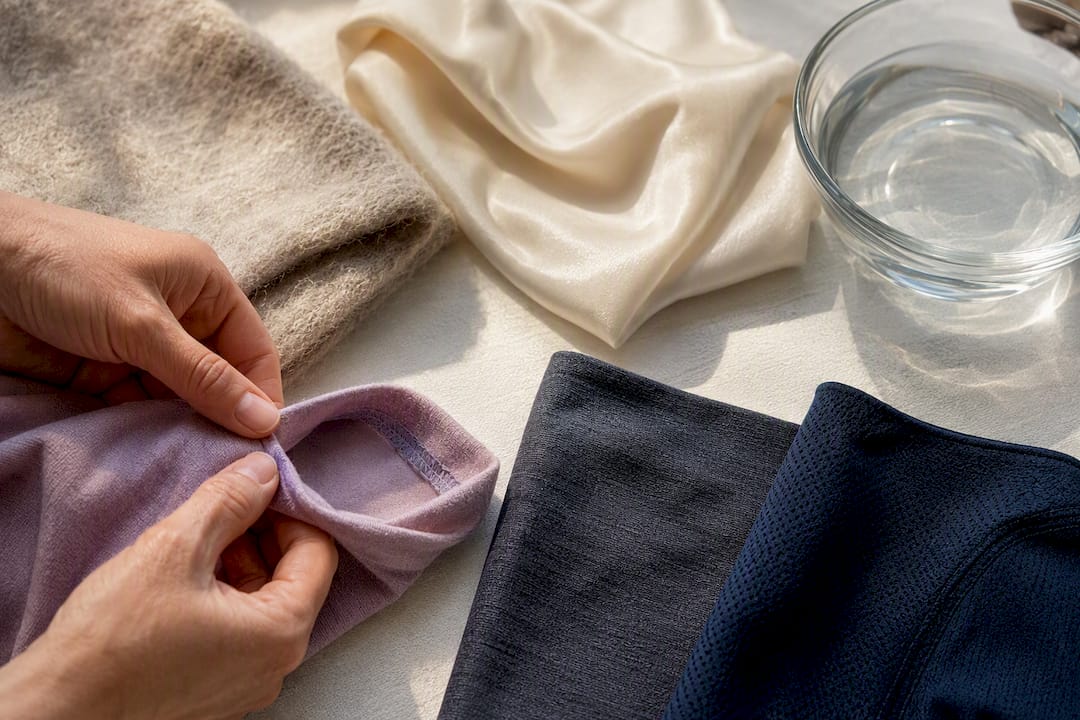
Why a Hypoallergenic, Pre-Dosed Sheet Fits This Routine
None of the sanitizing methods above depend on your detergent, which means the detergent choice comes down to what’s easiest on skin and least likely to introduce a new irritant. Purecise’s Toss & Go detergent sheets are plant-based, pre-dosed, and dissolve fully across water temperatures, so they slot into a hot sanitize cycle or a cold rinse-sanitizer load without changing your routine. There’s no scoop to misjudge and no cup to overfill, which matters for households already managing sensitive skin. A breakdown of what’s in hypoallergenic formulas explains why fewer additives generally means fewer reactions.
Our Take: Stop Treating Bleach-Free as a Downgrade
Most advice on this topic treats bleach avoidance as a compromise, as if you’re settling for “good enough” instead of real disinfection. That framing is backwards. A properly dosed hydrogen peroxide wash or a true 140°F sanitize cycle isn’t a consolation prize. It’s a verified method with the same disinfecting power, minus the fumes, fabric damage, and skin reactions bleach causes for a lot of households.
The real failure point isn’t the method, it’s the substitution people make instead. Reaching for vinegar or a few drops of tea tree oil because it feels natural, then assuming the laundry is disinfected, is where the risk actually lives. Vinegar has real uses. Disinfection isn’t one of them.
If you’re avoiding bleach for skin sensitivity, start there: pick a hypoallergenic detergent first, then layer in whichever disinfecting method fits the fabric. Getting that order right protects your skin and your germ-killing goal at the same time.
— Purecise
A Bleach-Free Detergent That Works With Every Method Above
Some detergent sheets offer a simple solution: pre-dosed, hypoallergenic sheets with no measuring or plastic jugs taking up shelf space. Whether running a 140°F sanitize cycle, adding peroxide, or using a cold-water rinse sanitizer for delicates, these sheets dissolve completely and typically do not include fragrances or dyes that commonly irritate sensitive skin.
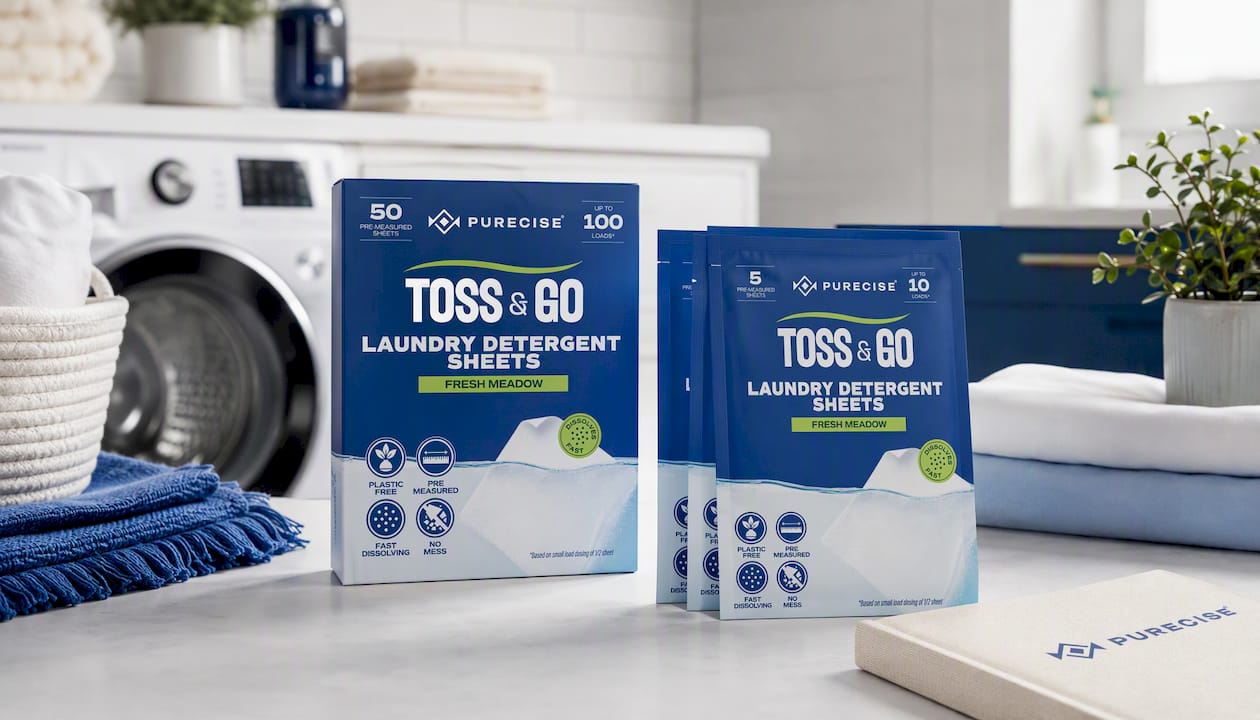
A full month’s supply of detergent sheets can fit in a pocket, which is convenient for laundry at shared facilities or while traveling. Some brands offer satisfaction guarantees to encourage trial without risk. Browse the detergent sheets box for home use, grab the travel envelopes for smaller loads, or check the full collection to compare pack sizes and start your next sanitize load with one less thing to measure.
Sources
- Peer-reviewed discussion of peroxide’s antimicrobial action
- EPA product registration / technical info for peroxide-based cleaners
- CDC pages on disinfection and chemical disinfectants
- Harvard School of Public Health summary on vinegar
FAQ
What can I use instead of bleach to sanitize laundry?
Each fits a different fabric type and water temperature, so match the method to your load rather than defaulting to one option.
Does vinegar actually disinfect laundry?
No. Vinegar reduces odor and helps with mineral buildup, but it does not meet EPA disinfection standards. Use it for freshness, not as a substitute for a real sanitizing method.
What do hospitals use to sanitize laundry?
Health care facilities rely on high-heat thermal disinfection, typically well above the 140°F (60°C) threshold, often combined with EPA-registered chemical disinfectants. Home washers rarely match that heat unless they have a dedicated sanitize cycle with an internal heater.
What can I put in my laundry to sanitize it without bleach?
For cold-water loads or delicates, an EPA-registered rinse sanitizer added to the softener dispenser works without heat. A hypoallergenic detergent like Purecise’s Toss & Go sheets pairs with any of these methods since it dissolves fully at any temperature.
Recommended
For Homeowners: Wash Pillows at Home Without Overdosing Detergent
Remove Ink Stains With 70% Alcohol and Premeasured Detergent Sheets
Related Posts

Remove Lipstick Stains: The First 15 Minutes, Plus Detergent Sheets

How Often to Wash Towels: Bath Weekly, Hand Towels Every Few Days

Detergent Allergy Rash: Test a Low Residue Wash Without Fragrance

Save Clothes From Mud Stains in 1–2 Hours With Premeasured Sheets

Fabric First Sweat Stain Fixes: Measured DIY Recipes and Sheets

Whiten White Clothes, No Chlorine: 4–8 Hour Soak, Premeasured Sheets

Remove Blood Stains from Clothes: Cold Water, Enzyme Soak, No Dryer


