

For Homeowners: Wash Pillows at Home Without Overdosing Detergent
Yes, you can wash pillows at home. Down, feather, cotton, and polyester pillows generally handle a gentle machine cycle just fine, but memory foam and most latex pillows can’t go in the washer at all and need spot or hand cleaning instead. Check the care label before you do anything else, and don’t skip the drying step. Damp filling left to sit is how pillows end up moldy.
TL;DR:
- Most pillows with down, polyester, or cotton fill can be safely machine washed on gentle, but memory foam, latex, and buckwheat hull pillows require spot cleaning or hand washing.
- Proper drying with low heat and adding dryer balls prevents clumping and ensures pillows are fully dry to avoid mold and mildew growth.
- Washing pillows twice a year is recommended, with more frequent cleaning for heavy sweaters, pet owners, and allergy sufferers, while pillowcases should be washed weekly.
- Avoid washing foam or latex pillows in the machine, and never machine wash buckwheat hulls, which need separate cleaning and air drying.
- Using pre-measured detergent sheets simplifies laundry, prevents residue buildup, and helps maintain pillow freshness over time.
Table of Contents
- Which Pillow Fillings Can You Machine Wash?
- How Do You Machine Wash Pillows Step by Step?
- How Do You Hand Wash Delicate Pillows?
- How Do You Dry Pillows Without Them Getting Lumpy?
- How Do You Get Rid of Stains and Odors on Pillows?
- How Often Should You Wash Pillows?
- What Laundry Habits Keep Pillows Cleaner Longer?
- How Should You Store Pillows After Washing to Keep Them Fresh?
- A Homeowner’s Quick Checklist for Pillow Care
- A Simpler Way to Wash Pillowcases and Covers
- Sources
- FAQ
Which Pillow Fillings Can You Machine Wash?
The care tag settles most arguments about how to wash pillows before you even start. Manufacturers print the actual limits for that specific fill, and those instructions override any general rule you read online, according to Wirecutter’s testing team.
That said, fill type tells you almost everything you need to know upfront:
- Down and feather: machine-washable on gentle, but drying takes patience and multiple cycles.
- Polyester and fiberfill: the most forgiving fill, safe on a normal or gentle cycle with warm water.
- Cotton-filled pillows: typically machine-safe, though they take longer to dry fully than synthetic fill.
- Memory foam and latex: never machine wash. Spot-clean and hand-wash only.
- Buckwheat hulls: never machine wash. Empty the hulls, wash the shell, air-dry the hulls separately.
- Shredded foam: hand-wash unless the tag specifically says otherwise, then dry flat to keep it from collapsing.
Consumer Reports backs this same split: common fills go in the machine, foam and latex don’t. Get the fill type right and the rest of the process is straightforward.
How Do You Machine Wash Pillows Step by Step?
Machine washing pillows isn’t complicated, but skipping a step is how people end up with lumpy, half-clean pillows or a washer that sounds like it’s having a breakdown.
Before you start:
- Strip off the pillowcase and any zippered cover, and wash those separately.
- Check seams for tears. A ripped seam means stuffing in your drum, not your pillow.
- Pre-treat any visible stains with a dab of detergent worked in with your fingers.
- Wash two pillows together, never one alone. A single pillow throws the drum off balance and can bang around hard enough to damage the machine, according to Tom’s Guide.
During the wash:
- Set the machine to gentle or delicate, using the water temperature the care tag allows.
- Use less detergent than you’d think. A small amount is enough, and running an extra rinse cycle clears out residue the first rinse misses.
After the wash:
- Run an extra spin cycle to wring out as much water as possible before the pillows ever touch a dryer.
- Move pillows to the dryer immediately. Wet filling sitting in a washer drum starts to smell within hours.
Pro Tip: Front-load washers are gentler on pillows than top-loaders with a center agitator, which can twist and tear seams. If you only have a top-loader, use the delicate cycle and keep an eye on the first few minutes.
How Do You Hand Wash Delicate Pillows?
Memory foam, latex, and some shredded-foam pillows never see the inside of a washing machine, but that doesn’t mean they’re stuck dirty. A bathtub and a little patience handle the job.
- Fill a tub with lukewarm water and a small amount of mild detergent, then submerge the pillow.
- Knead and press gently all over to work water through the foam, focusing on any stained or soiled areas.
- Drain the tub and press out the soapy water, then refill and rinse, repeating until the water runs clear.
- Press excess water out with both hands flat against the pillow. Never wring or twist foam. It tears the internal structure.
- Lay flat on a towel away from direct heat or sunlight until fully dry, which can take a full day or more.
For memory foam specifically, vacuuming first and spot-cleaning stains with diluted detergent often gets the pillow clean enough without a full soak. If a pillow is too fragile or expensive to risk, wash the cover alone and add a washable pillow protector underneath for ongoing protection.
How Do You Dry Pillows Without Them Getting Lumpy?
Drying is where most home pillow washes go wrong, and it’s the step that determines whether you end up with a fluffy pillow or a flat, clumped disaster.
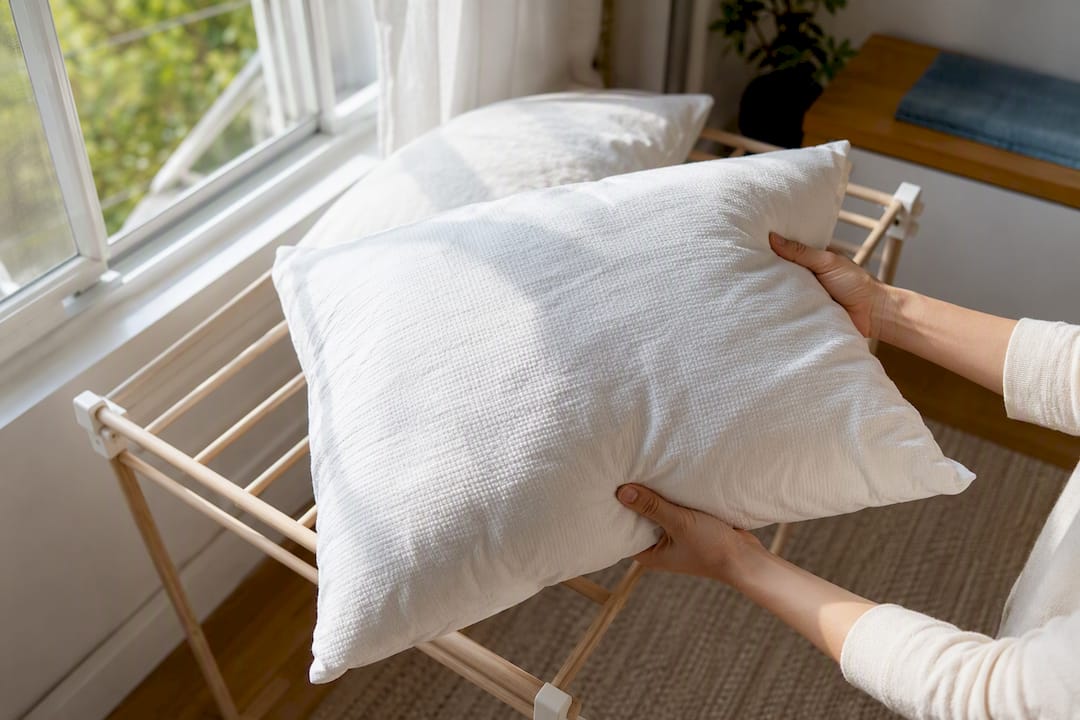
Use low heat or the air-fluff setting for down and feather pillows, and stick to no-heat settings for anything delicate. High heat can scorch synthetic fill, melt certain fabrics, and cook feathers until they’re brittle.
Toss in two or three dryer balls or clean tennis balls with each load. They knock apart clumps as the pillow tumbles and help redistribute filling that’s bunched up in one corner.
- Run the dryer in short intervals rather than one long cycle.
- Pull pillows out every 15 to 30 minutes and fluff and knead them by hand before putting them back in.
- Expect multiple cycles. Down and feather pillows especially can take two to three hours to dry completely.
Before you call it done, press firmly into the center of the pillow. If you feel any coolness or dampness, it’s not dry, no matter how dry the outside feels. CNN Underscored’s cleaning experts point out that incomplete drying is the single biggest cause of mildew in washed pillows, so run another cycle or let it finish air-drying rather than guessing.
How Do You Get Rid of Stains and Odors on Pillows?
Not every dirty pillow needs a full wash. Sweat smell, a faint yellow patch, or a small spot often responds to targeted treatment in under an hour.
- Dab a small amount of mild detergent or an enzyme-based stain remover directly on the mark, and patch-test on a hidden corner first.
- Let it sit for a few minutes, then blot with a damp cloth rather than scrubbing, which can spread the stain.
- Sprinkle baking soda over the entire pillow, let it sit for 15 to 20 minutes, then vacuum or shake it off to pull out trapped odor.
- For stubborn smells, a light vinegar-and-water rinse on the affected area can neutralize what baking soda leaves behind.
- If the pillow just needs freshening, skip the wash entirely and air it outside for a few hours, or run a no-heat, air-fluff dryer cycle with dryer balls.
For pillowcases and covers with cosmetic residue or deodorant marks, treating stubborn stains on fabric before laundering saves you from having to rewash the whole load.
How Often Should You Wash Pillows?
Twice a year is the baseline most cleaning experts recommend for a typical sleeper, but that number moves depending on how the pillow actually gets used. Consumer Reports recommends bumping that up to four times a year if you sweat heavily overnight, eat in bed, or share your pillow with a pet.
- Wash pillowcases weekly and pillow protectors every 2 to 4 weeks. They take the brunt of oil, sweat, and skin cells.
- Replace a protector as soon as it tears. A torn protector defeats the entire point of using one.
- Watch for signs a pillow is past saving: it won’t hold its shape after fluffing, it smells musty no matter how much you wash it, or yellowing won’t lift.
If a pillow hits any of those marks after a proper wash and dry, it’s done its job. Replace it rather than fighting it further.
What Laundry Habits Keep Pillows Cleaner Longer?
A lot of pillow damage traces back to something as basic as how much detergent gets used. Overdosing leaves behind residue that stiffens filling, causes clumping, and can irritate sensitive skin, a problem Tom’s Guide flags as one of the most common pillow-washing mistakes.
Pre-dosed detergent sheets solve that problem by removing the guesswork. One sheet is one wash, so there’s no eyeballing a cap or dumping in extra “to be safe.” A hypoallergenic formula also matters for pillowcases and shams that sit directly against your face all night, especially for anyone with sensitive skin.
- Pre-measured doses mean no leftover soap trapped in down clusters or foam.
- The compact, travel-friendly format makes it easy to keep a hypoallergenic detergent on hand in small apartments or during travel, where doing an occasional pillow refresh matters just as much as at home.
How Should You Store Pillows After Washing to Keep Them Fresh?
A pillow that comes out of the dryer bone dry and fully fluffed can still go stale or misshapen if you store it wrong afterward. The goal is airflow, low humidity, and enough room for the fill to hold its loft.
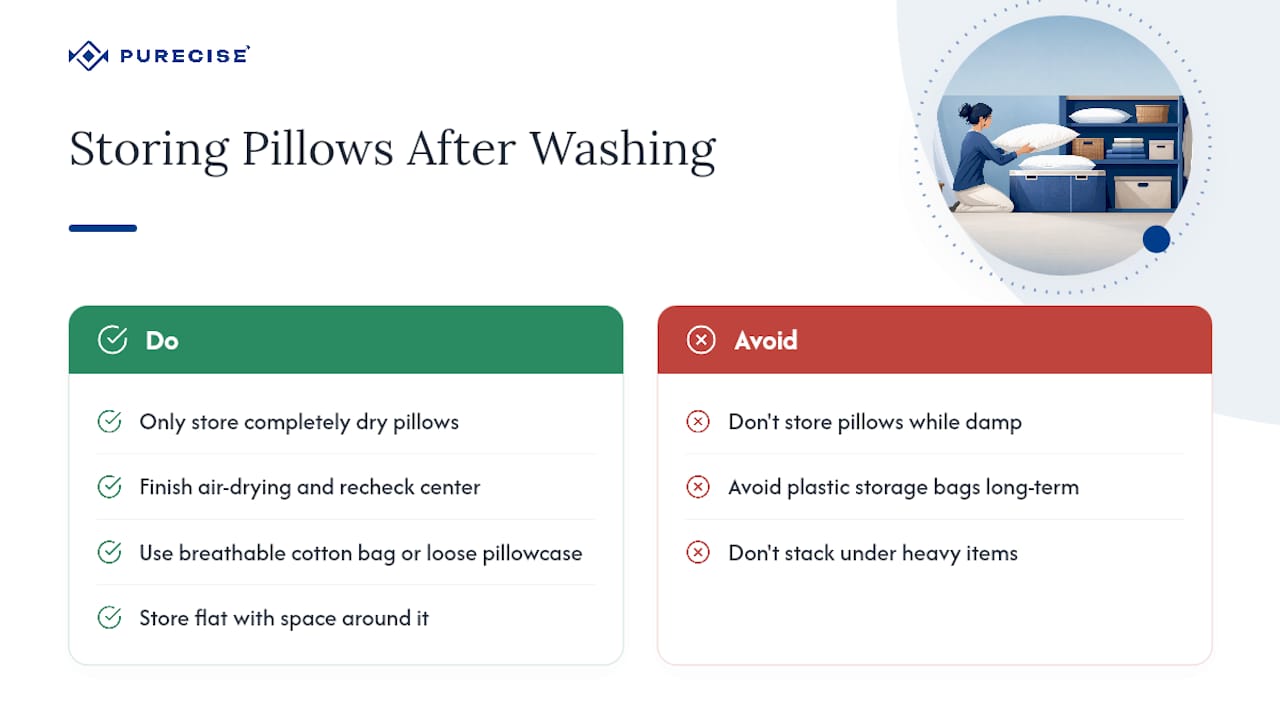
Never store a pillow while it’s even slightly damp. Trapped moisture inside a sealed bag or bin is exactly how mildew starts, even weeks after the wash. Let a freshly washed pillow finish air-drying in open air for a few extra hours after the dryer, then check the center again before putting it away.
Skip plastic storage bags for anything longer than a short move. Plastic traps humidity and blocks airflow, which flattens down and feather fill over time and can trap odors that build with no ventilation. A breathable cotton storage bag or a pillowcase left loosely closed works far better for pillows you’re not using every night, like guest room pillows or seasonal extras.
Store pillows flat rather than stacked under heavy items. Down and feather pillows recover their loft best when they’re not compressed for long stretches, and foam pillows can develop permanent dents if something heavy sits on them for weeks. A closet shelf or the top of a linen stack, laid flat with a little space around it, is ideal.
For pillows going into long-term storage, add a fabric sachet with dried lavender or a few drops of a mild essential oil nearby, never directly on the pillow, to keep things smelling fresh between uses. Rotate stored pillows back into regular use every few months so no single pillow sits untouched for a year, which gives odor and dust more time to settle in than airflow can fix.
A Homeowner’s Quick Checklist for Pillow Care
I keep this simple: fluff pillows daily and always sleep with a pillowcase over a protector. Once a month, I air them out or run an air-fluff cycle and hit any fresh stains right away instead of letting them set. Every three to six months, they get a real wash, machine or hand, depending on the fill. When a pillow won’t fluff back up or the smell won’t quit, it’s time to let it go.
— Purecise
A Simpler Way to Wash Pillowcases and Covers
Purecise’s Toss & Go detergent sheets take the guesswork out of the one variable that ruins the most pillow washes: how much detergent to use. Each sheet is pre-dosed, so there’s no measuring cup, no overpouring, and no leftover soap sitting in your pillowcases or protector fabric after the rinse cycle.
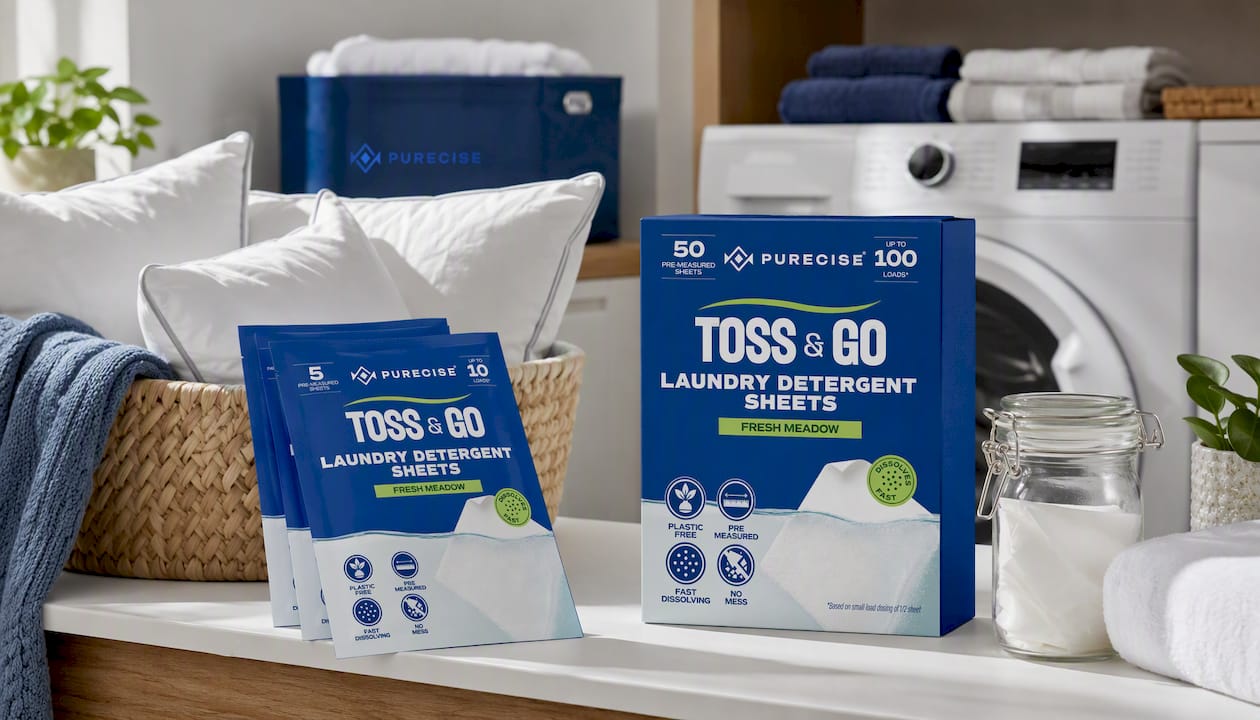
The hypoallergenic formula is worth knowing about if anyone in your house has sensitive skin, since pillowcases spend eight hours a night pressed against your face. And because detergent sheets are flat and compact, a supply can fit in a drawer or a travel bag, which matters if you’re washing linens in a shared laundry room, a small apartment, or on the road. Browse the Toss & Go detergent sheets or go straight to the detergent sheets box to add a pack to your next laundry day.
Sources
- How to wash a pillow | Consumer Reports
- How to wash your pillows in the washing machine | Tom’s Guide
- Can you put pillows in the dryer? | Sleep Foundation
- How to wash pillows | Wirecutter (NYTimes)
- How to wash pillows, according to cleaning experts | CNN Underscored
FAQ
Is It Safe to Wash Pillows in Your Washing Machine?
Most down, feather, cotton, and polyester pillows are safe to machine wash on a gentle cycle, according to Consumer Reports. Memory foam and latex pillows are the exception. They should be hand-washed or spot-cleaned instead, since machine agitation can break down their internal structure.
Why Do Pillows Turn Yellow?
Pillows yellow from a buildup of sweat, body oils, drool, and skin cells that soak into the filling over months and years of use. Regular washing every few months slows this down, but a pillow that’s deeply yellowed and won’t lighten even after a proper wash and dry has likely reached the end of its useful life.
Do You Put Pillows in the Dryer After Washing Them?
Yes, and it’s a required step, not an optional one. Use low heat or air-fluff, add dryer balls or clean tennis balls to break up clumps, and check the center of the pillow by hand for hidden dampness before storing it, since incomplete drying is the leading cause of mildew in washed pillows.
How Do You Stop Pillows From Going Lumpy After Washing?
Clumping happens when wet filling dries unevenly, so the fix is mechanical, not chemical. Add dryer balls or tennis balls to the load and pull the pillow out every 15 to 30 minutes during drying to fluff and knead it by hand, redistributing the fill before it sets in one spot.
How Often Should Pillows Actually Be Washed?
Twice a year is the general recommendation for most sleepers, rising to four times a year for anyone who sweats heavily, has pets in bed, or has allergies. Pillowcases and protectors need far more frequent washing, ideally weekly for cases and every two to four weeks for protectors.
Recommended
Store Detergent Sheets Right for Travel, Small Spaces, and Eco Shoppers
140°F Heat or 3% Peroxide: Sanitize Laundry Without Bleach
Related Posts

Remove Lipstick Stains: The First 15 Minutes, Plus Detergent Sheets

How Often to Wash Towels: Bath Weekly, Hand Towels Every Few Days

Detergent Allergy Rash: Test a Low Residue Wash Without Fragrance

Save Clothes From Mud Stains in 1–2 Hours With Premeasured Sheets

Fabric First Sweat Stain Fixes: Measured DIY Recipes and Sheets

Whiten White Clothes, No Chlorine: 4–8 Hour Soak, Premeasured Sheets

Remove Blood Stains from Clothes: Cold Water, Enzyme Soak, No Dryer


