

Store Detergent Sheets Right for Travel, Small Spaces, and Eco Shoppers
Keep your detergent sheets sealed in their original packaging or an airtight container, tucked somewhere cool and dry, away from bathrooms, laundry-room steam, or direct sun. Humidity is what ruins them: it breaks down the sheet, throws off dosing, and can strip the scent before you even get to the washer. Any sheet that feels damp, sticky, or crumbly should go in the trash, not the drum.
TL;DR:
- Proper storage involves keeping sheets in airtight containers away from humidity, heat, and sunlight to preserve their effectiveness and prevent clumping.
- Storing sheets in their original packaging or resealing them immediately after use extends shelf life and maintains cleaning performance for up to two years.
- Humidity, moisture, and handling with wet hands are primary factors that degrade sheets, causing uneven dissolution and reduced stain removal.
- Even well-stored sheets are ineffective on stubborn stains like grease, dried blood, or wine, which require pretreatment regardless of storage conditions.
- Using two sheets for heavily soiled or large loads is recommended, but a degraded or damp sheet should always be discarded to avoid poor cleaning results.
Table of Contents
- How to Store Laundry Sheets at Home and On the Road
- Does Storage Really Affect How Well Sheets Clean?
- What Storage Can’t Fix: Stains and Machine Limits
- What to Do With Damp, Damaged, or Leftover Sheets
- Why Purecise Designs Around the Storage Problem
- Which Purecise Format Fits Your Storage Setup
- Sources
- FAQ
How to Store Laundry Sheets at Home and On the Road
Detergent sheets are basically pressed powder with a shelf life that depends entirely on how much air and moisture reach them. Get the storage right and a box lasts as long as the sheets inside it are supposed to. Get it wrong, and you’ll be peeling apart a clump of mush in six weeks.
Here’s what actually works:
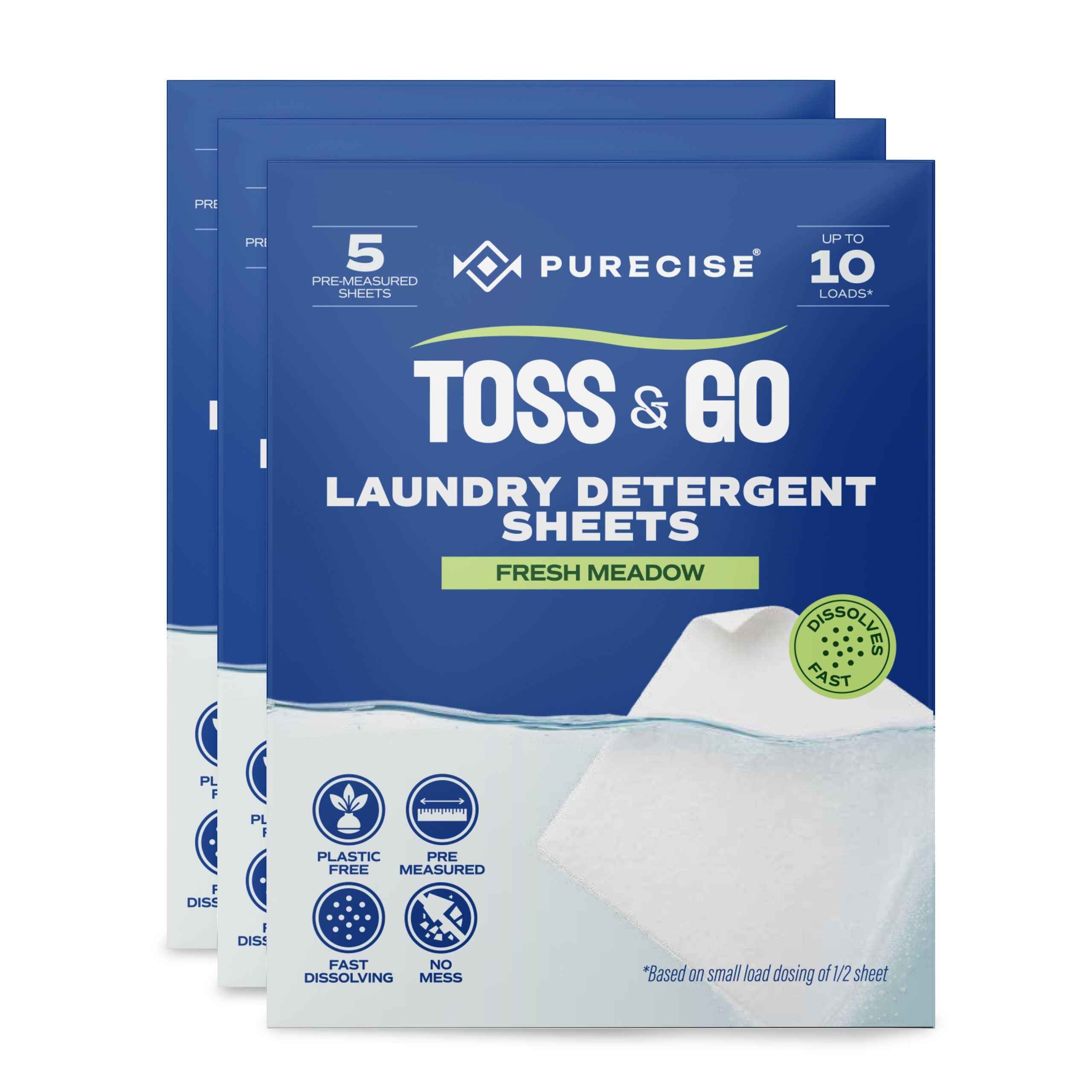
- Leave sheets in the original box or pouch whenever possible. Manufacturers design that packaging to block moisture, and resealing it after each use keeps that barrier intact.
- If you’ve opened the package, transfer loose sheets to an airtight container — a small tin, a snap-lid jar, or a resealable pouch all work fine.
- Store the container in a cabinet, pantry, or closet shelf, not the bathroom and not on top of the dryer, where heat and steam collect even when the door’s closed.
- For laundromat runs or trips, pack sheets in a resealable travel envelope or a small waterproof tin rather than a loose baggie, which tears and lets in air.
- Label any container you transfer sheets into with the date you opened the original pack and a rough “use by” window, so you’re not guessing later.
Brand help pages consistently point to the same rule: reseal after every use and avoid handling sheets with wet hands, since even a damp fingertip can start the clumping process on the sheet you touch and the ones stacked beneath it.
Pro Tip: Keep a spare tin or envelope in your gym bag or car if you do laundry away from home often. It costs nothing and means you’re never stuck peeling a soggy sheet off the bottom of a tote bag.
If you’re weighing formats for travel specifically, a dedicated travel-friendly sheet format built for packing light solves most of this before you even think about containers.
Does Storage Really Affect How Well Sheets Clean?
Yes, directly. Detergent sheets rely on enzymes and surfactants pressed into a thin, dissolvable strip, and both ingredients degrade faster when exposed to humidity. That’s the mechanism behind almost every complaint about sheets that “stopped working”: it’s rarely the formula, it’s the storage.
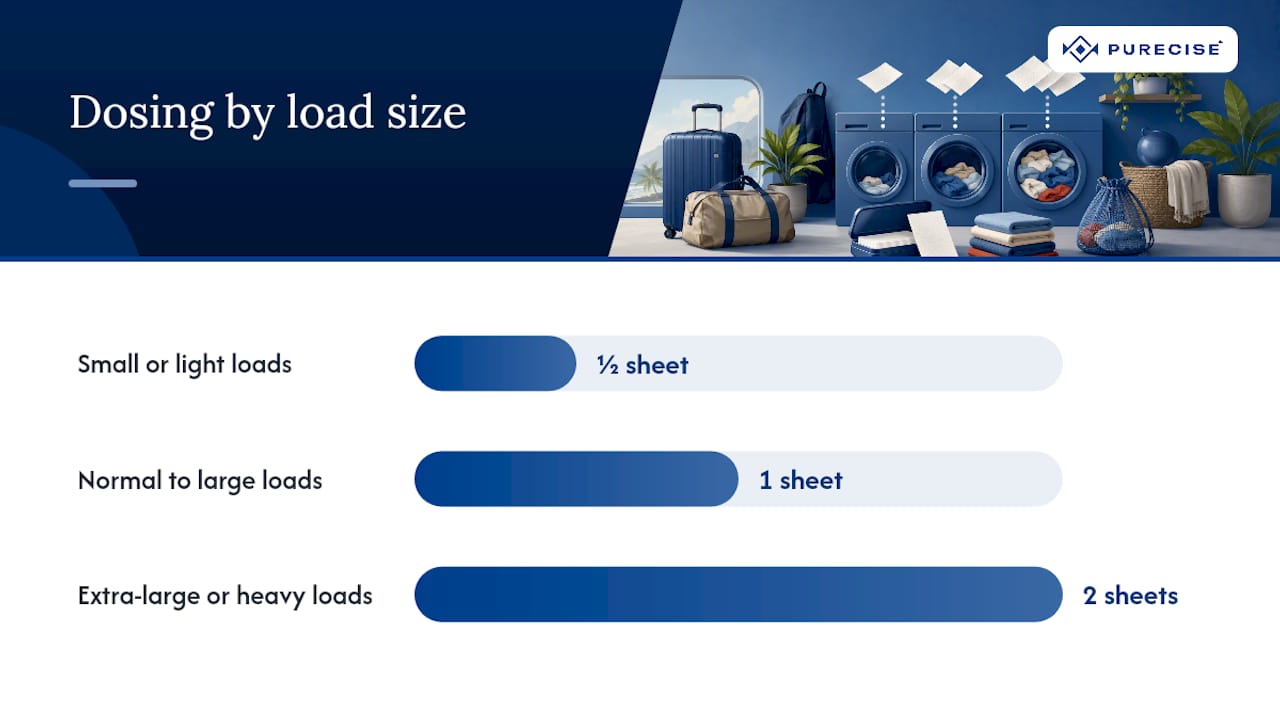
Some manufacturers suggest using sheets within a recommended time frame for the best scent and cleaning strength, though sealed, dry storage is what actually preserves their effectiveness. Dosing follows a similar logic. Standard guidance breaks it down like this:
- About half a sheet for small or lightly soiled loads.
- One sheet for normal to large loads.
- Two sheets for extra-large loads or heavily soiled laundry.
Moisture is the enemy of accurate dosing, too. A sheet that’s absorbed even a little humidity from the air can stick to its neighbor, tear when you separate it, or dissolve unevenly in the wash. Maytag’s usage guidance notes that sheets are a newer format with something of a learning curve, and correct storage is most of that curve.
Before tossing a sheet in the drum, run a quick check: does it feel brittle or oddly stiff? Is it sticky or tacky to the touch? Does it smell off compared to a fresh one? Any of those means it’s compromised, and it goes in the trash, not the wash. If a load comes out still dirty and you’ve ruled out overloading the machine, a degraded sheet from poor storage is a common, overlooked cause, and it may be worth checking your dosing math before assuming the product itself is the problem.
What Storage Can’t Fix: Stains and Machine Limits
Even a perfectly stored sheet has limits, and no amount of careful shelving changes that. They handle that reliably in HE machines, front-loaders, and cold water alike, since the low-using formula is built for exactly those conditions.
Where sheets can fall short is on the tougher end of the stain spectrum:
- Set-in grease or cooking oil often needs a pretreatment step before the wash, regardless of detergent format.
- Dried blood or red wine that’s had time to bond with fabric fibers may need a stronger, targeted treatment first.
- Heavily soiled workwear or sports gear sometimes benefits from a pre-soak, since one sheet isn’t formulated to do the job of a stain stick.
Laundry experts note that sheets are comparable to liquid detergent for routine loads but can underperform on the toughest stains, and that gap doesn’t close no matter how well you’ve stored the sheet. Machine compatibility isn’t the issue here. Sheets dissolve fine in cold water and HE drums; it’s the chemistry of the stain, not the wash temperature, that decides whether pretreatment is necessary.
The upside is that none of this cancels out the environmental case for switching formats. Less plastic, lighter shipping, and smaller packaging footprints hold up regardless, as long as the sheets you’re using haven’t degraded to the point where you’re re-washing loads and burning the water and energy savings you switched formats to get.
What to Do With Damp, Damaged, or Leftover Sheets
A sheet that’s absorbed moisture won’t bounce back. Drying it out and hoping for the best just wastes a wash cycle on unreliable cleaning power, so the right move is to toss it and grab a fresh one.
A few practical fixes and disposal steps worth knowing:
- Discard any sheet that’s damp, clumped, or visibly degraded rather than trying to dry and reuse it.
- Check the drum for leftover fragments after washing, especially with smaller loads, and remove them before running the dryer to avoid residue buildup.
- Wipe down the drum if you notice sticky film, which can happen with an overdosed or partially dissolved sheet.
- Recycle the cardboard box where your local program accepts it, and flatten it first. Manufacturer guidance on storage and disposal generally points to standard curbside cardboard recycling, though plastic-lined packaging may need to go through a separate stream depending on your city’s rules.
- Store sheets out of reach of children and pets, the same way you would any household cleaning product.
Left in the drum, undissolved fragments can build up residue over repeated cycles, which is more of a maintenance nuisance than a safety issue, but it’s worth catching early.
Why Purecise Designs Around the Storage Problem
Most of the storage headaches with detergent sheets trace back to one design flaw: packaging that lets in air the moment it’s opened. Purecise built its Toss & Go sheets around solving that from the start, cutting out the bulky bottles and messy measuring that make bathroom-shelf clutter and moisture exposure inevitable in the first place.
Every sheet is pre-dosed and dissolves fully in any wash type, hot or cold, HE or standard, which removes the guesswork that trips up a lot of first-time sheet users. The formula is free from harsh chemicals and built to be hypoallergenic, which matters if you’re storing a month’s supply somewhere kids or pets can reach it. A compact, sealed format isn’t just about saving shelf space. It’s about making sure what’s in your hand on wash day performs the same as it did the day you opened the box.
— Purecise
Which Purecise Format Fits Your Storage Setup
If your biggest challenge is cabinet space or you’re stocking up for the month, the Laundry Detergent Sheets Box is built for exactly that. It stacks flat, seals tight between uses, and holds up better in a linen closet or laundry cabinet than any jug ever could.
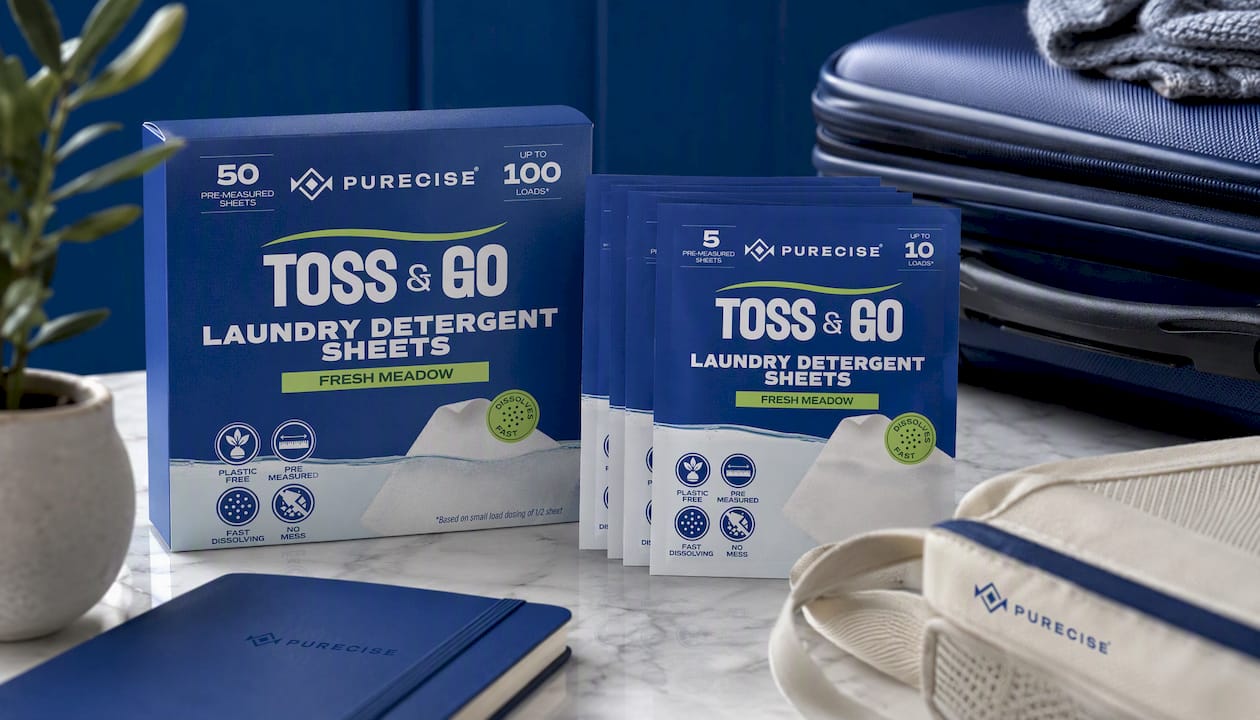
If you’re the type who does laundry away from home, whether that’s a laundromat, a dorm, a van, or a hotel room on a work trip, the Laundry Detergent Sheets Envelopes format is the better fit. It’s already portioned for portability, so there’s no tin to buy or baggie to repurpose. Some detergent sheet brands back their purchases with a money-back guarantee, so trying a new format doesn’t feel like a gamble. Browse the full lineup and pick whichever matches how and where you actually do laundry.
Sources
- How to use laundry detergent sheets: A step-by-step guide
- How to use laundry detergent sheets — Maytag
- Do laundry detergent sheets really work? — TODAY
- How should I store Sensitive Laundry Sheets and how do I dispose of the packaging?
FAQ
How Long Do Detergent Sheets Last in Storage?
Sealed and kept cool and dry, most sheets hold their strength for roughly two years, though scent and cleaning power can fade sooner if the packaging is left open to humidity.
Can I Store Detergent Sheets in the Bathroom?
It’s not ideal. Bathroom humidity from showers speeds up clumping and degradation, so a dry cabinet, closet, or pantry shelf is a better spot.
What Happens if a Detergent Sheet Gets Wet Before I Use It?
Discard it. A wet or damp sheet won’t dose evenly and may not dissolve properly, so it’s not worth risking on a load of laundry.
Are Purecise Sheets Safe to Store Around Kids and Pets?
Purecise’s formula is hypoallergenic and free from harsh chemicals, but sheets should still be stored out of reach and treated like any other cleaning product.
Can I Use Detergent Sheets for Heavily Soiled Laundry?
Yes, with two sheets recommended for extra-large or heavily soiled loads, though very stubborn stains like grease or set-in wine may still need pretreatment first.
Recommended
Stop Detergent Residue on Clothes: Cut Dosing 25–50% or Use Premeasured Sheets
For Homeowners: Wash Pillows at Home Without Overdosing Detergent
Related Posts

Remove Lipstick Stains: The First 15 Minutes, Plus Detergent Sheets

How Often to Wash Towels: Bath Weekly, Hand Towels Every Few Days

Detergent Allergy Rash: Test a Low Residue Wash Without Fragrance

Save Clothes From Mud Stains in 1–2 Hours With Premeasured Sheets

Fabric First Sweat Stain Fixes: Measured DIY Recipes and Sheets

Whiten White Clothes, No Chlorine: 4–8 Hour Soak, Premeasured Sheets

Remove Blood Stains from Clothes: Cold Water, Enzyme Soak, No Dryer


