

Stop Detergent Residue on Clothes: Cut Dosing 25–50% or Use Premeasured Sheets
That white powder is usually undissolved detergent, lint, or redeposited soil, not a stain. Rewash the affected load with no detergent, choose an extra rinse cycle, and use the hottest water the fabric care label allows. That single step clears most detergent residue on clothes without any spot treatment or special product.
TL;DR:
- Excess detergent, especially in high-efficiency machines, is the main cause of residue because they use less water for rinsing larger amounts of soap.
- Cold water below 60°F can prevent powdered detergents from dissolving fully, leading to undissolved particles trapped in fabric fibers.
- Mechanical issues like clogged dispensers, blocked spray jets, low water fill levels, or a failing pump reduce rinsing effectiveness and cause residue buildup.
- Rewashing clothes with no detergent in the hottest water safe for the fabric plus an extra rinse typically removes most detergent residue.
- Using pre-dosed detergent sheets eliminates dosing errors, dissolves better in various temperatures, and reduces the risk of leftover residue.
Table of Contents
- What Causes Detergent Residue on Clothes
- How to Remove Detergent Residue From Clothes Right Now
- Preventing Detergent Buildup Before It Starts
- Is Detergent Residue on Clothes Harmful to Your Skin?
- Why We Think Pre-Dosed Sheets Solve the Real Problem
- Try a Format That Removes the Guesswork
- Where to Verify These Fixes
- Sources
- FAQ
What Causes Detergent Residue on Clothes
Detergent residue almost always traces back to one of four things: too much detergent, the wrong format for your machine, water that’s too cold to dissolve powder, or a washer that isn’t rinsing properly.
Overdosing is the most common culprit, especially in high-efficiency (HE) machines. HE washers use far less water than older top loaders, so there’s simply less rinse volume to carry excess soap away. Whirlpool’s product help notes that more than about 2 teaspoons of concentrated HE detergent can exceed what a rinse cycle is built to flush out, leaving film behind on fabric.
Temperature matters just as much as quantity. Powdered detergents often won’t fully dissolve in water below roughly 60°F, which means a cold cycle can leave undissolved granules trapped in fibers. Using a non-HE detergent in an HE machine compounds the problem, since regular formulas produce more suds than low-water machines can rinse away.
Mechanical issues cause residue even when dosing is correct:
- A clogged dispenser drawer trapping detergent before it reaches the wash
- Blocked rinse jets or spray bars reducing rinse effectiveness
- Low water fill levels leaving too little volume to rinse a full load
- A weakening pump that can’t cycle water fast enough between fills
Overloading the drum, heavy body soils on activewear, and hard water minerals reacting with detergent to form insoluble deposits can all produce the same chalky look, even when you’ve done everything else right.
How to Remove Detergent Residue From Clothes Right Now
Check clothes before they hit the dryer. Heat can bake residue into fibers, turning an easy fix into a stubborn one. If you spot white marks on damp laundry, work through these steps in order:
- Rewash with no detergent. Run the load again using the hottest water safe for the fabric, plus an extra rinse or a large-load water setting if your machine offers one.
- Spot treat visible marks. Mix distilled white vinegar and water in a 1:2 ratio and dab it on residue spots. The mild acidity helps break the bond between detergent film and fabric, according to Whirlpool’s cleaning guidance.
- Try a baking soda paste on stubborn patches, or rubbing alcohol on the gummy residue that laundry pods sometimes leave when they don’t fully dissolve.
- Soak already-dried garments in warm water with an oxygen bleach product for 30 minutes before rewashing, since dried residue needs more time to loosen.
- Inspect the washer before running another load. A clogged dispenser or dirty filter will just redeposit the same residue on your next batch of clean laundry.
Pro Tip: If residue keeps showing up on the same few items, like leggings or sports bras, that’s usually body oil reacting with detergent rather than a dosing problem. Wash those pieces separately in warm water and skip fabric softener, which tends to make the buildup worse.
Preventing Detergent Buildup Before It Starts
Fixing residue once is easy. Keeping it from coming back is really about three habits: correct dosing, the right format for your cycle, and a washer you actually maintain.
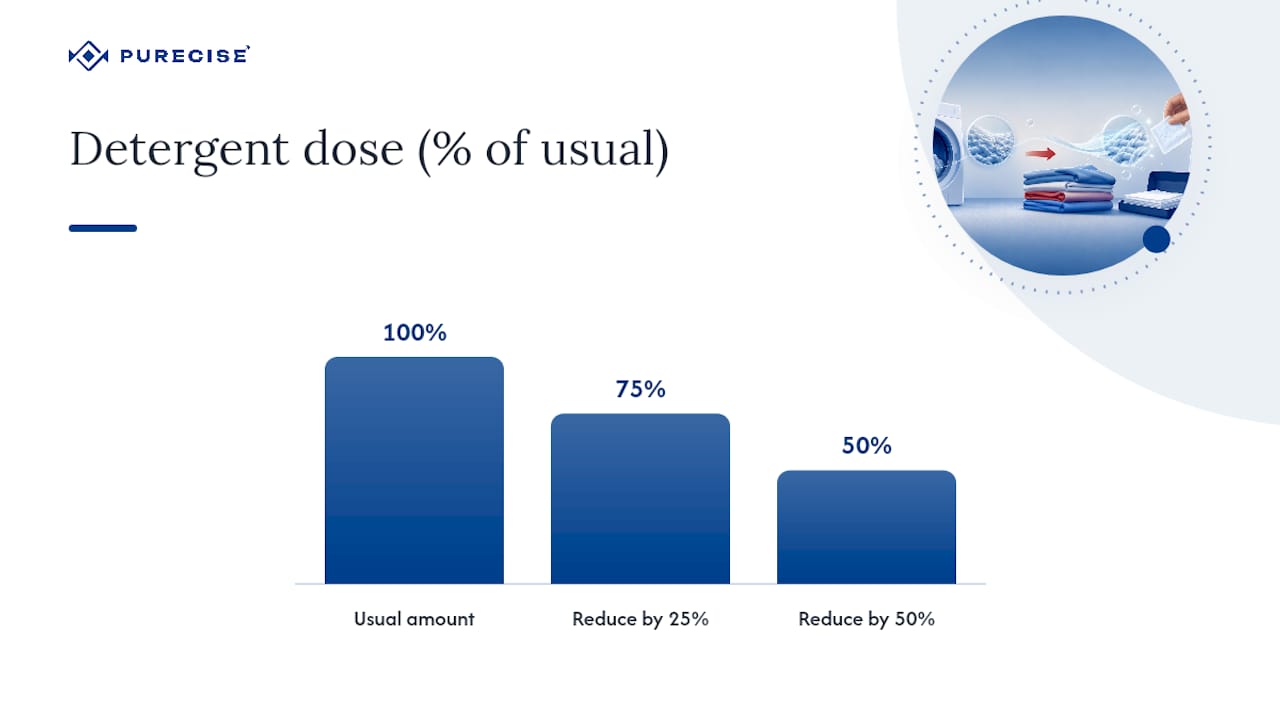
Start with the dosing line on your detergent cap, and treat it as a ceiling, not a suggestion. If you’ve had residue problems before, cut your usual amount by 25 to 50 percent for a few loads and watch what happens. HE machines in particular punish overdosing because there’s so little water to rinse with.
Liquid detergents and pre-dosed formats like sheets or pods dissolve more predictably in cold or short eco cycles than loose powder does, since there’s no granule size to fight against. Whatever format you use, add it to the machine before you load clothes in, not after, so it has time to disperse before fabric traps it.
For bulky items, towels, or heavily soiled activewear, an extra-rinse or normal/cotton cycle setting gives the machine more water and more time to fully clear detergent, compared to a quick or eco setting built for light loads.
Maintenance keeps all of that working:
- Clean the dispenser drawer every 2 to 4 weeks; dried detergent and softener residue in the drawer just washes back onto your next load.
- Run a dedicated clean washer cycle monthly, or every 30 cycles, using an appliance cleaner, which Maytag recommends to flush buildup from internal channels.
- If you have hard water, consider a water softener or slightly warmer wash temperatures, since minerals react with detergent to form the same kind of insoluble film.
- Avoid overloading. A packed drum leaves nowhere for water or detergent to circulate evenly.
Pro Tip: Modern HE washers are engineered around low-water eco cycles, which is great for utility bills but means detergent has fewer chances to flush through. Running an occasional heavy-duty cycle, even on lightly soiled loads, helps clear channels that eco settings never fully rinse.
Is Detergent Residue on Clothes Harmful to Your Skin?
Detergent residue looks worse than it usually is. For most people, the trace amounts left behind after a normal wash sit well below any threshold that would cause a reaction, and rewashing typically resolves the cosmetic issue entirely, according to The Spruce’s household guidance.
Sensitive skin and infants are the exception worth watching. If residue coincides with redness, itching, or a rash, don’t wait it out. Rewash the item with no detergent and an extra rinse, and switch to a hypoallergenic formula for future loads. If irritation persists after a clean rewash, that’s a signal to check in with a dermatologist rather than keep guessing at laundry fixes.
Why We Think Pre-Dosed Sheets Solve the Real Problem
Most detergent residue on clothes traces back to a dosing guess gone wrong, not a defective machine or a bad detergent. Purecise built Toss & Go sheets around that exact insight: each sheet is pre-measured, so there’s no cap to eyeball and no risk of dumping in double what an HE machine can rinse. They’re formulated to dissolve fully across wash temperatures, including the cold cycles where powder often fails.
To be fair, sheets aren’t the only fix. Correct dosing with any liquid detergent and routine washer maintenance work too. But for households that keep hitting the same residue problem, removing the guesswork removes the most common cause.
— Purecise
Try a Format That Removes the Guesswork
Purecise sheets are pre-dosed, so there’s no measuring cup, no bottle cap ceiling to eyeball, and no way to accidentally double up on detergent in an HE machine. Each sheet is formulated to dissolve fully in various wash temperatures, including cold and hot cycles, addressing common problems that leave powder residue behind. The formula is hypoallergenic, so households dealing with sensitive skin or an infant’s laundry don’t have to choose between clean clothes and skin comfort.
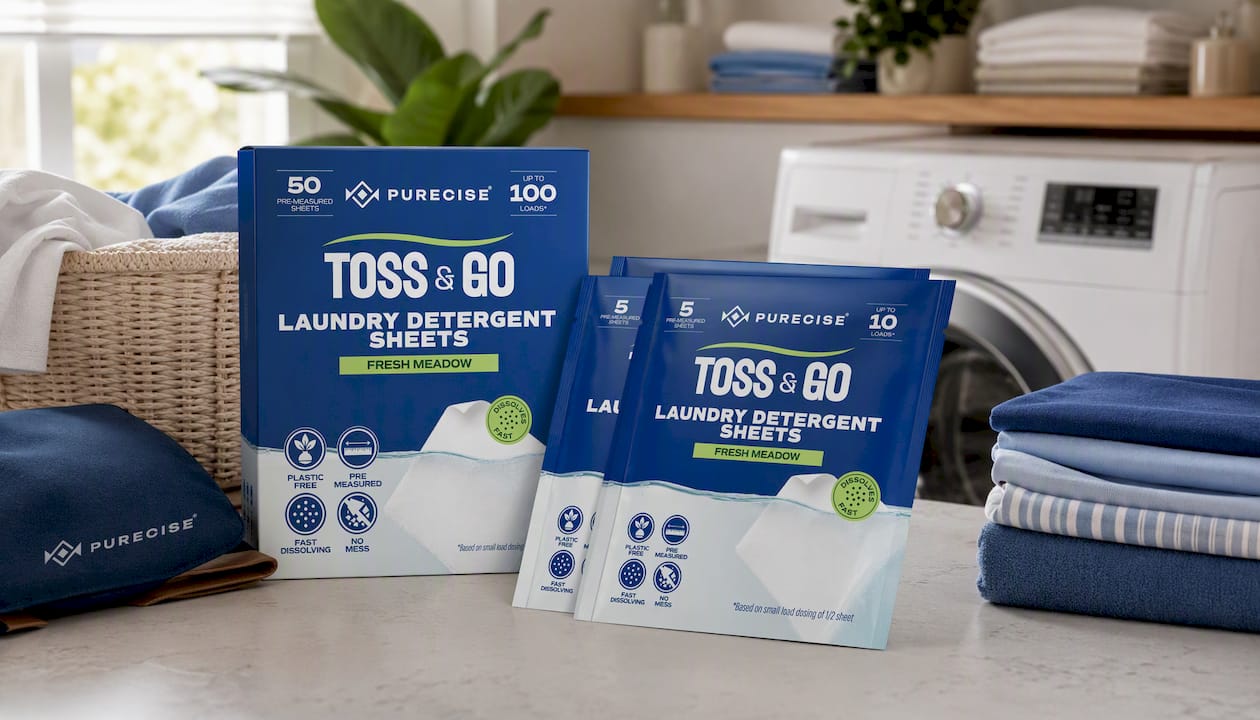
If residue keeps showing up no matter how carefully you measure powder or liquid, switching formats is a reasonable next move. Try a full box of detergent sheets for regular laundry, or start with the travel envelope pack if you want to test them on a smaller run first. Orders include a 30-day satisfaction guarantee, allowing customers to try a new format with confidence.
Where to Verify These Fixes
- Whirlpool’s white residue guide: dosing limits and cold-water dissolving issues.
- Maytag’s residue and cleaning cycle guidance: dispenser maintenance and clean-washer cycle timing.
- The Spruce’s residue explainer: consumer-facing removal steps and common causes.
- Better Homes & Gardens on laundry residue: why residue appears and how to avoid setting it with dryer heat.
Sources
- White Residue on Clothing - Product Help | Whirlpool
- White Residue on Clothing - Product Help | Maytag
- What Causes White Residue on Washed Clothes - The Spruce
- Why white residue appears on laundry - Better Homes & Gardens
FAQ
How do you get detergent residue out of clothes?
Rewash the load with no detergent, using the hottest water the fabric allows plus an extra rinse. For spots that remain, dab on a 1:2 vinegar-to-water solution or a baking soda paste before rewashing again.
Is detergent residue on clothes harmful?
For most people, no. Trace residue is a cosmetic issue that clears with a rewash, though sensitive skin or infants may react and should switch to a hypoallergenic formula like Purecise’s sheets if irritation continues.
Why is there residue on my clothes after washing?
The most common causes are using too much detergent, washing in water below about 60°F with a powder formula, a clogged dispenser, or an overloaded drum that limits rinsing.
Why are my laundry detergent sheets leaving residue on my clothes?
Sheets can leave residue if the water is too cold to fully dissolve them, if the machine is overloaded, or if more than one sheet is used for a small load. Using the correct sheet count for load size and adding it to the drum before clothes usually resolves this.
Recommended
5–15 Minute Fix for Baby Poop on Clothes With Enzymes and Purecise
Store Detergent Sheets Right for Travel, Small Spaces, and Eco Shoppers
Related Posts

Remove Lipstick Stains: The First 15 Minutes, Plus Detergent Sheets

How Often to Wash Towels: Bath Weekly, Hand Towels Every Few Days

Detergent Allergy Rash: Test a Low Residue Wash Without Fragrance

Save Clothes From Mud Stains in 1–2 Hours With Premeasured Sheets

Fabric First Sweat Stain Fixes: Measured DIY Recipes and Sheets

Whiten White Clothes, No Chlorine: 4–8 Hour Soak, Premeasured Sheets

Remove Blood Stains from Clothes: Cold Water, Enzyme Soak, No Dryer


