

5–15 Minute Fix for Baby Poop on Clothes With Enzymes and Purecise
Scrape off the solids, rinse cold from the fabric’s back side, pretreat with a protease enzyme spray or liquid detergent, wash on the warmest setting the care label allows, and skip the dryer until the stain is gone. Rinse thoroughly so no detergent residue sits against baby’s skin, then finish with a Purecise sheet in the wash and let sunlight fade any lingering shadow.
TL;DR:
- Using cold water immediately after a stain occurs helps prevent protein from setting into fabric fibers, making stain removal easier.
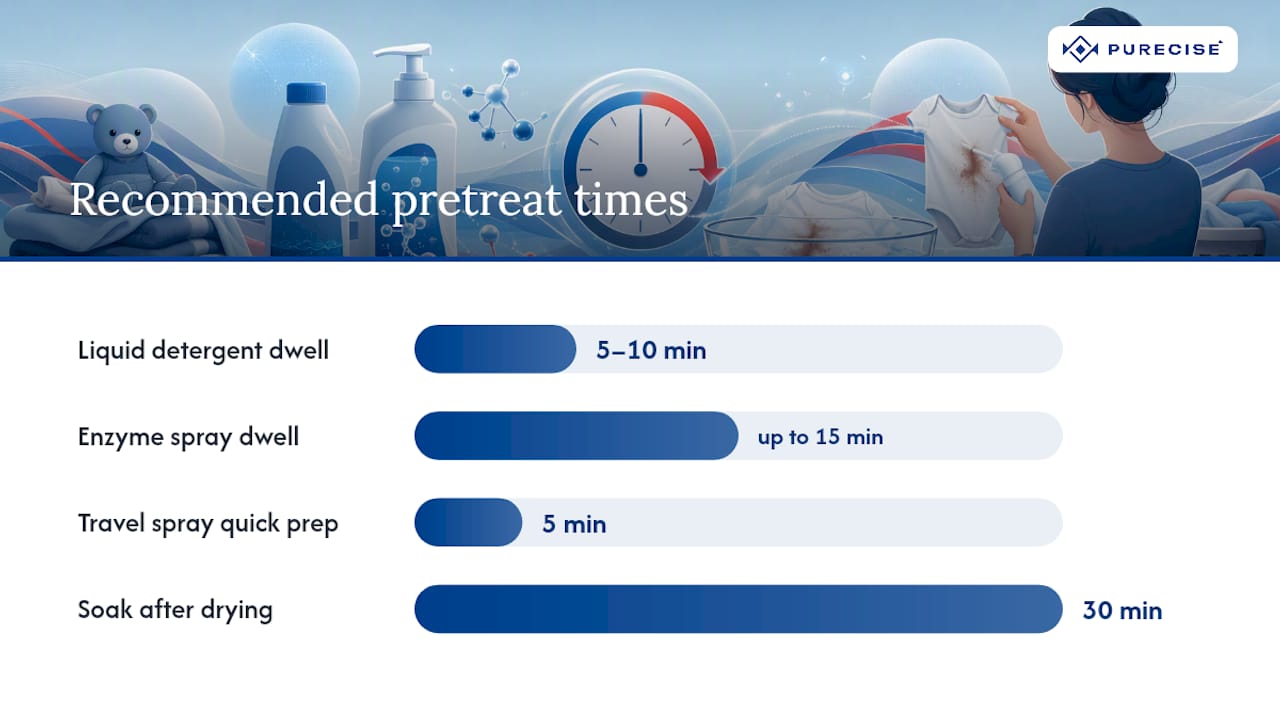
- Pretreating with enzyme spray or liquid detergent for 5 to 15 minutes maximizes the breakdown of protein-based poop stains before washing.
- Dried or set-in stains benefit from a soaking in cool water for at least 30 minutes and gentle re-treatment, rather than hot water or aggressive scrubbing.
- Oxygen-based bleach safely fights stains on both whites and colors with soak times of several hours, but chlorine bleach should only be used on white cotton if explicitly permitted.
- Pairing enzyme pretreatments with pre-dosed laundry sheets like Purecise improves stain removal and reduces chemical residue against sensitive skin.
Table of Contents
- How Do I Remove Baby Poop Stains From Clothes Right Now?
- Why Timing Matters for Fresh Stains
- What To Do About Dried or Set-In Poop Stains
- Handling Whites, Colors, and Sunlight Safely
- Which Cleaners Actually Break Down Poop Stains?
- Common Mistakes That Set Stains or Irritate Skin
- How Purecise Sheets Fit Into Your Stain Routine
- Practical Choices for Busy Caregivers
- Make Laundry Day Easier With Purecise
- Sources
- FAQ
How Do I Remove Baby Poop Stains From Clothes Right Now?
Grab a blowout kit before you need one: disposable gloves, a plastic scraper or old spoon, an enzyme spray, and a small basin. Here’s the sequence that stops a stain before it sets.
- Scrape off solid waste gently with a spoon or plastic card. Don’t grind it into the fabric.
- Flip the garment inside out and rinse under cold running water, aiming the stream from the back so the stain pushes out rather than deeper in.
- Rub in liquid detergent or spray an enzyme pretreat directly on the mark and let it sit 5 to 15 minutes.
- Wash on the warmest water temperature the care label permits.
- Check the spot before drying. If any trace remains, air-dry or sun-dry instead of tossing it in the machine.
Keep the whole kit in a diaper bag pocket. Ten seconds of scraping saves you a second wash cycle later.
Why Timing Matters for Fresh Stains
Cold water first is not a suggestion, it’s chemistry. Heat cooks protein into fabric fibers, which is exactly what you don’t want with a stain that’s mostly digestive protein. Rinsing from the back of the garment flushes the mess out the way it came in instead of pressing it further through the weave.
Once you’ve rinsed, you have two solid pretreat options:
- Rub liquid detergent directly into the damp stain until it foams slightly, then let it sit 5 to 10 minutes before washing.
- Spray an enzyme-based stain remover and give it a longer dwell time, up to 15 minutes, since protease enzymes need time to break down the proteins.
After pretreating, wash at the warmest temperature the label allows. Hold off on the dryer entirely until you’ve checked the spot in good light.
Pro Tip: Keep a travel-size enzyme spray in your bag. A five-minute pretreat at the changing table beats a 30-minute soak at home once the stain has dried.
What To Do About Dried or Set-In Poop Stains
A stain that’s had hours to dry needs a slower approach, not a stronger one. Rushing to hot water or heavy scrubbing at this stage usually makes things worse.
- Soak the item in cool water for about 30 minutes to loosen the dried residue before doing anything else.
- Reapply enzyme spray and gently work it into the fibers with an old toothbrush, never a hard scrub that can fray delicate knits.
- For color-safe fabrics, mix a sodium perborate oxygen bleach soak according to the product’s directions and let the garment sit anywhere from 1 to 6 hours, depending on how set the stain is.
- Repeat the pretreat and wash cycle if a shadow remains. Two gentle passes beat one aggressive one.
- Reserve chlorine bleach only for white cotton pieces where the care label explicitly allows it, and consider professional cleaning for wool, silk, or other delicate garments that can’t handle a soak.
Handling Whites, Colors, and Sunlight Safely
Oxygen-based bleach is the safer default for baby clothes because it works on both whites and colors without the harshness of chlorine. Sodium perborate formulas break down stains gradually, so soak times of several hours are normal are normal, not a sign something’s wrong.
- Follow the product’s dosing instructions exactly. More isn’t better with oxygen bleach.
- After washing, lay light-colored garments flat in direct sunlight for a couple of hours to naturally fade yellowing left behind by old stains.
- Skip the sun treatment on dark or brightly colored clothes. Extended UV exposure fades color just as effectively as it fades stains.
- Chlorine bleach belongs only on white cotton items whose care label specifically permits it. Everything else stays on oxygen bleach.
Sunlight works because UV light breaks down the leftover pigment compounds that survive a normal wash cycle, not because it “bleaches” fabric the way chemicals do.
Which Cleaners Actually Break Down Poop Stains?
Not every stain fighter does the same job, and knowing the difference saves you a ruined onesie. Protease enzymes specifically target protein, which is why enzyme-based cleaners outperform general detergent on poop stains. Check the label for “protease” or “protein-stain fighting” language before you buy.
Dish soap has its place, mostly on greasy residue left behind after a diaper leak, but it’s not a substitute for enzyme treatment on the protein itself. Vinegar and baking soda can lift mild odors and light residue, useful as a backup, not a primary weapon.
- Choose enzyme sprays or detergents labeled for protein stains as your first line of defense.
- Use dish soap for greasy edges around a stain, not the stain’s core.
- Never mix bleach with ammonia or vinegar. The combination produces fumes that are dangerous in an enclosed laundry room.
- Rinse thoroughly after any chemical treatment so no residue sits against sensitive skin.
Pro Tip: If you’re not sure whether a stain is protein or grease, treat it with enzyme spray first. Enzymes won’t hurt a greasy stain, but detergent alone often can’t touch a protein one.
Common Mistakes That Set Stains or Irritate Skin
Most stain-removal failures trace back to one of two habits: heat and haste. Checking the care label before reaching for bleach or the dryer takes ten seconds and prevents most of the damage parents unknowingly cause.
- Always check the care label’s symbols before applying heat or bleach; not every fabric tolerates either.
- Never run a stained item through the dryer until the mark is completely gone. Heat sets protein permanently, and once that happens no amount of soaking helps.
- Rinse pretreated garments thoroughly. Leftover detergent or enzyme residue can irritate a baby’s sensitive skin even after the stain is gone.
- Skip hard scrubbing on delicate knits and stick to gentle rubbing or a soft brush instead.
How Purecise Sheets Fit Into Your Stain Routine
Once you’ve scraped, rinsed, and pretreated with an enzyme spray, the wash cycle itself matters. Drop a pre-dosed Purecise sheet into the machine instead of measuring liquid detergent, and it dissolves completely in cold or warm water. The formula is designed to be gentle, which matters when you’re already worried about residue from a stain treatment.
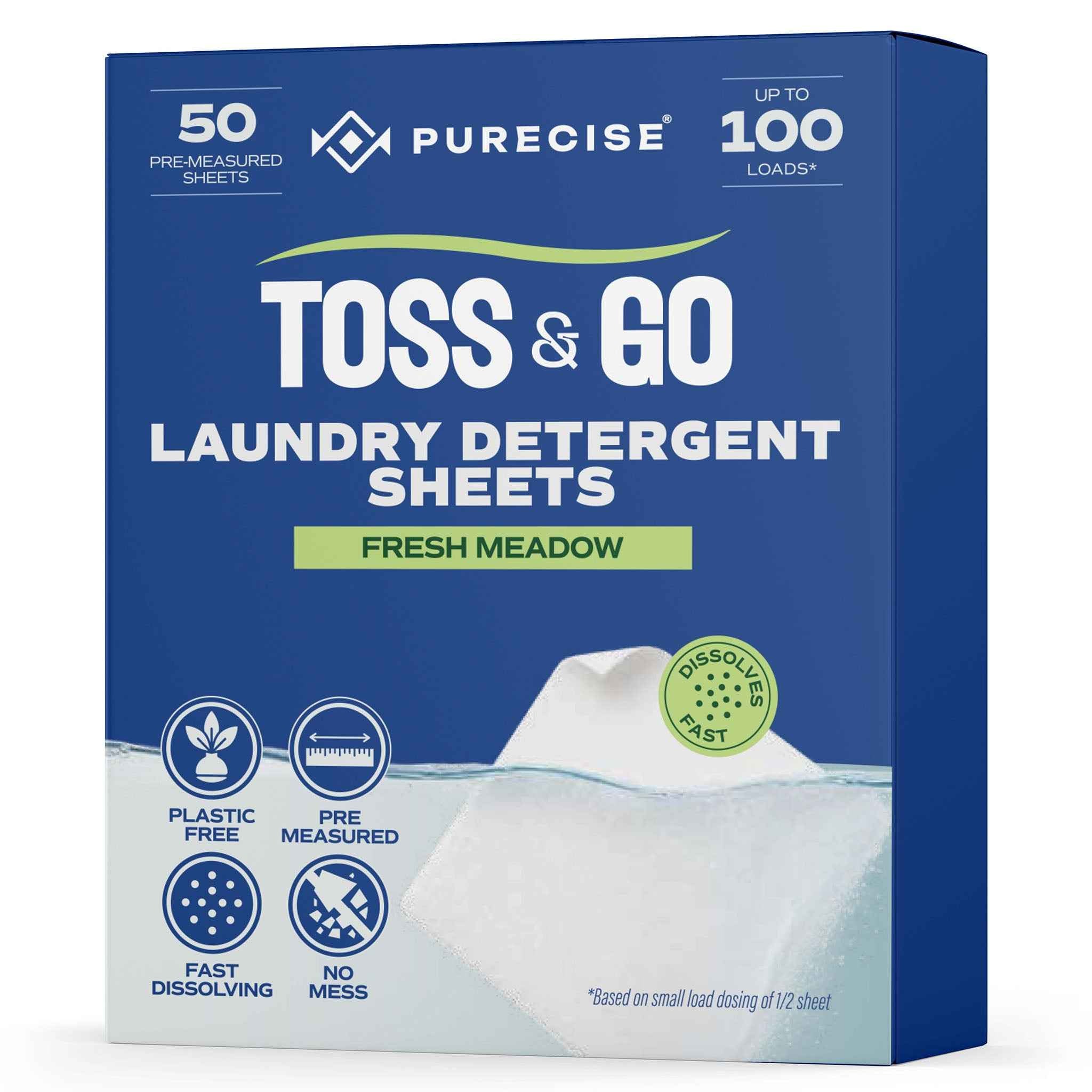
For toughest stains, pair a Purecise sheet with your enzyme pretreat rather than relying on either alone. The sheet handles the full wash while the enzyme does the targeted work on the mark itself. Beyond stain removal, each sheet cuts down on the plastic jugs piling up in your laundry closet, and Purecise backs every box with a full money-back guarantee if it doesn’t perform.
Practical Choices for Busy Caregivers
This routine favors speed and fabric safety over anything fancy. A quick treat-and-wash handles the vast majority of blowouts; save the oxygen-bleach soak for the stains that actually need it. Choosing oxygen bleach over chlorine whenever possible isn’t just gentler on baby skin, it’s gentler on the planet too.
— Purecise
Make Laundry Day Easier With Purecise
Purecise gives you one less thing to measure on a day already full of scraping, rinsing, and pretreating. Each sheet is pre-dosed, dissolves completely in any wash temperature, and skips the harsh chemicals that can leave residue against sensitive skin.
For parents who travel or just want less clutter under the sink, the envelope packs slide into a diaper bag without adding weight, while the full box covers a family’s regular laundry load. Every order comes backed by a 100% money back guarantee, so trying a box costs you nothing if it doesn’t work for your family. If a blowout just happened, pretreat with enzyme spray, then toss a sheet in with the wash and see the difference on the next load.
Sources
These are the guides behind the routine above: OxiClean’s poop stain protocol, the UGA Extension’s fecal stain guidance, StainWise’s baby stain sequence, and Babylist’s sunlight method. For general household stain habits, this family-safe cleaning guide is a solid companion read.
- How to Remove Poop Stains from Clothes - OxiClean
- Remove Stains From Feces/manure (Human, Animal) | Textiles - UGA Extension
- How to Get Baby Poop Stains Out of Clothes - StainWise
- How to Clean Baby Poop Stains With Sunshine - Babylist
FAQ
How Can I Remove Baby Poop Stains From Clothes?
Scrape off solids, rinse cold water from the back of the fabric, pretreat with an enzyme spray or liquid detergent for 5 to 15 minutes, then wash at the warmest temperature the care label allows and skip the dryer until the stain is gone.
How Do I Wash Baby Clothes With Poop Stains?
Pretreat the stain first, then wash using a gentle, hypoallergenic detergent like a Purecise sheet on a temperature the garment’s care label permits, checking the spot before you ever run it through the dryer.
Does Dawn Dish Soap Remove Poop Stains?
Dish soap can help lift greasy residue around a stain but doesn’t break down protein the way an enzyme-based cleaner does, so it works best as a supporting step, not the main treatment.
Can Poop Stains Be Removed From Clothes?
Most poop stains come out completely with a cold rinse, enzyme pretreat, and proper wash cycle, though older, set-in stains sometimes need a repeated pretreat or an oxygen bleach soak before they fully disappear.
Recommended
Travel Friendly Way to Remove Deodorant Stains Using Detergent Sheets
Stop Detergent Residue on Clothes: Cut Dosing 25–50% or Use Premeasured Sheets
Related Posts

Whiten White Clothes, No Chlorine: 4–8 Hour Soak, Premeasured Sheets

Remove Blood Stains from Clothes: Cold Water, Enzyme Soak, No Dryer

Pet Owners: Remove Hair from 5 Surfaces with a Washer and Dryer Trick

Wash Sheets Weekly, Dry Them Fully, and Stop Dosing Guesswork

6 Quick Steps to Remove Oil Stains at Home Without Ruining Clothes

Save Space: 50 Sheets Cover 50–100 Loads for Airbnb Hosts

Cut Detergent 25–50%: Use Premeasured Sheets for Soft Water


