

At Home: Remove Grass Stains From Clothes in 10–30 Minutes with Enzymes
The most reliable fix is an enzyme detergent applied straight to the stain, left to sit for 10 to 30 minutes, then a cold rinse and a normal wash. Grass stains are plant pigment, and enzymes break that pigment down before it bonds to the fabric. If the stain survives one wash, don’t put the garment in the dryer. Heat locks grass stains in permanently, and a product like an enzyme detergent sheet works well as a grab-and-go enzyme option for the diaper bag or gym duffel.
TL;DR:
- Applying enzyme detergent directly to the stain and letting it sit for 10 to 30 minutes before washing maximizes grass stain removal.
- Rinsing from the back of the fabric with cold water prevents pigment from embedding deeper into fibers, improving stain extraction.
- Old or set-in stains may require overnight soak in oxygen bleach, followed by thorough rinsing and laundering; enzyme treatment alone is often insufficient.
- Delicate fabrics like silk, wool, and linen need cautious patch-testing and should avoid harsh chemicals such as peroxide or vinegar.
- Pre-dosed enzyme detergent sheets provide a portable, effective, and safe solution, especially useful for quick treatment during outdoor activities.
Table of Contents
- How to remove grass stains from clothes step by step
- Which household remedies actually work on grass stains?
- Why enzyme detergents work best on grass stains
- How do you get old, set-in grass stains out?
- Which fabrics need extra care during stain removal?
- Why rinsing and drying technique makes or breaks the result
- What we think actually matters in this process
- Keep enzyme cleaning power ready for whatever the yard throws at you
- Sources
How to remove grass stains from clothes step by step
Grass stains respond best to speed. The longer chlorophyll sits on a fiber, the more it binds, so treat the mark before you even think about running a full load.
- Scrape off loose debris. Use a spoon or dull knife to lift any dirt or grass clumps before adding water or detergent.
- Rinse from the back of the fabric with cold water. Running water through the reverse side pushes the pigment out of the weave instead of driving it deeper, according to Real Homes.
- Blot, don’t rub. Rubbing spreads the stain and can grind pigment further into the fibers.
- Apply enzyme detergent directly to the stain. Work it in with your fingers or a soft brush.
- Let it sit for 10 to 15 minutes. Stubborn spots can go up to 30 minutes, based on the sit-time range recommended by Business Insider.
- Wash on the warmest setting the care label allows. Cold rinse first, then let the machine cycle do the rest.
- Inspect the garment while it’s still wet. If any shadow of the stain remains, repeat the treatment before drying.
That last step matters more than people think. Once a grass stain goes through a hot dryer cycle, you’re often looking at a permanent mark rather than a quick fix.
Which household remedies actually work on grass stains?
Not every pantry item deserves the same job. Some are gentle enough for daily use, others are better saved for stubborn, older marks.
- Distilled white vinegar (1:1 with water): Mist or dab onto fresh stains, let sit 15 to 30 minutes, then rinse. Good for cotton and polyester, risky on silk or wool.
- Baking soda paste (3 parts soda to 1 part water): Spread over the stain, let dry, then brush off before laundering. Works well on polyester athletic wear, but its abrasive texture means it should be used lightly on tighter weaves.
- Hydrogen peroxide + dish soap (equal parts): Effective on white or colorfast fabrics. Test on a hidden seam first since peroxide can lighten dyed fabric.
- Rubbing alcohol: Dab onto the stain with a cotton ball for a quick pigment break on sturdy synthetics.
- Dish soap alone: A mild, low-risk option for pretreating before the enzyme step, especially on kids’ clothes.
Pro Tip: Always patch-test on an inside seam or hem first, and never combine vinegar with hydrogen peroxide. The mix can create a mild acid that’s rougher on fabric than either ingredient alone.
Why enzyme detergents work best on grass stains
Grass stains are made of chlorophyll and plant proteins, and enzyme detergents are built specifically to digest that kind of organic material. That’s why enzyme-based cleaners are considered the standard first-line treatment for grass, grease, and other biological stains, according to Maytag. Purecise’s enzyme cleaning guide breaks down how those enzymes target protein bonds without harsh chemical bleach.
Application matters as much as the product itself:
- Apply liquid enzyme detergent or a pre-treater directly to the stain.
- Work it into the fibers gently with your fingers or a soft-bristle brush.
- Let it sit 10 to 30 minutes before washing, per Business Insider’s recommended range.
On water temperature: rinse cold first always. Warm or hot water can help lift stubborn pigment, but only after the enzyme has had time to break the stain down, and only if the care label allows it. Skip the dryer entirely until you’ve confirmed, in daylight, that the stain is fully gone.
How do you get old, set-in grass stains out?
If a stain has already been through the dryer, or it’s a week-old mystery mark from a kid’s backpack, enzyme pretreating alone often isn’t enough. Move to an oxygen-based bleach soak.
- Mix oxygen bleach with water per the product label and submerge the stained area.
- Soak for a minimum of 4 hours, and go overnight for marks that have set for days, following the timeline Business Insider recommends.
- Rinse thoroughly, then launder as usual.
- If pigment remains after the soak and one wash cycle, that’s the point to hand the item to a professional cleaner rather than escalate to harsher chemicals at home.
Oxygen bleach is color-safe on most fabrics, but it’s not built for silk, wool, or leather.
Which fabrics need extra care during stain removal?
Silk, wool, and rayon don’t tolerate the same treatments as cotton or polyester. Skip vinegar, peroxide, and heavy scrubbing on these fibers. Martha Stewart notes that baking soda’s abrasive texture can damage delicate weaves, which rules it out for anything hand-wash-only.
- Test any product on an inside seam and wait a few minutes for discoloration or texture change before treating the visible stain.
- For dry-clean-only garments, don’t improvise. Point out the stain to your cleaner and mention it’s grass. Purecise’s fabric-care breakdown covers safer alternatives for sensitive materials, and delicate linen pieces, like a heritage linen polo, deserve the same cautious patch-test approach before any home treatment.
Why rinsing and drying technique makes or breaks the result
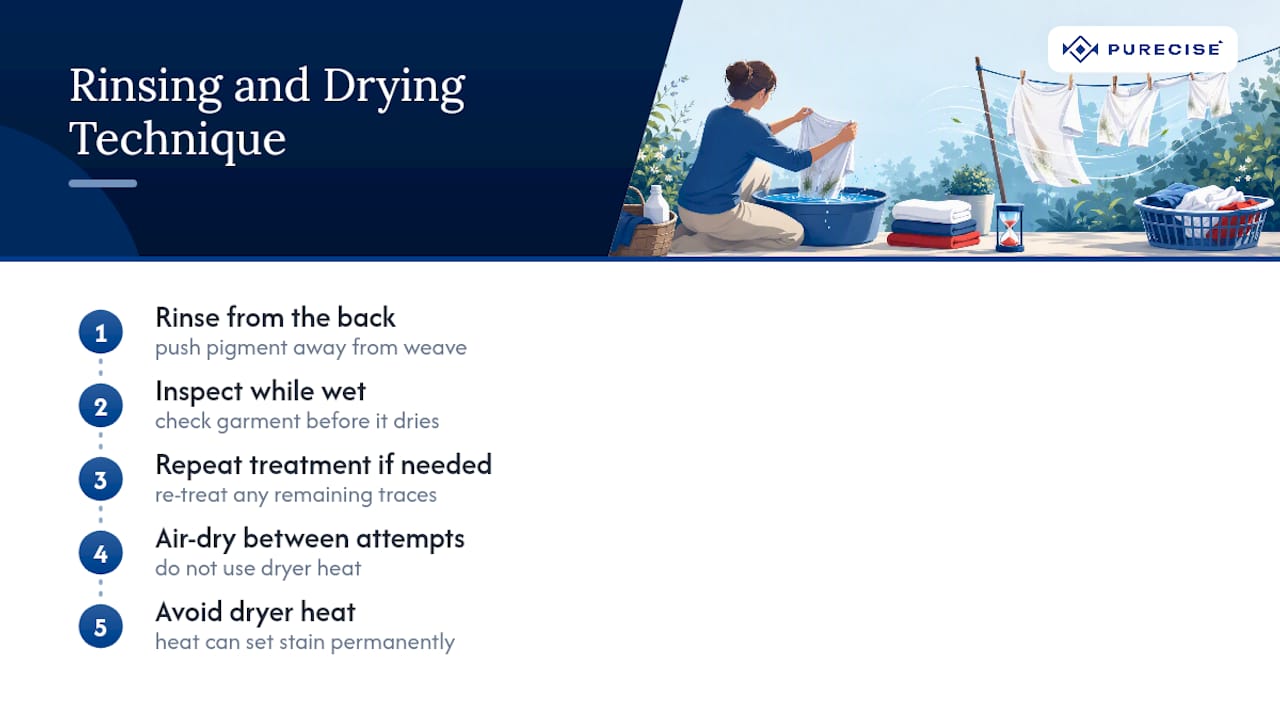
Always rinse from the back of the fabric, pushing pigment out and away from the weave rather than deeper into it. Check the garment while it’s still wet, not after it’s dried, and repeat treatment if any trace remains. Air-dry between attempts. Dryer heat is the single most common reason a treatable stain becomes a permanent one.
What we think actually matters in this process
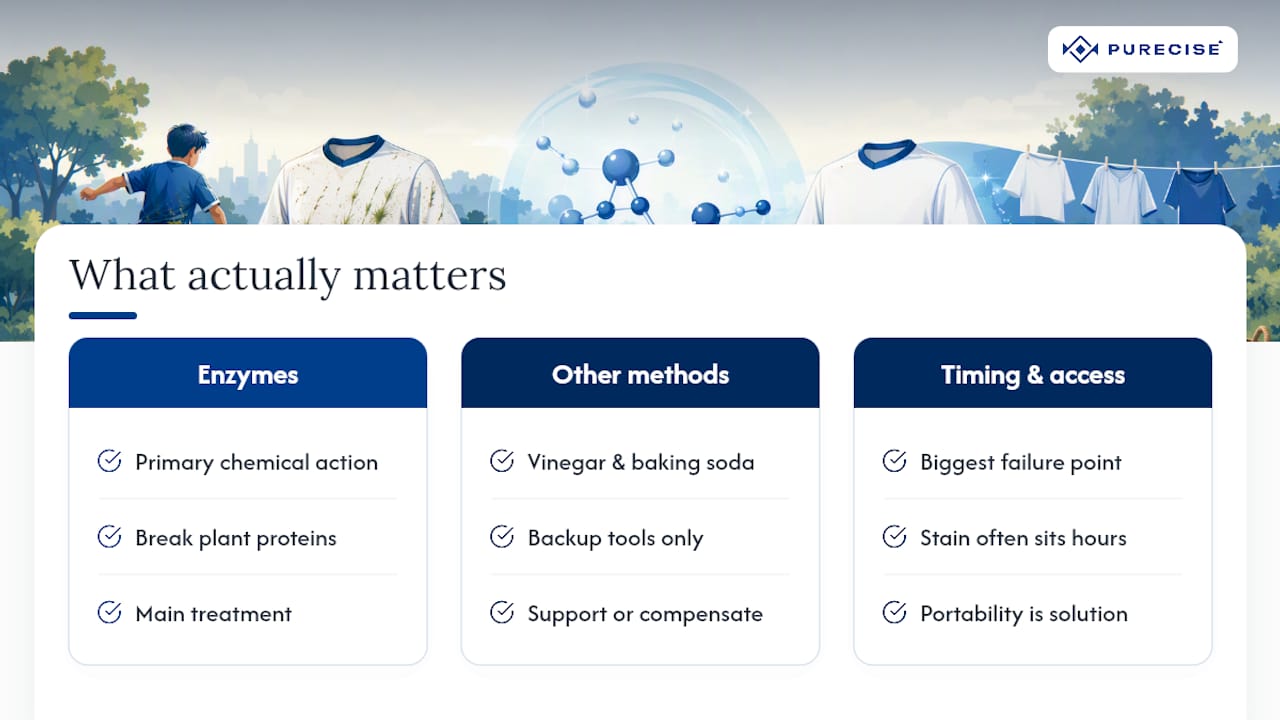
Most stain guides treat every method as equally good, listing five options with no real hierarchy. That’s misleading. Vinegar and baking soda have their place, but they’re backup tools, not the main event. Enzymes are doing the actual chemical work of breaking down the plant proteins in a grass stain, and everything else is either supporting that process or compensating for not having an enzyme product on hand in the moment.
The bigger failure point isn’t the treatment. It’s timing. Most people don’t have enzyme detergent within reach when their kid comes in from soccer practice with green-streaked knees, so the stain sits for hours before anyone does anything about it. That’s why we think portability matters more than most guides admit. A pre-treat kit you can pack or a sheet you can toss in a bag solves the actual problem, which is access, not knowledge.
— Purecise
Keep enzyme cleaning power ready for whatever the yard throws at you
Following every step above works, but only if you have an enzyme detergent on hand when the stain happens. That’s the gap that enzyme detergent sheets are built to close. Each sheet is pre-dosed, dissolves completely in any wash type, and carries the same enzyme-based cleaning power this guide recommends, without a bulky bottle to measure or spill.
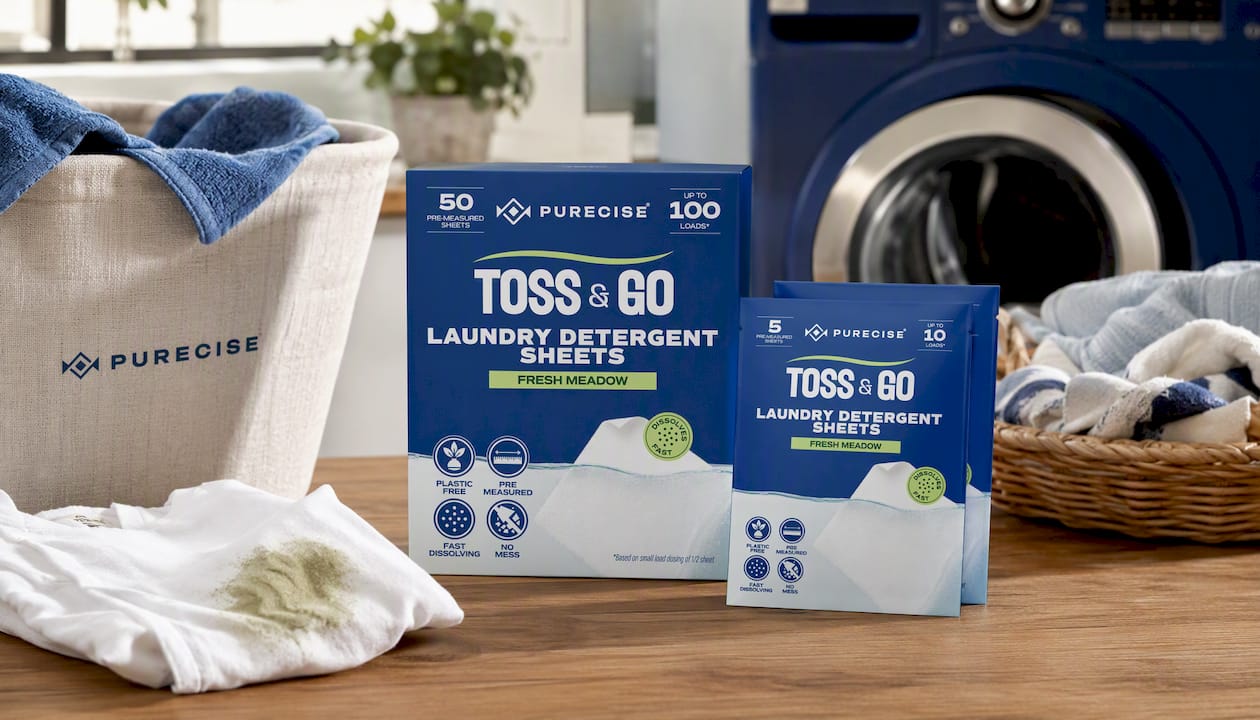
A hypoallergenic formula makes the detergent sheets safe for kids’ grass-stained uniforms and sensitive skin alike, and a full month’s supply fits in a pocket or diaper bag, so you’re never caught without a treatment option after practice or a weekend hike. Grab the detergent sheets box for home laundry, or pick up the travel-friendly envelopes to keep in a gym bag or car. Purecise backs every order with a 100% money-back guarantee, so trying the enzyme-first routine this guide describes costs you nothing if it doesn’t work for your household. Check out the full lineup and pick the format that fits how your family actually does laundry.
Sources
Recommended
Cut Detergent Cost Per Load: 6 Budget Moves and When Sheets Save
Skip TSA Hassles on U.S. Flights: Pack Detergent 3.4 oz or Use Sheets
Related Posts

Whiten White Clothes, No Chlorine: 4–8 Hour Soak, Premeasured Sheets

Remove Blood Stains from Clothes: Cold Water, Enzyme Soak, No Dryer

Pet Owners: Remove Hair from 5 Surfaces with a Washer and Dryer Trick

Wash Sheets Weekly, Dry Them Fully, and Stop Dosing Guesswork

6 Quick Steps to Remove Oil Stains at Home Without Ruining Clothes

Save Space: 50 Sheets Cover 50–100 Loads for Airbnb Hosts

Cut Detergent 25–50%: Use Premeasured Sheets for Soft Water


