

Recyclable Detergent Packaging: What MRFs Will Actually Recycle
Fiber-based cartons with minimal plastic parts and rigid HDPE or PET bottles are the most reliably recyclable detergent packaging on the market today, but only when your local system accepts them. Check the How2Recycle label on the package, then confirm with your municipal recycling guide or a manufacturer mail-back program before you toss it in the bin. That step matters more than most people think: only 53.9% of packaging and containers actually get recycled in the United States each year.
TL;DR:
- Most curbside recycling programs accept fiber cartons and rigid HDPE or PET bottles, but only if they are free of small parts, pumps, and caps separated per local rules.
- Fiber cartons with integrated, non-attached dosing tools and minimal plastic are the most reliably recyclable options, while pouches and multi-layer films perform poorly at recovery.
- Mail-back and take-back programs can handle complex packaging that curbside does not, but they require correct preparation and often involve a wait of several weeks.
- Switching to concentrated formulas, refill systems, or solid products can significantly reduce waste generation, with detergent sheets offering the simplest low-waste alternative.
Table of Contents
- How Do You Know If Detergent Packaging Is Curbside-Recyclable?
- Curbside, Take-Back, or Mail-In: Which Recycling Route Fits Your Packaging?
- Fiber Cartons vs. Rigid Bottles vs. Pouches: What Actually Recycles Best?
- What Should You Buy If You Want to Cut Packaging Waste?
- Why Do Some “Recyclable” Packages Still End Up in the Landfill?
- Where Do Detergent Sheets Fit Into a Low-Waste Laundry Routine?
- Editor’s Note: Design Matters More Than Material Swaps
- Try a Detergent Format That Skips the Packaging Problem Entirely
- Sources
How Do You Know If Detergent Packaging Is Curbside-Recyclable?
The How2Recycle label is the fastest way to check. A “widely recyclable” badge means most curbside programs in the country accept that format. A “check locally” badge means acceptance varies, often because of size, shape, or attached parts that a material recovery facility (MRF) can’t process. Detergent bottles frequently fall into that second category, not because the plastic itself is a problem, but because sorting equipment struggles with small or mixed-material pieces.
Resin codes tell you the base material, and they matter more than people realize. HDPE (resin code 2) and PET (resin code 1) are the most commonly accepted rigid plastics in curbside programs. A detergent jug made of HDPE usually clears the bar. The trouble starts with the extras: pumps, small dosing caps, and multi-material closures that get separated during sorting and often end up as contamination rather than recycled material.
Before it goes in the bin:
- Empty the container completely and scrape out residue; a full rinse usually isn’t necessary and wastes water.
- Leave the cap on or off based on your municipality’s specific instructions, since rules differ by program.
- Remove any small plastic scoops, pumps, or dosing cups if your local guidance asks for separation.
- Flatten fiber cartons when possible to save space and help sorting machinery read the material correctly.
Curbside, Take-Back, or Mail-In: Which Recycling Route Fits Your Packaging?
Curbside works well for straightforward, single-material packaging your local MRF is built to handle. It works poorly for anything with mixed plastics, foil linings, or attachments smaller than a business card. households don’t have recycling access as convenient as their trash pickup](https://www.asyousow.org/circular-economy/). This means curbside isn’t even an option for a large share of buyers in the first place.
When curbside isn’t reliable or available, manufacturer take-back programs and third-party mail-back services fill the gap. These programs often accept items curbside won’t, including small plastic parts, multi-layer pouches, and dosing devices, but every program has its own inclusion list and prep rules.
To participate in a typical mail-back program:
- Check the brand’s website or the mail-back provider’s list to confirm your packaging type is accepted.
- Empty and lightly rinse the container if instructed.
- Group accepted items together, since many programs require a minimum quantity or box size.
- Print the provided shipping label or drop the box at a designated collection point.
- Expect processing to take several weeks; most programs don’t offer real-time tracking.
Pro Tip: Save packaging from multiple purchases and mail them in one batch. Most take-back programs charge flat shipping regardless of box weight, so bundling cuts your cost per item significantly.
Fiber Cartons vs. Rigid Bottles vs. Pouches: What Actually Recycles Best?
Not all packaging formats perform the same once they leave your recycling bin, and the differences come down to material purity and design, not marketing claims.
- Fiber-based cartons score highest for real-world recovery when they minimize plastic add-ons. MM Packaging’s EcoBox uses roughly 95% fiber content and swaps the usual plastic handle and dosing cup for fiber-based versions, which keeps the whole package in the paper recycling stream instead of splitting it into unsortable pieces. Graphic Packaging’s CleanClose follows a similar logic, engineering paperboard cartons to qualify as “widely recyclable” under How2Recycle.
- Rigid HDPE and PET bottles are technically recyclable almost everywhere, but actual capture rates lag behind the technical claim. A bottle labeled with 50% recycled content still needs to make it through sorting intact, and small caps or pumps often don’t.
- Flexible pouches and multi-layer films are the weakest performers. Most combine plastic, foil, and adhesive layers that MRFs can’t separate, so they’re rejected outright by nearly every curbside program.
- Single-dose PVA films dissolve conveniently in the wash, but their biodegradability claims are contested. Industry reporting has flagged concerns about microplastic residue from PVA breakdown, which is part of why plastic-free alternatives like PureNil 0 are entering the market.
If you’re choosing between formats, fiber cartons with integrated (not attached) dosing tools are your safest bet for actual recovery, not just technical recyclability.
What Should You Buy If You Want to Cut Packaging Waste?
The packaging that creates the least waste is often the one you don’t have to recycle at all. Refill systems, concentrated formulas, and solid or sheet-based detergents all shrink the footprint before recycling ever enters the picture. A deeper look at plastic-free detergent options can help you compare formats side by side.
When you’re standing in the aisle or shopping online, prioritize in this order:
- Refillable dispensers or bulk pouches designed for repeated reuse over single-use bottles.
- Concentrated liquids or powders that use less packaging per load.
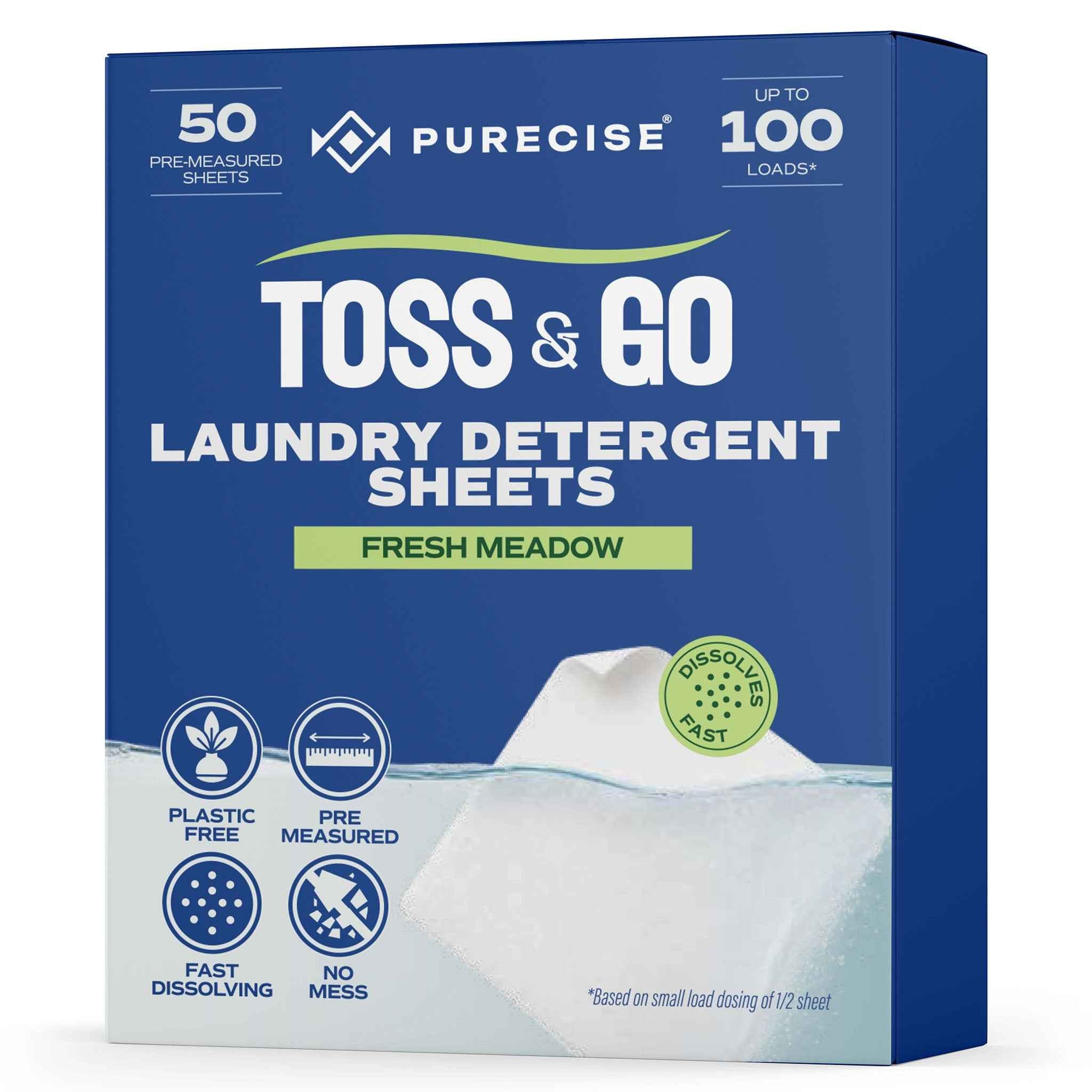
- Solid or sheet formats that ship without water weight and typically use minimal, often plastic-free, packaging.
- Products with clear recycled-content percentages instead of vague “eco-friendly” language.
Watch for credible labels: a How2Recycle badge, a certified compostable claim from a recognized standard, or a stated recycled-content percentage. Be skeptical of packaging that just says “biodegradable” with no certification behind it, especially for PVA-based single-dose products, since that claim is disputed industry-wide.
Pro Tip: Measure your usual load size before switching to a concentrate or sheet product. Overdosing is the most common reason people think a low-waste product “doesn’t work as well,” when the real issue is using the same amount they used with old-format detergent.
Why Do Some “Recyclable” Packages Still End Up in the Landfill?
Small non-fiber parts, handles, rivets, and separate dosing scoops, are the biggest reason technically recyclable cartons get rejected at the MRF. Sorting equipment is built for high volume and uniform material streams, and a rivet-sized piece of plastic on a paper carton often gets pulled out as contamination rather than processed correctly.
PVA and water-soluble films raise a separate concern. They dissolve, but dissolving isn’t the same as biodegrading cleanly, and the debate over microplastic residue is still active. If avoiding microplastics is a priority for you, look for plastic-free alternatives instead of assuming “dissolvable” means “safe.”
Before trusting a claim, verify it:
- Look for an actual How2Recycle badge, not just packaging text that says “recyclable.”
- Check your municipal recycling page directly rather than relying on brand claims alone.
- Favor brands that publish third-party testing or certification details over ones that use unverified buzzwords.
Where Do Detergent Sheets Fit Into a Low-Waste Laundry Routine?
Laundry detergent sheets are often pre-dosed, dissolve completely, and ship without the bulky plastic jugs traditional detergent requires. That combination cuts packaging volume dramatically compared to a liquid bottle, since there’s no water weight to ship and no rigid plastic container to eventually recycle or discard.
Sheets make the most sense in specific situations:
- Small households and apartments where storage space is limited and jug-sized containers are impractical.
- Travel and frequent movers who need a month’s supply that fits in a pocket instead of a suitcase pocket taken up by liquid.
- Anyone with sensitive skin who benefits from a hypoallergenic, pre-measured formula that removes guesswork.
If you strongly prefer liquid dosing for specific stain pretreatment, sheets require a slightly different routine, though they dissolve fully in any wash type and temperature.
Editor’s Note: Design Matters More Than Material Swaps
Swapping plastic for “greener” plastic doesn’t fix the packaging problem. The real fix is designing out the handles, rivets, and mixed materials that MRFs can’t sort in the first place. Ask brands how their packaging is built, not just what it’s made of, and look into sustainable packaging alternatives before your next purchase.
— Purecise
Try a Detergent Format That Skips the Packaging Problem Entirely
Instead of sorting bottle attachments or hoping your MRF accepts mixed plastics, Purecise sheets remove the packaging question altogether: no jug, no dosing cup, no cap to separate before recycling. Each pre-dosed sheet dissolves fully in any wash type, and a month’s supply often fits in a pocket, which means less material shipped, stored, and eventually thrown away compared to a standard liquid detergent bottle.
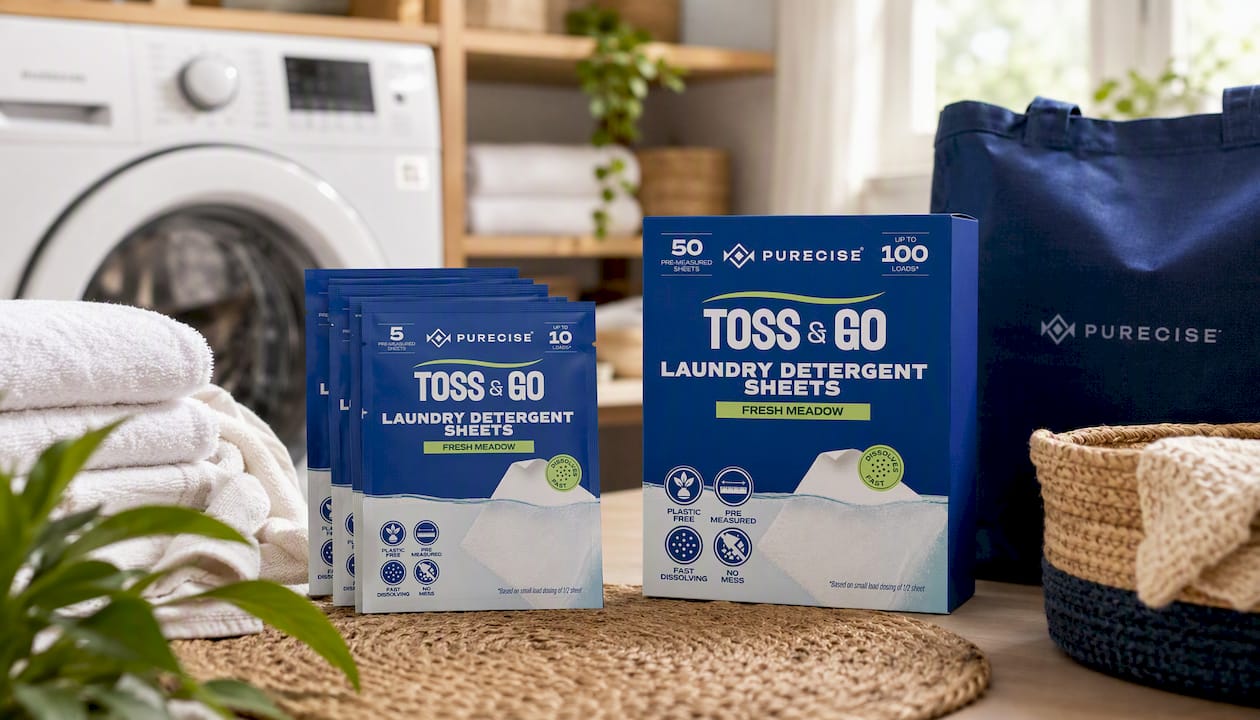
Some detergent sheets have hypoallergenic formulas that are free from harsh chemicals, making them suitable for sensitive skin without sacrificing stain-fighting power. For daily use, one sheet often handles a regular load, and the rest can be stored in a dry spot without worrying about spills or measuring cups. If you want a routine that also cuts water and energy use over time, pairing sheets with a simple eco-laundry schedule is worth a look. Purecise backs every order with a 100% money-back guarantee, so trying it costs you nothing but a load of laundry. Grab a pack of detergent sheets in an envelope for easy mail delivery, or choose the detergent sheets box if you’d rather stock up for the month ahead.
Sources
For deeper detail, see the EPA’s packaging recycling data, As You Sow’s circular economy resources on PVA and access gaps, and reporting on EcoBox and PureNil 0 for material innovation.
- Facts and figures about materials, waste and recycling | Containers and packaging product-specific data — EPA
- MM Packaging launches EcoBox, a high-performance recyclable fibre-based detergent pack — Sustainable Packaging News
- SmartSolve launches PureNil™ 0, a plastic-free solution for household cleaning packaging — PR Newswire
Recommended
Cruise Laundry Detergent: Pack 4–6 Sheets for 3–5 Nights
Cut Detergent 50–75%: Portable Washer Detergent for Travel & RVs
Related Posts

Whiten White Clothes, No Chlorine: 4–8 Hour Soak, Premeasured Sheets

Remove Blood Stains from Clothes: Cold Water, Enzyme Soak, No Dryer

Pet Owners: Remove Hair from 5 Surfaces with a Washer and Dryer Trick

Wash Sheets Weekly, Dry Them Fully, and Stop Dosing Guesswork

6 Quick Steps to Remove Oil Stains at Home Without Ruining Clothes

Save Space: 50 Sheets Cover 50–100 Loads for Airbnb Hosts

Cut Detergent 25–50%: Use Premeasured Sheets for Soft Water


