

Certified Palm Oil Free Detergent: Pocket Sized Sheets That Work
Palm oil–free detergents exist and are easy to find once you know what to look for. The most reliable path is a third-party certification like POFCAP or the Orangutan Alliance, paired with a full ingredient list, not a marketing label. Simple formats like bars, powders, and pre-dosed sheets, including Purecise’s, tend to skip palm derivatives entirely. The sections below cover verification, formats, and how to switch without losing cleaning power.
TL;DR:
- Choose detergents with recognized certifications like POFCAP or Orangutan Alliance and verify full ingredient lists to ensure palm oil derivatives are absent.
- Simply formatted options like bars, powders, and sheets are less likely to contain palm derivatives than liquids or pods, which rely heavily on palm-based surfactants.
- Switching to palm oil–free detergent requires trial, pre-treatment of stains, and testing dissolvability in cold water to match cleaning performance.
- Be aware that palm oil substitutes such as coconut oil may still contribute to environmental pressures, making certification critical for sustainability claims.
- Expect higher costs and limited availability in stores; online options with full disclosure and certification provide the most reliable and eco-friendly choices.
Table of Contents
- What Palm Oil Does in Laundry Detergent
- How to Verify a Detergent Is Actually Palm Oil Free
- Which Detergent Formats Are Most Likely Palm Oil Free
- Shopping Checklist: What to Look for at Checkout
- How to Switch Without Losing Cleaning Performance
- Why Purecise Sheets Check Every Palm Oil Free Box
- Popular Palm Oil Free Detergent Brands Worth Knowing
- What Replaces Palm Oil in Detergent Formulas
- Cost, Effectiveness, and Other Tradeoffs to Expect
- Where to Verify Palm Oil Claims Yourself
- Our Take: Certification Beats Good Intentions Every Time
- Try Purecise Sheets for Your Next Wash
- Sources
What Palm Oil Does in Laundry Detergent
Palm oil shows up in detergent because it’s cheap and versatile; for commercial cleaning services seeking sustainable detergent options, understanding this is key to making eco-friendly choices like those detailed in Our Services - iCleanse. Manufacturers process it into fatty alcohols and fatty acids, the building blocks of surfactants, the molecules that lift grease and dirt off fabric. Liquid detergents and pods lean on palm-derived surfactants especially hard because they need ingredients that stay stable in a concentrated gel or capsule. Powders and bars can use simpler soap chemistry that doesn’t require the same feedstock.
The catch is that palm oil rarely appears as “palm oil” on a label. It hides under chemical names most shoppers have never heard of. Common ones include:
- Sodium laureth sulfate (SLES)
- Sodium lauryl sulfate (SLS)
- Cetearyl alcohol
- Sodium palmate
- Glycerin (when unspecified)
- Palmitic acid
US labeling rules don’t require companies to disclose which plant a surfactant came from, so a bottle marketed as “plant-derived” can still be palm-based underneath, according to Non Toxic Finder’s review of EWG-rated detergents.
How to Verify a Detergent Is Actually Palm Oil Free
Marketing copy and ingredient lists tell you two very different things. “Plant-based” or “all-natural” is a claim, not a guarantee. Certification is the closest thing to proof.
- Look for a recognized certifier. The Orangutan Alliance and POFCAP both audit supply chains and license a trademark logo that brands display when they pass. That logo means someone outside the company checked the sourcing.
- Read the full ingredient list, not the front label. Scan for the chemical names above. If a term is vague (“plant-derived surfactant,” “natural glycerin”), treat it as unverified.
- Contact the manufacturer if the list is incomplete. Reputable brands publish full ingredient disclosures on their websites and answer sourcing questions directly.
- Discount claims that aren’t backed by anything checkable. If a company says “no palm oil” but won’t name a certifier or list ingredients, that’s a marketing decision, not a sourcing fact.
Pro Tip: Save the six or seven chemical names palm oil hides under to your phone’s notes app. You’ll spot them in seconds while standing in the detergent aisle, without needing to memorize a full glossary.
Which Detergent Formats Are Most Likely Palm Oil Free
Format matters more than brand reputation when it comes to avoiding palm oil. Bars, powders, and sheets are built on simpler chemistry than liquids and pods, which makes them easier to formulate without palm derivatives in the first place, based on research into palm-based detergent components.
- Bars and soap flakes rely on traditional saponification, which doesn’t demand the same surfactant feedstock as liquids.
- Powders dissolve using different binding agents and often skip the palm-derived stabilizers liquids need to stay smooth in a bottle.
- Detergent sheets are pre-dosed and dry, so they can use plant-based surfactants sourced from coconut or other non-palm oils without the shelf-stability problems liquids face.
The tradeoff shows up in dissolvability and packaging. Powders can leave residue in cold washes if you underdose. Bars need grating or pre-soaking for tough stains. Sheets and strips dissolve fast in most machines, including high-efficiency (HE) washers, but many rely on a PVA or PVOH film. That film’s biodegradability in real-world wastewater treatment is still debated, according to Beyond Plastics’ review of PVA in detergent products. If that concerns you, look specifically for a film-free or fully water-soluble formula.
Shopping Checklist: What to Look for at Checkout
Before you add a detergent to your cart, run it through a short mental list. It takes less time than reading a full ingredient panel three times over.
- Confirm certification (POFCAP, Orangutan Alliance) or a published, complete ingredient list.
- Choose fragrance-free or hypoallergenic formulas if anyone in the household has sensitive skin or eczema. The EWG’s cleaning product guidance flags synthetic fragrance, dyes, parabens, and phthalates as the ingredients most linked to irritation, separate from palm oil status.
- Check packaging: recyclable boxes and envelopes beat plastic jugs for actual disposal.
- Verify septic and gray-water safety if your home uses either system.
Here’s a number worth sitting with: the Environmental Justice Foundation identifies palm oil expansion as a leading driver of tropical deforestation and habitat loss for endangered species. That’s the environmental cost sitting behind a cheap surfactant, and it’s why many advocates argue partial avoidance isn’t good enough. Certification, not a good-faith label, is what closes that gap.
How to Switch Without Losing Cleaning Performance
Switching detergents fails for one reason more than any other: people give up after one disappointing wash. A little planning fixes that.
- Run a trial load first, not your dirtiest hamper pile. Follow the dosing instructions exactly, since sheets and powders often need a different amount than you’re used to with liquid.
- Pre-treat stains before washing, the same way you would with any detergent. An oxygen-based stain booster applied directly to grease or grass stains closes most of the performance gap people worry about.
- Check dissolvability in cold water. Sheets and powders dissolve best when tossed in before clothes, not on top of a packed drum, and both work fine in standard and HE machines.
Pro Tip: If you’re nervous about switching cold, pick one wash cycle a week to test the new detergent rather than replacing your entire routine overnight. It removes the pressure and still gets you real data on how it performs.
Why Purecise Sheets Check Every Palm Oil Free Box
Purecise’s Toss & Go sheets are built around the exact criteria this guide walks through. They’re plant-based, which means the surfactants come from non-palm feedstocks, and the full formula is disclosed rather than hidden behind vague marketing language. Each sheet is pre-dosed, so there’s no guessing on quantity and no risk of underdosing the way loose powder sometimes gets. They dissolve completely across wash temperatures and machine types, including HE washers, and the hypoallergenic formula is built for households managing sensitive skin, which lines up with the fragrance-free guidance dermatologists and the EWG both recommend.
| Shopping checklist item | How Purecise addresses it |
|---|---|
| Certification / ingredient transparency | Full formula disclosed, plant-based surfactants |
| Fragrance-free / hypoallergenic | Formulated for sensitive skin and children |
| Packaging waste | Recyclable packaging, no plastic jugs |
| Dosing accuracy | Pre-dosed sheets, no measuring |
| Performance across wash types | Dissolves fully in cold, hot, and HE cycles |
A full month’s supply fits in a coat pocket, which matters if you’re trying to cut down on the plastic bottles most liquid detergent ships in. Purecise backs the formula with a 100% money-back guarantee, which is a meaningful signal when you’re asking someone to abandon a detergent brand they already trust.
Popular Palm Oil Free Detergent Brands Worth Knowing
The palm oil–free category has grown enough that you have real options across formats. Detergent sheets, led by brands like Purecise, are the newest entrants and tend to disclose ingredients more readily since the format is still building trust with skeptical shoppers. Traditional soap bars and flake-based detergents, some sold by smaller ethical manufacturers, have used non-palm saponified oils for decades, often coconut or olive-based, and remain a dependable option if you don’t mind grating or pre-soaking. Powder detergents from brands focused on the sensitive-skin market frequently market themselves as palm-free precisely because their formulas skip the palm-derived stabilizers liquids need.
Consumer guides that track palm-free products across categories, including Ethical Consumer’s roundup of palm oil–free soap, are worth bookmarking if you shop across multiple product types, not just laundry. The pattern holds everywhere: smaller, ingredient-transparent brands tend to earn certification faster than large legacy detergent companies still transitioning decades-old formulas. That transition lag is exactly why checking for a certification logo matters more than checking a brand’s size or shelf space.
What Replaces Palm Oil in Detergent Formulas
Manufacturers avoiding palm oil don’t skip surfactants altogether, they swap the feedstock. Coconut oil is the most common substitute, since it produces similar fatty alcohols and fatty acids without the deforestation footprint tied to palm plantations. Rapeseed, sunflower, and soy oils show up in some European formulas, though availability varies in US products. Some detergents use petroleum-derived surfactants instead of any plant oil, which sidesteps palm oil entirely but trades one environmental tradeoff for another around fossil fuel sourcing.
Enzyme-based cleaning boosters, protease and amylase among them, are increasingly used to cut stain-fighting power without leaning harder on any oil-based surfactant. That’s part of why bar soaps and powders can match liquid performance despite simpler formulas: enzymes do work that used to depend on surfactant volume alone.
The honest takeaway is that no single substitute is perfect. Coconut farming has its own land-use pressures, just at a smaller global scale than palm oil. That’s precisely why certification through a body like the Orangutan Alliance matters more than trusting any single ingredient swap to solve the sustainability question on its own.
Cost, Effectiveness, and Other Tradeoffs to Expect
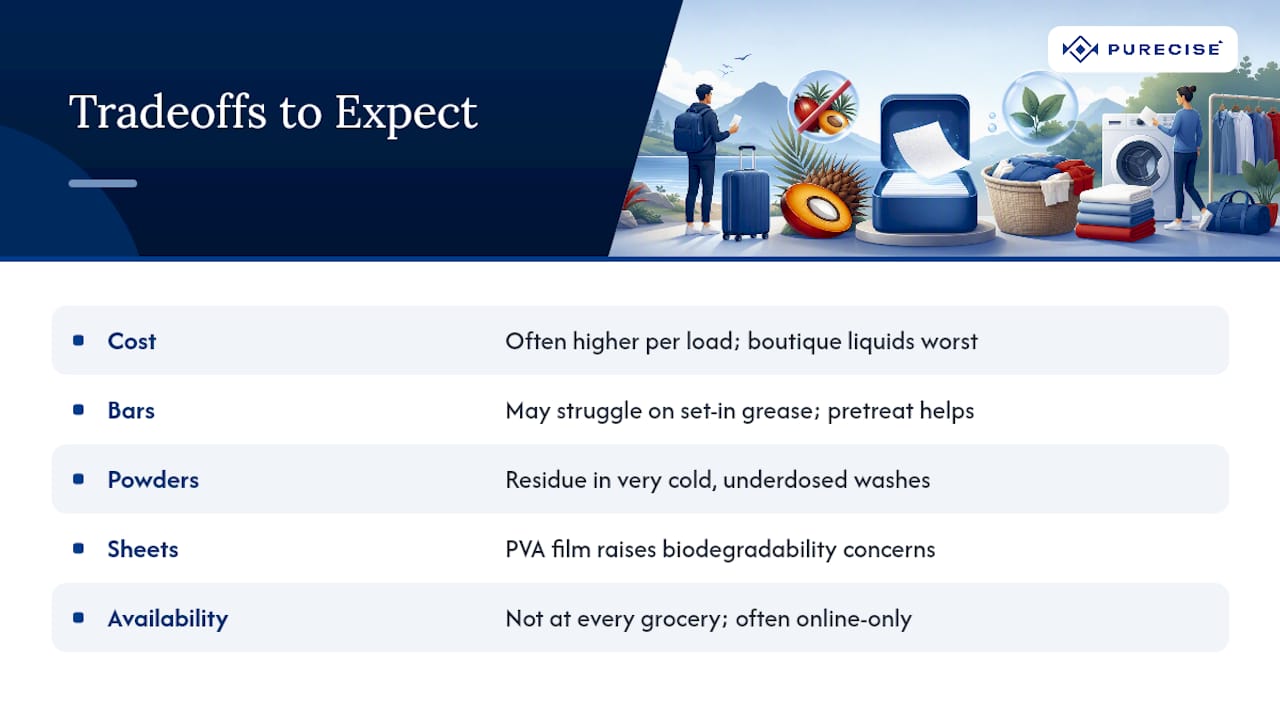
Palm oil–free detergents usually cost more per load than mainstream liquid detergent, sometimes noticeably. Smaller-batch, ingredient-transparent manufacturers don’t get the bulk feedstock pricing that palm oil offers, and certification itself carries a compliance cost that gets passed to the shopper. If you’re budget-constrained, powders and bars typically land closer to conventional pricing than boutique liquid alternatives.
Effectiveness is the second concern, and it’s mostly solvable rather than permanent. Bar soaps can struggle with set-in grease stains unless pre-treated. Powders can leave residue in very cold washes if underdosed. Sheets and strips using PVA film carry the biodegradability questions mentioned earlier, which matters if you’re on a septic system or care deeply about wastewater impact.
Availability is the quieter limitation. Not every grocery store stocks a certified palm oil–free option, which pushes many shoppers toward online ordering. That’s less of a hurdle than it used to be, but it does mean this category rewards a little research over grabbing whatever’s on the shelf. None of these tradeoffs are dealbreakers. They’re just real enough that a switch works better with a plan than with impulse.
Where to Verify Palm Oil Claims Yourself
Check certification status directly at POFCAP / Orangutan Alliance, review ingredient safety ratings through the EWG’s cleaning product database, and read the environmental case against palm oil at the Environmental Justice Foundation. Compare product options directly on Purecise’s detergent sheet page.
Our Take: Certification Beats Good Intentions Every Time
Most advice on this topic treats “palm oil free” as a label you can trust at a glance. It isn’t. The chemical names hiding palm derivatives, the labeling loopholes around “plant-derived” claims, and the sheer number of brands that mean well but never pursued certification all point to one conclusion: verification has to come before the purchase, not after.
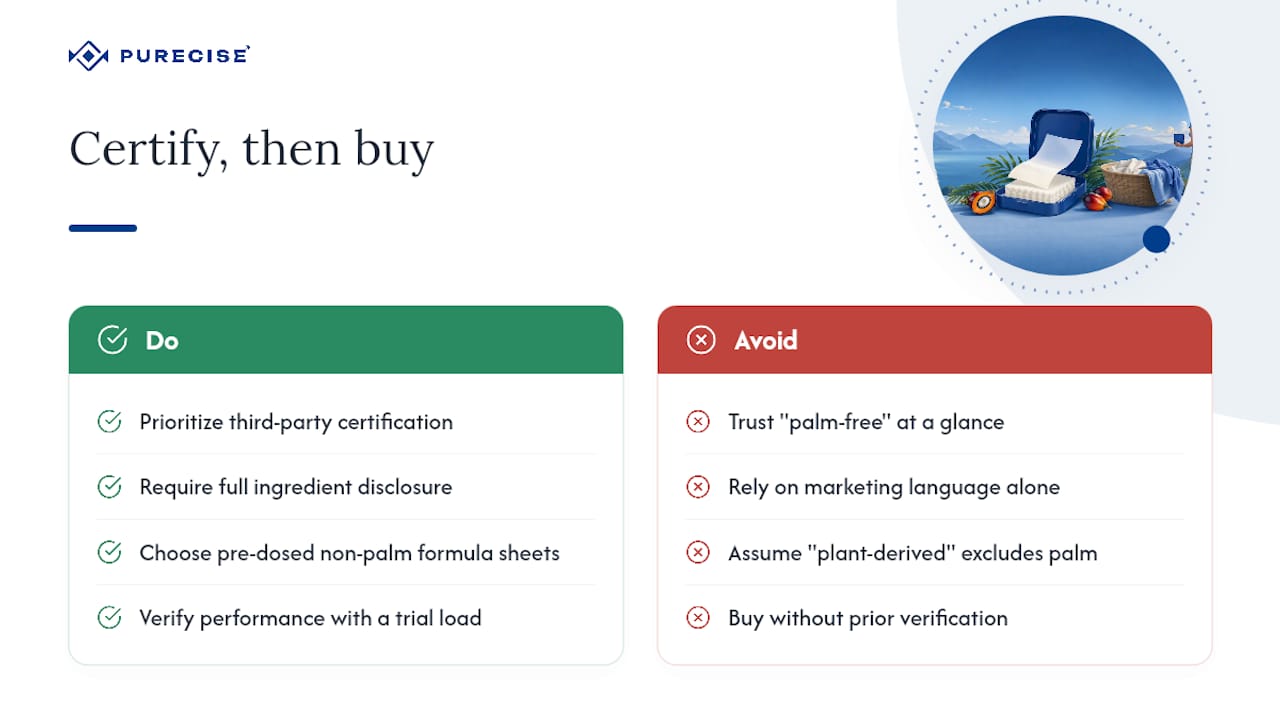
Where conventional advice falls short is treating format and certification as separate questions. They’re the same question. A pre-dosed sheet with a disclosed, non-palm formula solves the labeling opacity problem and the convenience problem at once, which is exactly why Purecise built its product around both.
If you take one thing from this guide, prioritize certification and full ingredient disclosure over marketing language, every time. Performance concerns are real but fixable with a trial load and a little pre-treatment. The sourcing question isn’t fixable after the fact. That’s the one to get right before checkout.
— Purecise
Try Purecise Sheets for Your Next Wash
Purecise is built for exactly the reader who just finished this guide: someone who wants a palm oil–free detergent without spending every grocery trip decoding chemical names on a bottle. Each sheet is pre-dosed and plant-based, dissolves fully in any wash temperature or machine type, and skips the harsh chemicals that make sensitive skin flare up. A month’s supply fits in a pocket, which means less plastic in your recycling bin and no bulky jug taking up shelf space.
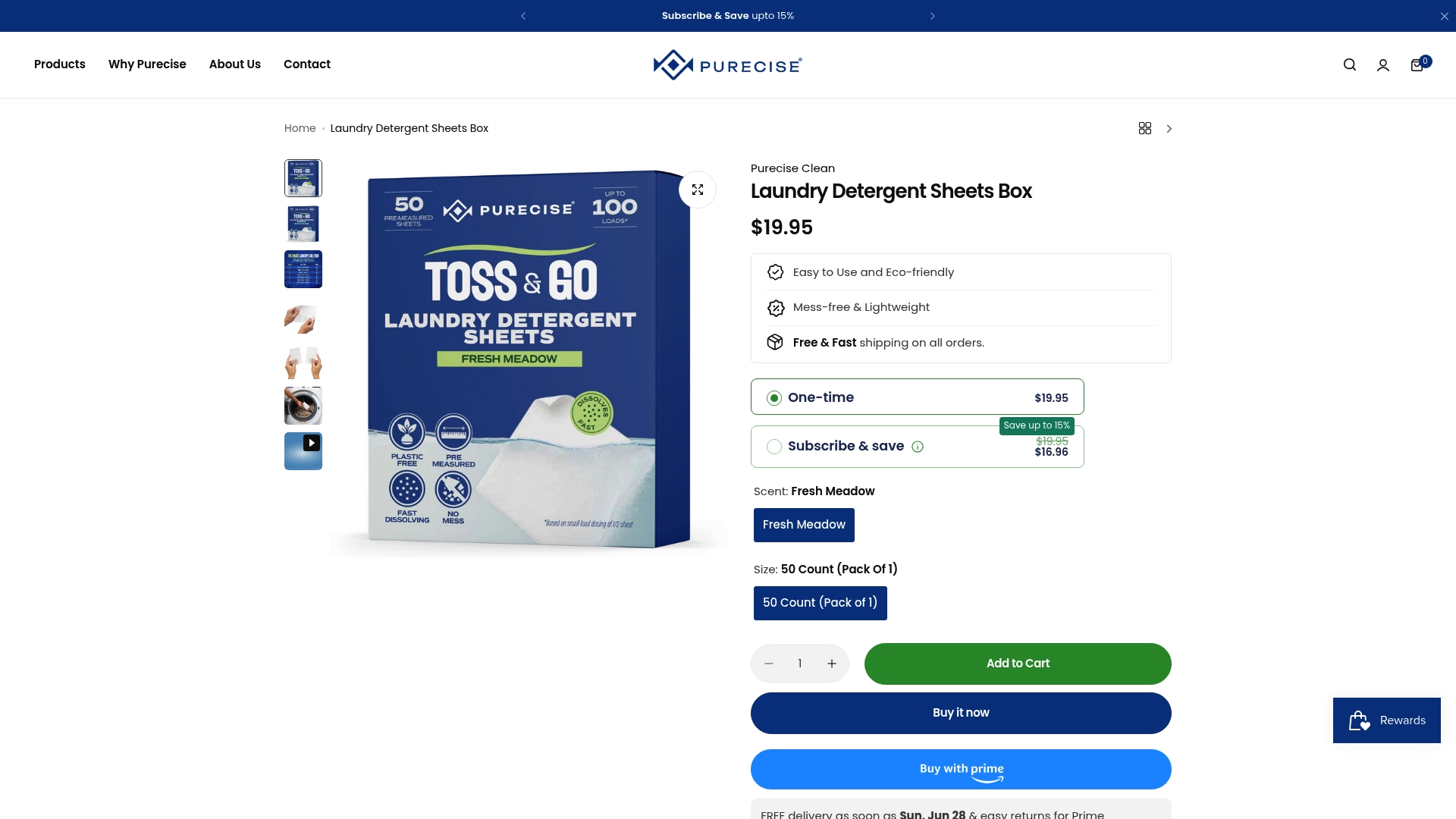
If you’re ready to switch, start with the envelope pack for a low-commitment trial, or go straight to the box option if you already know sheets fit your routine. Every order carries a 100% money-back guarantee, so testing it against your toughest laundry load costs you nothing but the wash cycle.
Sources
- Palm Oil Free Certification (POFCAP / Orangutan Alliance)
- Environmental Justice Foundation: ending deforestation for palm oil
Recommended
Laundry Symbols Meaning: Pocket Cheat Sheet and a Detergent That Works
Remove Sunscreen Stains Within an Hour, With a Packable Pretreat Kit
Related Posts

Remove Lipstick Stains: The First 15 Minutes, Plus Detergent Sheets

How Often to Wash Towels: Bath Weekly, Hand Towels Every Few Days

Detergent Allergy Rash: Test a Low Residue Wash Without Fragrance

Save Clothes From Mud Stains in 1–2 Hours With Premeasured Sheets

Fabric First Sweat Stain Fixes: Measured DIY Recipes and Sheets

Whiten White Clothes, No Chlorine: 4–8 Hour Soak, Premeasured Sheets

Remove Blood Stains from Clothes: Cold Water, Enzyme Soak, No Dryer


