

Baking Soda Paste for Home Cleaning: DIY Recipes That Work
Mix baking soda with a small amount of water until it feels like wet sand, and you have a working cleaning paste in under a minute. That single combination scrubs soap scum off sinks, lifts baked-on grease from ovens, brightens grout, and cuts through grime on non-glass stovetops. It works on most tubs and countertops too, though not all of them, and the biggest mistake people make is skipping a patch test or mixing it with the wrong booster.
Here’s the fast version before we get into ratios, dwell times, and the surfaces to avoid:
- Sinks and tubs: thick paste, scrub with a soft cloth, rinse.
- Ovens: thick paste, let it sit for hours (details below), then wipe.
- Grout: paste worked into lines with an old toothbrush, short dwell time.
- Stovetops (non-glass): thin paste, gentle circles, quick rinse.
- Countertops: depends heavily on the material, covered in detail further down.
Sodium bicarbonate has pH around 8.3, mild enough to be gentle but alkaline enough to cut through grease and neutralize odors. That’s the whole mechanism, and it’s why the paste is a staple in low-toxicity cleaning routines.
Pro Tip: Never mix a baking soda paste with bleach. Combining bleach with acidic or ammonia-based products can release hazardous gases, and it’s not worth the risk for a cleaning task this simple.
Key Takeaways
A basic baking soda paste, made from sodium bicarbonate and water, cleans most household surfaces safely when you match the ratio and dwell time to the job.
| Point | Details |
|---|---|
| Core recipe | Mix baking soda with water to a spreadable paste; adjust thickness for the surface. |
| Best surfaces | Porcelain, stainless steel (with the grain), ceramic tile, grout, ovens, and enamel cookware. |
| Surfaces to avoid | Marble, unsealed stone, glass-ceramic cooktops, polished wood, and aluminum. |
| Always patch-test | Test a hidden spot for 5 to 10 minutes before applying paste to the full surface. |
| Never mix with bleach | Combining bleach with acidic boosters can release hazardous fumes. |
| Follow up on fabrics | Use Purecise Laundry Detergent Sheets after spot-treating stained items for a full, eco-friendly wash. |
Table of Contents
- How to Make a Baking Soda Cleaning Paste at Home
- Step-by-Step: Mixing, Applying, and Rinsing the Paste
- What Surfaces Work Well With Baking Soda Paste
- What Surfaces Should You Avoid Cleaning With Baking Soda Paste?
- Why Does Baking Soda Paste Actually Clean Things?
- Boosting the Paste: Dish Soap, Peroxide, and Lemon
- Is Baking Soda Paste Safe to Use on Skin?
- How to Store Leftover Paste and Dry Mix
- Common Mistakes When Using Baking Soda Paste
- An Editor’s Take on Where Baking Soda Paste Fits at Home
- Keep the Cleaning Routine Simple With Purecise
- Sources
How to Make a Baking Soda Cleaning Paste at Home
The core recipe never changes: sodium bicarbonate plus a liquid, usually water. What changes is the ratio, and getting that right is the difference between a paste that clings to a vertical oven wall and one that runs down the door and dries into chalky streaks.
Essential ingredients:
- Baking soda (sodium bicarbonate) — the working ingredient
- Water — the base liquid
- Dish soap (optional) — adds grease-cutting power
- Hydrogen peroxide (optional) — adds mild whitening, used briefly
- Lemon juice (optional) — adds acidity, use with caution
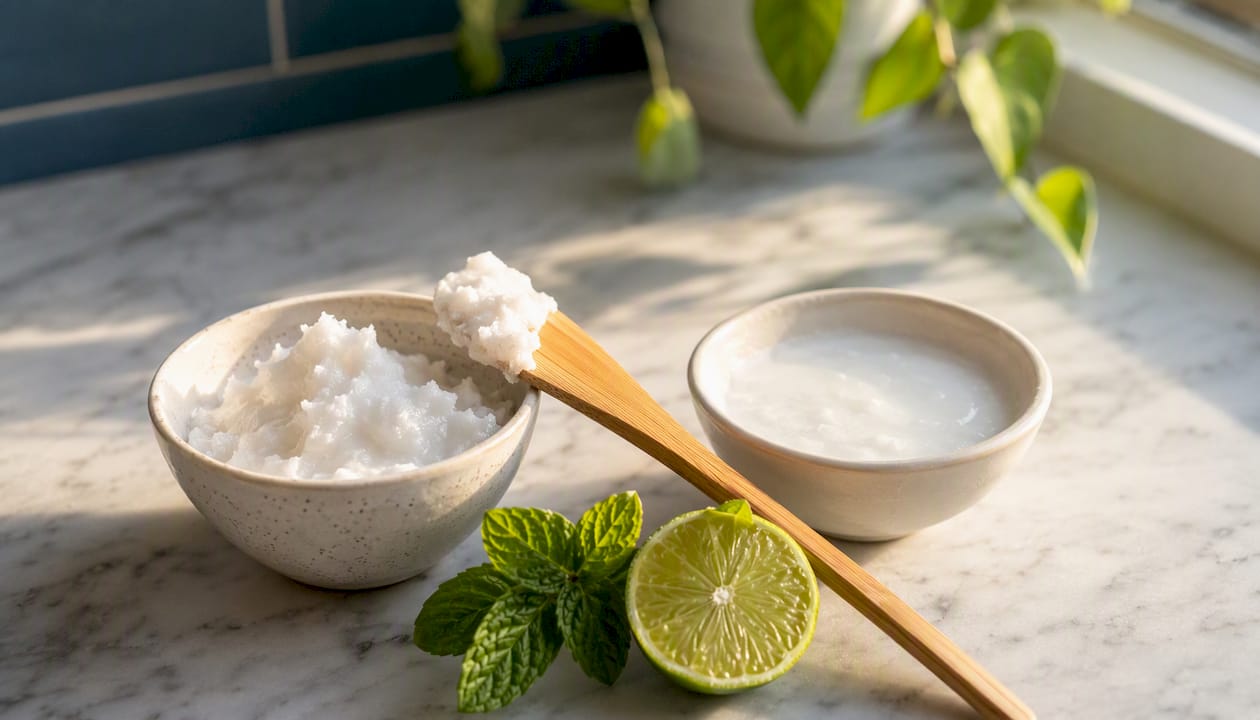
For most jobs, aim for a ratio of baking soda to water that creates a clay-like texture suitable for spreading and clinging to surfaces. This gives you a scoopable, clay-like texture that holds shape and clings to surfaces like oven interiors or grout lines. For lighter jobs, like wiping down a countertop or a stainless appliance, thin it out with a bit more water so it spreads without leaving a gritty residue behind.
Home-care experts recommend a stronger scouring version, closer to a 3:1 ratio, for tougher scrubbing tasks and suggest folding in a small squeeze of dish soap when grease is the main problem. Community cleaning guides also point out that blending the paste smooth removes lumps and helps it cling better to vertical surfaces, which matters more than most people expect once you’re staring at the inside of a dirty oven.
Tools worth having on hand:
- A small bowl for mixing
- A spoon or spatula
- A glass jar with a lid, for storing extra
- Soft microfiber cloths
- An old toothbrush or small scrub brush for grout and corners
Pro Tip: Mix small batches. A tablespoon or two of baking soda usually covers a full sink or stovetop, so there’s rarely a reason to make more than you’ll use in one session.
Step-by-Step: Mixing, Applying, and Rinsing the Paste
Once you have the ratio down, the process itself takes minutes.
- Mix. Combine baking soda and water in a small bowl until you reach a spreadable, non-runny consistency.
- Patch-test. Apply a dime-sized amount to a hidden spot on the surface and wait 5 to 10 minutes to check for dulling, scratching, or discoloration.
- Apply. Spread the paste evenly with a cloth, spoon, or gloved fingers, covering the stained or greasy area.
- Let it dwell. Leave it in place for the time recommended for that surface or task (see the table below).
- Scrub. Use a soft cloth for finished surfaces, a toothbrush for grout lines and corners, or a non-scratch pad for baked-on grime.
- Rinse. Wipe away with a damp cloth and rinse thoroughly with water.
- Dry. Buff dry with a clean towel to prevent streaking, especially on stainless steel and glass.
| Surface or Task | Recommended Dwell Time |
|---|---|
| Sink or tub soap scum | 5–10 minutes |
| Grout lines | 10 minutes |
| Stovetop grease (non-glass) | 5 minutes |
| Oven interior, baked-on residue | 4 hours (overnight works well) |
| Silver tarnish | 2–3 minutes, gentle rub only |
Pro Tip: Always test on a hidden edge first, like the underside of a counter lip or the back corner of a tile. If the paste dulls the finish or leaves a mark, thin it further with water or skip the paste entirely for that surface.
What Surfaces Work Well With Baking Soda Paste
A baking soda cleaning paste is genuinely effective on a specific, well-documented set of surfaces, and knowing which ones lets you clean confidently instead of guessing.
- Porcelain sinks and tubs: thick paste, scrub with a soft cloth or non-scratch sponge, rinse fully.
- Stainless steel: always rub with the grain of the metal, never against it, to avoid fine scratch lines.
- Ceramic tile and grout: work the paste into grout lines with a toothbrush, let it dwell, then rinse with a damp cloth.
- Enamel cookware and cast iron with enamel coating: gentle paste, soft sponge, avoid metal scouring pads.
- Ovens and microwaves: thick paste left overnight breaks down baked-on grease without harsh fumes.
- Some plastics: a thin paste can lift stains from food storage containers, though colored plastics can retain a faint residue if scrubbed too hard.
- Silver: works, but only with a very gentle touch and short contact time to avoid scratching soft metal.
Practical household guides consistently list ovens, sinks, and fabric deodorizing among the highest-value uses, and a paste with a little dish soap mixed in handles greasy stovetop spots better than plain baking soda and water alone.
Pro Tip: Match paste thickness to the job. Thick, clay-like paste clings to vertical surfaces like oven walls; thin paste works better on delicate or textured surfaces where you want light coverage instead of heavy grit.
What Surfaces Should You Avoid Cleaning With Baking Soda Paste?
Baking soda’s mild abrasiveness is a strength on tile and steel, but it’s a liability on softer or more reactive materials.
- Marble and unsealed natural stone: the mild acidity in some boosters and the abrasive grit can etch or dull the polished surface permanently.
- Glass-ceramic cooktops: the smooth glass surface scratches more easily than people expect, and once scratched, it’s not reversible.
- Polished or lacquered wood: abrasion strips the finish, leaving dull patches that don’t buff out.
- Aluminum and other soft metals: repeated scrubbing can cause discoloration and fine surface scratching over time.
If a surface is soft, polished, or unsealed, treat baking soda paste as a last resort rather than a first choice. The gentlest alternative, whether that’s a microfiber cloth and warm water or a cleaner made specifically for that material, protects the finish better than any DIY paste can.
When you’re not sure whether a surface can handle it, patch-test in an inconspicuous spot first, and default to a manufacturer-recommended cleaner if the material is expensive, sealed, or has a factory finish you can’t easily replace.
Why Does Baking Soda Paste Actually Clean Things?
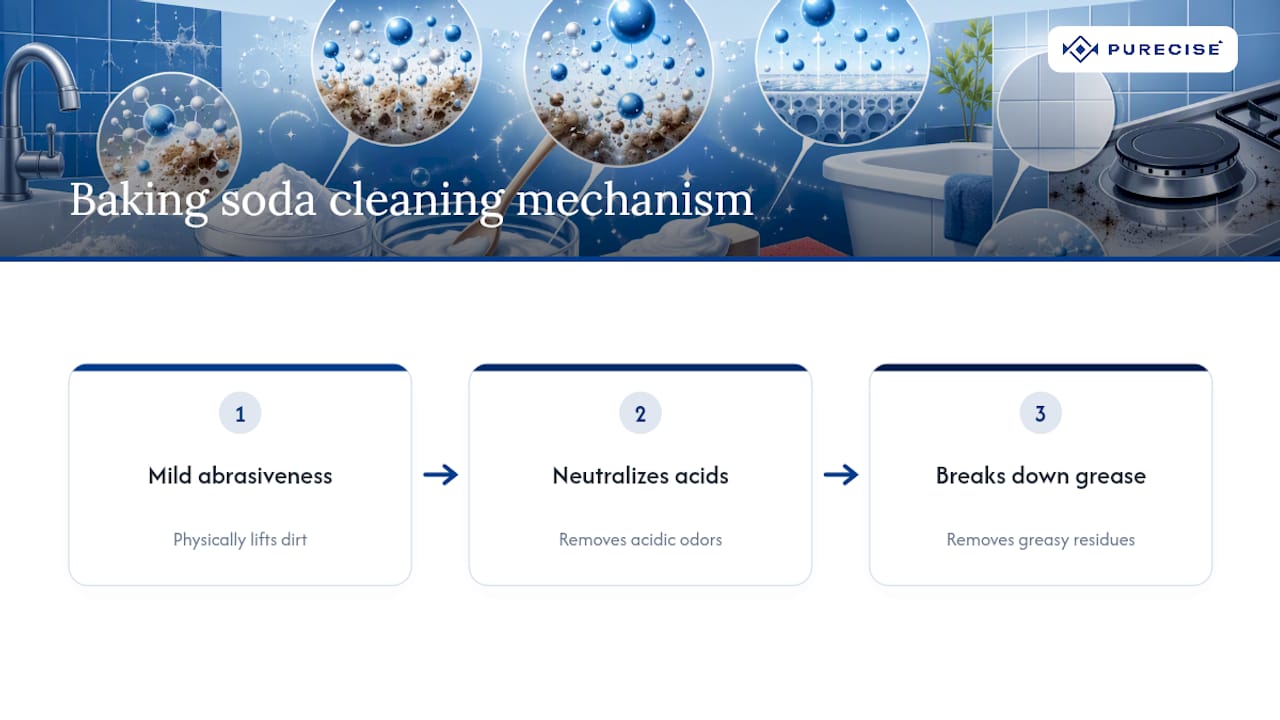
The mechanism is simpler than most people assume. Baking soda particles are mildly abrasive, so they physically lift dirt and grime off a surface the way fine sandpaper would, just gentler. At the same time, sodium bicarbonate is weakly alkaline, which helps it neutralize acidic odors and break down greasy residues that plain water can’t touch on its own.
That alkalinity is also why the popular trend of mixing baking soda with vinegar doesn’t actually improve cleaning power. The fizzing reaction feels satisfying, but it neutralizes the alkaline properties that make baking soda useful in the first place. You’re left with mostly water and a little sodium acetate, not a stronger cleaner.
Compared to some commercial disinfectants built around quaternary ammonium compounds, a baking soda paste leaves minimal chemical residue and skips the stronger fumes those products can carry. That’s part of why it remains a go-to for households trying to cut down on harsh chemicals without giving up cleaning power.
Boosting the Paste: Dish Soap, Peroxide, and Lemon
A plain water-and-soda paste handles most jobs, but specific problems call for a specific boost.
- Dish soap: add a small squeeze when grease is the main issue, like stovetops or oven racks. Works well, don’t over-add, since too much soap makes rinsing harder.
- Hydrogen peroxide: useful for mild whitening or light disinfecting. Research on household use supports short contact times followed by a full rinse. Don’t leave it sitting for hours; brief contact is the point.
- Lemon juice: adds mild acidity and scent, but it also cuts into the alkalinity that makes baking soda effective, similar to the vinegar problem. Use sparingly, and never combine any acidic booster with bleach.
Pro Tip: Keep boosters minimal and test on a small area first. A paste that works great with a teaspoon of dish soap can turn gummy and hard to rinse with three teaspoons.
Never mix hydrogen peroxide or lemon juice into a paste that also contains bleach or bleach-based cleaners. The combination risks producing dangerous fumes, and there’s no cleaning benefit that justifies the risk.
Is Baking Soda Paste Safe to Use on Skin?
Sometimes, but with real limits. Official product labeling for topical sodium bicarbonate supports limited use as a paste for minor skin irritation, like an occasional insect bite. That labeling also specifically advises consulting a physician before use on children under 2 or on broken skin.
- Avoid contact with eyes.
- Never ingest the paste, even in small amounts.
- Stop use immediately if redness, itching, or irritation develops.
- Wear gloves for any prolonged skin exposure, especially with boosted pastes.
- Skip hydrogen peroxide or lemon-boosted pastes on skin entirely unless a clinician has specifically recommended it.
Limited topical use for minor irritation is one thing. Applying a homemade paste to a child’s skin, an open cut, or anything beyond mild surface irritation is a different situation, and that’s exactly when the labeling says to check with a doctor first.
This guidance is general information, not a substitute for professional medical advice. If you’re unsure whether a skin application is appropriate, especially for a young child, check with a clinician before proceeding.
How to Store Leftover Paste and Dry Mix
A batch of mixed paste doesn’t last indefinitely, so store it with intention rather than leaving it in an open bowl on the counter.
- Keep leftover paste in an airtight glass jar to prevent it from drying out or absorbing odors from the air.
- If the paste contains hydrogen peroxide or lemon juice, refrigerate it and plan to use it within a few days, since those boosters break down faster than plain baking soda and water.
- A plain water-based paste holds up at room temperature for about a week before it starts to dry out or separate.
- For longer-term prep, store dry baking soda in a labeled container and mix small batches fresh as needed. This avoids waste entirely.
- Label any stored paste with the date it was mixed, especially if it contains an additive.
When you’re done with a batch, rinse any leftover paste down the drain with plenty of water. Small quantities of baking soda are not an environmental concern, and this is one of the reasons it’s favored over stronger chemical cleaners for households trying to reduce their footprint.
Common Mistakes When Using Baking Soda Paste
Most problems come down to a handful of avoidable errors.
- Making the paste too thick and abrasive: a gritty, dry paste can scratch softer finishes even on surfaces that are normally safe for baking soda.
- Leaving paste on too long on delicate materials: overnight dwell time works great in an oven, but the same duration on a plastic or painted surface can cause dulling or discoloration.
- Scrubbing stainless steel against the grain: this creates fine scratch patterns that are hard to buff out and become more visible over time.
- Mixing incompatible boosters: combining acidic ingredients with bleach-based products, even accidentally, risks releasing harmful fumes.
If the paste isn’t lifting a stain after one pass, don’t reach for more pressure or a rougher tool. Reapply a slightly thinner paste, extend the dwell time in short intervals, and switch from a brush to a soft cloth if you’re starting to see surface marks. A plastic scraper can help lift stubborn baked-on residue in ovens without scratching, and a bit of steam from a hot, damp cloth left on the area for a few minutes often loosens grime enough that the paste finishes the job with less scrubbing.
Pro Tip: If you’re worried about scratching a finish, always start with the thinnest paste that could plausibly work and increase thickness only if needed. It’s much easier to go thicker than to undo a scratch.
Baking soda paste also has real limits. It won’t touch set-in dye stains, rust, or mineral buildup from hard water nearly as well as it handles grease and general grime, and it does nothing for mold beyond light surface cleaning. For those jobs, a different approach entirely is usually the better call.
An Editor’s Take on Where Baking Soda Paste Fits at Home
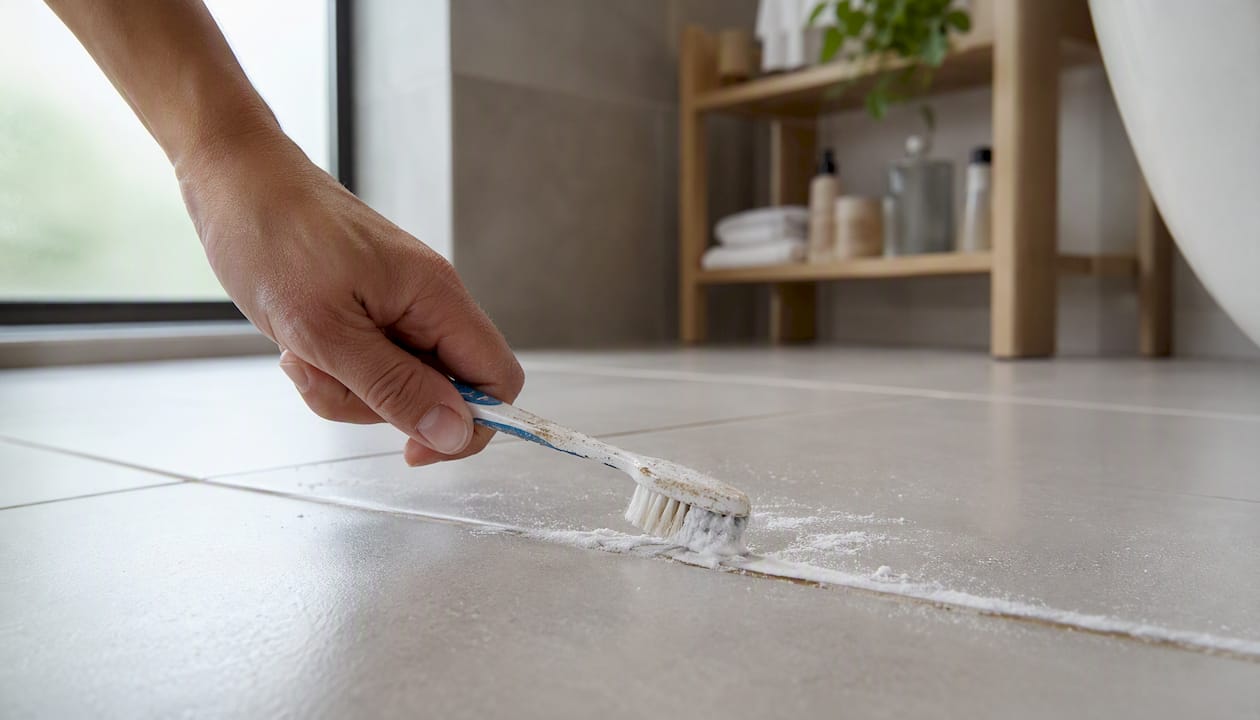
The most useful thing about baking soda paste isn’t any single use, it’s how often it quietly replaces a specialty product you’d otherwise buy and store. Grout brightening is the one job where it consistently outperforms expectations. A thick paste worked into grout lines with an old toothbrush, left for ten minutes, does more visible work than most grout-specific sprays sold at twice the price, making it a preferred choice in removing grease without harsh chemicals at home.
The habit that actually makes this practical long-term is keeping a small jar of pre-mixed paste in the utility closet next to a labeled container of plain dry baking soda. That way you’re never standing at the sink mixing from scratch when you just want to wipe down a stovetop.
Where baking soda paste stops being the right tool is anything involving fabric. It’s fine for spot-pretreating a greasy stain on a napkin before laundering, but it’s not a substitute for a real laundry stain treatment, and it won’t do anything for the wash cycle itself. That’s a separate problem, and it’s worth having a household solution ready for it, like Purecise Laundry Detergent Sheets, which pick up where a spot-treatment paste leaves off.
Keep the Cleaning Routine Simple With Purecise
Just as a good baking soda paste skips the bulky bottles and guesswork of commercial cleaners, Purecise applies the same idea to laundry. Each pre-dosed sheet dissolves completely in any wash type, so there’s no measuring cups, no spills, and no plastic jug taking up space under the sink.
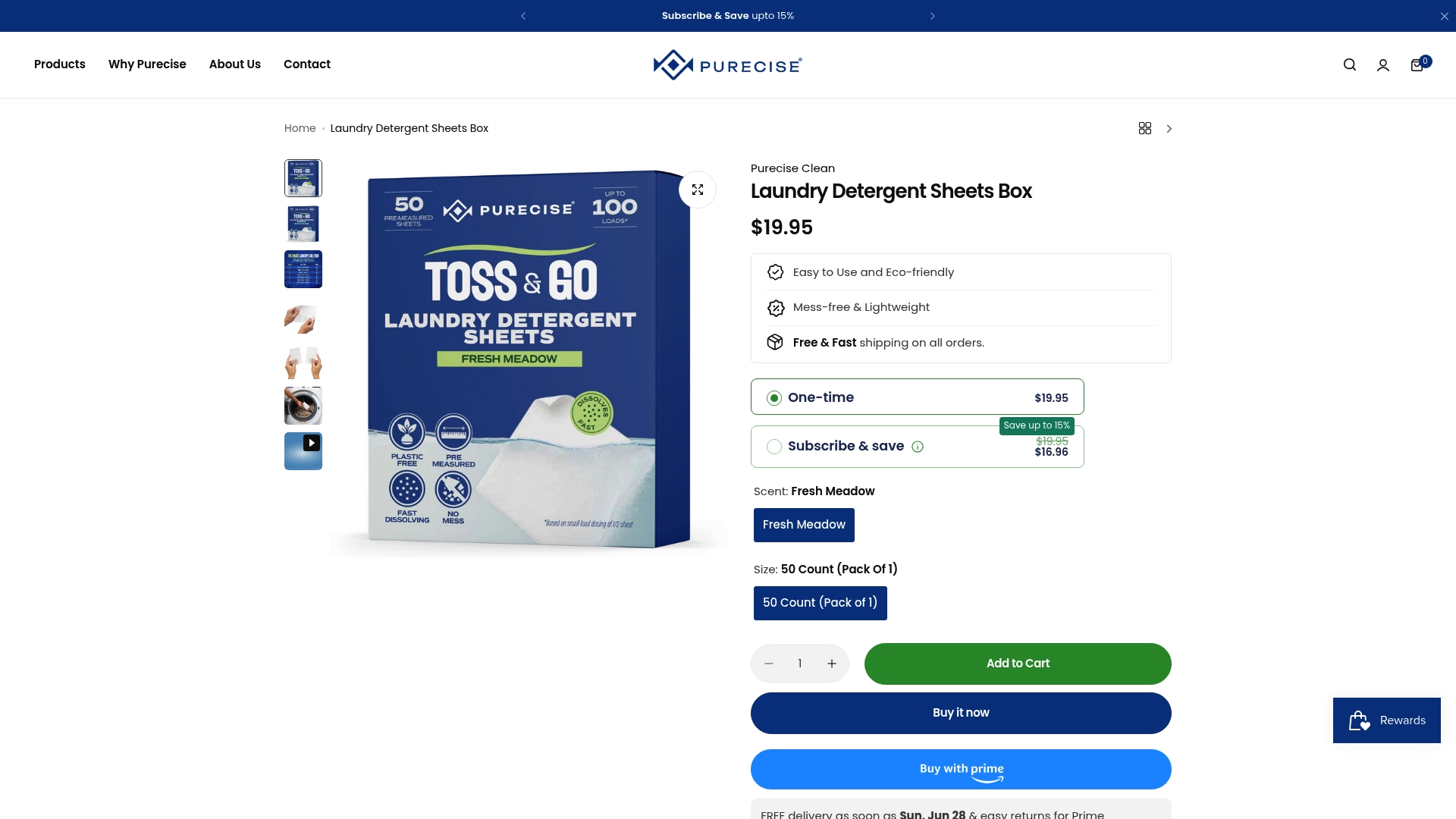
If you’ve just spot-treated a greasy stain with a baking soda paste before tossing the item in the wash, a hypoallergenic, fragrance-free formula matters, especially for households managing sensitive skin or small children. Purecise sheets are built for exactly that, and a full month’s supply fits in your pocket, which comes in handy for anyone dealing with travel, small apartments, or laundromat trips. Explore the Laundry Detergent Sheets Box for home use, or grab the Laundry Detergent Sheets Envelopes if you want a travel-ready option on hand.
Sources
- DailyMed — Sodium Bicarbonate topical product labeling
- NCBI Bookshelf — topical overview of bicarbonates and uses
- PMC article on hydrogen peroxide and household use
- Martha Stewart — cleaning with baking soda
Recommended
Non-Toxic Cleaning and Your Infant's Health: What Parents Need to Know
How to Remove Food Coloring From Hands: Fast, Safe Fixes
Related Posts

Whiten White Clothes, No Chlorine: 4–8 Hour Soak, Premeasured Sheets

Remove Blood Stains from Clothes: Cold Water, Enzyme Soak, No Dryer

Pet Owners: Remove Hair from 5 Surfaces with a Washer and Dryer Trick

Wash Sheets Weekly, Dry Them Fully, and Stop Dosing Guesswork

6 Quick Steps to Remove Oil Stains at Home Without Ruining Clothes

Save Space: 50 Sheets Cover 50–100 Loads for Airbnb Hosts

Cut Detergent 25–50%: Use Premeasured Sheets for Soft Water


