

Non-Toxic Cleaning and Your Infant's Health: What Parents Need to Know
Using non-toxic cleaning products reduces your infant’s everyday exposure to chemicals linked to respiratory problems and developmental risks. The CHILD birth cohort found that frequent use of household cleaning products in infancy was associated with higher odds of recurrent wheeze and an asthma diagnosis by age 3. The EPA Safer Choice program and the American Lung Association both recommend reducing chemical cleaning exposures at home, especially for young children.
Four things you can do right now:
- Switch every surface cleaner your baby contacts to a fragrance-free formula
- Remove plug-in air fresheners and scented sprays from rooms where your baby spends time
- Open windows while cleaning and keep your baby in another room until surfaces are dry
- Replace your current laundry detergent with a pre-dosed, hypoallergenic option such as detergent sheets to avoid overdosing and residue buildup on baby clothing
Key finding: In the CHILD cohort, higher frequency of cleaning-product use in infancy was associated with an adjusted odds ratios indicating increased odds of recurrent wheeze and asthma diagnosis, with some outcomes showing modestly higher associations within a similar range. These are associations, not proof of causation.
Key Takeaways
Non-toxic cleaning matters for infant health because infants face higher chemical exposure per body weight through inhalation, skin contact, and hand-to-mouth behavior, and cohort evidence links frequent early-life cleaning-product use to higher odds of recurrent wheeze and asthma by age 3.
| Point | Details |
|---|---|
| Fragrance-free is the safest default | “Fragrance” hides undisclosed chemicals; switch every baby-contact product to a fragrance-free formula first. |
| Use certified products, not marketing claims | EPA Safer Choice, Green Seal, and EWG Verified screen ingredients; “natural” and “green” labels do not. |
| Clean routinely; disinfect selectively | Soap and water handles most messes; reserve disinfectants for illness, raw meat spills, or known contamination. |
| Pre-dosed laundry reduces residue risk | Detergent sheets eliminate measuring errors and overdosing, lowering residue on infant clothing and bedding. |
| Purecise Toss & Go sheets | Plant-based, hypoallergenic, pre-dosed sheets with full ingredient disclosure; available in envelopes or box format. |
Table of Contents
- What the research says about cleaning products and infant respiratory health
- Which ingredients are most concerning for infants
- How to choose safer cleaning products for a baby-safe home
- Daily cleaning habits that reduce your infant’s chemical exposure
- Laundry and baby clothing: reducing detergent residues from the start
- When and how to disinfect safely around infants
- Your printable checklist: make your home baby-safer today
- Long-term developmental and neurobehavioral effects linked to early chemical exposure
- A perspective from Purecise on balancing cleanliness and chemical caution
- A safer laundry option that fits the evidence
- Sources
What the research says about cleaning products and infant respiratory health
The strongest evidence comes from longitudinal birth cohorts, which follow children from infancy through early childhood and track real-world exposures. The CHILD cohort study tracked over 2,000 Canadian children and found that higher frequency of household cleaning-product use in the first year of life was associated with higher odds of recurrent wheeze, recurrent wheeze with atopy, and an asthma diagnosis at age 3. Scented sprays and air fresheners showed the strongest associations.
Infants are not just small adults when it comes to chemical exposure. They breathe faster than older children and adults, so they inhale more air relative to their body weight in the same amount of time. They spend the vast majority of their time indoors, often on or near the floor where chemical residues and contaminated dust settle. Hand-to-mouth behavior means they ingest residues from surfaces they touch. All three pathways, inhalation, skin contact, and ingestion, can contribute to cumulative exposure.
| Study / Source | Population | Key Association | Outcome Age | Notes |
|---|---|---|---|---|
| CHILD Cohort (PMC7030878) | ~2,000 Canadian infants | OR ~1.35 (recurrent wheeze per IQR increase) | Age 3 | Strongest for scented sprays; observational |
| CHILD Cohort (PMC7030878) | ~2,000 Canadian infants | OR 1.37–1.49 (asthma diagnosis, alternate metrics) | Age 3 | Adjusted for confounders; association only |
These are observational associations, not proof that cleaning products cause asthma. Confounders such as housing quality, pet ownership, and socioeconomic factors are difficult to fully control. Measurement of exposure relied on caregiver-reported frequency, which introduces recall bias. What the data does support is a plausible, dose-related signal that warrants caution, particularly for the product types with the strongest associations.
Pro Tip: *When reading observational studies, look for adjusted odds ratios rather than raw associations. An adjusted OR accounts for known confounders.
Which ingredients are most concerning for infants
Not every cleaning product carries the same risk. The ingredient classes below have the strongest evidence or regulatory concern for infants and young children.
- Quaternary ammonium compounds (quats): Found in many disinfectant sprays and wipes, quats have been linked to asthma, airway irritation, and possible reproductive effects in animal studies. They persist on surfaces and can be transferred to infant skin.
- Volatile organic compounds (VOCs): Cleaning products release VOCs into indoor air during and after use. The American Lung Association notes these can irritate eyes and airways and worsen respiratory symptoms. Solvent-based cleaners and scented all-purpose sprays are common sources.
- Bleach (sodium hypochlorite): Effective as a disinfectant but releases chlorine gas when mixed with ammonia or acids. Even at normal use concentrations, bleach fumes can irritate infant airways. Never mix bleach with other cleaners.
- Synthetic fragrances and phthalates: The word “fragrance” on a label can represent dozens or hundreds of undisclosed chemicals. Consumer Reports documents that these hidden components may include chemicals linked to endocrine disruption. Phthalates are used as fragrance carriers and are absorbed through skin and inhalation.
- Certain antimicrobials and preservatives: Triclosan (now largely phased out of hand soaps but still present in some products) and formaldehyde-releasing preservatives have raised concern in regulatory reviews. Check ingredient lists for “DMDM hydantoin” and “quaternium” prefixes.
- Colorants and dyes: Artificial dyes serve no cleaning function and add unnecessary chemical load. Brightly colored products are not safer than clear ones.
Product formats that frequently combine several of these concerns: scented all-purpose sprays, plug-in air fresheners, scented laundry detergents and fabric softeners, aerosol disinfectant sprays, and dryer sheets.
The label problem is real. “Fragrance” is a legally protected trade secret, meaning manufacturers are not required to disclose the individual chemicals it contains. “Natural” and “green” are not regulated terms and carry no safety guarantee. EWG’s guide to cleaning product labels confirms that marketing language alone is not a reliable safety signal. Third-party ecolabels are the only shortcut that actually means something.
How to choose safer cleaning products for a baby-safe home
Choose fragrance-free by default, then verify with a third-party certification. That two-step rule eliminates the majority of the highest-risk products before you even read the ingredient list.
The certifications worth trusting each screen for different things. The EPA Safer Choice label means every ingredient in the product has been evaluated against safety criteria for human health and environmental impact. Green Seal applies life-cycle criteria and restricts specific hazardous ingredients. EWG Verified requires full ingredient disclosure and prohibits chemicals of concern. None of these is perfect, but any of them is more meaningful than “plant-based,” “eco,” or “natural” on the front of a bottle.
Red flags to scan for before buying:
- “Fragrance” or “parfum” anywhere in the ingredient list
- “Antibacterial” claims on routine household cleaners (signals quat or triclosan content)
- Bright artificial coloring in the formula
- Excessive hazard warnings (skull-and-crossbones, “keep away from children” beyond standard storage advice)
- Vague ingredient disclosure (“cleaning agents,” “surfactant blend”) with no specifics
Shopping checklist:
- Fragrance-free formulation confirmed on the label
- Third-party certification (EPA Safer Choice, Green Seal, or EWG Verified)
- Full ingredient disclosure on the label or brand website
- Multipurpose formula where possible (fewer products = fewer exposures)
- Pre-dosed format for laundry (detergent sheets or pods with child-resistant packaging) to prevent overdosing
For laundry specifically, a clean ingredient checklist can help you verify what is and is not in your detergent before you buy.
Pro Tip: Search the EPA Safer Choice product finder at epa.gov/saferchoice before your next shopping trip. You can filter by product type and see the full list of certified options in under two minutes.
Daily cleaning habits that reduce your infant’s chemical exposure
Routine cleaning, not constant disinfecting, is the safest default for homes with infants. The goal is removing dirt, allergens, and residues, not sterilizing every surface. Healthychildren and the American Lung Association both frame the primary cleaning goal as allergen and dirt removal rather than heavy disinfection, since over-disinfecting introduces respiratory irritants without meaningful health benefit in routine home settings.
Practical daily and weekly habits:
- Dust with a damp cloth, working top to bottom, so particles fall to the floor before you mop
- Wet-mop hard floors regularly; dry sweeping stirs up settled dust and chemical residues
- Vacuum with a HEPA-filter vacuum, especially in rooms where your baby crawls and plays
- Wash soft toys and baby bedding on hot cycles when visibly soiled or after illness
- Open windows before, during, and after cleaning; run exhaust fans for at least 15 minutes after you finish
- Avoid spray and aerosol cleaners in enclosed spaces; use a spray bottle with a cloth and apply the product to the cloth, not directly to the surface
- Remove plug-in air fresheners, scented candles, and wax warmers from your baby’s environment entirely
Safety callout: Store all cleaning products in a locked cabinet, out of reach and out of sight. If a child ingests or contacts a cleaning product, call Poison Control immediately: 1-800-222-1222 (US, 24/7). Boston Children’s Hospital recommends keeping this number posted in your home.
Pro Tip: Batch your cleaning tasks into one session while your baby is napping or out with another caregiver. This concentrates any brief chemical exposure into a single window and gives rooms time to air out before your baby returns.
Laundry and baby clothing: reducing detergent residues from the start
Infant skin is thinner and more permeable than adult skin, which means detergent residues left in fabric after washing can be absorbed more readily. The practical fix is straightforward: use a hypoallergenic, fragrance-free detergent, rinse thoroughly, and avoid overdosing.
Dos and don’ts for infant laundry:
- Do wash all new clothing and bedding before your baby wears or uses them; manufacturing residues and sizing chemicals are real
- Do use the full rinse cycle every time; skipping or shortening it leaves more detergent in the fabric
- Do choose a pre-dosed format (detergent sheets or pre-measured pods) to prevent the overdosing that liquid measuring almost always produces
- Don’t use fabric softeners or dryer sheets on infant clothing or bedding; they coat fibers with fragrance chemicals and conditioning agents
- Don’t use scented laundry boosters or in-wash scent beads
- Don’t assume “baby” on the label means fragrance-free; read the ingredient list
On dosing formats: liquid detergents measured by cap are the most likely to be overdosed, because the cap markings are difficult to read and most people pour more than the recommended amount. Pods reduce that error but carry a child poisoning risk if not stored carefully, since their concentrated gel is attractive to toddlers. Pre-dosed detergent sheets dissolve completely in any wash temperature, eliminate measuring entirely, and are easy to store out of reach. Plant-based laundry options in sheet form also tend to have shorter, more transparent ingredient lists than conventional liquid detergents.
Pro Tip: Wash all new baby clothing, blankets, and crib sheets once before first use, even if they look clean. Factory treatments and packaging residues are invisible but real. Use your fragrance-free detergent and a full rinse cycle.
When and how to disinfect safely around infants
Most routine messes in a home with a healthy infant do not require a disinfectant. Soap and water, or a fragrance-free all-purpose cleaner, removes the dirt and most of the microbial load for everyday spills, countertops, and floors. Reserve disinfection for higher-risk situations: a household member is ill with a contagious infection, there has been a raw meat spill, or there is known contamination from bodily fluids.
When disinfection is genuinely needed, choose actives with safer profiles. HealthyChildren.org identifies hydrogen peroxide and citric acid as preferable options. Avoid quat-based disinfectants for routine use around infants given their association with respiratory irritation and persistence on surfaces.
Safe disinfecting steps:
- Open windows and run a fan before you start; keep your baby out of the room
- Apply the disinfectant and allow full contact time as stated on the label (most products require 30 seconds to 10 minutes of wet contact to be effective)
- Wipe or allow to air dry; do not rinse surfaces that require contact time before it is complete
- Wear gloves; wash hands thoroughly after
- Never mix bleach with ammonia or any acid-based cleaner. Boston Children’s Hospital warns that this combination produces toxic chloramine gas
- Do not allow your baby back into the room until surfaces are fully dry and the room has been ventilated
When in doubt: For infants who are premature, have chronic lung disease, or have a diagnosed respiratory condition, consult your pediatrician before using any disinfectant product in the home. The risk-benefit calculation is different for medically vulnerable infants.
Your printable checklist: make your home baby-safer today
Do today
- [ ] Replace any scented surface cleaner your baby contacts with a fragrance-free alternative
- [ ] Unplug and remove all plug-in air fresheners from your home
- [ ] Open windows when cleaning; keep your baby in a separate room
- [ ] Move all cleaning products to a locked cabinet out of reach
- [ ] Write the Poison Control number on your fridge: 1-800-222-1222
Do this week
- [ ] Wash all baby clothing, blankets, and crib bedding before use
- [ ] Replace your current laundry detergent with a fragrance-free, pre-dosed option (detergent sheets work well)
- [ ] Wet-dust and damp-mop floors in rooms where your baby spends time
- [ ] Vacuum with a HEPA-filter vacuum
Ongoing habits
- [ ] Buy only third-party certified cleaners (EPA Safer Choice, Green Seal, or EWG Verified)
- [ ] Default to routine cleaning (soap and water) rather than disinfecting
- [ ] Scan ingredient lists for “fragrance,” “parfum,” and “quaternium” before buying
- [ ] Keep the Poison Control number posted and accessible
If-then reminders
- If your baby has breathing symptoms after you clean: note which product you used, ventilate the room, and consult your pediatrician
- If a household member is ill: follow the disinfecting guidance above; keep your baby out of the area
- If a child ingests a cleaning product: call Poison Control at 1-800-222-1222 immediately
Long-term developmental and neurobehavioral effects linked to early chemical exposure
The respiratory associations from cohort studies are the most replicated findings, but researchers are also examining whether early-life exposure to certain cleaning chemicals affects brain development and behavior. This area of science is younger and the evidence is less settled, but the signals are worth understanding.
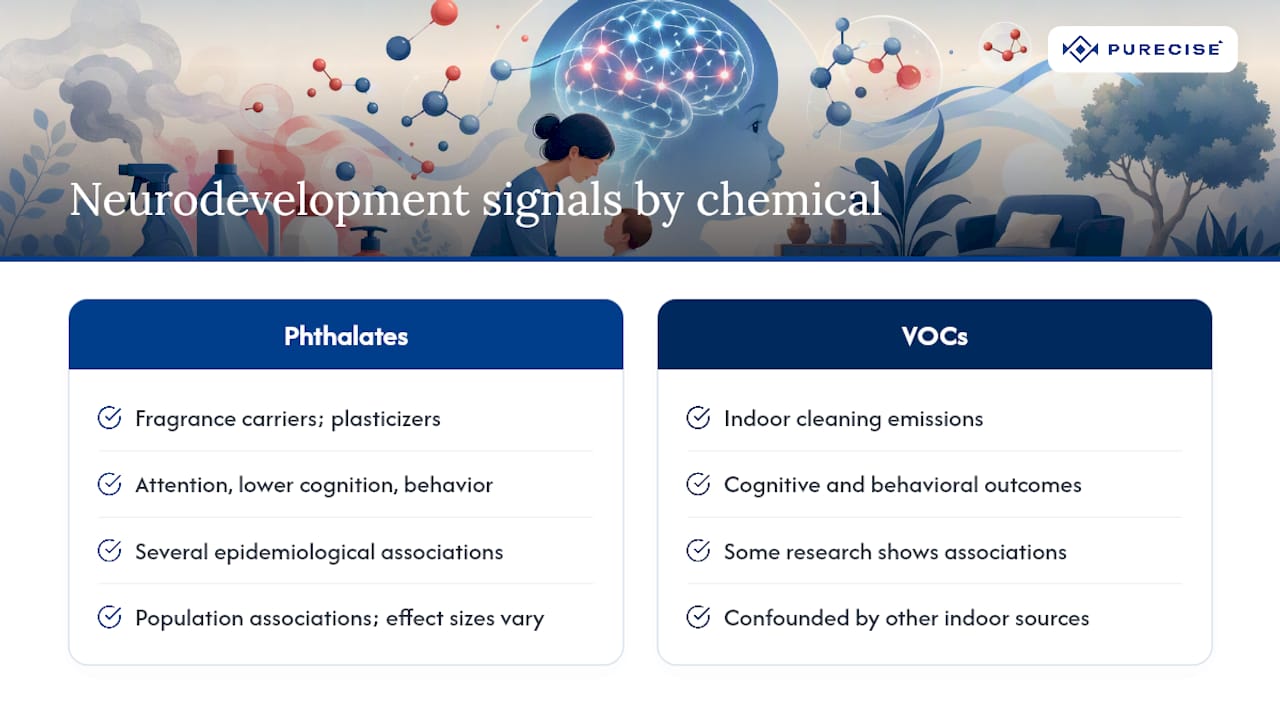
Phthalates, which are used as fragrance carriers and plasticizers in many cleaning and personal care products, have been studied in relation to neurodevelopment. Several epidemiological studies have found associations between prenatal and early-childhood phthalate exposure and outcomes including attention difficulties, reduced cognitive scores, and behavioral changes in children. These studies measure associations in populations, not individual causation, and effect sizes vary across studies and populations.
VOCs from cleaning products overlap with a broader class of indoor air pollutants that have been studied in relation to childhood neurodevelopment. Chronic low-level VOC exposure in indoor environments has been associated in some research with cognitive and behavioral outcomes, though disentangling cleaning-product VOCs from other indoor sources (paint, furniture off-gassing, vehicle exhaust infiltration) is methodologically difficult.
What is clear from the regulatory and public-health literature is that the developing brain is more sensitive to chemical insults than the adult brain, for the same reason infants are more vulnerable to respiratory effects: higher relative exposure, faster metabolism, and incomplete development of detoxification pathways. The precautionary logic that applies to respiratory protection applies here too. Reducing unnecessary chemical exposures during infancy is a reasonable, low-cost step given what is known, even where the neurodevelopmental evidence is still accumulating.
The practical implication is not alarm. It is the same fragrance-free, third-party certified, ventilate-while-cleaning approach the respiratory evidence already supports. The neurodevelopmental research adds another reason to follow it.
A perspective from Purecise on balancing cleanliness and chemical caution
The evidence on cleaning products and infant health does not call for a spotless home or a paranoid one. It calls for a thoughtful one. The CHILD cohort data, the EPA’s ingredient screening work, and the guidance from pediatric environmental health programs all point in the same direction: reduce unnecessary chemical exposures, prioritize fragrance-free products, and clean routinely without over-disinfecting.
What gets underestimated is how much of the risk comes from products that feel harmless, specifically scented sprays, plug-in fresheners, and heavily fragranced laundry products. These are not industrial chemicals. They are products most families use without a second thought. The research suggests that frequency and product type matter more than any single exposure event, which means small, consistent swaps have real cumulative value.
If your infant has asthma, eczema, chronic lung disease, or was born prematurely, consult your pediatrician before making changes to your cleaning routine. The general guidance here applies to healthy infants; medically vulnerable children may need more specific advice.
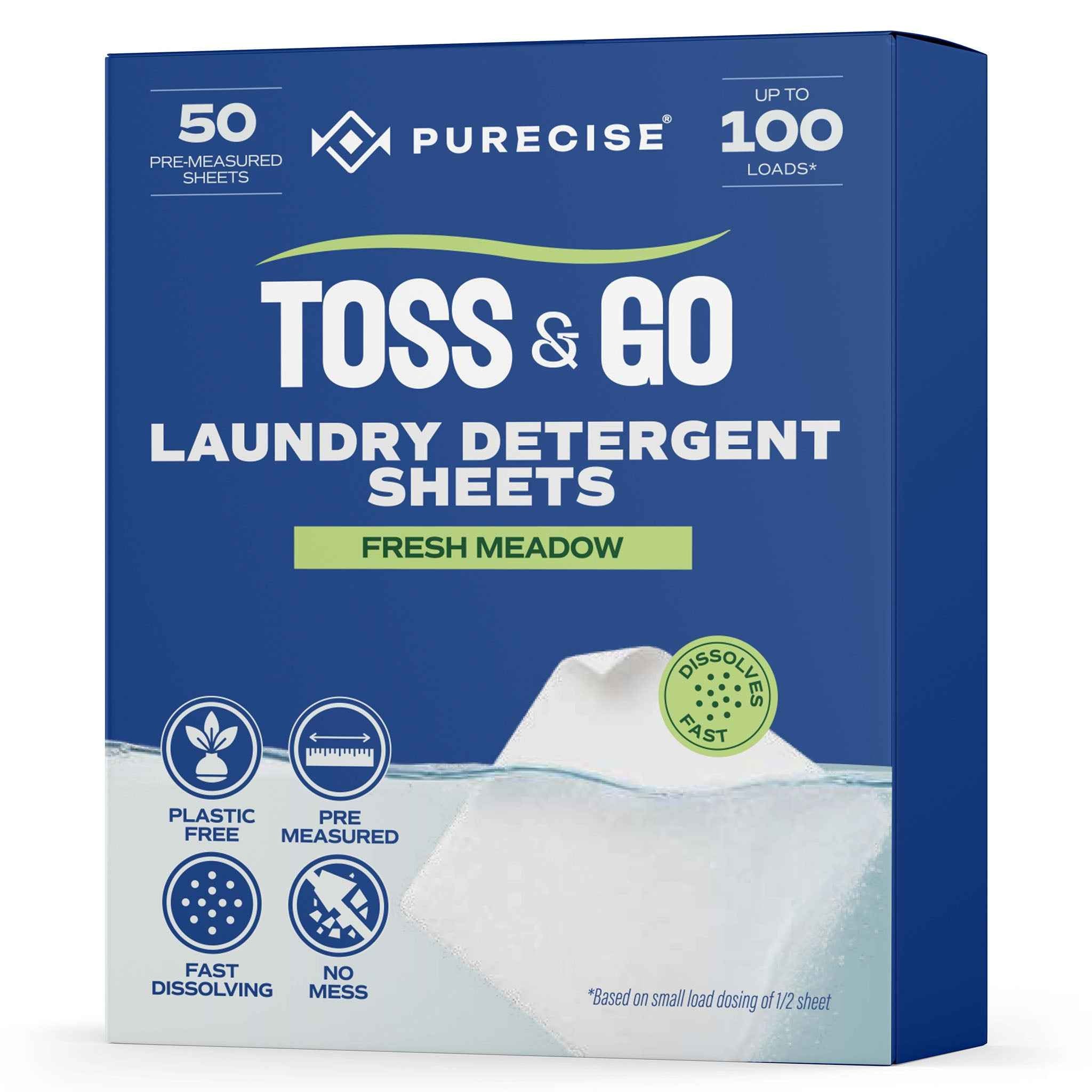
Purecise offers pre-dosed, hypoallergenic laundry detergent sheets (available as Laundry Detergent Sheets Envelopes and Laundry Detergent Sheets Box) as a practical laundry option that aligns with the safety principles in this article: no measuring, no overdosing, no fragrance, and full ingredient transparency.
A safer laundry option that fits the evidence
Parents who have already switched to fragrance-free surface cleaners often find that laundry is the last holdout: liquid detergents are easy to overdose, fabric softeners add fragrance chemicals back in, and most “baby” detergents still contain scent. Purecise Toss & Go laundry detergent sheets solve the dosing problem at the source. Each sheet is pre-measured, plant-based, and hypoallergenic, dissolves completely in any wash temperature, and leaves no measuring residue behind. There are no plastic jugs, no cap-line guesswork, and no fragrance. The full ingredient list is available on the Purecise ingredients page so you can verify what goes into every wash.
If your infant has a known allergy, eczema, or a skin condition being managed medically, consult your pediatrician or allergist before switching laundry products.
Pick up a box of Purecise laundry detergent sheets and try them on your next load of baby clothing.
This article provides general information and is not a substitute for professional medical advice. Consult your pediatrician or a qualified healthcare provider for concerns specific to your child’s health.
Sources
Key authoritative sources to consult:
- Frequent use of household cleaning products in early life and risk of childhood respiratory outcomes (CHILD Cohort)
- Cleaning supplies and household chemicals | American Lung Association
- How to Choose Nontoxic Cleaning Products - Consumer Reports
- Healthychildren
- Safer Choice | US EPA
- Pediatric Environmental Health Center | Cleaning & Disinfecting | Boston Children’s Hospital
Recommended
How to Wash Canvas Without Ruining It
Baking Soda Paste for Home Cleaning: DIY Recipes That Work
Related Posts

Fabric First Sweat Stain Fixes: Measured DIY Recipes and Sheets

Whiten White Clothes, No Chlorine: 4–8 Hour Soak, Premeasured Sheets

Remove Blood Stains from Clothes: Cold Water, Enzyme Soak, No Dryer

Pet Owners: Remove Hair from 5 Surfaces with a Washer and Dryer Trick

Wash Sheets Weekly, Dry Them Fully, and Stop Dosing Guesswork

6 Quick Steps to Remove Oil Stains at Home Without Ruining Clothes

Save Space: 50 Sheets Cover 50–100 Loads for Airbnb Hosts


